AQA · GCSE · Combined Science
Course version: 8464 · Version from Sept 2018
Contraception: intrauterine devices which prevent the implantation of an embryo or release a hormone
An intrauterine device, or IUD, is a small device fitted into the uterus by a healthcare professional.
Study notes
From the checked teaching notes for this specification point.
The idea
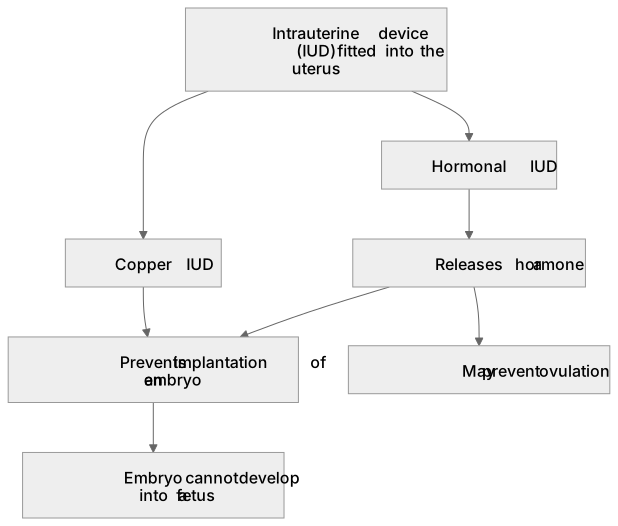
An intrauterine device, or IUD, is a small device fitted into the uterus by a healthcare professional. Some IUDs are made of copper, which changes the environment of the uterus so that a fertilised egg cannot settle and implant in the lining. Others release a hormone such as a progestogen, which thickens cervical mucus, thins the uterine lining and can also stop the ovary releasing an egg. Because implantation is prevented, the embryo cannot develop into a fetus. IUDs are long-acting and do not depend on the user remembering a daily pill, but they must be inserted and removed by a trained clinician and can cause heavier or irregular bleeding. They do not protect against sexually transmitted infections, so a condom may still be advised.
What earns the marks
- State that an intrauterine device is placed inside the uterus.
- Explain that a copper IUD prevents the implantation of an embryo in the uterus lining.
- Explain that a hormonal IUD releases a hormone that also helps prevent implantation and may prevent ovulation.
- Distinguish IUDs from barrier methods, which stop sperm reaching the egg rather than acting after fertilisation.
- Note that IUDs are long-acting but must be fitted and removed by a healthcare professional.
- Recognise that IUDs do not protect against sexually transmitted infections.
Common mistakes and how to put them right
Saying an IUD prevents fertilisation only.
Put it right: It mainly prevents implantation of an embryo, and hormonal IUDs may also prevent ovulation.
Confusing an IUD with a diaphragm.
Put it right: An IUD sits inside the uterus and is long-acting, while a diaphragm is a barrier placed over the cervix for one act of intercourse.
Believing an IUD is a pill.
Put it right: An IUD is a small device inserted into the uterus, not a tablet taken by mouth.
Exam tips
- Use the term 'implantation' precisely and link it to the embryo attaching to the uterus lining.
- For a hormonal IUD, name at least one extra effect, such as thickening cervical mucus or preventing ovulation.
- When comparing methods, state clearly whether the method acts before or after fertilisation.
Try the lesson
The start of the Contraception: intrauterine devices which prevent the implantation of an embryo or release a hormone lesson, made from checked teaching notes for this specification point.
Have a go first
What is one way that an intrauterine device (IUD) prevents pregnancy?
See it
Label the diagram
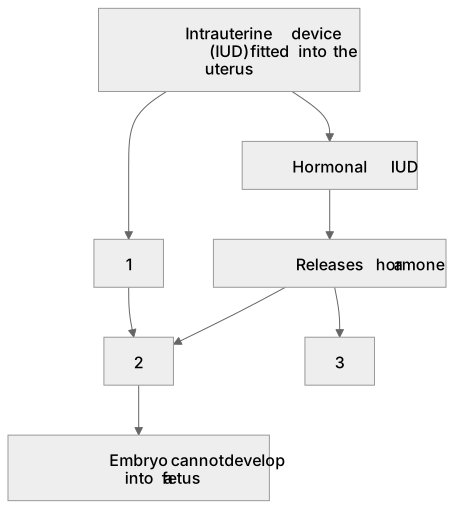
Some boxes have lost their names. Pick the right name for each number.
1Box 1
2Box 2
3Box 3
There is more to this lesson
The full lesson goes on to check your understanding and help you earn the marks. Create a free account to carry on, with your progress saved.
7 days Premium · Then the free plan continues · No card, no charge
Test your understanding of Contraception: intrauterine devices which prevent the implantation of an embryo or release a hormone
Active recall beats re-reading. Take an instant quiz now to test what you’ve learned and lock it into long-term memory.
7 days Premium · Then the free plan continues · No card, no charge