AQA · GCSE · Combined Science
Course version: 8464 · Version from Sept 2018
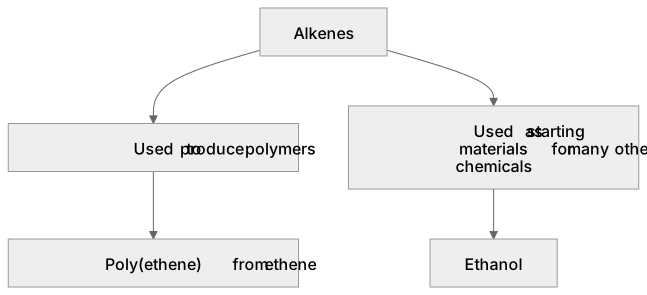
Cracking and alkenes: Alkenes are used to produce polymers and as starting materials for the production of many other chemicals.
Alkenes are unsaturated hydrocarbons containing a C=C double bond, making them far more reactive than alkanes.
- 3 key terms
Study notes
From the checked teaching notes for this specification point.
The idea
Alkenes are unsaturated hydrocarbons containing a C=C double bond, making them far more reactive than alkanes. This reactivity is exploited in the chemical industry. Alkenes are used to produce polymers and act as starting materials for many other chemicals. For example, ethene (molecular formula C₂H₄, empirical formula CH₂) can be used to make poly(ethene) for carrier bags and bottles, or converted into other useful compounds like ethanol. Cracking long-chain alkanes supplies these essential alkenes. Understanding that alkenes serve as versatile chemical feedstocks is key, as their double bond allows them to undergo reactions that alkanes cannot, forming the basis of many everyday materials.
What earns the marks
- Alkenes contain a carbon–carbon double bond (C=C) and are described as unsaturated.
- Alkenes are more reactive than alkanes due to the presence of the C=C double bond.
- Ethene has the molecular formula C₂H₄ and the empirical formula CH₂.
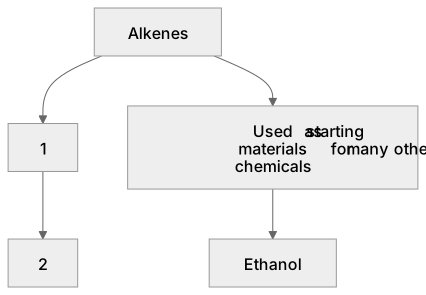
- Alkenes are used as starting materials (feedstocks) for making other chemicals, such as ethanol.
- Alkenes are used to produce polymers, such as poly(ethene) from ethene.
Common mistakes and how to put them right
Writing that alkenes are saturated.
Put it right: Alkenes are unsaturated because of the C=C double bond, whereas alkanes are saturated.
Confusing molecular and empirical formulae.
Put it right: Ethene's molecular formula is C₂H₄, but its empirical formula is CH₂.
Assuming alkanes and alkenes have the same reactivity.
Put it right: Alkenes are much more reactive due to the double bond.
Exam tips
- When asked why alkenes are useful, link the answer to their reactivity and use as starting materials for polymers and other chemicals.
- Use the phrase 'starting material' or 'feedstock' when describing alkenes being converted into other chemicals.
Try the lesson
The start of the Cracking and alkenes: Alkenes are used to produce polymers and as starting materials for the production of many other chemicals. lesson, made from checked teaching notes for this specification point.
Have a go first
Which type of substance is made when many alkene molecules join together in a polymerisation reaction?
Listen
Alkenes are unsaturated hydrocarbons containing a C=C double bond, making them far more reactive than alkanes. This reactivity is exploited in the chemical industry. Alkenes are used to produce polymers and act as starting materials for many other chemicals. For example, ethene (molecular formula C₂H₄, empirical formula CH₂) can be used to make poly(ethene) for carrier bags and bottles, or converted into other useful compounds like ethanol. Cracking long-chain alkanes supplies these essential alkenes. Understanding that alkenes serve as versatile chemical feedstocks is key, as their double bond allows them to undergo reactions that alkanes cannot, forming the basis of many everyday materials. A strong answer earns marks for these points. Alkenes contain a carbon–carbon double bond (C=C) and are described as unsaturated. Alkenes are more reactive than alkanes due to the presence of the C=C double bond. Ethene has the molecular formula C₂H₄ and the empirical formula CH₂. Alkenes are used as starting materials (feedstocks) for making other chemicals, such as ethanol. Exam tip: When asked why alkenes are useful, link the answer to their reactivity and use as starting materials for polymers and other chemicals.
See it
Key words
Say what each word means before you turn the card.
Unsaturated hydrocarbons and the C=C double bond
Try answering aloud or in your head before turning the card.
Polymers as useful materials
Try answering aloud or in your head before turning the card.
Alkenes as chemical feedstocks
Try answering aloud or in your head before turning the card.
See every definition
- Unsaturated hydrocarbons and the C=C double bond
- Hydrocarbons containing a carbon–carbon double bond (C=C) are described as unsaturated, and this double bond makes them far more reactive than alkanes.
- Polymers as useful materials
- Alkenes are used to produce polymers, such as poly(ethene) from ethene, which is used for carrier bags and bottles.
- Alkenes as chemical feedstocks
- Alkenes are used as starting materials for the production of many other chemicals, such as ethanol.
Label the diagram
Some boxes have lost their names. Pick the right name for each number.
1Box 1
2Box 2
There is more to this lesson
The full lesson goes on to check your understanding and help you earn the marks. Create a free account to carry on, with your progress saved.
A week of Premium from your first lesson · Then the free plan continues · No card, no charge
Test your understanding of Cracking and alkenes: Alkenes are used to produce polymers and as starting materials for the production of many other chemicals.
Active recall beats re-reading. Take an instant quiz now to test what you’ve learned and lock it into long-term memory.
A week of Premium from your first lesson · Then the free plan continues · No card, no charge