AQA · GCSE · Combined Science
Course version: 8464 · Version from Sept 2018
Energy transfer during exothermic and endothermic reactions: An endothermic reaction is one that takes in energy from the surroundings so the temperature of the surroundings decreases.
An endothermic reaction absorbs energy from its surroundings, so the surroundings lose thermal energy and their temperature falls.
Study notes
From the checked teaching notes for this specification point.
The idea
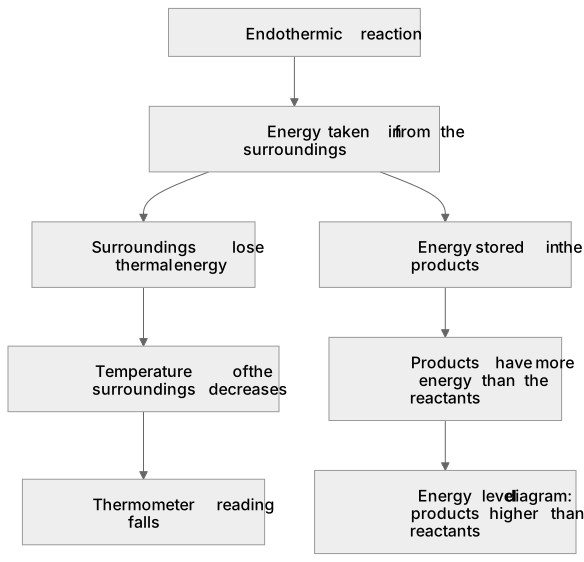
An endothermic reaction absorbs energy from its surroundings, so the surroundings lose thermal energy and their temperature falls. Energy is transferred from the surroundings to the reacting system, which stores it in the products; the products therefore have more energy than the reactants. A practical way to observe this is to add citric acid to sodium hydrogencarbonate in a polystyrene cup with a thermometer: the thermometer reading drops as the reaction proceeds. The temperature decrease is evidence that energy has been taken in, not released. In an energy level diagram the products are drawn higher than the reactants, and the energy difference is the energy absorbed. The temperature change depends on amounts and concentrations, so a small change may be hard to detect without a sensitive thermometer or insulation.
What earns the marks
- Endothermic reactions transfer energy from the surroundings to the reacting system.
- The surroundings lose thermal energy, so their temperature decreases.
- The products have more stored energy than the reactants.
- Energy is absorbed, so the temperature change of the surroundings is negative.
- A thermometer reading that falls during a reaction is evidence for an endothermic change.
- An energy level diagram for an endothermic reaction shows products higher than reactants.
Common mistakes and how to put them right
Saying energy is 'used up' or 'destroyed' rather than transferred and stored in the products.
Put it right by describing energy transfer from surroundings to the system.
Confusing endothermic with exothermic and predicting a temperature rise.
Put it right by linking 'endo' to energy entering the system and a fall in surroundings temperature.
Believing the reacting mixture itself gets colder because it 'loses' energy.
Put it right by stating the surroundings lose energy while the system gains it.
Exam tips
- State clearly that energy is taken in from the surroundings and that the surroundings' temperature decreases.
- When describing a practical, name the thermometer reading falling as the observation that supports an endothermic change.
- If asked to compare, contrast endothermic with exothermic by the direction of energy transfer and the sign of the temperature change.
Try the lesson
The start of the Energy transfer during exothermic and endothermic reactions: An endothermic reaction is one that takes in energy from the surroundings so the temperature of the surroundings decreases. lesson, made from checked teaching notes for this specification point.
Have a go first
A student adds two solids together in a test tube. The mixture gets colder and the thermometer reading falls. Which type of reaction is taking place?
Listen
An endothermic reaction absorbs energy from its surroundings, so the surroundings lose thermal energy and their temperature falls. Energy is transferred from the surroundings to the reacting system, which stores it in the products; the products therefore have more energy than the reactants. A practical way to observe this is to add citric acid to sodium hydrogencarbonate in a polystyrene cup with a thermometer: the thermometer reading drops as the reaction proceeds. The temperature decrease is evidence that energy has been taken in, not released. In an energy level diagram the products are drawn higher than the reactants, and the energy difference is the energy absorbed. The temperature change depends on amounts and concentrations, so a small change may be hard to detect without a sensitive thermometer or insulation. A strong answer earns marks for these points. Endothermic reactions transfer energy from the surroundings to the reacting system. The surroundings lose thermal energy, so their temperature decreases. The products have more stored energy than the reactants. Energy is absorbed, so the temperature change of the surroundings is negative. A common slip: Saying energy is 'used up' or 'destroyed' rather than transferred and stored in the products. Instead, describing energy transfer from surroundings to the system. Exam tip: State clearly that energy is taken in from the surroundings and that the surroundings' temperature decreases.
See it
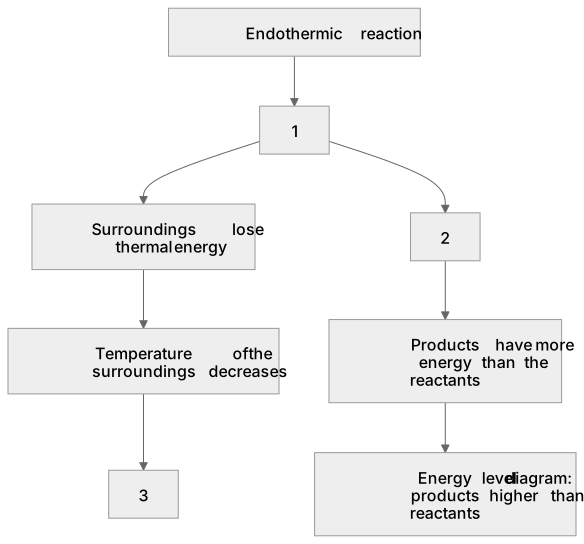
Label the diagram
Some boxes have lost their names. Pick the right name for each number.
1Box 1
2Box 2
3Box 3
There is more to this lesson
The full lesson goes on to check your understanding and help you earn the marks. Create a free account to carry on, with your progress saved.
A week of Premium from your first lesson · Then the free plan continues · No card, no charge
Test your understanding of Energy transfer during exothermic and endothermic reactions: An endothermic reaction is one that takes in energy from the surroundings so the temperature of the surroundings decreases.
Active recall beats re-reading. Take an instant quiz now to test what you’ve learned and lock it into long-term memory.
A week of Premium from your first lesson · Then the free plan continues · No card, no charge