AQA · GCSE · Combined Science
Course version: 8464 · Version from Sept 2018
Energy transfer during exothermic and endothermic reactions: distinguish between exothermic and endothermic reactions on the basis of the temperature change of the surroundings
You distinguish the two reaction types by observing what happens to the temperature of the surroundings.
- 4 key terms
Study notes
From the checked teaching notes for this specification point.
The idea
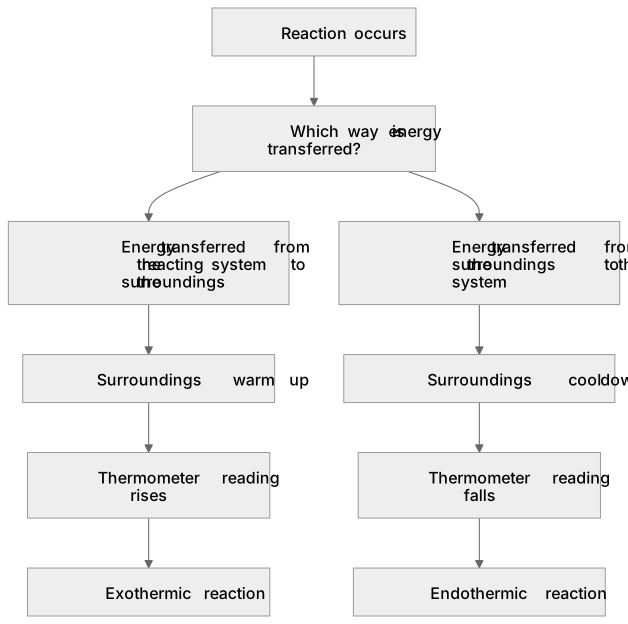
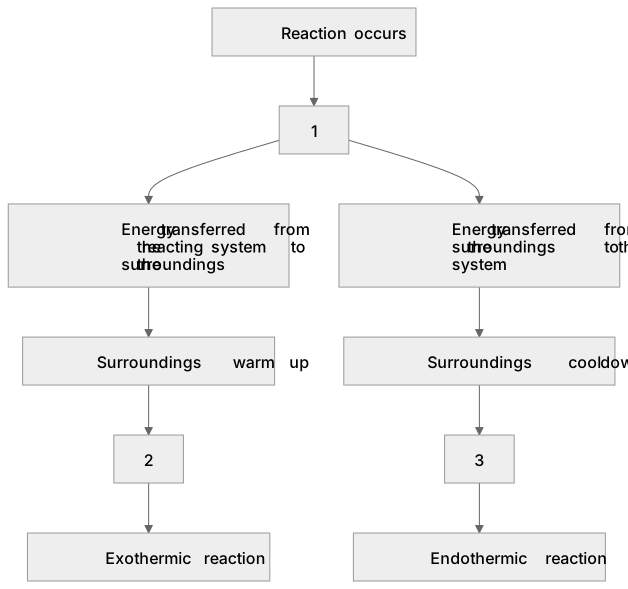
You distinguish the two reaction types by observing what happens to the temperature of the surroundings. In an exothermic reaction, energy is transferred from the reacting system to the surroundings, so the surroundings warm up and the thermometer reading rises. In an endothermic reaction, energy is transferred from the surroundings to the system, so the surroundings cool down and the thermometer reading falls. For example, dissolving ammonium nitrate in water lowers the temperature, so it is endothermic; burning magnesium raises the temperature, so it is exothermic. The key skill is to link the direction of temperature change to the direction of energy transfer, not simply to memorise examples.
What earns the marks
- States that an exothermic reaction transfers energy to the surroundings and causes a temperature rise in the surroundings.
- States that an endothermic reaction takes in energy from the surroundings and causes a temperature fall in the surroundings.
- Uses temperature change data from a described experiment to classify a named reaction correctly as exothermic or endothermic.
- Explains the classification in terms of energy transfer direction rather than only quoting the temperature value.
- Applies the distinction to unfamiliar examples, such as a self-heating hand warmer or an instant cold pack, using the observed temperature change.
Common mistakes and how to put them right
Confusing the temperature change of the reaction mixture with the temperature change of the surroundings.
Put it right: The classification is based on the surroundings, so state which temperature is being measured.
Thinking that an endothermic reaction always feels cold because energy is destroyed.
Put it right: Energy is absorbed from the surroundings, not destroyed.
Reversing the labels: exothermic means energy out and temperature up; endothermic means energy in and temperature down.
Exam tips
- Use the phrase energy transferred to the surroundings for exothermic and energy taken in from the surroundings for endothermic.
- When given data, quote the starting and finishing temperatures and state the direction of change before naming the process.
- Link each classification to a real example, such as combustion for exothermic or thermal decomposition for endothermic, to show understanding.
Try the lesson
The start of the Energy transfer during exothermic and endothermic reactions: distinguish between exothermic and endothermic reactions on the basis of the temperature change of the surroundings lesson, made from checked teaching notes for this specification point.
Have a go first
A student adds magnesium to dilute hydrochloric acid in a test tube. The thermometer in the mixture shows the temperature rising. Which type of reaction is this?
Listen
You distinguish the two reaction types by observing what happens to the temperature of the surroundings. In an exothermic reaction, energy is transferred from the reacting system to the surroundings, so the surroundings warm up and the thermometer reading rises. In an endothermic reaction, energy is transferred from the surroundings to the system, so the surroundings cool down and the thermometer reading falls. For example, dissolving ammonium nitrate in water lowers the temperature, so it is endothermic; burning magnesium raises the temperature, so it is exothermic. The key skill is to link the direction of temperature change to the direction of energy transfer, not simply to memorise examples. A strong answer earns marks for these points. States that an exothermic reaction transfers energy to the surroundings and causes a temperature rise in the surroundings. States that an endothermic reaction takes in energy from the surroundings and causes a temperature fall in the surroundings. Uses temperature change data from a described experiment to classify a named reaction correctly as exothermic or endothermic. Explains the classification in terms of energy transfer direction rather than only quoting the temperature value. Exam tip: Use the phrase energy transferred to the surroundings for exothermic and energy taken in from the surroundings for endothermic.
See it
Key words
Say what each word means before you turn the card.
exothermic reaction
Try answering aloud or in your head before turning the card.
endothermic reaction
Try answering aloud or in your head before turning the card.
temperature change of the surroundings
Try answering aloud or in your head before turning the card.
energy transfer direction
Try answering aloud or in your head before turning the card.
See every definition
- exothermic reaction
- A reaction in which energy is transferred from the reacting system to the surroundings, so the surroundings warm up and the thermometer reading rises.
- endothermic reaction
- A reaction in which energy is transferred from the surroundings to the system, so the surroundings cool down and the thermometer reading falls.
- temperature change of the surroundings
- The rise or fall in the temperature of the surroundings, which is the evidence used to distinguish between exothermic and endothermic reactions.
- energy transfer direction
- Whether energy is transferred to the surroundings or taken in from the surroundings, which explains a classification rather than the temperature value alone.
Label the diagram
Some boxes have lost their names. Pick the right name for each number.
1Box 1
2Box 2
3Box 3
There is more to this lesson
The full lesson goes on to check your understanding and help you earn the marks. Create a free account to carry on, with your progress saved.
A week of Premium from your first lesson · Then the free plan continues · No card, no charge
Test your understanding of Energy transfer during exothermic and endothermic reactions: distinguish between exothermic and endothermic reactions on the basis of the temperature change of the surroundings
Active recall beats re-reading. Take an instant quiz now to test what you’ve learned and lock it into long-term memory.
A week of Premium from your first lesson · Then the free plan continues · No card, no charge