AQA · GCSE · Combined Science
Course version: 8464 · Version from Sept 2018
Energy transfer during exothermic and endothermic reactions: Endothermic reactions include thermal decompositions and the reaction of citric acid and sodium hydrogencarbonate. Some sports injury packs are based on endothermic reactions.
Many endothermic reactions are familiar from the laboratory and everyday life.
- 4 key terms
Study notes
From the checked teaching notes for this specification point.
The idea
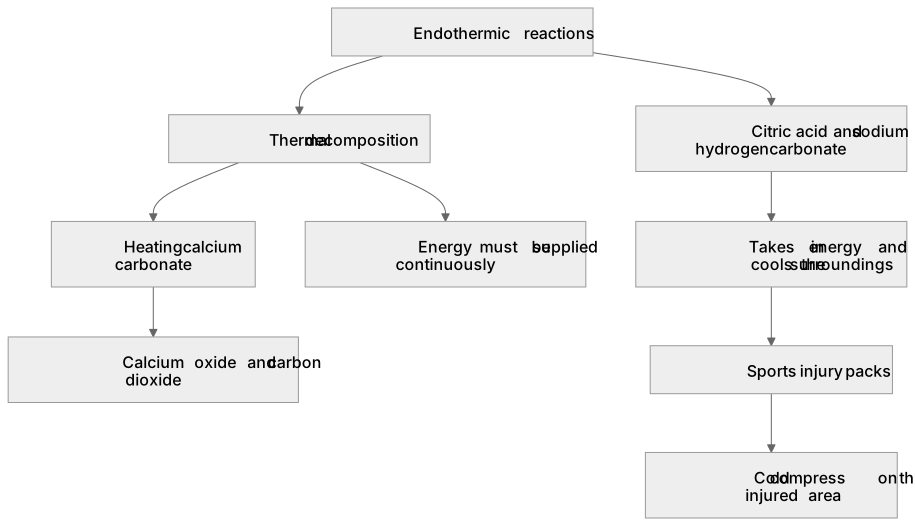
Many endothermic reactions are familiar from the laboratory and everyday life. Thermal decomposition means breaking a compound down using heat; for example, heating calcium carbonate strongly forms calcium oxide and carbon dioxide, and energy must be supplied continuously for the decomposition to continue. Another example is the reaction between citric acid and sodium hydrogencarbonate, which fizzes and cools as it takes in energy from the surroundings. This cooling effect is used in some sports injury packs: when the pack is activated, the reaction absorbs energy from the injured area, providing a cold compress. The temperature drop can be measured with a thermometer in an insulated cup, and the reaction is recognised as endothermic because the surroundings cool.
What earns the marks
- Thermal decomposition is an endothermic process because it requires energy input to break down a compound.
- Heating calcium carbonate to form calcium oxide and carbon dioxide is an example of thermal decomposition.
- Citric acid reacting with sodium hydrogencarbonate takes in energy and cools the surroundings.
- Sports injury packs can use endothermic reactions to produce a cooling effect on the body.
- The temperature of the surroundings falls during these reactions, which is evidence of energy absorption.
- Energy must be supplied continuously for a thermal decomposition to keep going.
Common mistakes and how to put them right
Thinking all decompositions release energy.
Put it right by noting that thermal decomposition requires heating and is endothermic.
Assuming a fizzing reaction must be exothermic.
Put it right by testing the temperature change, as citric acid and sodium hydrogencarbonate cool the surroundings.
Confusing the purpose of a sports injury pack with an exothermic hand warmer.
Put it right by linking injury packs to cooling and hand warmers to warming.
Exam tips
- Give named examples when asked, such as thermal decomposition of calcium carbonate or citric acid with sodium hydrogencarbonate.
- Link the everyday use of a sports injury pack to the endothermic cooling effect rather than just naming the pack.
- Use the temperature change of the surroundings as evidence when explaining why a reaction is endothermic.
Try the lesson
The start of the Energy transfer during exothermic and endothermic reactions: Endothermic reactions include thermal decompositions and the reaction of citric acid and sodium hydrogencarbonate. Some sports injury packs are based on endothermic reactions. lesson, made from checked teaching notes for this specification point.
Have a go first
A sports injury pack contains citric acid and sodium hydrogencarbonate. When the pack is activated, the two chemicals react and the pack becomes cold. Which statement explains why the pack becomes cold?
Listen
Many endothermic reactions are familiar from the laboratory and everyday life. Thermal decomposition means breaking a compound down using heat; for example, heating calcium carbonate strongly forms calcium oxide and carbon dioxide, and energy must be supplied continuously for the decomposition to continue. Another example is the reaction between citric acid and sodium hydrogencarbonate, which fizzes and cools as it takes in energy from the surroundings. This cooling effect is used in some sports injury packs: when the pack is activated, the reaction absorbs energy from the injured area, providing a cold compress. The temperature drop can be measured with a thermometer in an insulated cup, and the reaction is recognised as endothermic because the surroundings cool. A strong answer earns marks for these points. Thermal decomposition is an endothermic process because it requires energy input to break down a compound. Heating calcium carbonate to form calcium oxide and carbon dioxide is an example of thermal decomposition. Citric acid reacting with sodium hydrogencarbonate takes in energy and cools the surroundings. Sports injury packs can use endothermic reactions to produce a cooling effect on the body. A common slip: Thinking all decompositions release energy. Instead, noting that thermal decomposition requires heating and is endothermic. Exam tip: Give named examples when asked, such as thermal decomposition of calcium carbonate or citric acid with sodium hydrogencarbonate.
See it
Key words
Say what each word means before you turn the card.
Thermal decomposition
Try answering aloud or in your head before turning the card.
Everyday applications
Try answering aloud or in your head before turning the card.
Energy absorption
Try answering aloud or in your head before turning the card.
Temperature change
Try answering aloud or in your head before turning the card.
See every definition
- Thermal decomposition
- Breaking a compound down using heat, with energy supplied continuously for the decomposition to continue.
- Everyday applications
- Some sports injury packs are based on endothermic reactions, absorbing energy from the injured area to provide a cold compress.
- Energy absorption
- The reaction takes in energy from the surroundings, which is why the surroundings cool.
- Temperature change
- The temperature drop can be measured with a thermometer in an insulated cup, and the surroundings cooling shows the reaction is endothermic.
Label the diagram
Some boxes have lost their names. Pick the right name for each number.
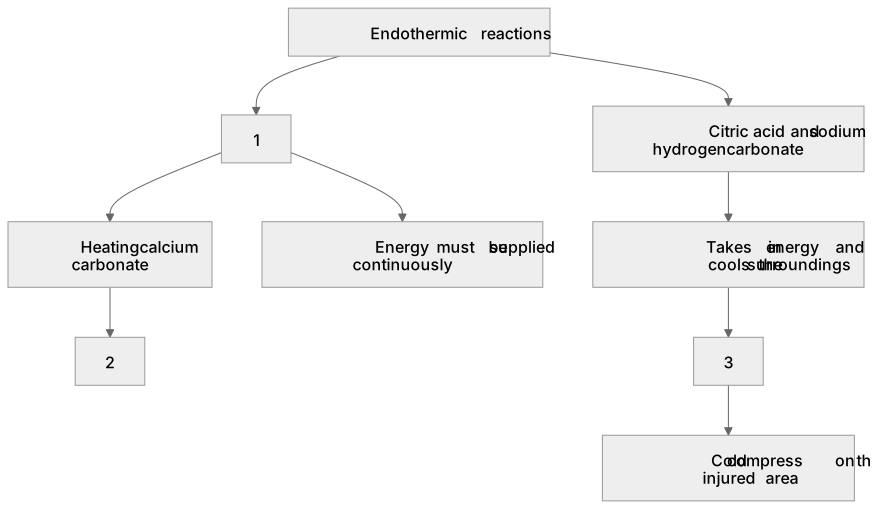
1Box 1
2Box 2
3Box 3
There is more to this lesson
The full lesson goes on to check your understanding and help you earn the marks. Create a free account to carry on, with your progress saved.
A week of Premium from your first lesson · Then the free plan continues · No card, no charge
Test your understanding of Energy transfer during exothermic and endothermic reactions: Endothermic reactions include thermal decompositions and the reaction of citric acid and sodium hydrogencarbonate. Some sports injury packs are based on endothermic reactions.
Active recall beats re-reading. Take an instant quiz now to test what you’ve learned and lock it into long-term memory.
A week of Premium from your first lesson · Then the free plan continues · No card, no charge