AQA · GCSE · Combined Science
Course version: 8464 · Version from Sept 2018
Fractional distillation and petrochemicals: Many useful materials on which modern life depends are produced by the petrochemical industry, such as solvents, lubricants, polymers, detergents.
The petrochemical industry uses fractions from crude oil as feedstocks.
- 4 key terms
Study notes
From the checked teaching notes for this specification point.
The idea
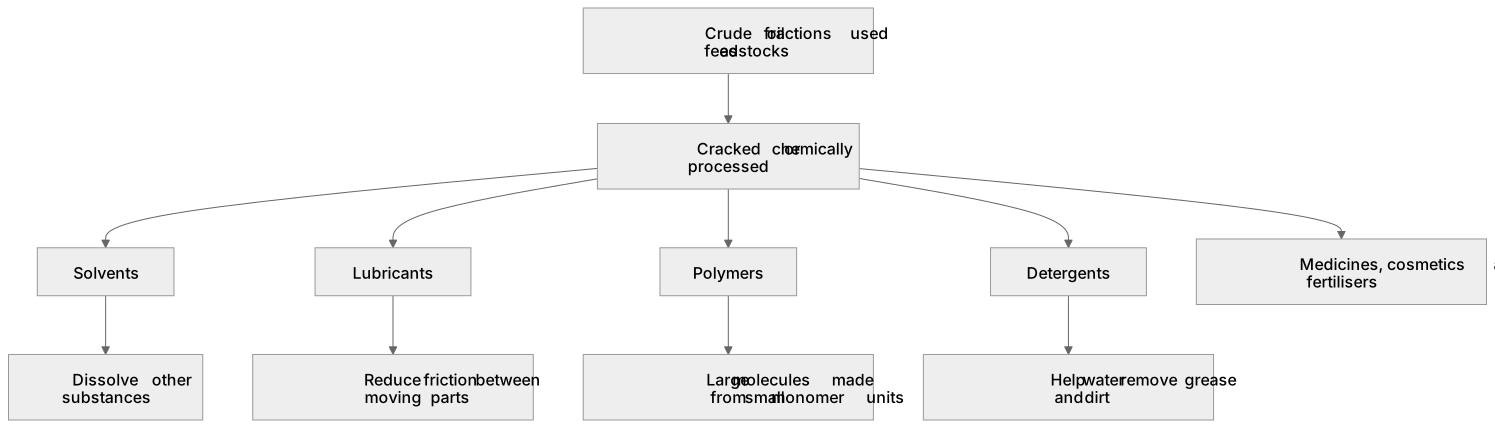
The petrochemical industry uses fractions from crude oil as feedstocks. These hydrocarbons are cracked or chemically processed to make new substances. Solvents dissolve other substances, for example in paints and dry cleaning. Lubricants reduce friction between moving parts, such as engine oil. Polymers are large molecules made from small monomer units, used in plastics and fibres. Detergents help water remove grease and dirt, for example in washing-up liquid. Many of these materials are not fuels; they are useful products on which modern life depends. The industry also produces medicines, cosmetics and fertilisers, showing the wide importance of petrochemicals.
What earns the marks
- The petrochemical industry uses hydrocarbons from crude oil as raw materials or feedstocks.
- Solvents are useful petrochemical products that dissolve other substances, for example in paints or cleaning fluids.
- Lubricants are petrochemical products that reduce friction between moving surfaces, such as engine oils and greases.
- Polymers are large molecules made by joining many small monomer units, and are used to make plastics and synthetic fibres.
- Detergents are petrochemical products that help water to remove grease and dirt from surfaces.
- Many useful materials for modern life, including medicines, cosmetics and fertilisers, also come from the petrochemical industry.
Common mistakes and how to put them right
Thinking all crude oil products are fuels.
Put it right: Many fractions are used as feedstocks to make non-fuel materials such as solvents, lubricants, polymers and detergents.
Confusing polymers with the small molecules they are made from.
Put it right: Polymers are large molecules built from many small monomer units joined together.
Assuming detergents work by dissolving grease in water alone.
Put it right: Detergents help water to remove grease and dirt by interacting with both water and grease.
Exam tips
- Give a named example for each product type, such as ethanol as a solvent or poly(ethene) as a polymer, to make your answer specific.
- Link each product to its function, for example lubricants reduce friction and detergents help remove grease, rather than just naming the product.
- Use the term feedstock when explaining that crude oil fractions are starting materials for making new substances in the petrochemical industry.
Try the lesson
The start of the Fractional distillation and petrochemicals: Many useful materials on which modern life depends are produced by the petrochemical industry, such as solvents, lubricants, polymers, detergents. lesson, made from checked teaching notes for this specification point.
Have a go first
Which of these useful materials is produced by the petrochemical industry?
Listen
The petrochemical industry uses fractions from crude oil as feedstocks. These hydrocarbons are cracked or chemically processed to make new substances. Solvents dissolve other substances, for example in paints and dry cleaning. Lubricants reduce friction between moving parts, such as engine oil. Polymers are large molecules made from small monomer units, used in plastics and fibres. Detergents help water remove grease and dirt, for example in washing-up liquid. Many of these materials are not fuels; they are useful products on which modern life depends. The industry also produces medicines, cosmetics and fertilisers, showing the wide importance of petrochemicals. A strong answer earns marks for these points. The petrochemical industry uses hydrocarbons from crude oil as raw materials or feedstocks. Solvents are useful petrochemical products that dissolve other substances, for example in paints or cleaning fluids. Lubricants are petrochemical products that reduce friction between moving surfaces, such as engine oils and greases. Polymers are large molecules made by joining many small monomer units, and are used to make plastics and synthetic fibres. A common slip: Thinking all crude oil products are fuels. Instead, many fractions are used as feedstocks to make non-fuel materials such as solvents, lubricants, polymers and detergents. Exam tip: Give a named example for each product type, such as ethanol as a solvent or poly(ethene) as a polymer, to make your answer specific.
See it
Key words
Say what each word means before you turn the card.
Solvents
Try answering aloud or in your head before turning the card.
Lubricants
Try answering aloud or in your head before turning the card.
Polymers
Try answering aloud or in your head before turning the card.
Detergents
Try answering aloud or in your head before turning the card.
See every definition
- Solvents
- Substances that dissolve other substances, for example in paints and dry cleaning.
- Lubricants
- Substances that reduce friction between moving parts, such as engine oil.
- Polymers
- Large molecules made from small monomer units, used in plastics and fibres.
- Detergents
- Substances that help water remove grease and dirt, for example in washing-up liquid.
Label the diagram
Some boxes have lost their names. Pick the right name for each number.
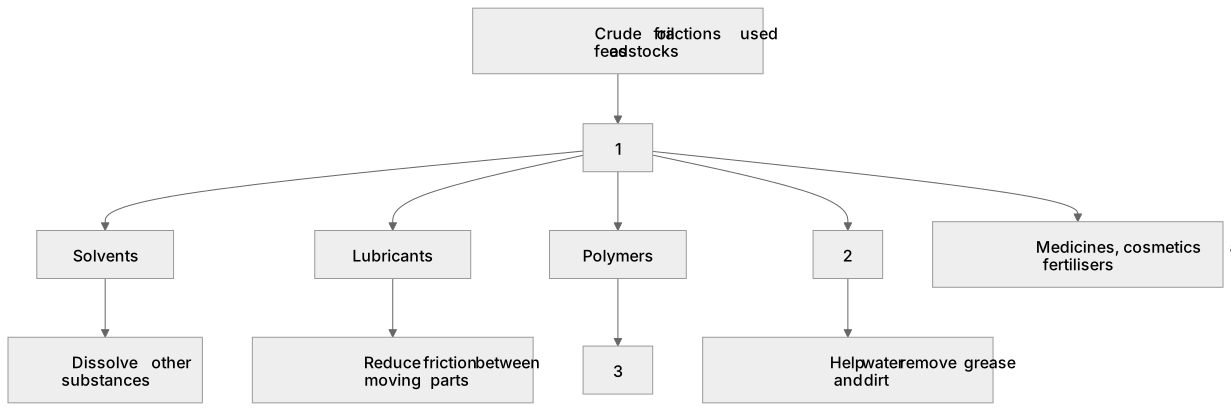
1Box 1
2Box 2
3Box 3
There is more to this lesson
The full lesson goes on to check your understanding and help you earn the marks. Create a free account to carry on, with your progress saved.
A week of Premium from your first lesson · Then the free plan continues · No card, no charge
Test your understanding of Fractional distillation and petrochemicals: Many useful materials on which modern life depends are produced by the petrochemical industry, such as solvents, lubricants, polymers, detergents.
Active recall beats re-reading. Take an instant quiz now to test what you’ve learned and lock it into long-term memory.
A week of Premium from your first lesson · Then the free plan continues · No card, no charge