AQA · GCSE · Combined Science
Course version: 8464 · Version from Sept 2018
Life cycle assessment: Students should be able to carry out simple comparative LCAs for shopping bags made from plastic and paper.
A life cycle assessment (LCA) tracks a product through four stages: extracting raw materials, manufacturing, using it, and disposing of it.
- 4 key terms
Study notes
From the checked teaching notes for this specification point.
The idea
A life cycle assessment (LCA) tracks a product through four stages: extracting raw materials, manufacturing, using it, and disposing of it. For shopping bags, compare a plastic bag (made from crude oil, a limited resource) with a paper bag (made from wood, a renewable resource if replanted). Judge each stage: extraction uses energy and can damage habitats; manufacture uses energy and water and may release pollutants; use depends on reuse — a plastic bag reused many times spreads its impact, while paper bags tear and may be replaced; disposal differs because plastic is durable and non-biodegradable but can be recycled, whereas paper is biodegradable and recyclable but may release methane in landfill. Weigh the stages to decide which bag has the smaller overall impact.
What earns the marks
- Identifies the four LCA stages: raw material extraction, manufacture, use and disposal, and applies each stage to both bag types.
- Compares raw materials: plastic bags use crude oil, a finite resource, while paper bags use wood, which can be renewable if forests are managed sustainably.
- Compares manufacture and use: both need energy and water, but reuse of a plastic bag many times can lower its impact per use, while paper bags may need replacing more often.
- Compares disposal: plastic is durable and non-biodegradable but recyclable, whereas paper is biodegradable and recyclable but can produce methane if buried in landfill.
- Reaches a justified comparative conclusion that weighs the stages rather than judging on one stage alone, and recognises that the answer depends on assumptions such as number of reuses.
Common mistakes and how to put them right
Judging paper as always better because it is biodegradable.
Put it right: Biodegradability is only one disposal factor, and growing and processing wood also uses energy, water and land.
Ignoring the use stage and comparing only manufacture.
Put it right: How many times a bag is reused strongly changes its impact per shopping trip.
Treating an LCA as a single score with no uncertainty.
Put it right: LCAs involve estimates and value judgements, so state the assumptions behind your comparison.
Exam tips
- Structure your answer stage by stage (extraction, manufacture, use, disposal) so every clause of the comparison is covered.
- Use comparative connectives such as whereas, however and therefore to make the weighing of stages explicit.
- Finish with a clear conclusion that names the assumptions, for example how many times each bag is reused, rather than declaring one bag universally better.
Try the lesson
The start of the Life cycle assessment: Students should be able to carry out simple comparative LCAs for shopping bags made from plastic and paper. lesson, made from checked teaching notes for this specification point.
Have a go first
A simple comparative LCA provides data for two types of shopping bag. A plastic bag uses 15 MJ of energy for raw material extraction and manufacture, and 2 MJ for disposal. A paper bag uses 25 MJ of energy for raw material extraction and manufacture, and 1 MJ for disposal. Which bag requires the least total energy across these stages, and what is its total?
Listen
A life cycle assessment (LCA) tracks a product through four stages: extracting raw materials, manufacturing, using it, and disposing of it. For shopping bags, compare a plastic bag (made from crude oil, a limited resource) with a paper bag (made from wood, a renewable resource if replanted). Judge each stage: extraction uses energy and can damage habitats; manufacture uses energy and water and may release pollutants; use depends on reuse — a plastic bag reused many times spreads its impact, while paper bags tear and may be replaced; disposal differs because plastic is durable and non-biodegradable but can be recycled, whereas paper is biodegradable and recyclable but may release methane in landfill. Weigh the stages to decide which bag has the smaller overall impact. A strong answer earns marks for these points. Identifies the four LCA stages: raw material extraction, manufacture, use and disposal, and applies each stage to both bag types. Compares raw materials: plastic bags use crude oil, a finite resource, while paper bags use wood, which can be renewable if forests are managed sustainably. Compares manufacture and use: both need energy and water, but reuse of a plastic bag many times can lower its impact per use, while paper bags may need replacing more often. Compares disposal: plastic is durable and non-biodegradable but recyclable, whereas paper is biodegradable and recyclable but can produce methane if buried in landfill. A common slip: Judging paper as always better because it is biodegradable. Instead, biodegradability is only one disposal factor, and growing and processing wood also uses energy, water and land. Exam tip: Structure your answer stage by stage (extraction, manufacture, use, disposal) so every clause of the comparison is covered.
See it
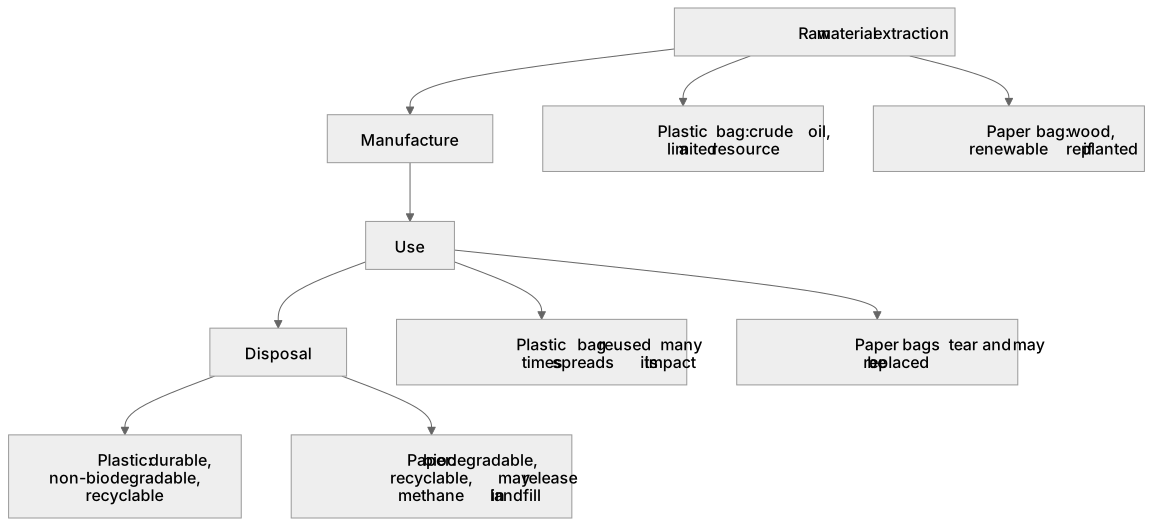
Key words
Say what each word means before you turn the card.
Life cycle assessment
Try answering aloud or in your head before turning the card.
Finite and renewable resources
Try answering aloud or in your head before turning the card.
Energy use and environmental impact
Try answering aloud or in your head before turning the card.
Reuse and disposal of materials
Try answering aloud or in your head before turning the card.
See every definition
- Life cycle assessment
- Tracks a product through four stages: extracting raw materials, manufacturing, using it, and disposing of it.
- Finite and renewable resources
- Plastic bags use crude oil, a finite resource, while paper bags use wood, which can be renewable if forests are managed sustainably.
- Energy use and environmental impact
- Extraction and manufacture use energy and water and may release pollutants, and extraction can damage habitats.
- Reuse and disposal of materials
- Reusing a plastic bag many times can lower its impact per use, while paper is biodegradable and recyclable but may produce methane if buried in landfill.
Label the diagram
Some boxes have lost their names. Pick the right name for each number.
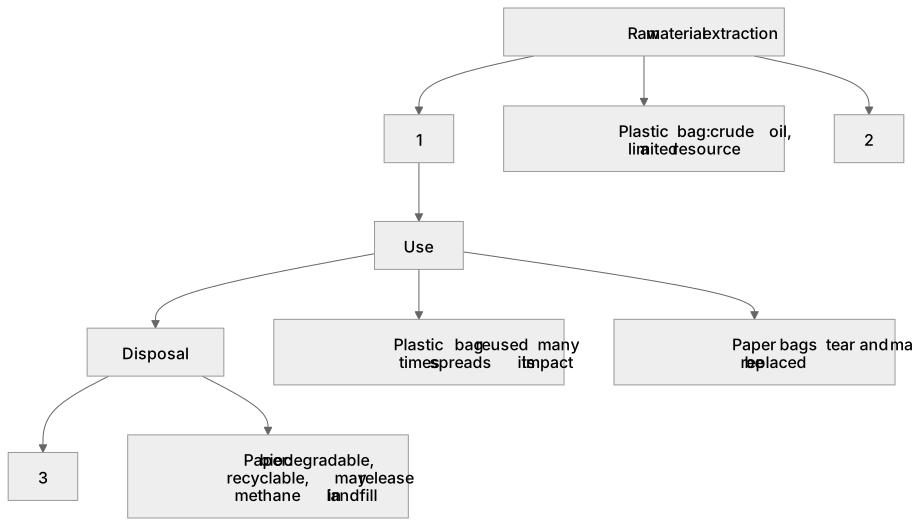
1Box 1
2Box 2
3Box 3
There is more to this lesson
The full lesson goes on to check your understanding and help you earn the marks. Create a free account to carry on, with your progress saved.
A week of Premium from your first lesson · Then the free plan continues · No card, no charge
Test your understanding of Life cycle assessment: Students should be able to carry out simple comparative LCAs for shopping bags made from plastic and paper.
Active recall beats re-reading. Take an instant quiz now to test what you’ve learned and lock it into long-term memory.
A week of Premium from your first lesson · Then the free plan continues · No card, no charge