AQA · GCSE · Combined Science
Course version: 8464 · Version from Sept 2018
Life cycle assessment: use and operation during its lifetime
A life cycle assessment (LCA) tracks a product from raw materials to disposal.
- 3 key terms
Study notes
From the checked teaching notes for this specification point.
The idea
A life cycle assessment (LCA) tracks a product from raw materials to disposal. The stage 'use and operation during its lifetime' covers everything that happens while the product is actually being used: the energy it consumes, any fuel or electricity it needs, replacement parts, servicing, and the emissions or waste produced during normal working life.
For example: A washing machine uses electricity and water for every wash over perhaps ten years, and that ongoing energy use often contributes far more to its total environmental impact than making it did.
What earns the marks
- Identifies the use and operation stage as the period when the product is being used for its intended purpose, between manufacture and disposal.
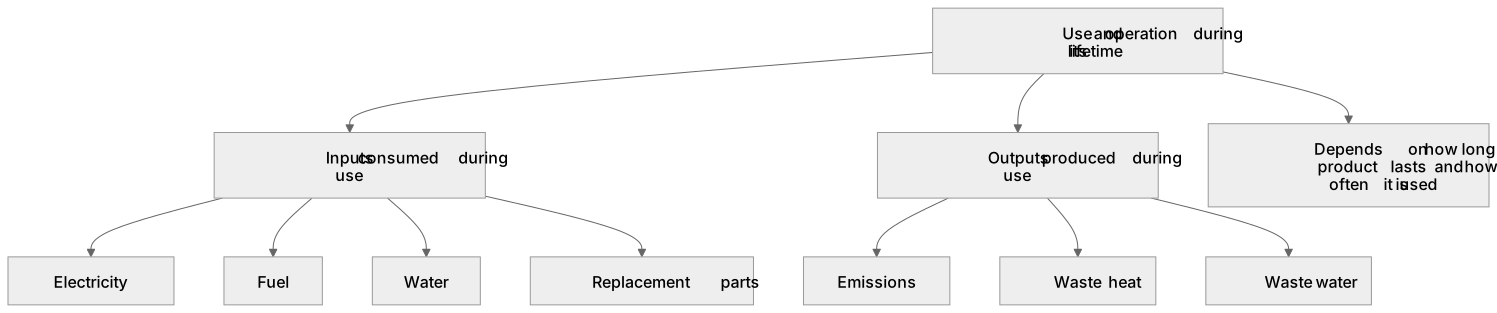
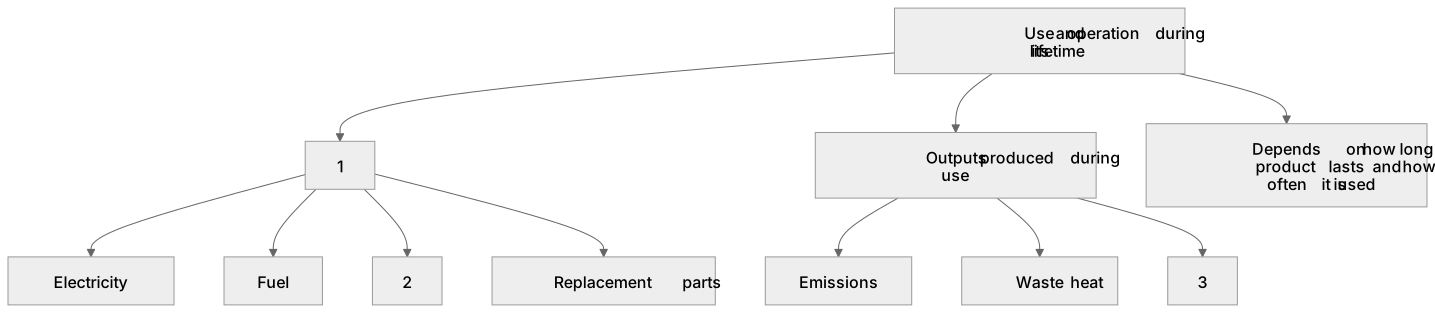
- Describes the inputs consumed during use, such as electricity, fuel, water or replacement parts.
- Describes the outputs produced during use, such as emissions, waste heat or waste water.
- Explains that impacts during use depend on how long the product lasts and how often it is used.
- Compares two products by the resources used and pollution produced during their working lives.
- Links the use stage to the wider LCA by noting it must be weighed against manufacture and disposal.
Common mistakes and how to put them right
Treating the use stage as only the moment of purchase or first switch-on; correct this by describing the whole working life, including servicing and consumables.
Assuming manufacture always causes the greatest impact.
Put it right by comparing stages, since a long-lived appliance may use more energy in operation than in production.
Confusing use with disposal.
Put it right by keeping operation (energy in, emissions out) separate from end-of-life processing.
Exam tips
- Name the stage explicitly and then give one input and one output of use to show you understand what it covers.
- Use a familiar product such as a car, phone or kettle and state one resource it consumes while working.
- When asked to compare, refer to both products and give a reason based on lifetime energy or resource use.
Try the lesson
The start of the Life cycle assessment: use and operation during its lifetime lesson, made from checked teaching notes for this specification point.
Have a go first
In a life cycle assessment of a washing machine, which stage covers the electricity used each time the machine washes clothes?
Listen
A life cycle assessment (LCA) tracks a product from raw materials to disposal. The stage 'use and operation during its lifetime' covers everything that happens while the product is actually being used: the energy it consumes, any fuel or electricity it needs, replacement parts, servicing, and the emissions or waste produced during normal working life. For example, a washing machine uses electricity and water for every wash over perhaps ten years, and that ongoing energy use often contributes far more to its total environmental impact than making it did. A strong answer earns marks for these points. Identifies the use and operation stage as the period when the product is being used for its intended purpose, between manufacture and disposal. Describes the inputs consumed during use, such as electricity, fuel, water or replacement parts. Describes the outputs produced during use, such as emissions, waste heat or waste water. Explains that impacts during use depend on how long the product lasts and how often it is used. A common slip: Treating the use stage as only the moment of purchase or first switch-on. Instead, describing the whole working life, including servicing and consumables. Exam tip: Name the stage explicitly and then give one input and one output of use to show you understand what it covers.
See it
Key words
Say what each word means before you turn the card.
Use and operation during its lifetime
Try answering aloud or in your head before turning the card.
Energy and resource consumption in use
Try answering aloud or in your head before turning the card.
Comparing products over their lifetimes
Try answering aloud or in your head before turning the card.
See every definition
- Use and operation during its lifetime
- The stage covering everything that happens while the product is actually being used, including the energy it consumes and any fuel or electricity it needs.
- Energy and resource consumption in use
- The inputs consumed during use, such as electricity, fuel, water or replacement parts.
- Comparing products over their lifetimes
- Asking which product uses more energy or resources while operating, and weighing the use stage against manufacture and disposal.
Label the diagram
Some boxes have lost their names. Pick the right name for each number.
1Box 1
2Box 2
3Box 3
There is more to this lesson
The full lesson goes on to check your understanding and help you earn the marks. Create a free account to carry on, with your progress saved.
A week of Premium from your first lesson · Then the free plan continues · No card, no charge
Test your understanding of Life cycle assessment: use and operation during its lifetime
Active recall beats re-reading. Take an instant quiz now to test what you’ve learned and lock it into long-term memory.
A week of Premium from your first lesson · Then the free plan continues · No card, no charge