AQA · GCSE · Combined Science
Course version: 8464 · Version from Sept 2018
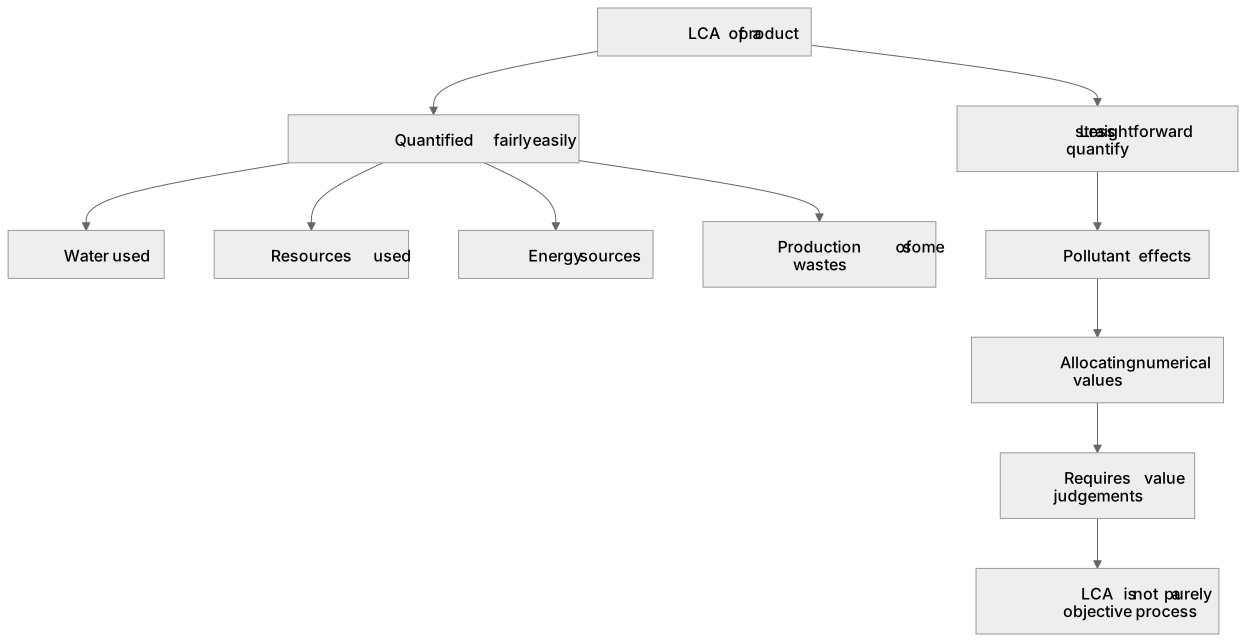
Life cycle assessment: Use of water, resources, energy sources and production of some wastes can be fairly easily quantified. Allocating numerical values to pollutant effects is less straightforward and requires value judgements, so LCA is not a purely objective process.
A life cycle assessment (LCA) tracks a product from raw materials to disposal.
- 3 key terms
Study notes
From the checked teaching notes for this specification point.
The idea
A life cycle assessment (LCA) tracks a product from raw materials to disposal. Some inputs and outputs are measurable: the volume of water used, the mass of material extracted, the energy consumed and the mass of waste sent to landfill can all be metered or weighed, so they can be fairly easily quantified. Other impacts resist simple numbers. If a factory releases sulfur dioxide, how many 'harm units' equal one tonne of plastic waste? Deciding that one effect matters more than another is a value judgement, not a measurement. Two assessors can use identical data yet reach different conclusions because they weight pollution, habitat damage and resource depletion differently. LCA therefore combines objective measurements with subjective choices, so it is not a purely objective process.
What earns the marks
- Identifies quantifiable inputs such as water volume, raw material mass and energy in joules or kilowatt-hours.
- Identifies quantifiable outputs such as mass of waste, volume of effluent or mass of gas emitted.
- Explains that pollutant effects are difficult to express in a common numerical unit because impacts differ in type and severity.
- Explains that comparing or weighting different effects requires a value judgement about which impact matters most.
- Concludes that an LCA mixes measured data with subjective decisions, so it is not purely objective.
- Uses a product example, such as a plastic bottle or cotton T-shirt, to show where measurement stops and judgement begins.
Common mistakes and how to put them right
Claiming an LCA is completely objective because it uses data.
Put it right by stating that the data are objective but the weighting of pollutant effects is subjective.
Treating all pollution as one identical category.
Put it right by noting that effects such as global warming, acid rain and habitat loss are different in kind and cannot simply be added.
Assuming every LCA must cover every stage.
Put it right by explaining that an LCA can be selective or abbreviated, which is the focus of the next statement.
Exam tips
- Use the phrase 'value judgement' explicitly when explaining why pollutant effects are hard to score.
- Give one measured quantity and one judged quantity in the same answer to show the contrast.
- Link your conclusion back to the word 'objective' rather than just saying LCA is 'unfair' or 'biased'.
Try the lesson
The start of the Life cycle assessment: Use of water, resources, energy sources and production of some wastes can be fairly easily quantified. Allocating numerical values to pollutant effects is less straightforward and requires value judgements, so LCA is not a purely objective process. lesson, made from checked teaching notes for this specification point.
Have a go first
In a life cycle assessment of two types of drinks bottle, which item can be measured fairly easily and given a numerical value?
Listen
A life cycle assessment (LCA) tracks a product from raw materials to disposal. Some inputs and outputs are measurable: the volume of water used, the mass of material extracted, the energy consumed and the mass of waste sent to landfill can all be metered or weighed, so they can be fairly easily quantified. Other impacts resist simple numbers. If a factory releases sulfur dioxide, how many 'harm units' equal one tonne of plastic waste? Deciding that one effect matters more than another is a value judgement, not a measurement. Two assessors can use identical data yet reach different conclusions because they weight pollution, habitat damage and resource depletion differently. LCA therefore combines objective measurements with subjective choices, so it is not a purely objective process. A strong answer earns marks for these points. Identifies quantifiable inputs such as water volume, raw material mass and energy in joules or kilowatt-hours. Identifies quantifiable outputs such as mass of waste, volume of effluent or mass of gas emitted. Explains that pollutant effects are difficult to express in a common numerical unit because impacts differ in type and severity. Explains that comparing or weighting different effects requires a value judgement about which impact matters most. A common slip: Claiming an LCA is completely objective because it uses data. Instead, stating that the data are objective but the weighting of pollutant effects is subjective. Exam tip: Use the phrase 'value judgement' explicitly when explaining why pollutant effects are hard to score.
See it
Key words
Say what each word means before you turn the card.
Quantification of resource use
Try answering aloud or in your head before turning the card.
Value judgements
Try answering aloud or in your head before turning the card.
Life cycle assessment
Try answering aloud or in your head before turning the card.
See every definition
- Quantification of resource use
- Use of water, resources, energy sources and production of some wastes can be fairly easily quantified.
- Value judgements
- Allocating numerical values to pollutant effects is less straightforward and requires value judgements about which impact matters most.
- Life cycle assessment
- Combines objective measurements with subjective choices, so it is not a purely objective process.
Label the diagram
Some boxes have lost their names. Pick the right name for each number.
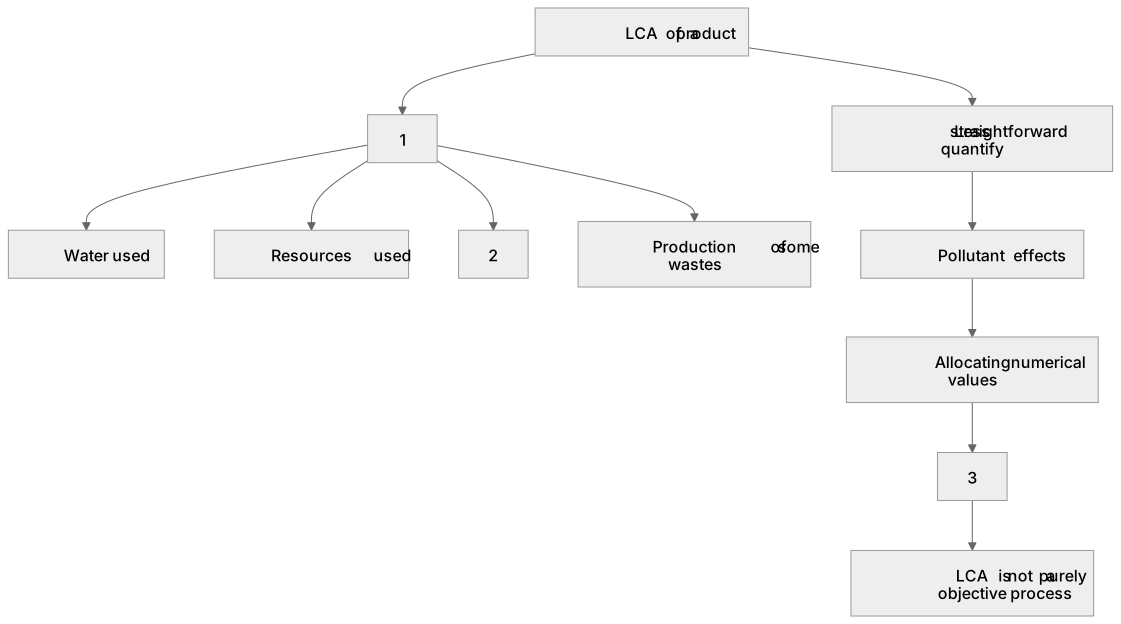
1Box 1
2Box 2
3Box 3
There is more to this lesson
The full lesson goes on to check your understanding and help you earn the marks. Create a free account to carry on, with your progress saved.
A week of Premium from your first lesson · Then the free plan continues · No card, no charge
Test your understanding of Life cycle assessment: Use of water, resources, energy sources and production of some wastes can be fairly easily quantified. Allocating numerical values to pollutant effects is less straightforward and requires value judgements, so LCA is not a purely objective process.
Active recall beats re-reading. Take an instant quiz now to test what you’ve learned and lock it into long-term memory.
A week of Premium from your first lesson · Then the free plan continues · No card, no charge