AQA · GCSE · Combined Science
Course version: 8464 · Version from Sept 2018
Oxidation and reduction in terms of electrons (HT only): Oxidation is the loss of electrons and reduction is the gain of electrons.
In terms of electrons, oxidation is loss of electrons and reduction is gain of electrons.
Study notes
From the checked teaching notes for this specification point.
The idea
In terms of electrons, oxidation is loss of electrons and reduction is gain of electrons. This applies to reactions involving ions, such as displacement and electrolysis. For example, in Zn + Cu²⁺ → Zn²⁺ + Cu, zinc atoms lose electrons to form Zn²⁺, so zinc is oxidised, while Cu²⁺ ions gain electrons to form Cu, so copper(II) ions are reduced. To identify which species is oxidised or reduced, compare the charge and formula of each species before and after reaction. An increase in positive charge or loss of negative charge indicates electron loss (oxidation); a decrease in positive charge or gain of negative charge indicates electron gain (reduction). This electron-transfer definition is required for higher tier and supports understanding of redox in electrolysis and metal displacement.
What earns the marks
- State that oxidation is loss of electrons and reduction is gain of electrons.
- Identify electron loss or gain by comparing the charge of a species before and after reaction.
- Apply the definition to ionic equations, such as displacement reactions and electrolysis.
- Use oxidation states or ion charges to confirm which species is oxidised or reduced.
Common mistakes and how to put them right
Reversing the definitions: remember 'OIL RIG' — Oxidation Is Loss, Reduction Is Gain of electrons.
Confusing gain of electrons with gain of oxygen.
Put it right: In electron terms, reduction is gain of electrons, not oxygen.
Forgetting to balance charge when writing half-equations.
Put it right: Ensure the number of electrons lost equals the number gained overall.
Exam tips
- Write the relevant half-equations to show electron loss or gain clearly.
- Check the charge on each side of the equation to confirm whether electrons are lost or gained.
Try the lesson
The start of the Oxidation and reduction in terms of electrons (HT only): Oxidation is the loss of electrons and reduction is the gain of electrons. lesson, made from checked teaching notes for this specification point.
Have a go first
In terms of electrons, what happens to a substance when it is oxidised?
Listen
In terms of electrons, oxidation is loss of electrons and reduction is gain of electrons. This applies to reactions involving ions, such as displacement and electrolysis. For example, in Zn + Cu²⁺ → Zn²⁺ + Cu, zinc atoms lose electrons to form Zn²⁺, so zinc is oxidised, while Cu²⁺ ions gain electrons to form Cu, so copper(II) ions are reduced. To identify which species is oxidised or reduced, compare the charge and formula of each species before and after reaction. An increase in positive charge or loss of negative charge indicates electron loss (oxidation); a decrease in positive charge or gain of negative charge indicates electron gain (reduction). This electron-transfer definition is required for higher tier and supports understanding of redox in electrolysis and metal displacement. A strong answer earns marks for these points. State that oxidation is loss of electrons and reduction is gain of electrons. Identify electron loss or gain by comparing the charge of a species before and after reaction. Apply the definition to ionic equations, such as displacement reactions and electrolysis. Use oxidation states or ion charges to confirm which species is oxidised or reduced. Exam tip: Write the relevant half-equations to show electron loss or gain clearly.
See it
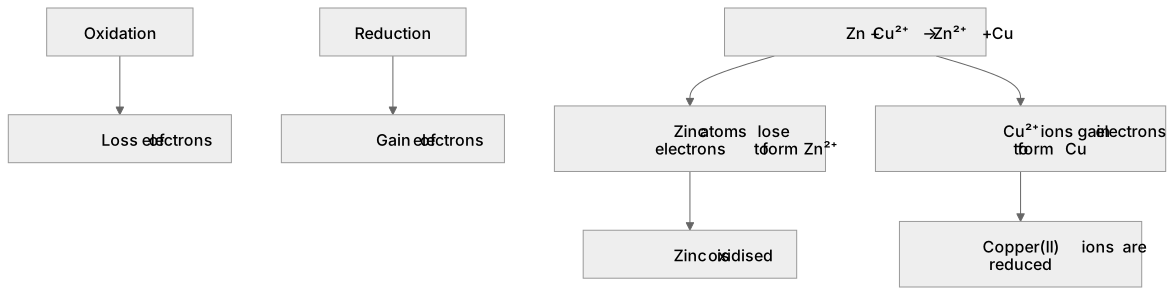
Label the diagram
Some boxes have lost their names. Pick the right name for each number.
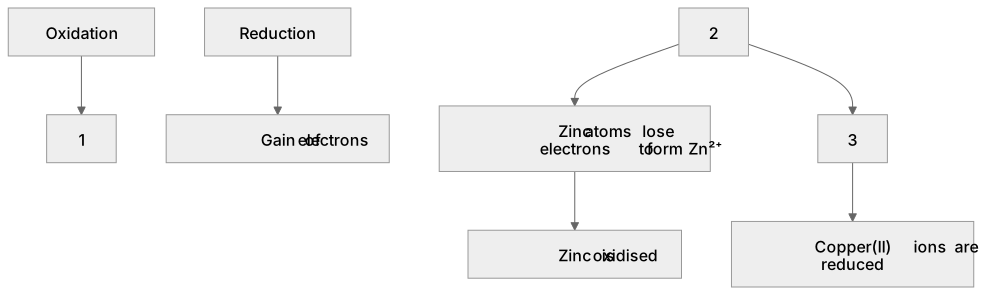
1Box 1
2Box 2
3Box 3
There is more to this lesson
The full lesson goes on to check your understanding and help you earn the marks. Create a free account to carry on, with your progress saved.
A week of Premium from your first lesson · Then the free plan continues · No card, no charge
Test your understanding of Oxidation and reduction in terms of electrons (HT only): Oxidation is the loss of electrons and reduction is the gain of electrons.
Active recall beats re-reading. Take an instant quiz now to test what you’ve learned and lock it into long-term memory.
A week of Premium from your first lesson · Then the free plan continues · No card, no charge