AQA · GCSE · Combined Science
Course version: 8464 · Version from Sept 2018
Potable water: give reasons for the steps used to produce potable water.
Potable water is water that is safe to drink.
- 4 key terms
Study notes
From the checked teaching notes for this specification point.
The idea
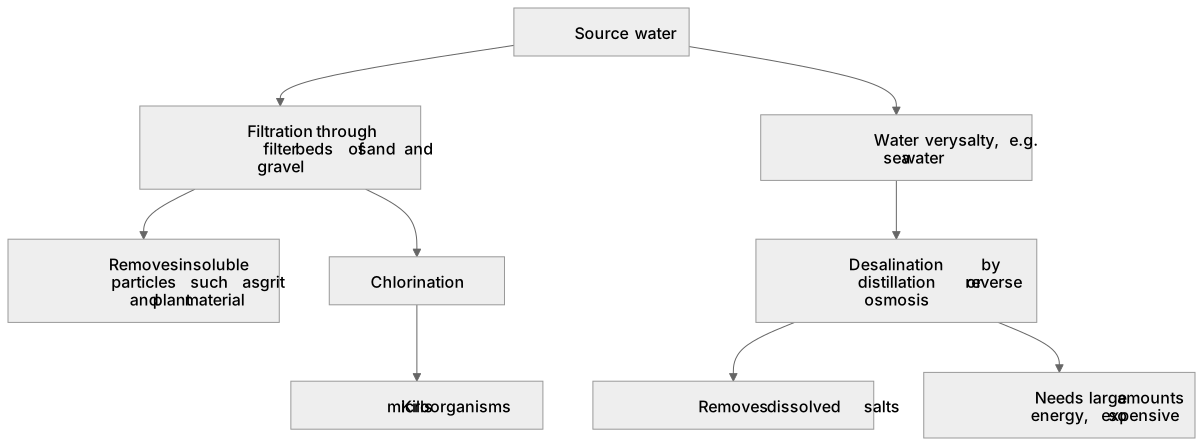
Potable water is water that is safe to drink. It is not pure water in the chemical sense because it contains dissolved substances, but the levels of microbes and contaminants are low enough not to harm health. The steps used depend on the source. For most UK sources, water is passed through filter beds of sand and gravel to remove insoluble particles such as grit and plant material. Chlorine is then added to kill microorganisms. If the water is very salty, for example sea water, simple filtration and chlorination are not enough because dissolved salts remain. Desalination by distillation or reverse osmosis removes dissolved salts, but it needs large amounts of energy, so it is expensive.
What earns the marks
- Filtration through filter beds removes insoluble solids such as grit, soil and plant material; it does not remove dissolved salts or microorganisms.
- Chlorination kills microorganisms such as bacteria that could cause disease; it does not remove dissolved solids.
- For water containing high levels of dissolved salts, desalination by distillation or reverse osmosis is needed because filtration and chlorination cannot remove dissolved salts.
- Distillation involves boiling water to produce steam and condensing the steam, leaving dissolved salts behind; reverse osmosis uses pressure to force water through a membrane that retains dissolved ions.
- The choice of steps depends on the source of the water and the impurities it contains, so the reasons must be linked to the specific impurity being removed.
- Potable water is safe to drink but is not pure water because it still contains some dissolved substances at acceptable levels.
Common mistakes and how to put them right
Stating that filtration removes dissolved salts.
Put it right: Filtration removes insoluble solids only; dissolved salts require desalination.
Saying that chlorine removes dirt or makes water pure.
Put it right: Chlorine kills microorganisms; it does not remove insoluble or dissolved solids.
Describing distillation as freezing or as simply boiling.
Put it right: Distillation involves boiling to produce steam and then condensing the steam to produce liquid water.
Claiming that potable water is pure water.
Put it right: Potable water contains dissolved substances but at levels safe for drinking.
Exam tips
- Link each step to the impurity it removes: filtration for insoluble solids, chlorination for microorganisms, desalination for dissolved salts.
- Use the phrase 'safe to drink' rather than 'pure' when describing potable water.
- If asked to compare methods, state that desalination is more expensive because it uses more energy than filtration and chlorination.
- Read the question carefully: if it asks for reasons, give a because clause for each step rather than just naming the step.
Try the lesson
The start of the Potable water: give reasons for the steps used to produce potable water. lesson, made from checked teaching notes for this specification point.
Have a go first
In the treatment of fresh water, why is the water passed through a filter bed of sand and gravel?
Listen
Potable water is water that is safe to drink. It is not pure water in the chemical sense because it contains dissolved substances, but the levels of microbes and contaminants are low enough not to harm health. The steps used depend on the source. For most UK sources, water is passed through filter beds of sand and gravel to remove insoluble particles such as grit and plant material. Chlorine is then added to kill microorganisms. If the water is very salty, for example sea water, simple filtration and chlorination are not enough because dissolved salts remain. Desalination by distillation or reverse osmosis removes dissolved salts, but it needs large amounts of energy, so it is expensive. A strong answer earns marks for these points. Filtration through filter beds removes insoluble solids such as grit, soil and plant material; it does not remove dissolved salts or microorganisms. Chlorination kills microorganisms such as bacteria that could cause disease; it does not remove dissolved solids. For water containing high levels of dissolved salts, desalination by distillation or reverse osmosis is needed because filtration and chlorination cannot remove dissolved salts. Distillation involves boiling water to produce steam and condensing the steam, leaving dissolved salts behind; reverse osmosis uses pressure to force water through a membrane that retains dissolved ions. A common slip: stating that filtration removes dissolved salts. Instead, filtration removes insoluble solids only; dissolved salts require desalination. Exam tip: Link each step to the impurity it removes: filtration for insoluble solids, chlorination for microorganisms, desalination for dissolved salts.
See it
Key words
Say what each word means before you turn the card.
Potable water
Try answering aloud or in your head before turning the card.
Filtration
Try answering aloud or in your head before turning the card.
Chlorination
Try answering aloud or in your head before turning the card.
Desalination
Try answering aloud or in your head before turning the card.
See every definition
- Potable water
- Water that is safe to drink, containing dissolved substances but with levels of microbes and contaminants low enough not to harm health.
- Filtration
- Passing water through filter beds of sand and gravel to remove insoluble particles such as grit and plant material.
- Chlorination
- Adding chlorine to water to kill microorganisms such as bacteria that could cause disease.
- Desalination
- Removal of dissolved salts by distillation or reverse osmosis, needing large amounts of energy so it is expensive.
Label the diagram
Some boxes have lost their names. Pick the right name for each number.
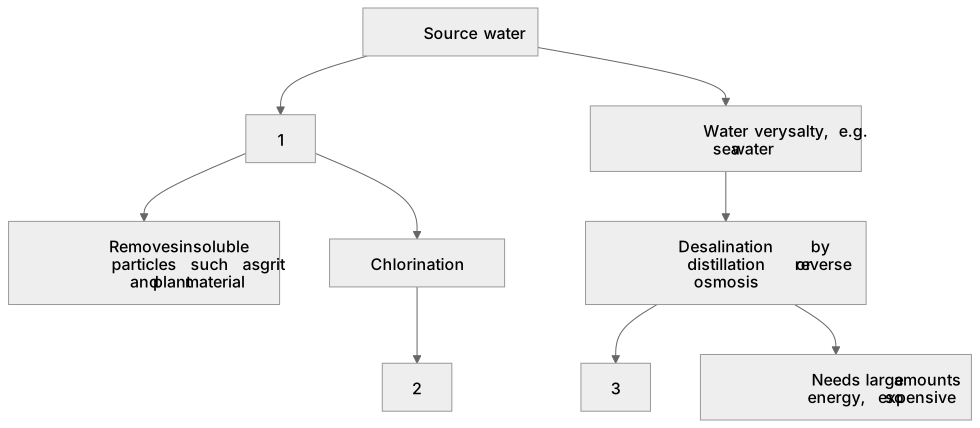
1Box 1
2Box 2
3Box 3
There is more to this lesson
The full lesson goes on to check your understanding and help you earn the marks. Create a free account to carry on, with your progress saved.
A week of Premium from your first lesson · Then the free plan continues · No card, no charge
Test your understanding of Potable water: give reasons for the steps used to produce potable water.
Active recall beats re-reading. Take an instant quiz now to test what you’ve learned and lock it into long-term memory.
A week of Premium from your first lesson · Then the free plan continues · No card, no charge