AQA · GCSE · Combined Science
Course version: 8464 · Version from Sept 2018
Potable water: In the United Kingdom (UK), rain provides water with low levels of dissolved substances (fresh water) that collects in the ground and in lakes and rivers, and most potable water is produced by:
In the UK, rainfall provides fresh water because rain contains low levels of dissolved substances.
- 4 key terms
Study notes
From the checked teaching notes for this specification point.
The idea
In the UK, rainfall provides fresh water because rain contains low levels of dissolved substances. This water collects in the ground, including aquifers, and in lakes and rivers. Most potable water in the UK is produced from these fresh water sources by a sequence of steps. First, water is passed through filter beds to remove insoluble particles such as grit, soil and small pieces of debris. Second, the water is sterilised to kill microbes, for example by chlorination, by exposure to ultraviolet light or by ozonation. The result is potable water that is safe to drink. The exact sequence and the sterilising agent chosen depend on the source and local conditions, but the principles of removing insoluble material and then killing microbes are common to most UK supplies.
What earns the marks
- UK rain provides fresh water with low levels of dissolved substances.
- Fresh water collects in the ground, including aquifers, and in lakes and rivers.
- Most UK potable water is produced by passing water through filter beds to remove insoluble particles.
- Sterilisation kills microbes and may use chlorine, ultraviolet light or ozone.
- The treated water is potable, meaning safe to drink, but it is not pure water.
- The order of treatment matters: filtration removes insoluble solids before sterilisation deals with microbes.
Common mistakes and how to put them right
Confusing filtration with sterilisation.
Put it right by stating that filtration removes insoluble particles while sterilisation kills microbes.
Claiming that UK tap water is pure water.
Put it right by explaining that potable water still contains dissolved substances.
Describing desalination as the main UK method.
Put it right by stating that desalination is used where fresh water is scarce, not for most UK supplies.
Exam tips
- Name the source first, then give the treatment steps in order, so the answer follows the logic of the process.
- Give at least one named sterilising method, such as chlorination, ultraviolet light or ozonation.
- State the purpose of each step, for example removing insoluble particles or killing microbes, rather than only naming the step.
Try the lesson
The start of the Potable water: In the United Kingdom (UK), rain provides water with low levels of dissolved substances (fresh water) that collects in the ground and in lakes and rivers, and most potable water is produced by: lesson, made from checked teaching notes for this specification point.
Have a go first
In the UK, rain provides fresh water that collects in the ground and in lakes and rivers. Which process is used to produce most potable water from this fresh water?
Listen
In the UK, rainfall provides fresh water because rain contains low levels of dissolved substances. This water collects in the ground, including aquifers, and in lakes and rivers. Most potable water in the UK is produced from these fresh water sources by a sequence of steps. First, water is passed through filter beds to remove insoluble particles such as grit, soil and small pieces of debris. Second, the water is sterilised to kill microbes, for example by chlorination, by exposure to ultraviolet light or by ozonation. The result is potable water that is safe to drink. The exact sequence and the sterilising agent chosen depend on the source and local conditions, but the principles of removing insoluble material and then killing microbes are common to most UK supplies. A strong answer earns marks for these points. UK rain provides fresh water with low levels of dissolved substances. Fresh water collects in the ground, including aquifers, and in lakes and rivers. Most UK potable water is produced by passing water through filter beds to remove insoluble particles. Sterilisation kills microbes and may use chlorine, ultraviolet light or ozone. A common slip: Confusing filtration with sterilisation. Instead, stating that filtration removes insoluble particles while sterilisation kills microbes. Exam tip: Name the source first, then give the treatment steps in order, so the answer follows the logic of the process.
See it
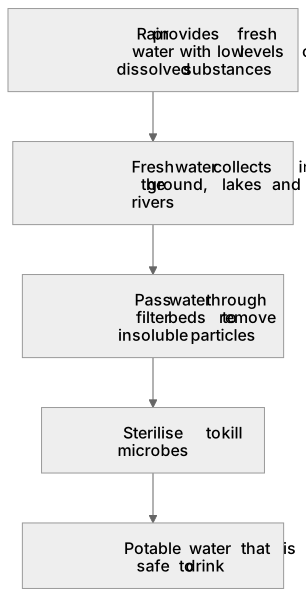
Put it in order
Put these steps in the order they happen.
- 1. Fresh water collects in the ground, lakes and rivers
- 2. Pass water through filter beds to remove insoluble particles
- 3. Sterilise to kill microbes
- 4. Potable water that is safe to drink
- 5. Rain provides fresh water with low levels of dissolved substances
Key words
Say what each word means before you turn the card.
fresh water
Try answering aloud or in your head before turning the card.
filtration
Try answering aloud or in your head before turning the card.
sterilisation
Try answering aloud or in your head before turning the card.
potable water
Try answering aloud or in your head before turning the card.
See every definition
- fresh water
- Rain provides water with low levels of dissolved substances, which collects in the ground and in lakes and rivers.
- filtration
- Passing water through filter beds removes insoluble particles such as grit, soil and small pieces of debris.
- sterilisation
- This step kills microbes, for example by chlorination, by exposure to ultraviolet light or by ozonation.
- potable water
- Treated water that is safe to drink, produced from fresh water sources by removing insoluble material and then killing microbes.
Label the diagram
Some boxes have lost their names. Pick the right name for each number.
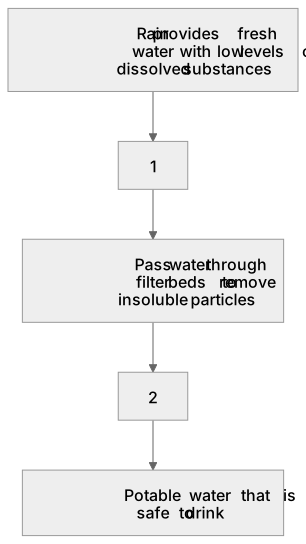
1Box 1
2Box 2
There is more to this lesson
The full lesson goes on to check your understanding and help you earn the marks. Create a free account to carry on, with your progress saved.
A week of Premium from your first lesson · Then the free plan continues · No card, no charge
Test your understanding of Potable water: In the United Kingdom (UK), rain provides water with low levels of dissolved substances (fresh water) that collects in the ground and in lakes and rivers, and most potable water is produced by:
Active recall beats re-reading. Take an instant quiz now to test what you’ve learned and lock it into long-term memory.
A week of Premium from your first lesson · Then the free plan continues · No card, no charge