AQA · GCSE · Combined Science
Course version: 8464 · Version from Sept 2018
Potable water: Required practical activity 13: analysis and purification of water samples from different sources, including pH, dissolved solids and distillation.
In this required practical, you analyse water samples from different sources, such as tap water, rain water, sea water or pond water.
- 4 key terms
Study notes
From the checked teaching notes for this specification point.
The idea
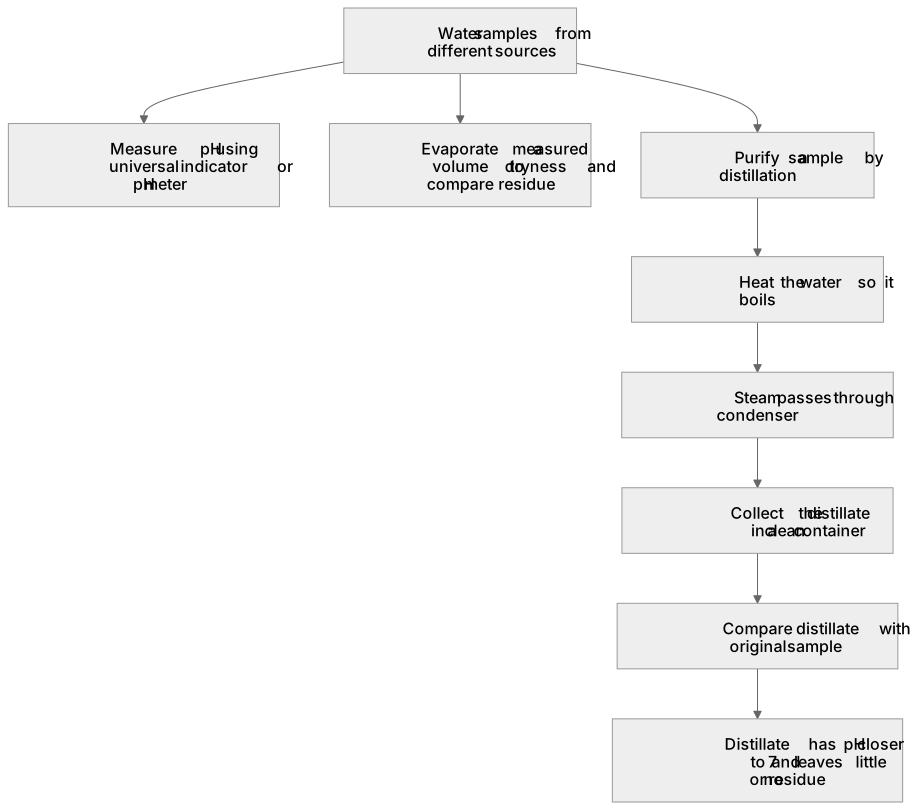
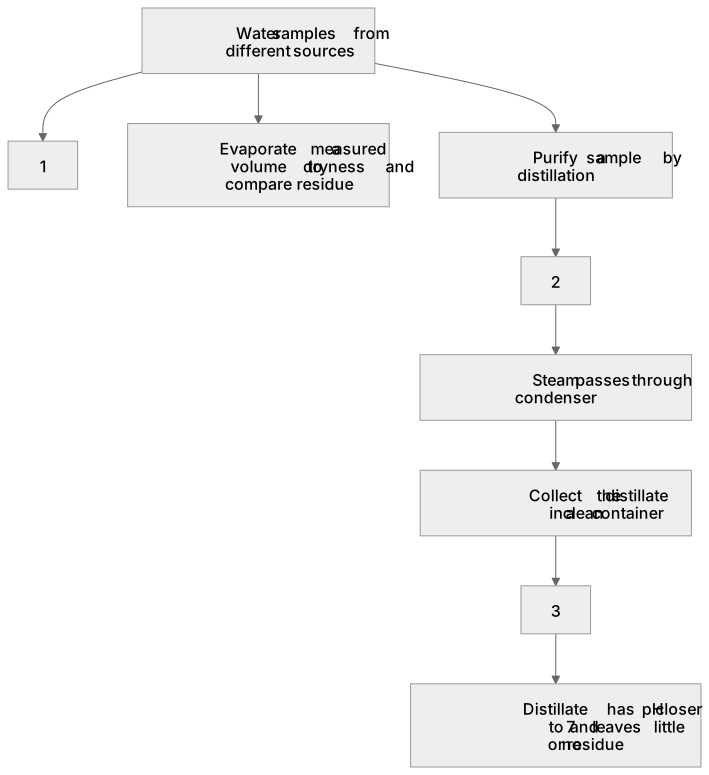
In this required practical, you analyse water samples from different sources, such as tap water, rain water, sea water or pond water. You measure pH using universal indicator or a pH meter to compare acidity or alkalinity. You test for dissolved solids by evaporating a measured volume of each sample to dryness and comparing the mass of residue left. You then purify a sample by distillation: heat the water so it boils, condense the steam and collect the distillate. The distillate should have a pH closer to 7 and leave little or no residue on evaporation, showing that dissolved solids have been removed. You should record observations clearly, compare samples and explain how the results show the effectiveness of distillation.
What earns the marks
- Measure pH of each water sample using universal indicator or a pH meter and record the colour or numerical value.
- Test for dissolved solids by evaporating a known volume of each sample to dryness and comparing the mass or appearance of the residue.
- Set up distillation apparatus correctly: heat the water sample, allow steam to pass through a condenser, and collect the distillate in a clean container.
- Compare the distillate with the original sample: the distillate should have a pH closer to 7 and should leave little or no solid residue on evaporation.
- Explain that distillation removes dissolved solids because the water evaporates and condenses while dissolved salts remain behind in the flask.
- Identify variables that should be controlled, such as the volume of water sample used and the time or temperature of heating, to make comparisons fair.
Common mistakes and how to put them right
Using different volumes of water samples when comparing dissolved solids.
Put it right: Use the same volume for each sample so the comparison is fair.
Heating the water sample until it all evaporates when testing for dissolved solids, then trying to distil the same sample.
Put it right: Use separate portions for evaporation and distillation.
Collecting the distillate without condensing the steam properly.
Put it right: Ensure the condenser is working so steam cools back to liquid water.
Assuming the distillate is pure water with no dissolved solids.
Put it right: Test the distillate by evaporation to show that little or no residue remains.
Exam tips
- Describe how you would test for dissolved solids: evaporate a measured volume to dryness and compare the residue.
- When explaining distillation, state that the water evaporates and is condensed, while dissolved solids remain in the original container.
- Record pH values or colours for each sample and use them to compare acidity or alkalinity before and after distillation.
- Mention safety: wear eye protection, use a water bath or electric heater rather than a Bunsen flame if flammable liquids are present, and handle hot apparatus with care.
Try the lesson
The start of the Potable water: Required practical activity 13: analysis and purification of water samples from different sources, including pH, dissolved solids and distillation. lesson, made from checked teaching notes for this specification point.
Have a go first
In required practical activity 13, a student tests a water sample with universal indicator paper and it turns green. What does this show about the water sample?
Listen
In this required practical, you analyse water samples from different sources, such as tap water, rain water, sea water or pond water. You measure pH using universal indicator or a pH meter to compare acidity or alkalinity. You test for dissolved solids by evaporating a measured volume of each sample to dryness and comparing the mass of residue left. You then purify a sample by distillation: heat the water so it boils, condense the steam and collect the distillate. The distillate should have a pH closer to 7 and leave little or no residue on evaporation, showing that dissolved solids have been removed. You should record observations clearly, compare samples and explain how the results show the effectiveness of distillation. A strong answer earns marks for these points. Measure pH of each water sample using universal indicator or a pH meter and record the colour or numerical value. Test for dissolved solids by evaporating a known volume of each sample to dryness and comparing the mass or appearance of the residue. Set up distillation apparatus correctly: heat the water sample, allow steam to pass through a condenser, and collect the distillate in a clean container. Compare the distillate with the original sample: the distillate should have a pH closer to 7 and should leave little or no solid residue on evaporation. A common slip: using different volumes of water samples when comparing dissolved solids. Instead, use the same volume for each sample so the comparison is fair. Exam tip: Describe how you would test for dissolved solids: evaporate a measured volume to dryness and compare the residue.
See it
Key words
Say what each word means before you turn the card.
distillation
Try answering aloud or in your head before turning the card.
dissolved solids
Try answering aloud or in your head before turning the card.
distillate
Try answering aloud or in your head before turning the card.
control variables
Try answering aloud or in your head before turning the card.
See every definition
- distillation
- Heating a water sample so it boils, condensing the steam and collecting the distillate to purify it.
- dissolved solids
- Substances tested for by evaporating a measured volume of each sample to dryness and comparing the mass of residue left.
- distillate
- The collected product that should have a pH closer to 7 and leave little or no residue on evaporation.
- control variables
- Factors such as the volume of water sample used and the time or temperature of heating, kept the same to make comparisons fair.
Label the diagram
Some boxes have lost their names. Pick the right name for each number.
1Box 1
2Box 2
3Box 3
There is more to this lesson
The full lesson goes on to check your understanding and help you earn the marks. Create a free account to carry on, with your progress saved.
A week of Premium from your first lesson · Then the free plan continues · No card, no charge
Test your understanding of Potable water: Required practical activity 13: analysis and purification of water samples from different sources, including pH, dissolved solids and distillation.
Active recall beats re-reading. Take an instant quiz now to test what you’ve learned and lock it into long-term memory.
A week of Premium from your first lesson · Then the free plan continues · No card, no charge