AQA · GCSE · Combined Science
Course version: 8464 · Version from Sept 2018
Potable water: The methods used to produce potable water depend on available supplies of water and local conditions.
Potable water is water that is safe to drink: it has sufficiently low levels of dissolved salts and microbes.
- 4 key terms
Study notes
From the checked teaching notes for this specification point.
The idea
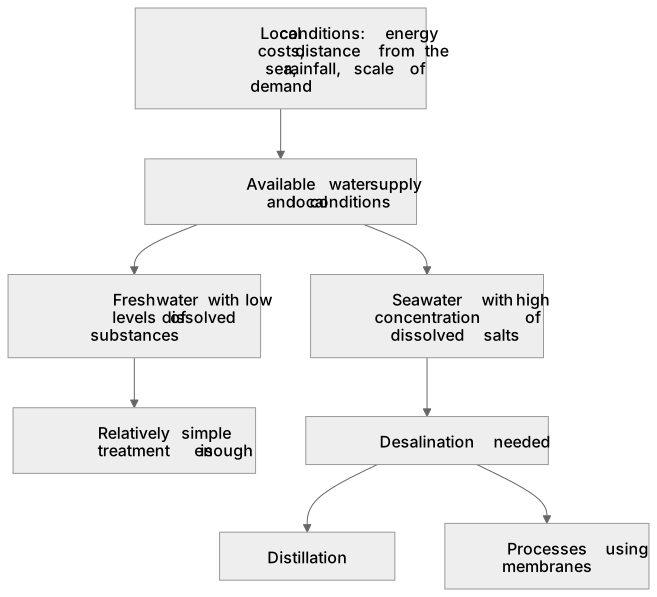
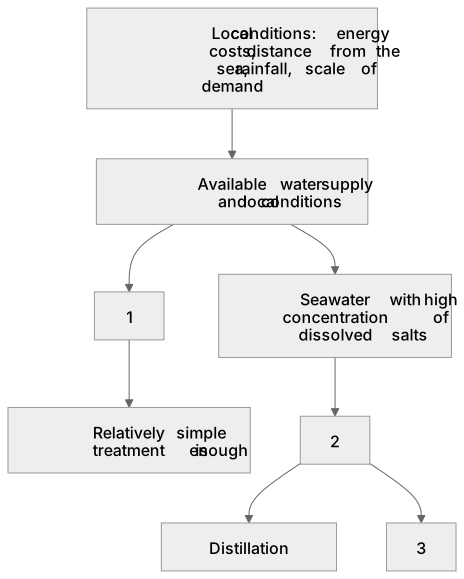
Potable water is water that is safe to drink: it has sufficiently low levels of dissolved salts and microbes. It is not the same as pure water, which contains no dissolved substances at all. The method chosen to make water potable is not fixed; it is selected to suit the water available and the local situation. If the local supply is fresh water with low levels of dissolved substances, such as UK rain collected in the ground, lakes and rivers, then relatively simple treatment is enough. If the only supply is seawater, which contains a high concentration of dissolved salts, then desalination is needed, for example by distillation or by processes using membranes. Local conditions such as energy costs, distance from the sea, rainfall and the scale of demand all influence the choice.
What earns the marks
- Potable water is defined as water that is safe to drink, with low levels of dissolved salts and low levels of microbes.
- The choice of production method depends on the available water supply, for example fresh water compared with seawater.
- Fresh water contains low levels of dissolved substances, so it needs less extensive treatment than seawater.
- Seawater contains high levels of dissolved salts, so desalination by distillation or membrane processes is required.
- Local conditions such as energy availability and cost, rainfall, proximity to the sea and demand affect the method chosen.
- A suitable comparison is UK fresh water treated by filtration and sterilisation against seawater treated by desalination.
Common mistakes and how to put them right
Treating potable water as the same as pure water.
Put it right by stating that potable water is safe to drink but still contains dissolved substances, whereas pure water contains none.
Assuming one universal method produces all potable water.
Put it right by linking the method to the supply, for example fresh water versus seawater.
Ignoring local conditions and naming only one process.
Put it right by explaining that energy cost, rainfall and distance from the sea influence the choice.
Exam tips
- Define potable water precisely before describing any method, so the answer starts from the correct meaning.
- Contrast two supplies, such as a UK lake and seawater, and state why their treatment differs.
- Use comparative language such as low levels of dissolved substances and high levels of dissolved salts to show the reason for the choice.
Try the lesson
The start of the Potable water: The methods used to produce potable water depend on available supplies of water and local conditions. lesson, made from checked teaching notes for this specification point.
Have a go first
Town A is located in a hot, dry coastal region with very little rainfall. Town B is located inland in a region with high rainfall and many lakes. Why will the two towns likely use different methods to produce potable water?
Listen
Potable water is water that is safe to drink: it has sufficiently low levels of dissolved salts and microbes. It is not the same as pure water, which contains no dissolved substances at all. The method chosen to make water potable is not fixed; it is selected to suit the water available and the local situation. If the local supply is fresh water with low levels of dissolved substances, such as UK rain collected in the ground, lakes and rivers, then relatively simple treatment is enough. If the only supply is seawater, which contains a high concentration of dissolved salts, then desalination is needed, for example by distillation or by processes using membranes. Local conditions such as energy costs, distance from the sea, rainfall and the scale of demand all influence the choice. A strong answer earns marks for these points. Potable water is defined as water that is safe to drink, with low levels of dissolved salts and low levels of microbes. The choice of production method depends on the available water supply, for example fresh water compared with seawater. Fresh water contains low levels of dissolved substances, so it needs less extensive treatment than seawater. Seawater contains high levels of dissolved salts, so desalination by distillation or membrane processes is required. A common slip: Treating potable water as the same as pure water. Instead, stating that potable water is safe to drink but still contains dissolved substances, whereas pure water contains none. Exam tip: Define potable water precisely before describing any method, so the answer starts from the correct meaning.
See it
Key words
Say what each word means before you turn the card.
potable water
Try answering aloud or in your head before turning the card.
pure water
Try answering aloud or in your head before turning the card.
desalination
Try answering aloud or in your head before turning the card.
local conditions
Try answering aloud or in your head before turning the card.
See every definition
- potable water
- Water that is safe to drink, with sufficiently low levels of dissolved salts and microbes.
- pure water
- Water that contains no dissolved substances at all.
- desalination
- Treatment needed when the only supply is seawater, which contains a high concentration of dissolved salts, for example by distillation or by processes using membranes.
- local conditions
- Factors such as energy costs, distance from the sea, rainfall and the scale of demand that influence the choice of method.
Label the diagram
Some boxes have lost their names. Pick the right name for each number.
1Box 1
2Box 2
3Box 3
There is more to this lesson
The full lesson goes on to check your understanding and help you earn the marks. Create a free account to carry on, with your progress saved.
A week of Premium from your first lesson · Then the free plan continues · No card, no charge
Test your understanding of Potable water: The methods used to produce potable water depend on available supplies of water and local conditions.
Active recall beats re-reading. Take an instant quiz now to test what you’ve learned and lock it into long-term memory.
A week of Premium from your first lesson · Then the free plan continues · No card, no charge