AQA · GCSE · Combined Science
Course version: 8464 · Version from Sept 2018
Pure substances: Students should be able to use melting point and boiling point data to distinguish pure from impure substances.
A pure substance melts at a specific temperature and boils at a specific temperature.
- 4 key terms
Study notes
From the checked teaching notes for this specification point.
The idea
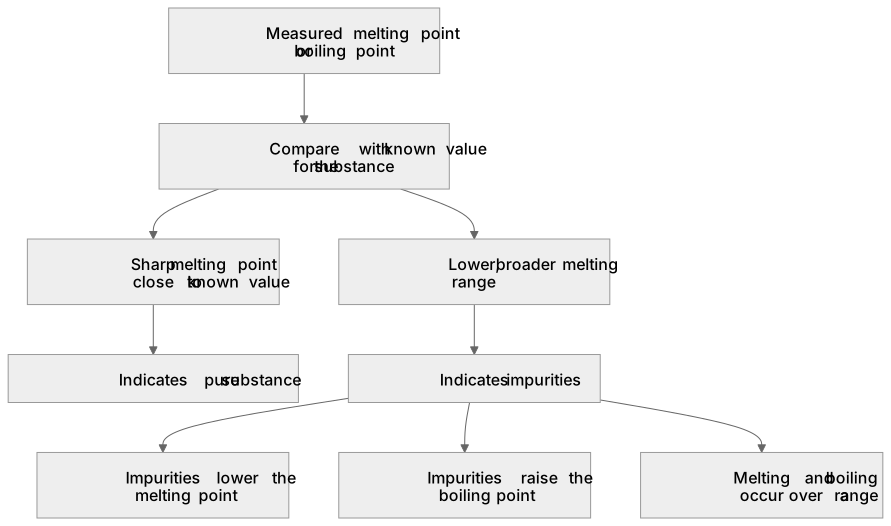
A pure substance melts at a specific temperature and boils at a specific temperature. Impurities lower the melting point and raise the boiling point, and they also spread the melting and boiling ranges over several degrees. To distinguish pure from impure, compare the measured melting point or boiling point with the known value for that substance. A pure sample melts sharply at the known temperature, for example pure ice melts at 0 °C. An impure sample melts over a range, starting below the known value, for example salty ice may begin melting at −5 °C and finish at 0 °C. Similarly, pure water boils at 100 °C, while salty water boils above 100 °C. A sharp melting point close to the known value indicates purity; a lower, broader melting range indicates impurities.
What earns the marks
- Pure substances have a specific sharp melting point and boiling point.
- Impurities lower the melting point and raise the boiling point.
- Impurities also cause melting and boiling to occur over a range of temperatures rather than sharply.
- Compare measured values with known values for the substance to judge purity.
- A sharp melting point at the known value indicates a pure substance; a lower, broader range indicates impurities.
Common mistakes and how to put them right
Thinking impurities raise the melting point.
Put it right: Impurities lower the melting point and raise the boiling point.
Ignoring the range and using only the start or end temperature.
Put it right: A pure substance melts sharply at one temperature, while an impure one melts over a range.
Assuming any melting point below the known value means a different substance.
Put it right: A lower, broader melting range indicates impurities in the same substance.
Exam tips
- Quote the known melting or boiling point and compare it with the measured value.
- Mention both the value and the sharpness or range when judging purity.
- Use the words 'lower' and 'broader' for impure melting behaviour to gain credit.
Try the lesson
The start of the Pure substances: Students should be able to use melting point and boiling point data to distinguish pure from impure substances. lesson, made from checked teaching notes for this specification point.
Have a go first
A student heats a sample of a solid. The sample melts sharply at 80 °C. What does this melting point show about the sample?
Listen
A pure substance melts at a specific temperature and boils at a specific temperature. Impurities lower the melting point and raise the boiling point, and they also spread the melting and boiling ranges over several degrees. To distinguish pure from impure, compare the measured melting point or boiling point with the known value for that substance. A pure sample melts sharply at the known temperature, for example pure ice melts at 0 °C. An impure sample melts over a range, starting below the known value, for example salty ice may begin melting at −5 °C and finish at 0 °C. Similarly, pure water boils at 100 °C, while salty water boils above 100 °C. A sharp melting point close to the known value indicates purity; a lower, broader melting range indicates impurities. A strong answer earns marks for these points. Pure substances have a specific sharp melting point and boiling point. Impurities lower the melting point and raise the boiling point. Impurities also cause melting and boiling to occur over a range of temperatures rather than sharply. Compare measured values with known values for the substance to judge purity. A common slip: Thinking impurities raise the melting point. Instead, impurities lower the melting point and raise the boiling point. Exam tip: Quote the known melting or boiling point and compare it with the measured value.
See it
Key words
Say what each word means before you turn the card.
Sharp versus range melting and boiling
Try answering aloud or in your head before turning the card.
Effect of impurities on melting point
Try answering aloud or in your head before turning the card.
Effect of impurities on boiling point
Try answering aloud or in your head before turning the card.
Comparing measured and known values
Try answering aloud or in your head before turning the card.
See every definition
- Sharp versus range melting and boiling
- A pure substance melts and boils at a specific temperature, while an impure sample melts and boils over a range of temperatures rather than sharply.
- Effect of impurities on melting point
- Impurities lower the melting point, so an impure sample melts over a range starting below the known value.
- Effect of impurities on boiling point
- Impurities raise the boiling point, so an impure sample boils above the known value.
- Comparing measured and known values
- To distinguish pure from impure, compare the measured melting point or boiling point with the known value for that substance.
Label the diagram
Some boxes have lost their names. Pick the right name for each number.
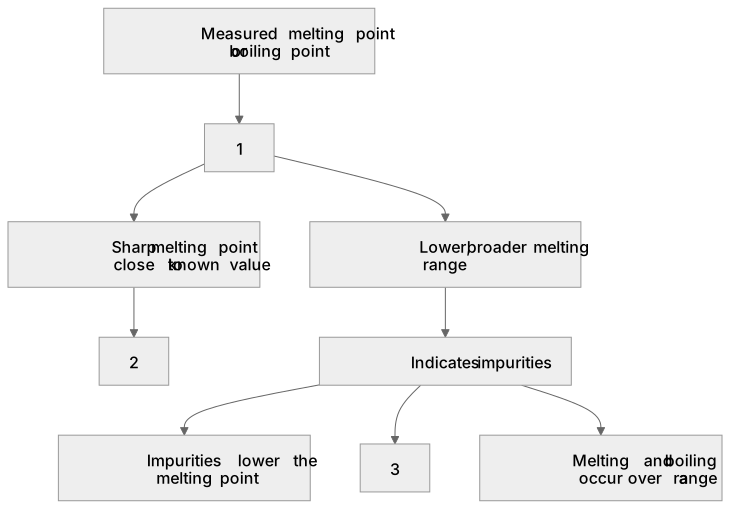
1Box 1
2Box 2
3Box 3
There is more to this lesson
The full lesson goes on to check your understanding and help you earn the marks. Create a free account to carry on, with your progress saved.
A week of Premium from your first lesson · Then the free plan continues · No card, no charge
Test your understanding of Pure substances: Students should be able to use melting point and boiling point data to distinguish pure from impure substances.
Active recall beats re-reading. Take an instant quiz now to test what you’ve learned and lock it into long-term memory.
A week of Premium from your first lesson · Then the free plan continues · No card, no charge