AQA · GCSE · Combined Science
Course version: 8464 · Version from Sept 2018
Resistant bacteria: To reduce the rate of development of antibiotic resistant strains:
Antibiotic resistance develops when bacteria with random mutations survive exposure to an antibiotic and reproduce.
Study notes
From the checked teaching notes for this specification point.
The idea
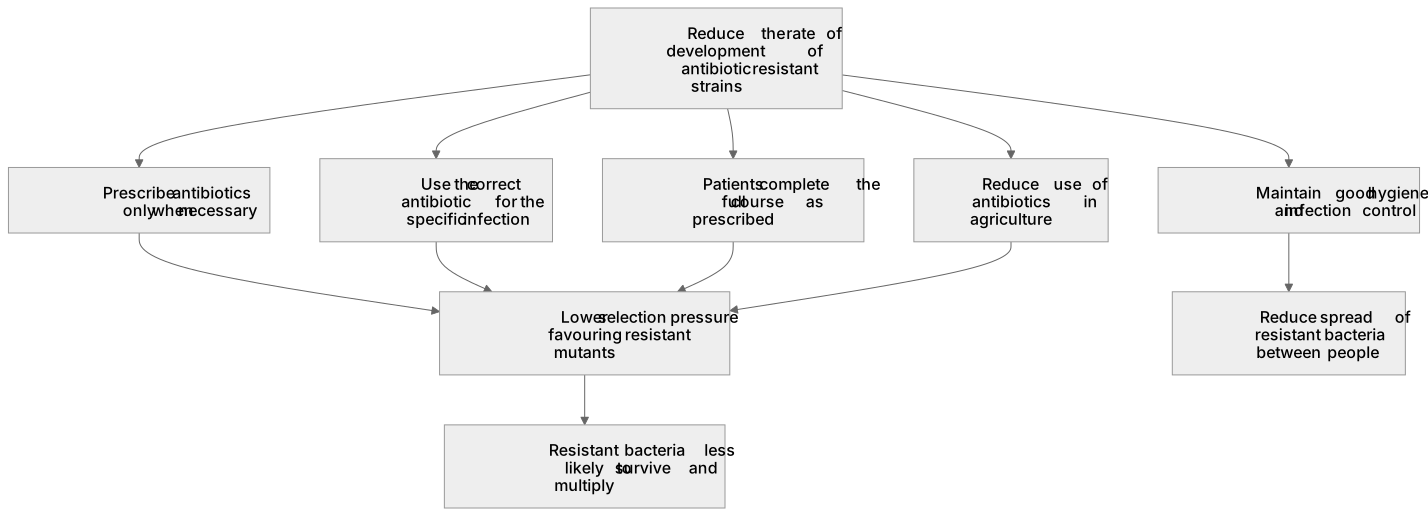
Antibiotic resistance develops when bacteria with random mutations survive exposure to an antibiotic and reproduce. The more often bacteria meet an antibiotic, the stronger the selection pressure favouring resistant individuals. To slow this process, doctors prescribe antibiotics only when they are needed, for example for bacterial infections rather than viral illnesses such as colds. Patients should complete the full prescribed course so that all susceptible bacteria are killed and partially resistant survivors are less likely to remain. Using the correct antibiotic for the specific infection, and avoiding unnecessary or broad use in agriculture, also reduces selection pressure. Good hygiene and infection control limit the spread of resistant strains between people. These actions do not stop mutation, but they reduce the chances that resistant bacteria survive and multiply.
What earns the marks
- Prescribe antibiotics only when necessary, for example for bacterial infections and not for viral infections.
- Use the correct antibiotic for the specific infection rather than a broad-spectrum antibiotic when a narrow-spectrum one will work.
- Patients should complete the full course of antibiotics as prescribed so that susceptible bacteria are eliminated.
- Reduce the use of antibiotics in agriculture and avoid unnecessary use in animals.
- Maintain good hygiene and infection control to reduce the spread of resistant bacteria between people.
- Reduce the overall exposure of bacterial populations to antibiotics, which lowers the selection pressure favouring resistant mutants.
Common mistakes and how to put them right
Thinking that stopping antibiotics early is fine once you feel better.
Put it right: Completing the course reduces the chance that surviving bacteria, including partially resistant ones, multiply.
Believing antibiotics work against viruses such as colds or flu.
Put it right: Antibiotics target bacteria, so taking them for viral infections is unnecessary and increases selection pressure.
Assuming resistance can be reversed by simply taking a different antibiotic.
Put it right: Reducing unnecessary antibiotic use slows the development and spread of resistance but does not remove existing resistance genes.
Exam tips
- Link each control measure to reduced selection pressure on bacterial populations.
- Use examples: prescribe antibiotics only for bacterial infections, and complete the full course.
- When explaining, refer to survival and reproduction of resistant bacteria rather than saying antibiotics 'stop working'.
Try the lesson
The start of the Resistant bacteria: To reduce the rate of development of antibiotic resistant strains: lesson, made from checked teaching notes for this specification point.
Have a go first
Which action helps to reduce the rate at which antibiotic resistant strains of bacteria develop?
Listen
Antibiotic resistance develops when bacteria with random mutations survive exposure to an antibiotic and reproduce. The more often bacteria meet an antibiotic, the stronger the selection pressure favouring resistant individuals. To slow this process, doctors prescribe antibiotics only when they are needed, for example for bacterial infections rather than viral illnesses such as colds. Patients should complete the full prescribed course so that all susceptible bacteria are killed and partially resistant survivors are less likely to remain. Using the correct antibiotic for the specific infection, and avoiding unnecessary or broad use in agriculture, also reduces selection pressure. Good hygiene and infection control limit the spread of resistant strains between people. These actions do not stop mutation, but they reduce the chances that resistant bacteria survive and multiply. A strong answer earns marks for these points. Prescribe antibiotics only when necessary, for example for bacterial infections and not for viral infections. Use the correct antibiotic for the specific infection rather than a broad-spectrum antibiotic when a narrow-spectrum one will work. Patients should complete the full course of antibiotics as prescribed so that susceptible bacteria are eliminated. Reduce the use of antibiotics in agriculture and avoid unnecessary use in animals. A common slip: Thinking that stopping antibiotics early is fine once you feel better. Instead, completing the course reduces the chance that surviving bacteria, including partially resistant ones, multiply. Exam tip: Link each control measure to reduced selection pressure on bacterial populations.
See it
Label the diagram
Some boxes have lost their names. Pick the right name for each number.
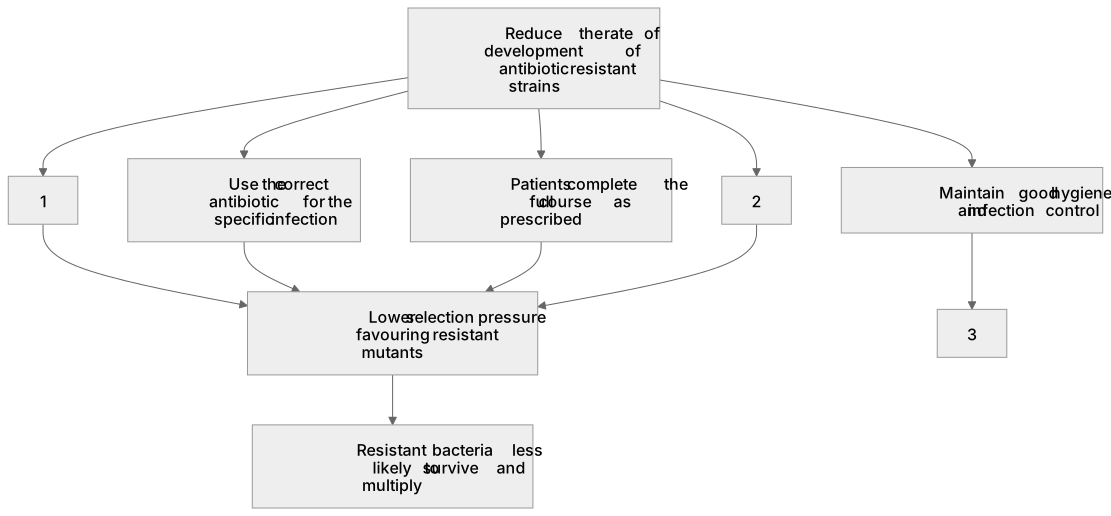
1Box 1
2Box 2
3Box 3
There is more to this lesson
The full lesson goes on to check your understanding and help you earn the marks. Create a free account to carry on, with your progress saved.
A week of Premium from your first lesson · Then the free plan continues · No card, no charge
Test your understanding of Resistant bacteria: To reduce the rate of development of antibiotic resistant strains:
Active recall beats re-reading. Take an instant quiz now to test what you’ve learned and lock it into long-term memory.
A week of Premium from your first lesson · Then the free plan continues · No card, no charge