AQA · GCSE · Combined Science
Course version: 8464 · Version from Sept 2018
Response to exercise: During exercise the human body reacts to the increased demand for energy.
Exercise raises the rate of respiration in muscle cells because more energy is needed for contraction.
Study notes
From the checked teaching notes for this specification point.
The idea
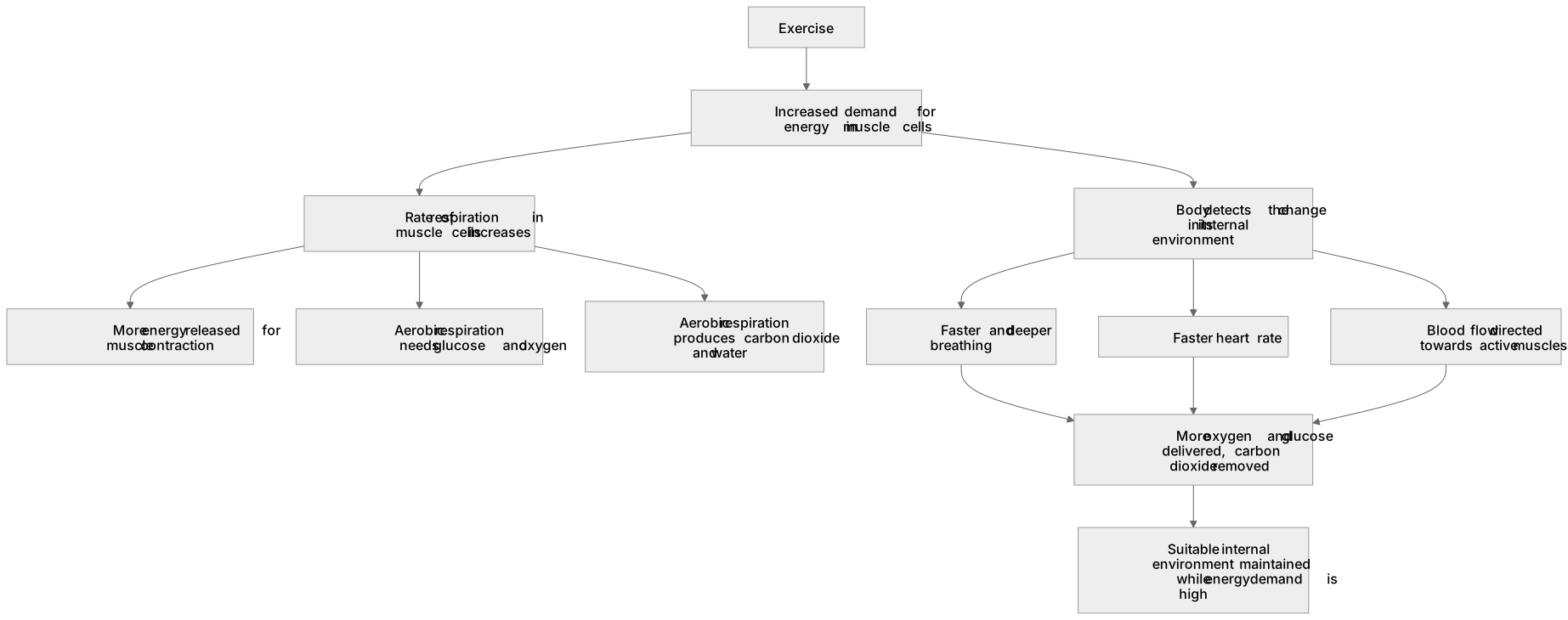
Exercise raises the rate of respiration in muscle cells because more energy is needed for contraction. This extra energy comes from aerobic respiration, which requires glucose and oxygen and releases carbon dioxide and water. The body therefore detects a change in its internal environment and responds with coordinated changes, including faster and deeper breathing, a faster heart rate and redistribution of blood towards active muscles. These responses increase the delivery of oxygen and glucose and the removal of carbon dioxide.
For example: When a student runs upstairs, breathing quickens and the pulse rises; the body is matching oxygen supply to the higher demand for energy rather than simply becoming tired.
What earns the marks
- Exercise increases the rate of respiration in muscle cells, releasing more energy for muscle contraction.
- Aerobic respiration needs glucose and oxygen and produces carbon dioxide and water.
- The body detects the increased demand and responds with faster breathing, greater breath volume and a faster heart rate.
- Blood flow is directed towards active muscles so that more oxygen and glucose arrive and carbon dioxide is removed.
Common mistakes and how to put them right
Saying that exercise creates energy.
Put it right: Energy is transferred, not created; respiration releases energy from glucose.
Confusing breathing with respiration.
Put it right: Breathing moves air into and out of the lungs, while respiration is the chemical process in cells.
Thinking the heart rate rises only to remove carbon dioxide.
Put it right: It also delivers more oxygen and glucose to muscles.
Exam tips
- Link every response back to the demand for energy in muscle cells.
- Use the terms aerobic respiration, oxygen, glucose and carbon dioxide accurately.
- When describing a change, state what increases or decreases and why that helps the muscle cells.
Try the lesson
The start of the Response to exercise: During exercise the human body reacts to the increased demand for energy. lesson, made from checked teaching notes for this specification point.
Have a go first
Which change happens in the human body during exercise because muscles need more energy?
Listen
Exercise raises the rate of respiration in muscle cells because more energy is needed for contraction. This extra energy comes from aerobic respiration, which requires glucose and oxygen and releases carbon dioxide and water. The body therefore detects a change in its internal environment and responds with coordinated changes, including faster and deeper breathing, a faster heart rate and redistribution of blood towards active muscles. These responses increase the delivery of oxygen and glucose and the removal of carbon dioxide. For example, when a student runs upstairs, breathing quickens and the pulse rises; the body is matching oxygen supply to the higher demand for energy rather than simply becoming tired. A strong answer earns marks for these points. Exercise increases the rate of respiration in muscle cells, releasing more energy for muscle contraction. Aerobic respiration needs glucose and oxygen and produces carbon dioxide and water. The body detects the increased demand and responds with faster breathing, greater breath volume and a faster heart rate. Blood flow is directed towards active muscles so that more oxygen and glucose arrive and carbon dioxide is removed. Exam tip: Link every response back to the demand for energy in muscle cells.
See it
Label the diagram
Some boxes have lost their names. Pick the right name for each number.
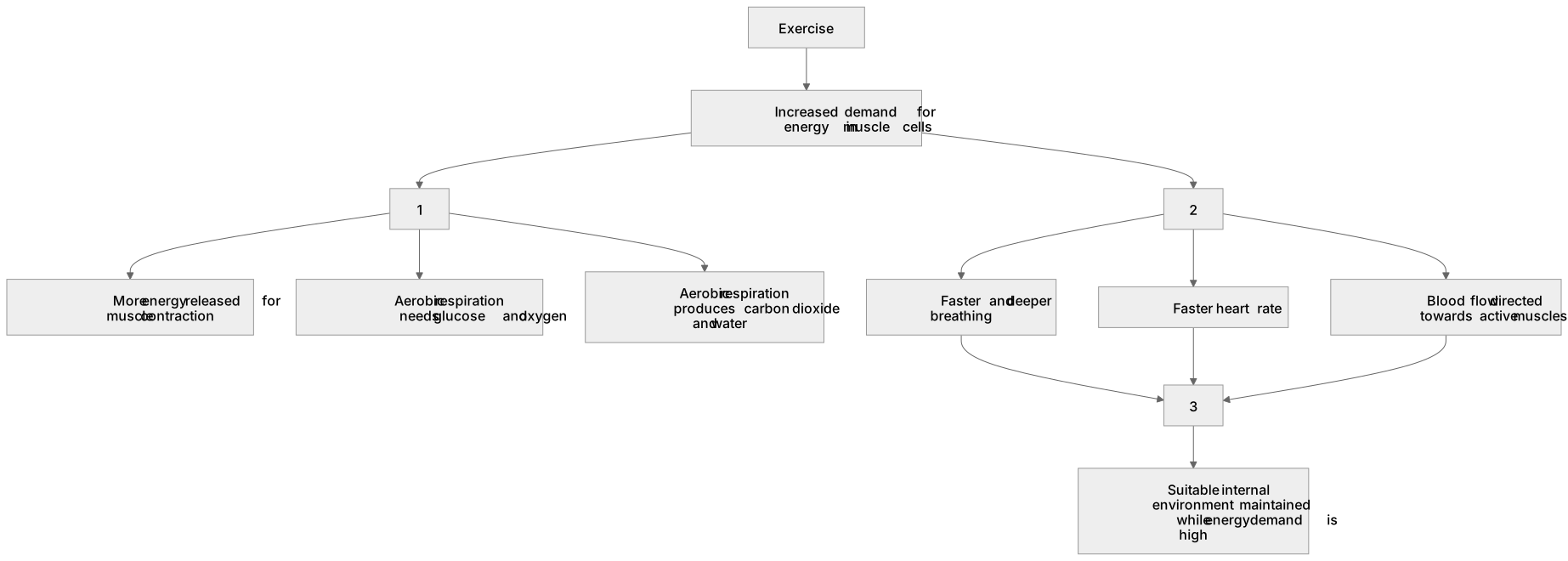
1Box 1
2Box 2
3Box 3
There is more to this lesson
The full lesson goes on to check your understanding and help you earn the marks. Create a free account to carry on, with your progress saved.
A week of Premium from your first lesson · Then the free plan continues · No card, no charge
Test your understanding of Response to exercise: During exercise the human body reacts to the increased demand for energy.
Active recall beats re-reading. Take an instant quiz now to test what you’ve learned and lock it into long-term memory.
A week of Premium from your first lesson · Then the free plan continues · No card, no charge