AQA · GCSE · Combined Science
Course version: 8464 · Version from Sept 2018
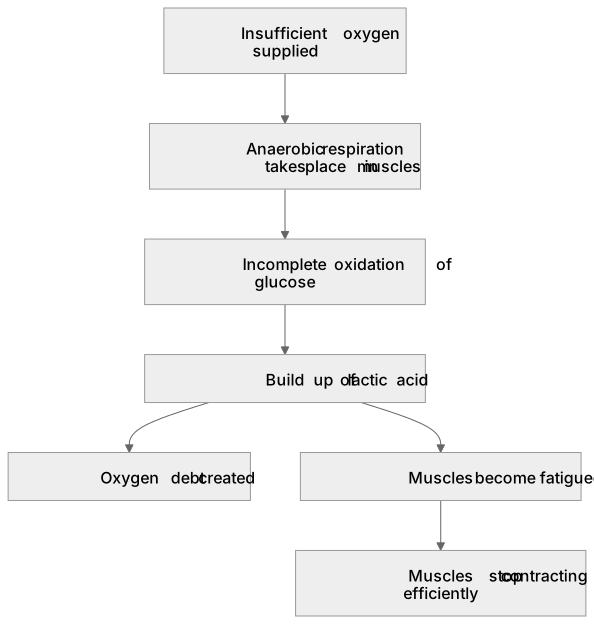
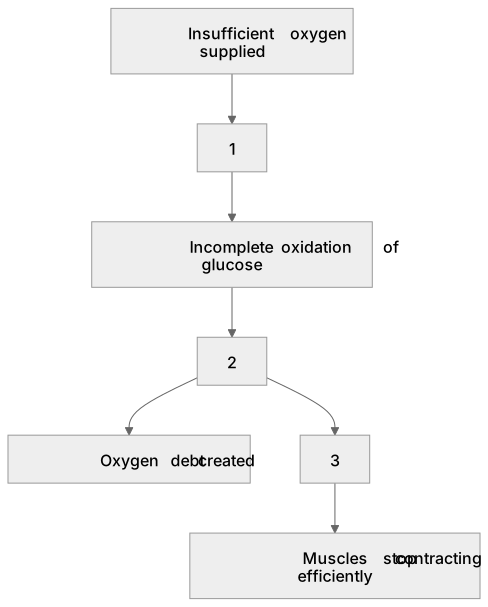
Response to exercise: If insufficient oxygen is supplied anaerobic respiration takes place in muscles. The incomplete oxidation of glucose causes a build up of lactic acid and creates an oxygen debt. During long periods of vigorous activity muscles become fatigued and stop contracting efficiently.
When muscles work hard, blood may not deliver oxygen fast enough, so glucose is broken down without oxygen in anaerobic respiration.
- 4 key terms
Study notes
From the checked teaching notes for this specification point.
The idea
When muscles work hard, blood may not deliver oxygen fast enough, so glucose is broken down without oxygen in anaerobic respiration. This incomplete oxidation of glucose releases less energy and produces lactic acid, which accumulates in muscle cells and contributes to an oxygen debt. The lactic acid lowers pH and interferes with muscle contraction, so during long periods of vigorous activity muscles become fatigued and stop contracting efficiently. For example, a sprinter running 400 m reaches this state quickly; the same happens to a cyclist climbing a long steep hill. The body must later repay the oxygen debt by taking in extra oxygen to remove the lactic acid.
What earns the marks
- Anaerobic respiration in muscles occurs when oxygen supply is insufficient for aerobic respiration.
- Glucose is only partially broken down, so the oxidation is incomplete and less energy is released per glucose molecule.
- Lactic acid is produced and builds up in the muscle cells, contributing to fatigue.
- The build-up of lactic acid creates an oxygen debt that must be repaid after exercise.
- During long periods of vigorous activity, muscles become fatigued and can no longer contract efficiently.
- Anaerobic respiration is a short-term energy supply and cannot be sustained for long periods.
Common mistakes and how to put them right
Writing that anaerobic respiration produces carbon dioxide and water.
Put it right: In muscles it produces lactic acid, while carbon dioxide and water are products of aerobic respiration.
Stating that lactic acid is produced because oxygen is present.
Put it right: Lactic acid builds up when oxygen is insufficient, so glucose is incompletely oxidised.
Confusing fatigue with a lack of glucose only.
Put it right: Fatigue is linked to lactic acid accumulation and other factors, and muscles stop contracting efficiently.
Saying anaerobic respiration releases the same energy as aerobic respiration.
Put it right: It releases less energy because glucose is not fully oxidised.
Exam tips
- Link the cause and effect chain clearly: insufficient oxygen → anaerobic respiration → lactic acid → fatigue and oxygen debt.
- Use the phrase incomplete oxidation of glucose when explaining why less energy is released.
- Apply the idea to a named activity, such as sprinting or heavy weightlifting, to show understanding rather than repeating the statement.
- If asked to compare, state that aerobic respiration needs oxygen and releases more energy, while anaerobic respiration in muscles does not need oxygen and releases less energy.
Try the lesson
The start of the Response to exercise: If insufficient oxygen is supplied anaerobic respiration takes place in muscles. The incomplete oxidation of glucose causes a build up of lactic acid and creates an oxygen debt. During long periods of vigorous activity muscles become fatigued and stop contracting efficiently. lesson, made from checked teaching notes for this specification point.
Have a go first
Which substance builds up in muscles during anaerobic respiration?
Listen
When muscles work hard, blood may not deliver oxygen fast enough, so glucose is broken down without oxygen in anaerobic respiration. This incomplete oxidation of glucose releases less energy and produces lactic acid, which accumulates in muscle cells and contributes to an oxygen debt. The lactic acid lowers pH and interferes with muscle contraction, so during long periods of vigorous activity muscles become fatigued and stop contracting efficiently. For example, a sprinter running 400 m reaches this state quickly; the same happens to a cyclist climbing a long steep hill. The body must later repay the oxygen debt by taking in extra oxygen to remove the lactic acid. A strong answer earns marks for these points. Anaerobic respiration in muscles occurs when oxygen supply is insufficient for aerobic respiration. Glucose is only partially broken down, so the oxidation is incomplete and less energy is released per glucose molecule. Lactic acid is produced and builds up in the muscle cells, contributing to fatigue. The build-up of lactic acid creates an oxygen debt that must be repaid after exercise. A common slip: Writing that anaerobic respiration produces carbon dioxide and water. Instead, in muscles it produces lactic acid, while carbon dioxide and water are products of aerobic respiration. Exam tip: Link the cause and effect chain clearly: insufficient oxygen → anaerobic respiration → lactic acid → fatigue and oxygen debt.
See it
Key words
Say what each word means before you turn the card.
Anaerobic respiration
Try answering aloud or in your head before turning the card.
Oxygen debt
Try answering aloud or in your head before turning the card.
Muscle fatigue
Try answering aloud or in your head before turning the card.
Incomplete oxidation of glucose
Try answering aloud or in your head before turning the card.
See every definition
- Anaerobic respiration
- Respiration that takes place in muscles when insufficient oxygen is supplied, breaking down glucose without oxygen.
- Oxygen debt
- Created by the build up of lactic acid, and must be repaid after exercise by taking in extra oxygen to remove the lactic acid.
- Muscle fatigue
- Occurs during long periods of vigorous activity, when muscles stop contracting efficiently.
- Incomplete oxidation of glucose
- Causes a build up of lactic acid and releases less energy because glucose is not fully oxidised.
Label the diagram
Some boxes have lost their names. Pick the right name for each number.
1Box 1
2Box 2
3Box 3
There is more to this lesson
The full lesson goes on to check your understanding and help you earn the marks. Create a free account to carry on, with your progress saved.
A week of Premium from your first lesson · Then the free plan continues · No card, no charge
Test your understanding of Response to exercise: If insufficient oxygen is supplied anaerobic respiration takes place in muscles. The incomplete oxidation of glucose causes a build up of lactic acid and creates an oxygen debt. During long periods of vigorous activity muscles become fatigued and stop contracting efficiently.
Active recall beats re-reading. Take an instant quiz now to test what you’ve learned and lock it into long-term memory.
A week of Premium from your first lesson · Then the free plan continues · No card, no charge