AQA · GCSE · Combined Science
Course version: 8464 · Version from Sept 2018
Selective breeding: Domestic dogs with a gentle nature.
Selective breeding can also target behaviour.
Study notes
From the checked teaching notes for this specification point.
The idea
Selective breeding can also target behaviour. Dog breeders may choose parents that show a gentle, calm temperament, then breed them together. Puppies that inherit alleles contributing to that temperament are more likely to be gentle, and the gentlest offspring may be bred in the next generation. Over many generations, gentle behaviour becomes more common in that line of dogs. Behaviour is influenced by many genes and by environment, training and handling, so selection is rarely as clear-cut as selecting for a single visible feature. Breeders often observe adult dogs in different situations before deciding which to breed. Selection for temperament can reduce genetic variation and may unintentionally increase inherited health problems if closely related dogs are used.
What earns the marks
- Humans choose dogs with a gentle nature as parents, rather than allowing random mating.
- Gentle behaviour is influenced by inherited alleles as well as by environment and training.
- Offspring of gentle parents are more likely to inherit alleles associated with a gentle temperament.
- Breeders observe and assess adult dogs before selecting which ones to breed.
- Repeated selection over many generations makes gentle behaviour more common in that population.
- Selective breeding for temperament can reduce genetic variation and increase the risk of inherited health problems.
Common mistakes and how to put them right
Claiming that temperament is entirely genetic.
Put it right: Behaviour is affected by both inherited alleles and the environment, including training and handling.
Thinking that a gentle dog will automatically produce only gentle puppies.
Put it right: Inheritance involves chance, so not every puppy inherits the same combination of alleles.
Confusing selection for behaviour with training.
Put it right: Training changes an individual dog's behaviour, while selective breeding changes the inherited characteristics of future generations.
Exam tips
- State clearly that the breeder chooses which dogs mate, and link that choice to the gentle nature of the parents.
- Use the idea of alleles being inherited when explaining why puppies may also be gentle.
- When evaluating the practice, refer to reduced genetic variation or welfare concerns rather than making a general statement that it is 'bad'.
Try the lesson
The start of the Selective breeding: Domestic dogs with a gentle nature. lesson, made from checked teaching notes for this specification point.
Have a go first
A breeder wants to produce a litter of puppies that are likely to have a gentle nature. Which dogs should the breeder choose as parents?
Listen
Selective breeding can also target behaviour. Dog breeders may choose parents that show a gentle, calm temperament, then breed them together. Puppies that inherit alleles contributing to that temperament are more likely to be gentle, and the gentlest offspring may be bred in the next generation. Over many generations, gentle behaviour becomes more common in that line of dogs. Behaviour is influenced by many genes and by environment, training and handling, so selection is rarely as clear-cut as selecting for a single visible feature. Breeders often observe adult dogs in different situations before deciding which to breed. Selection for temperament can reduce genetic variation and may unintentionally increase inherited health problems if closely related dogs are used. A strong answer earns marks for these points. Humans choose dogs with a gentle nature as parents, rather than allowing random mating. Gentle behaviour is influenced by inherited alleles as well as by environment and training. Offspring of gentle parents are more likely to inherit alleles associated with a gentle temperament. Breeders observe and assess adult dogs before selecting which ones to breed. A common slip: Claiming that temperament is entirely genetic. Instead, behaviour is affected by both inherited alleles and the environment, including training and handling. Exam tip: State clearly that the breeder chooses which dogs mate, and link that choice to the gentle nature of the parents.
See it
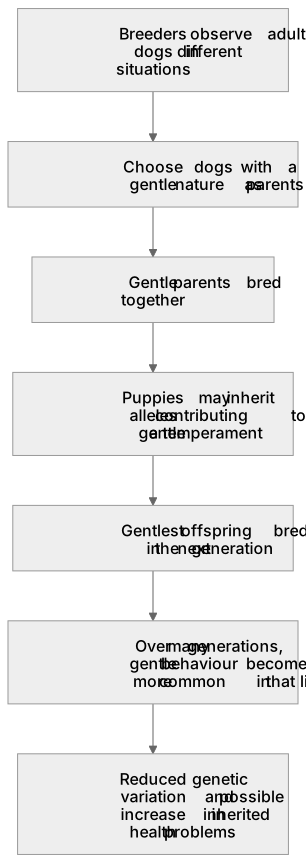
Put it in order
Put these steps in the order they happen.
- 1. Choose dogs with a gentle nature as parents
- 2. Gentle parents bred together
- 3. Puppies may inherit alleles contributing to a gentle temperament
- 4. Gentlest offspring bred in the next generation
- 5. Over many generations, gentle behaviour becomes more common in that line
- 6. Reduced genetic variation and possible increase in inherited health problems
- 7. Breeders observe adult dogs in different situations
Label the diagram
Some boxes have lost their names. Pick the right name for each number.
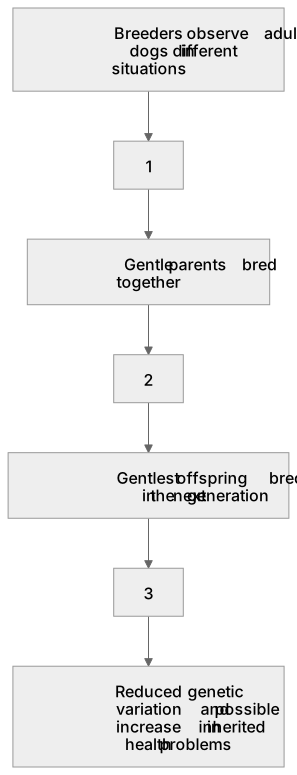
1Box 1
2Box 2
3Box 3
There is more to this lesson
The full lesson goes on to check your understanding and help you earn the marks. Create a free account to carry on, with your progress saved.
A week of Premium from your first lesson · Then the free plan continues · No card, no charge
Test your understanding of Selective breeding: Domestic dogs with a gentle nature.
Active recall beats re-reading. Take an instant quiz now to test what you’ve learned and lock it into long-term memory.
A week of Premium from your first lesson · Then the free plan continues · No card, no charge