AQA · GCSE · Combined Science
Course version: 8464 · Version from Sept 2018
Sexual and asexual reproduction: Sexual reproduction involves the joining (fusion) of male and female gametes:
Sexual reproduction is the production of offspring by the fusion of two gametes, one male and one female.
- 4 key terms
Study notes
From the checked teaching notes for this specification point.
The idea
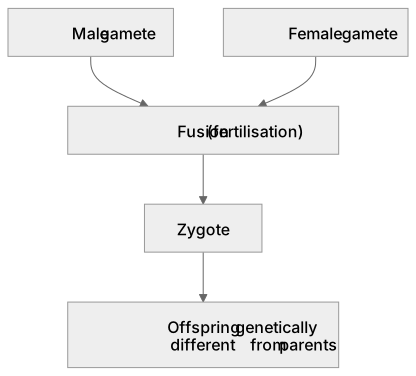
Sexual reproduction is the production of offspring by the fusion of two gametes, one male and one female. Gametes are sex cells produced by meiosis, so each carries half the normal chromosome number. At fertilisation the gamete nuclei join, restoring the full chromosome number in the zygote. Because each parent contributes one set of chromosomes, the offspring inherits a mixture of alleles and is genetically different from either parent and from its siblings. This variation is the key advantage of sexual reproduction. For example, in humans a sperm nucleus (23 chromosomes) fuses with an egg nucleus (23 chromosomes) to form a zygote with 46 chromosomes. The process requires two parents, or at least two gametes, and is slower than asexual reproduction but generates genetic variation that can help a population survive environmental change.
What earns the marks
- Gametes are sex cells produced by meiosis and carry half the chromosome number of a body cell.
- Fusion means the male and female gamete nuclei join to form a single cell, the zygote.
- Fertilisation restores the full, diploid chromosome number in the zygote.
- Each parent contributes one set of chromosomes, so the offspring receives a mixture of alleles.
- The offspring are genetically different from each other and from their parents, giving variation.
- Sexual reproduction requires two gametes, so it usually involves two parents.
Common mistakes and how to put them right
Saying gametes are produced by mitosis.
Put it right: Gametes are produced by meiosis, which halves the chromosome number.
Writing that the gametes fuse to make a body cell directly.
Put it right: The fused cell is a zygote, which divides by mitosis to form the embryo.
Claiming offspring are identical to parents.
Put it right: Because two sets of alleles combine, offspring show genetic variation.
Exam tips
- Use the word fusion or fertilisation when describing the joining of gamete nuclei, and name the product as a zygote.
- State chromosome numbers explicitly, for example sperm 23 and egg 23 joining to give a zygote with 46, to show the halving and restoring idea.
- Link sexual reproduction to variation in a final sentence, because questions often ask why sexual reproduction produces variation.
Try the lesson
The start of the Sexual and asexual reproduction: Sexual reproduction involves the joining (fusion) of male and female gametes: lesson, made from checked teaching notes for this specification point.
Have a go first
During sexual reproduction, the nucleus of a male gamete joins with the nucleus of a female gamete. What name is given to this joining of the two gametes?
Listen
Sexual reproduction is the production of offspring by the fusion of two gametes, one male and one female. Gametes are sex cells produced by meiosis, so each carries half the normal chromosome number. At fertilisation the gamete nuclei join, restoring the full chromosome number in the zygote. Because each parent contributes one set of chromosomes, the offspring inherits a mixture of alleles and is genetically different from either parent and from its siblings. This variation is the key advantage of sexual reproduction. For example, in humans a sperm nucleus (23 chromosomes) fuses with an egg nucleus (23 chromosomes) to form a zygote with 46 chromosomes. The process requires two parents, or at least two gametes, and is slower than asexual reproduction but generates genetic variation that can help a population survive environmental change. A strong answer earns marks for these points. Gametes are sex cells produced by meiosis and carry half the chromosome number of a body cell. Fusion means the male and female gamete nuclei join to form a single cell, the zygote. Fertilisation restores the full, diploid chromosome number in the zygote. Each parent contributes one set of chromosomes, so the offspring receives a mixture of alleles. A common slip: Saying gametes are produced by mitosis. Instead, gametes are produced by meiosis, which halves the chromosome number. Exam tip: Use the word fusion or fertilisation when describing the joining of gamete nuclei, and name the product as a zygote.
See it
Key words
Say what each word means before you turn the card.
Gametes
Try answering aloud or in your head before turning the card.
Fertilisation
Try answering aloud or in your head before turning the card.
Zygote
Try answering aloud or in your head before turning the card.
Genetic variation
Try answering aloud or in your head before turning the card.
See every definition
- Gametes
- Sex cells produced by meiosis, so each carries half the normal chromosome number.
- Fertilisation
- The joining of the male and female gamete nuclei, restoring the full chromosome number in the zygote.
- Zygote
- The single cell formed when the male and female gamete nuclei join at fertilisation.
- Genetic variation
- Offspring inherit a mixture of alleles, so they are genetically different from either parent and from their siblings.
Label the diagram
Some boxes have lost their names. Pick the right name for each number.
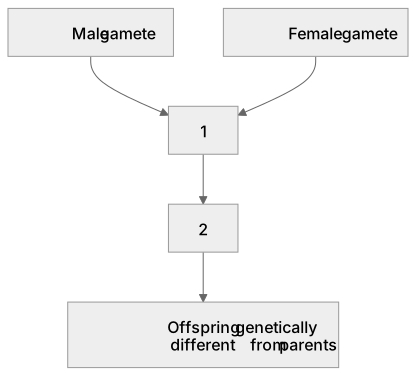
1Box 1
2Box 2
There is more to this lesson
The full lesson goes on to check your understanding and help you earn the marks. Create a free account to carry on, with your progress saved.
A week of Premium from your first lesson · Then the free plan continues · No card, no charge
Test your understanding of Sexual and asexual reproduction: Sexual reproduction involves the joining (fusion) of male and female gametes:
Active recall beats re-reading. Take an instant quiz now to test what you’ve learned and lock it into long-term memory.
A week of Premium from your first lesson · Then the free plan continues · No card, no charge