AQA · GCSE · Combined Science
Course version: 8464 · Version from Sept 2018
The energy change of reactions (HT only): In an endothermic reaction, the energy needed to break existing bonds is greater than the energy released from forming new bonds.
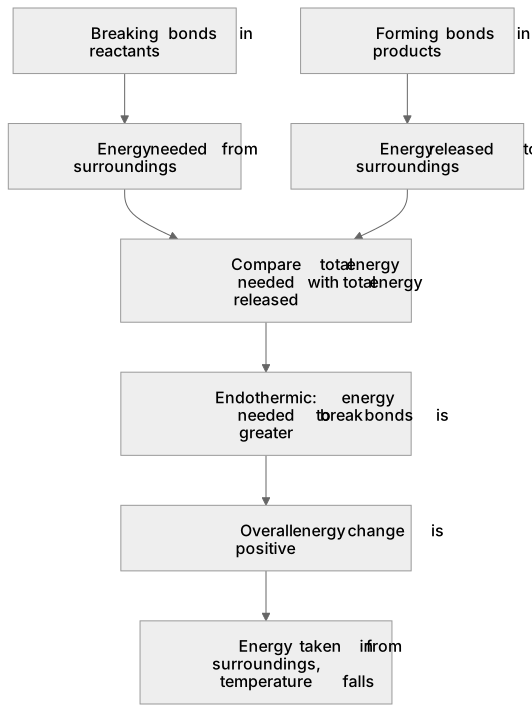
In any reaction, energy must be supplied to break bonds in the reactants, and energy is released when new bonds form in the products.
Study notes
From the checked teaching notes for this specification point.
The idea
In any reaction, energy must be supplied to break bonds in the reactants, and energy is released when new bonds form in the products. In an endothermic reaction, the total energy needed to break the existing bonds is greater than the total energy released when the new bonds form. The overall energy change is therefore positive, taking in energy from the surroundings and cooling them.
For example: In the thermal decomposition of calcium carbonate (CaCO₃ → CaO + CO₂), the energy needed to break bonds in CaCO₃ is greater than the energy released when bonds form in CaO and CO₂.
What earns the marks
- Breaking bonds in reactants requires an input of energy from the surroundings.
- Forming bonds in products releases energy to the surroundings.
- In an endothermic reaction, energy needed to break existing bonds is greater than energy released from forming new bonds.
- The overall energy change is positive because more energy is absorbed than released.
- Energy is taken in from the surroundings, so the temperature of the surroundings typically falls.
- Higher Tier candidates must compare total energy needed versus total energy released, not just one bond.
Common mistakes and how to put them right
Thinking that endothermic reactions release energy because new bonds form.
Put it right: Bond formation releases energy, but in endothermic reactions the energy needed to break bonds is greater overall.
Comparing only one bond broken with one bond formed.
Put it right: Compare the total energy needed to break all reactant bonds with the total energy released forming all product bonds.
Stating that endothermic reactions absorb no energy at all.
Put it right: They absorb more energy than they release, giving a positive overall energy change.
Exam tips
- Use the phrase 'energy needed to break bonds is greater than energy released from forming bonds' to make the comparison explicit.
- Link the bond-energy comparison to the sign of the overall energy change and to the observed temperature fall of the surroundings.
- As a Higher Tier student, when given bond energies, calculate total energy absorbed and total energy released separately before comparing them.
Try the lesson
The start of the The energy change of reactions (HT only): In an endothermic reaction, the energy needed to break existing bonds is greater than the energy released from forming new bonds. lesson, made from checked teaching notes for this specification point.
Have a go first
A reaction is endothermic. Which statement describes the bond energies in this reaction?
Listen
In any reaction, energy must be supplied to break bonds in the reactants, and energy is released when new bonds form in the products. In an endothermic reaction, the total energy needed to break the existing bonds is greater than the total energy released when the new bonds form. The overall energy change is therefore positive, taking in energy from the surroundings and cooling them. For example, in the thermal decomposition of calcium carbonate (CaCO₃ → CaO + CO₂), the energy needed to break bonds in CaCO₃ is greater than the energy released when bonds form in CaO and CO₂. A strong answer earns marks for these points. Breaking bonds in reactants requires an input of energy from the surroundings. Forming bonds in products releases energy to the surroundings. In an endothermic reaction, energy needed to break existing bonds is greater than energy released from forming new bonds. The overall energy change is positive because more energy is absorbed than released. A common slip: Thinking that endothermic reactions release energy because new bonds form. Instead, bond formation releases energy, but in endothermic reactions the energy needed to break bonds is greater overall. Exam tip: Use the phrase 'energy needed to break bonds is greater than energy released from forming bonds' to make the comparison explicit.
See it
Label the diagram
Some boxes have lost their names. Pick the right name for each number.
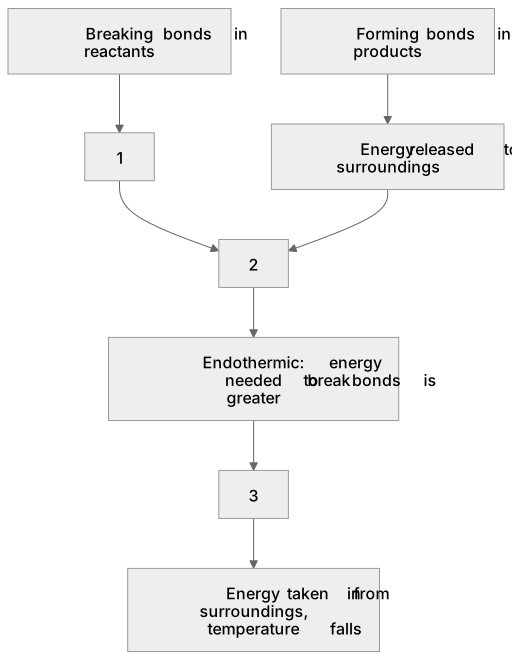
1Box 1
2Box 2
3Box 3
There is more to this lesson
The full lesson goes on to check your understanding and help you earn the marks. Create a free account to carry on, with your progress saved.
A week of Premium from your first lesson · Then the free plan continues · No card, no charge
Test your understanding of The energy change of reactions (HT only): In an endothermic reaction, the energy needed to break existing bonds is greater than the energy released from forming new bonds.
Active recall beats re-reading. Take an instant quiz now to test what you’ve learned and lock it into long-term memory.
A week of Premium from your first lesson · Then the free plan continues · No card, no charge