AQA · GCSE · Combined Science
Course version: 8464 · Version from Sept 2018
The pH scale and neutralisation: describe the use of universal indicator or a wide range indicator to measure the approximate pH of a solution
Universal indicator is a mixture of dyes that changes colour gradually across the pH scale, so it shows whether a solution is strongly acidic, weakly acidic, neutral, weakly alkaline or strongly…
- 2 key terms
Study notes
From the checked teaching notes for this specification point.
The idea
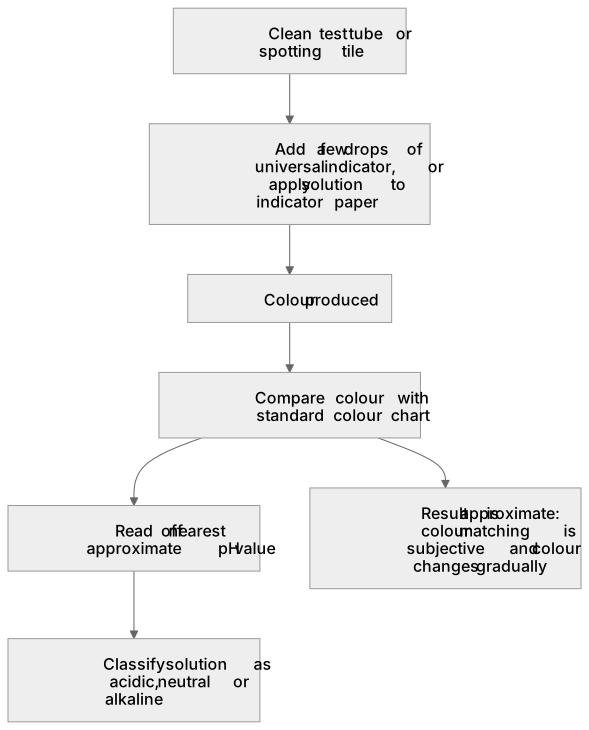
Universal indicator is a mixture of dyes that changes colour gradually across the pH scale, so it shows whether a solution is strongly acidic, weakly acidic, neutral, weakly alkaline or strongly alkaline. To use it, add a few drops to the solution in a clean test tube or spotting tile, or dip a clean glass rod into the solution and touch it onto universal indicator paper. Compare the resulting colour with the colour chart and read off the nearest pH value. The reading is approximate because colour matching is subjective and the indicator gives a broad colour change rather than a sharp end point. A wide range indicator works in the same way, covering a broad pH interval.
What earns the marks
- Universal indicator is a mixture of indicators that produces a different colour at different pH values across the pH scale.
- The indicator is added to the solution, or the solution is applied to indicator paper, and the colour produced is compared with a standard colour chart.
- The colour chart links each colour to an approximate pH value, allowing the solution to be classified as acidic, neutral or alkaline.
- The result is approximate because colour matching is subjective and the indicator changes colour gradually over a range of pH values.
- A wide range indicator covers a broad pH interval and is used in the same way as universal indicator to estimate pH.
- The solution should be tested in a clean container with a clean dropping pipette or glass rod to avoid contamination by residues from previous tests.
Common mistakes and how to put them right
Treating the universal indicator reading as exact.
Put it right: The colour chart gives an approximate pH, so a reading such as pH 3 should be described as approximate rather than precise.
Confusing universal indicator with a single indicator such as litmus.
Put it right: Litmus only shows acidic or alkaline, whereas universal indicator gives a range of colours linked to pH values.
Using a dirty test tube or pipette.
Put it right: Residues from a previous solution can change the colour and give a false pH reading, so apparatus must be clean.
Exam tips
- State clearly that the colour is matched to a chart to obtain an approximate pH value, not just that the indicator changes colour.
- Use the colour chart language of the specification, such as red for strong acid and purple for strong alkali, and link each colour to an approximate pH.
- When asked to describe a method, include the practical steps: place the solution in a clean container, add a few drops of universal indicator, and compare the colour with the chart.
Try the lesson
The start of the The pH scale and neutralisation: describe the use of universal indicator or a wide range indicator to measure the approximate pH of a solution lesson, made from checked teaching notes for this specification point.
Have a go first
A student adds a few drops of universal indicator to a solution and the indicator turns red. What is the approximate pH of the solution?
Listen
Universal indicator is a mixture of dyes that changes colour gradually across the pH scale, so it shows whether a solution is strongly acidic, weakly acidic, neutral, weakly alkaline or strongly alkaline. To use it, add a few drops to the solution in a clean test tube or spotting tile, or dip a clean glass rod into the solution and touch it onto universal indicator paper. Compare the resulting colour with the colour chart and read off the nearest pH value. The reading is approximate because colour matching is subjective and the indicator gives a broad colour change rather than a sharp end point. A wide range indicator works in the same way, covering a broad pH interval. A strong answer earns marks for these points. Universal indicator is a mixture of indicators that produces a different colour at different pH values across the pH scale. The indicator is added to the solution, or the solution is applied to indicator paper, and the colour produced is compared with a standard colour chart. The colour chart links each colour to an approximate pH value, allowing the solution to be classified as acidic, neutral or alkaline. The result is approximate because colour matching is subjective and the indicator changes colour gradually over a range of pH values. Exam tip: State clearly that the colour is matched to a chart to obtain an approximate pH value, not just that the indicator changes colour.
See it
Key words
Say what each word means before you turn the card.
Universal indicator
Try answering aloud or in your head before turning the card.
Wide range indicator
Try answering aloud or in your head before turning the card.
See every definition
- Universal indicator
- A mixture of dyes that changes colour gradually across the pH scale, showing whether a solution is strongly acidic, weakly acidic, neutral, weakly alkaline or strongly alkaline.
- Wide range indicator
- An indicator that covers a broad pH interval and is used in the same way as universal indicator to estimate pH.
Label the diagram
Some boxes have lost their names. Pick the right name for each number.
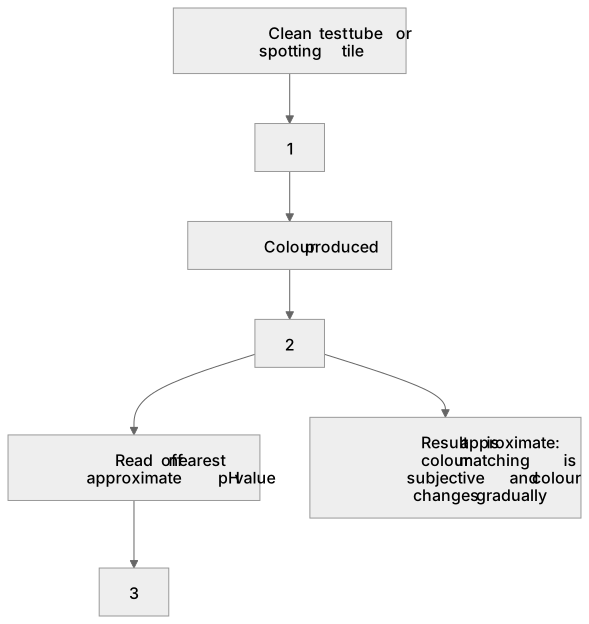
1Box 1
2Box 2
3Box 3
There is more to this lesson
The full lesson goes on to check your understanding and help you earn the marks. Create a free account to carry on, with your progress saved.
A week of Premium from your first lesson · Then the free plan continues · No card, no charge
Test your understanding of The pH scale and neutralisation: describe the use of universal indicator or a wide range indicator to measure the approximate pH of a solution
Active recall beats re-reading. Take an instant quiz now to test what you’ve learned and lock it into long-term memory.
A week of Premium from your first lesson · Then the free plan continues · No card, no charge