AQA · GCSE · Combined Science
Course version: 8464 · Version from Sept 2018
The reactivity series: A more reactive metal can displace a less reactive metal from a compound.
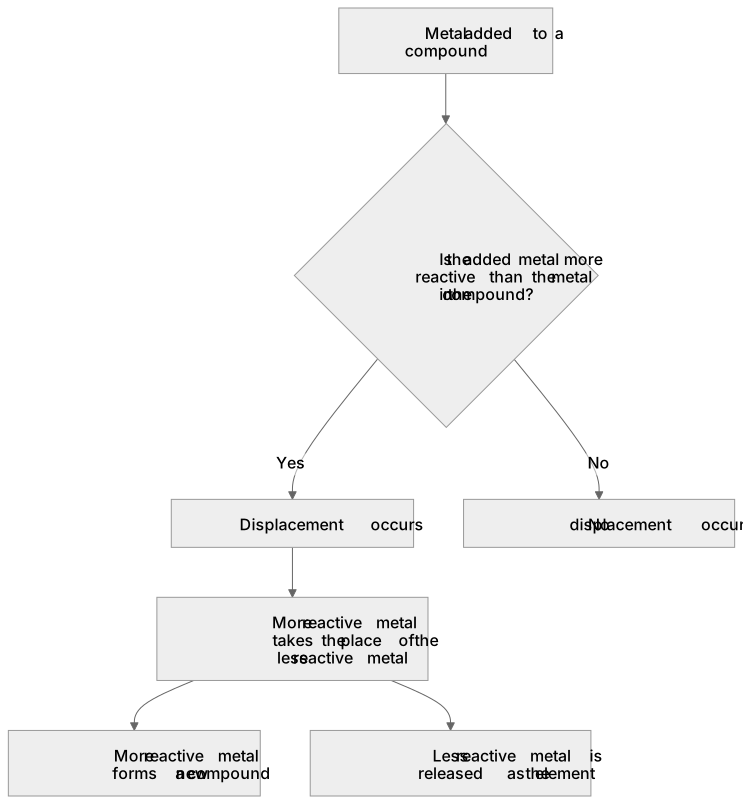
Displacement occurs when a more reactive metal takes the place of a less reactive metal in a compound.
Study notes
From the checked teaching notes for this specification point.
The idea
Displacement occurs when a more reactive metal takes the place of a less reactive metal in a compound. The more reactive metal forms a compound, and the less reactive metal is released as the element. For example, if magnesium is added to copper sulfate solution, magnesium is above copper in the reactivity series, so magnesium displaces copper: magnesium sulfate forms and copper metal appears as a brown solid. The reaction can be written as Mg + CuSO₄ → MgSO₄ + Cu. The same principle applies to solid metal oxides heated with a more reactive metal, and it explains why displacement is used to predict whether a reaction happens. If the added metal is less reactive than the metal in the compound, no displacement occurs.
What earns the marks
- A more reactive metal displaces a less reactive metal from its compound, so the more reactive metal takes the place of the less reactive metal.
- The more reactive metal becomes part of a new compound, while the less reactive metal is released as the element.
- The relative positions in the reactivity series decide whether displacement happens: the added metal must be above the metal in the compound.
- A word equation or symbol equation can represent the change, for example magnesium + copper sulfate → magnesium sulfate + copper, or Mg + CuSO₄ → MgSO₄ + Cu.
- Observable evidence can include colour change, disappearance of the more reactive metal and appearance of the less reactive metal.
- If the added metal is below the metal in the compound, no displacement occurs.
Common mistakes and how to put them right
Writing the displacement the wrong way round, for example saying copper displaces magnesium from magnesium sulfate.
Put it right: The more reactive metal, magnesium, displaces the less reactive copper.
Forgetting that the displaced metal appears as the element, not as a compound.
Put it right: Show copper as Cu, not as copper sulfate.
Assuming any metal displaces any other metal.
Put it right: Check the reactivity series and only predict displacement when the added metal is more reactive.
Exam tips
- Check the reactivity series before predicting displacement, and state which metal is more reactive.
- Balance symbol equations for displacement so the number of each type of atom is the same on both sides.
- Link observations to the reaction, such as a colour change or a solid forming, rather than only naming the products.
Try the lesson
The start of the The reactivity series: A more reactive metal can displace a less reactive metal from a compound. lesson, made from checked teaching notes for this specification point.
Have a go first
Magnesium is more reactive than copper. When magnesium is added to copper sulfate solution, which substance is displaced from the compound?
Listen
Displacement occurs when a more reactive metal takes the place of a less reactive metal in a compound. The more reactive metal forms a compound, and the less reactive metal is released as the element. For example, if magnesium is added to copper sulfate solution, magnesium is above copper in the reactivity series, so magnesium displaces copper: magnesium sulfate forms and copper metal appears as a brown solid. The reaction can be written as Mg + CuSO₄ → MgSO₄ + Cu. The same principle applies to solid metal oxides heated with a more reactive metal, and it explains why displacement is used to predict whether a reaction happens. If the added metal is less reactive than the metal in the compound, no displacement occurs. A strong answer earns marks for these points. A more reactive metal displaces a less reactive metal from its compound, so the more reactive metal takes the place of the less reactive metal. The more reactive metal becomes part of a new compound, while the less reactive metal is released as the element. The relative positions in the reactivity series decide whether displacement happens: the added metal must be above the metal in the compound. A word equation or symbol equation can represent the change, for example magnesium + copper sulfate → magnesium sulfate + copper, or Mg + CuSO₄ → MgSO₄ + Cu. A common slip: Writing the displacement the wrong way round, for example saying copper displaces magnesium from magnesium sulfate. Instead, the more reactive metal, magnesium, displaces the less reactive copper. Exam tip: Check the reactivity series before predicting displacement, and state which metal is more reactive.
See it
There is more to this lesson
The full lesson goes on to check your understanding and help you earn the marks. Create a free account to carry on, with your progress saved.
A week of Premium from your first lesson · Then the free plan continues · No card, no charge
Test your understanding of The reactivity series: A more reactive metal can displace a less reactive metal from a compound.
Active recall beats re-reading. Take an instant quiz now to test what you’ve learned and lock it into long-term memory.
A week of Premium from your first lesson · Then the free plan continues · No card, no charge