AQA · GCSE · Combined Science
Course version: 8464 · Version from Sept 2018
The reactivity series: recall and describe the reactions, if any, of potassium, sodium, lithium, calcium, magnesium, zinc, iron and copper with water or dilute acids and where appropriate, to place these metals in order of reactivity
You need to recall and describe how each named metal behaves with water or dilute acid, then use that evidence to rank them.
- 2 key terms
Study notes
From the checked teaching notes for this specification point.
The idea
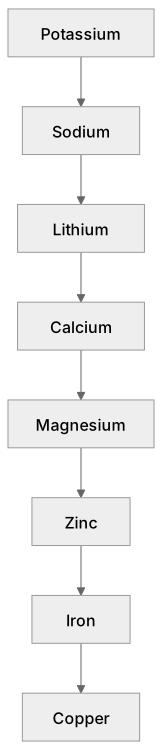
You need to recall and describe how each named metal behaves with water or dilute acid, then use that evidence to rank them. Potassium, sodium and lithium react vigorously with cold water, giving hydrogen and an alkaline hydroxide; calcium reacts steadily; magnesium reacts very slowly with cold water but rapidly with steam. Zinc and iron react with dilute acid to form a salt and hydrogen but not with cold water, while copper reacts with neither. Reactivity reflects how easily a metal atom loses electrons to form a positive ion. A common method adds a small cleaned sample to water or acid and records fizzing, movement, temperature change and any flame, then compares results to build the order potassium > sodium > lithium > calcium > magnesium > zinc > iron > copper.
What earns the marks
- Recalls that potassium, sodium and lithium react vigorously with cold water, producing hydrogen and an alkaline metal hydroxide.
- Describes calcium reacting steadily with water and magnesium reacting very slowly with cold water but vigorously with steam.
- Explains that zinc and iron react with dilute acid to form a salt and hydrogen, but do not react appreciably with cold water.
- States that copper does not react with cold water or dilute acid and is placed below hydrogen.
- Uses the reactions to place the metals in order: potassium > sodium > lithium > calcium > magnesium > zinc > iron > copper.
- Links the order to the ease of forming a positive ion by losing electrons.
Common mistakes and how to put them right
Claiming magnesium reacts vigorously with cold water.
Put it right: Magnesium reacts very slowly with cold water and rapidly with steam.
Writing that copper reacts with dilute acid to give hydrogen.
Put it right: Copper is below hydrogen, so it does not displace hydrogen from dilute acids.
Forgetting the salt in the products of a metal–acid reaction.
Put it right: Name both the salt and hydrogen, for example zinc + sulfuric acid → zinc sulfate + hydrogen.
Exam tips
- Practise writing the reactivity order from memory, then check it against the reactions you can describe.
- In extended answers, compare at least three metals and use comparative language such as 'more reactive than'.
- Include the state or appearance of the metal and the key observation, such as fizzing or a flame, to show you are describing evidence.
Try the lesson
The start of the The reactivity series: recall and describe the reactions, if any, of potassium, sodium, lithium, calcium, magnesium, zinc, iron and copper with water or dilute acids and where appropriate, to place these metals in order of reactivity lesson, made from checked teaching notes for this specification point.
Have a go first
Which of the following metals reacts most vigorously when placed in cold water?
Listen
You need to recall and describe how each named metal behaves with water or dilute acid, then use that evidence to rank them. Potassium, sodium and lithium react vigorously with cold water, giving hydrogen and an alkaline hydroxide; calcium reacts steadily; magnesium reacts very slowly with cold water but rapidly with steam. Zinc and iron react with dilute acid to form a salt and hydrogen but not with cold water, while copper reacts with neither. Reactivity reflects how easily a metal atom loses electrons to form a positive ion. A common method adds a small cleaned sample to water or acid and records fizzing, movement, temperature change and any flame, then compares results to build the order potassium > sodium > lithium > calcium > magnesium > zinc > iron > copper. A strong answer earns marks for these points. Recalls that potassium, sodium and lithium react vigorously with cold water, producing hydrogen and an alkaline metal hydroxide. Describes calcium reacting steadily with water and magnesium reacting very slowly with cold water but vigorously with steam. Explains that zinc and iron react with dilute acid to form a salt and hydrogen, but do not react appreciably with cold water. States that copper does not react with cold water or dilute acid and is placed below hydrogen. A common slip: Claiming magnesium reacts vigorously with cold water. Instead, magnesium reacts very slowly with cold water and rapidly with steam. Exam tip: Practise writing the reactivity order from memory, then check it against the reactions you can describe.
See it
Put it in order
Put these steps in the order they happen.
- 1. Sodium
- 2. Lithium
- 3. Calcium
- 4. Magnesium
- 5. Zinc
- 6. Iron
- 7. Copper
- 8. Potassium
Key words
Say what each word means before you turn the card.
Reactivity series
Try answering aloud or in your head before turning the card.
Observation as evidence
Try answering aloud or in your head before turning the card.
See every definition
- Reactivity series
- The order of the named metals from potassium > sodium > lithium > calcium > magnesium > zinc > iron > copper, built by comparing their reactions with water or dilute acids.
- Observation as evidence
- Recording fizzing, movement, temperature change and any flame when a small cleaned sample is added to water or acid, then comparing results to build the order.
Label the diagram
Some boxes have lost their names. Pick the right name for each number.
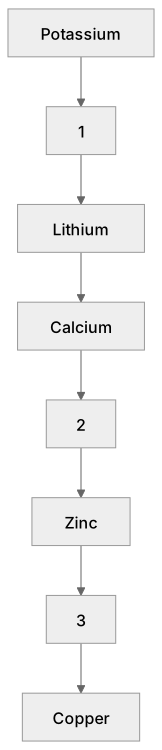
1Box 1
2Box 2
3Box 3
There is more to this lesson
The full lesson goes on to check your understanding and help you earn the marks. Create a free account to carry on, with your progress saved.
A week of Premium from your first lesson · Then the free plan continues · No card, no charge
Test your understanding of The reactivity series: recall and describe the reactions, if any, of potassium, sodium, lithium, calcium, magnesium, zinc, iron and copper with water or dilute acids and where appropriate, to place these metals in order of reactivity
Active recall beats re-reading. Take an instant quiz now to test what you’ve learned and lock it into long-term memory.
A week of Premium from your first lesson · Then the free plan continues · No card, no charge