AQA · GCSE · Combined Science
Course version: 8464 · Version from Sept 2018
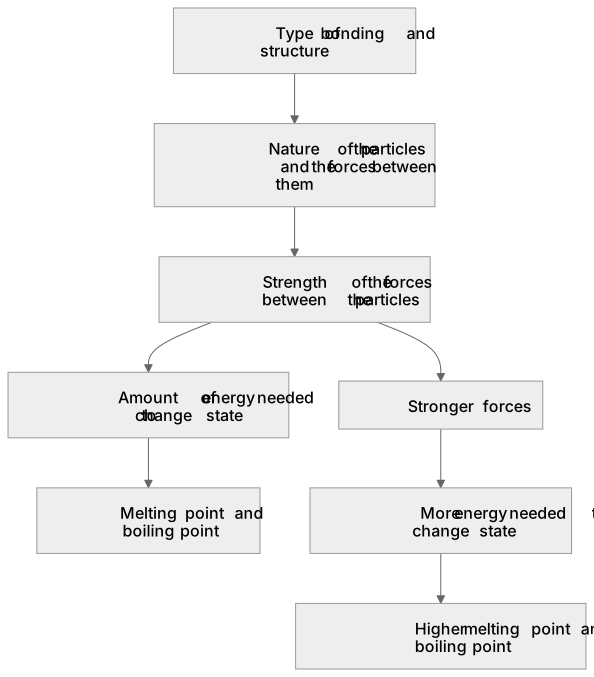
The three states of matter: The amount of energy needed to change state from solid to liquid and from liquid to gas depends on the strength of the forces between the particles of the substance. The nature of the particles involved depends on the type of bonding and the structure of the substance. The stronger the forces between the particles the higher the melting point and boiling point of the substance.
Changing state requires energy to overcome the forces between particles, not to break the particles themselves.
- 3 key terms
Study notes
From the checked teaching notes for this specification point.
The idea
Changing state requires energy to overcome the forces between particles, not to break the particles themselves. Melting needs enough energy to weaken the regular solid arrangement so particles can slide past one another; boiling needs more energy to separate particles completely into a gas. The energy required therefore depends on how strong those forces are. The forces depend on the type of bonding and the structure: a giant ionic lattice such as sodium chloride has strong electrostatic forces between oppositely charged ions, giving a high melting point, while simple molecular substances such as iodine have weak forces between molecules, giving low melting and boiling points. In general, the stronger the forces between particles, the more energy is needed to change state, so the higher the melting point and boiling point.
What earns the marks
- States that energy is needed to overcome the forces between particles when a substance melts or boils, not to break the particles themselves.
- Links the strength of the forces between particles to the amount of energy required for a change of state.
- Explains that the nature of the particles and the forces between them depend on the type of bonding and the structure of the substance.
- Uses the relationship that stronger forces between particles give higher melting and boiling points, and applies it to a named example.
- Distinguishes between energy needed to overcome forces between particles and energy needed to break chemical bonds within particles.
Common mistakes and how to put them right
Saying that melting breaks the particles apart.
Put it right by stating that the particles stay intact and the forces between them are overcome.
Saying that all substances with strong bonding have high melting points without considering structure.
Put it right by linking the forces to the arrangement, for example simple molecular substances have weak forces between molecules.
Confusing the energy needed to melt with the energy needed to boil.
Put it right by stating that boiling requires more energy because particles must be completely separated.
Exam tips
- When comparing melting points, name the substance, state the type of bonding and structure, then link the strength of the forces to the energy needed and the melting point.
- Use comparative language such as stronger forces, more energy and higher melting point to make the relationship explicit.
- If a question gives data, quote the values and use them to support the comparison rather than describing the trend in general terms only.
Try the lesson
The start of the The three states of matter: The amount of energy needed to change state from solid to liquid and from liquid to gas depends on the strength of the forces between the particles of the substance. The nature of the particles involved depends on the type of bonding and the structure of the substance. The stronger the forces between the particles the higher the melting point and boiling point of the substance. lesson, made from checked teaching notes for this specification point.
Have a go first
Substance P melts at 80 °C and substance Q melts at 660 °C. Using the strength of the forces between the particles, which statement explains why Q melts at a higher temperature than P?
Listen
Changing state requires energy to overcome the forces between particles, not to break the particles themselves. Melting needs enough energy to weaken the regular solid arrangement so particles can slide past one another; boiling needs more energy to separate particles completely into a gas. The energy required therefore depends on how strong those forces are. The forces depend on the type of bonding and the structure: a giant ionic lattice such as sodium chloride has strong electrostatic forces between oppositely charged ions, giving a high melting point, while simple molecular substances such as iodine have weak forces between molecules, giving low melting and boiling points. In general, the stronger the forces between particles, the more energy is needed to change state, so the higher the melting point and boiling point. A strong answer earns marks for these points. States that energy is needed to overcome the forces between particles when a substance melts or boils, not to break the particles themselves. Links the strength of the forces between particles to the amount of energy required for a change of state. Explains that the nature of the particles and the forces between them depend on the type of bonding and the structure of the substance. Uses the relationship that stronger forces between particles give higher melting and boiling points, and applies it to a named example. A common slip: Saying that melting breaks the particles apart. Instead, stating that the particles stay intact and the forces between them are overcome. Exam tip: When comparing melting points, name the substance, state the type of bonding and structure, then link the strength of the forces to the energy needed and the melting point.
See it
Key words
Say what each word means before you turn the card.
Energy and changes of state
Try answering aloud or in your head before turning the card.
Forces between particles
Try answering aloud or in your head before turning the card.
Bonding and structure
Try answering aloud or in your head before turning the card.
See every definition
- Energy and changes of state
- The amount of energy needed to change state from solid to liquid and from liquid to gas depends on the strength of the forces between the particles of the substance.
- Forces between particles
- The stronger these are, the higher the melting point and boiling point of the substance.
- Bonding and structure
- The nature of the particles involved depends on the type of bonding and the structure of the substance.
Label the diagram
Some boxes have lost their names. Pick the right name for each number.
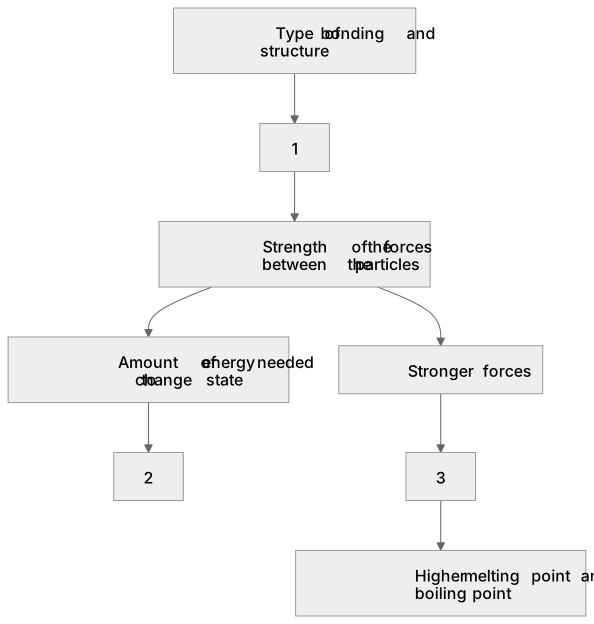
1Box 1
2Box 2
3Box 3
There is more to this lesson
The full lesson goes on to check your understanding and help you earn the marks. Create a free account to carry on, with your progress saved.
A week of Premium from your first lesson · Then the free plan continues · No card, no charge
Test your understanding of The three states of matter: The amount of energy needed to change state from solid to liquid and from liquid to gas depends on the strength of the forces between the particles of the substance. The nature of the particles involved depends on the type of bonding and the structure of the substance. The stronger the forces between the particles the higher the melting point and boiling point of the substance.
Active recall beats re-reading. Take an instant quiz now to test what you’ve learned and lock it into long-term memory.
A week of Premium from your first lesson · Then the free plan continues · No card, no charge