AQA · GCSE · Combined Science
Course version: 8464 · Version from Sept 2018
Uses of glucose from photosynthesis: converted into insoluble starch for storage
Glucose made in photosynthesis is soluble and would affect the water balance of the cell if it accumulated.
Study notes
From the checked teaching notes for this specification point.
The idea
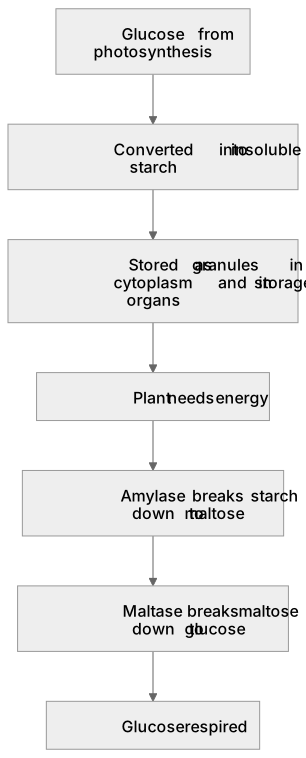
Glucose made in photosynthesis is soluble and would affect the water balance of the cell if it accumulated. Plants therefore convert some glucose into insoluble starch, which can be stored without dissolving in the cytoplasm. Starch is a polymer of glucose, so it is compact and osmotically inactive. It is stored in granules in the cytoplasm of cells and in organs such as potato tubers, seeds and roots. When the plant needs energy, for example at night or during germination, enzymes hydrolyse the starch back to glucose. Amylase breaks starch down to maltose, and maltase then breaks maltose down to glucose; glucose is then respired. This links photosynthesis in the leaf to respiration in growing tissues and to the storage role of organs such as tubers.
What earns the marks
- Glucose is soluble and would lower the water potential of the cytoplasm, so converting it to insoluble starch avoids osmotic problems.
- Starch is a polymer of glucose, so it stores the same chemical energy in a compact, osmotically inactive form.
- Starch is stored as granules in the cytoplasm of cells and in storage organs such as potato tubers, seeds and roots.
- Enzymes hydrolyse stored starch back to glucose when the plant needs energy, for example at night or during germination.
- Amylase breaks starch down to maltose, and maltase then breaks maltose down to glucose; glucose is then respired.
- The stored glucose can be respired to release energy for growth and other life processes.
Common mistakes and how to put them right
Writing that glucose is stored directly as starch without explaining why.
Put it right: Glucose is first converted to starch because starch is insoluble and does not affect osmosis.
Confusing starch with cellulose.
Put it right: Starch is a storage carbohydrate, whereas cellulose is a structural carbohydrate in cell walls.
Stating that amylase hydrolyses starch directly to glucose.
Put it right: Amylase produces maltose, and maltase is needed to produce glucose.
Stating that starch is broken down into glucose by respiration.
Put it right: Enzymes such as amylase and maltase hydrolyse starch to glucose, and glucose is then respired.
Exam tips
- Use the word insoluble when explaining why starch is a good storage molecule, and link it to avoiding osmotic effects.
- Give a named storage organ, such as a potato tuber, to show where starch is stored in a plant.
- When asked about the fate of glucose, state the conversion to starch and then explain how it can be remobilised for respiration, naming amylase and maltase correctly.
Try the lesson
The start of the Uses of glucose from photosynthesis: converted into insoluble starch for storage lesson, made from checked teaching notes for this specification point.
Have a go first
A plant makes glucose in its leaves. Some of this glucose is turned into insoluble starch. Why is starch a useful storage substance for a plant?
Listen
Glucose made in photosynthesis is soluble and would affect the water balance of the cell if it accumulated. Plants therefore convert some glucose into insoluble starch, which can be stored without dissolving in the cytoplasm. Starch is a polymer of glucose, so it is compact and osmotically inactive. It is stored in granules in the cytoplasm of cells and in organs such as potato tubers, seeds and roots. When the plant needs energy, for example at night or during germination, enzymes hydrolyse the starch back to glucose. Amylase breaks starch down to maltose, and maltase then breaks maltose down to glucose; glucose is then respired. This links photosynthesis in the leaf to respiration in growing tissues and to the storage role of organs such as tubers. A strong answer earns marks for these points. Glucose is soluble and would lower the water potential of the cytoplasm, so converting it to insoluble starch avoids osmotic problems. Starch is a polymer of glucose, so it stores the same chemical energy in a compact, osmotically inactive form. Starch is stored as granules in the cytoplasm of cells and in storage organs such as potato tubers, seeds and roots. Enzymes hydrolyse stored starch back to glucose when the plant needs energy, for example at night or during germination. A common slip: Writing that glucose is stored directly as starch without explaining why. Instead, glucose is first converted to starch because starch is insoluble and does not affect osmosis. Exam tip: Use the word insoluble when explaining why starch is a good storage molecule, and link it to avoiding osmotic effects.
See it
Put it in order
Put these steps in the order they happen.
- 1. Converted into insoluble starch
- 2. Stored as granules in cytoplasm and in storage organs
- 3. Plant needs energy
- 4. Amylase breaks starch down to maltose
- 5. Maltase breaks maltose down to glucose
- 6. Glucose respired
- 7. Glucose from photosynthesis
Label the diagram
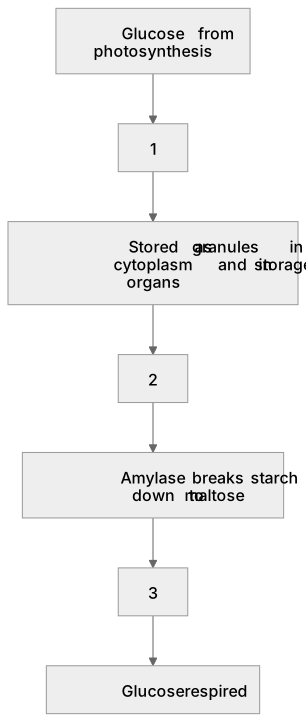
Some boxes have lost their names. Pick the right name for each number.
1Box 1
2Box 2
3Box 3
There is more to this lesson
The full lesson goes on to check your understanding and help you earn the marks. Create a free account to carry on, with your progress saved.
A week of Premium from your first lesson · Then the free plan continues · No card, no charge
Test your understanding of Uses of glucose from photosynthesis: converted into insoluble starch for storage
Active recall beats re-reading. Take an instant quiz now to test what you’ve learned and lock it into long-term memory.
A week of Premium from your first lesson · Then the free plan continues · No card, no charge