AQA · GCSE · Combined Science
Course version: 8464 · Version from Sept 2018
Uses of glucose from photosynthesis: used for respiration
One important fate of the glucose made in photosynthesis is use in respiration.
- 4 key terms
Study notes
From the checked teaching notes for this specification point.
The idea
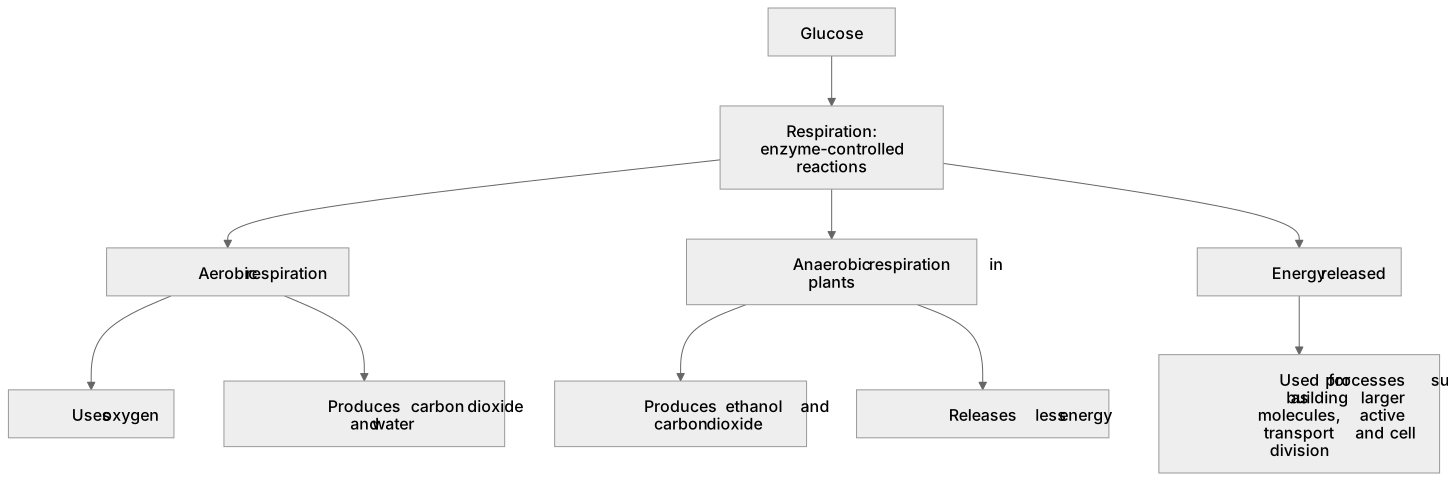
One important fate of the glucose made in photosynthesis is use in respiration. In respiration, glucose is broken down in a series of enzyme-controlled reactions to release energy. Aerobic respiration uses oxygen and produces carbon dioxide and water, while anaerobic respiration in plants produces ethanol and carbon dioxide with less energy released. The energy released is used to build larger molecules from smaller ones, enable muscle contraction in animals, maintain a constant body temperature in birds and mammals, and support active transport and other cellular processes in plants. In plants, respiration occurs continuously in all living cells, including at night when photosynthesis cannot occur. The glucose used may be freshly made in photosynthesis or released from stored starch.
What earns the marks
- Glucose is broken down during respiration to release energy for the plant's cells.
- Aerobic respiration in plants uses oxygen and produces carbon dioxide and water.
- Anaerobic respiration in plant cells produces ethanol and carbon dioxide and releases less energy than aerobic respiration.
- The energy released by respiration is used for processes such as building larger molecules, active transport and cell division.
- Respiration in plants occurs continuously, including at night when photosynthesis is not taking place.
- Glucose for respiration can come directly from photosynthesis or from the breakdown of stored starch.
Common mistakes and how to put them right
Saying that plants photosynthesise instead of respiring.
Put it right: Plants respire all the time and also photosynthesise when light is available.
Writing that respiration produces energy as a substance.
Put it right: Respiration releases energy from glucose; energy is not a product substance like carbon dioxide or water.
Confusing anaerobic respiration in plants with anaerobic respiration in animals.
Put it right: Plant cells produce ethanol and carbon dioxide, whereas animal cells produce lactic acid.
Exam tips
- State clearly that respiration releases energy from glucose rather than creating energy.
- Include the correct reactants and products when describing aerobic respiration: glucose and oxygen react to form carbon dioxide and water.
- Use the phrase 'all living cells respire continuously' to show that respiration is not limited to daylight hours.
Try the lesson
The start of the Uses of glucose from photosynthesis: used for respiration lesson, made from checked teaching notes for this specification point.
Have a go first
What is the main reason a plant uses some of the glucose made in photosynthesis for respiration?
Listen
One important fate of the glucose made in photosynthesis is use in respiration. In respiration, glucose is broken down in a series of enzyme-controlled reactions to release energy. Aerobic respiration uses oxygen and produces carbon dioxide and water, while anaerobic respiration in plants produces ethanol and carbon dioxide with less energy released. The energy released is used to build larger molecules from smaller ones, enable muscle contraction in animals, maintain a constant body temperature in birds and mammals, and support active transport and other cellular processes in plants. In plants, respiration occurs continuously in all living cells, including at night when photosynthesis cannot occur. The glucose used may be freshly made in photosynthesis or released from stored starch. A strong answer earns marks for these points. Glucose is broken down during respiration to release energy for the plant's cells. Aerobic respiration in plants uses oxygen and produces carbon dioxide and water. Anaerobic respiration in plant cells produces ethanol and carbon dioxide and releases less energy than aerobic respiration. The energy released by respiration is used for processes such as building larger molecules, active transport and cell division. A common slip: Saying that plants photosynthesise instead of respiring. Instead, plants respire all the time and also photosynthesise when light is available. Exam tip: State clearly that respiration releases energy from glucose rather than creating energy.
See it
Key words
Say what each word means before you turn the card.
Respiration
Try answering aloud or in your head before turning the card.
Aerobic respiration
Try answering aloud or in your head before turning the card.
Anaerobic respiration
Try answering aloud or in your head before turning the card.
Continuous respiration
Try answering aloud or in your head before turning the card.
See every definition
- Respiration
- Glucose is broken down in a series of enzyme-controlled reactions to release energy.
- Aerobic respiration
- Uses oxygen and produces carbon dioxide and water.
- Anaerobic respiration
- In plants produces ethanol and carbon dioxide with less energy released.
- Continuous respiration
- In plants, respiration occurs continuously in all living cells, including at night when photosynthesis cannot occur.
Label the diagram
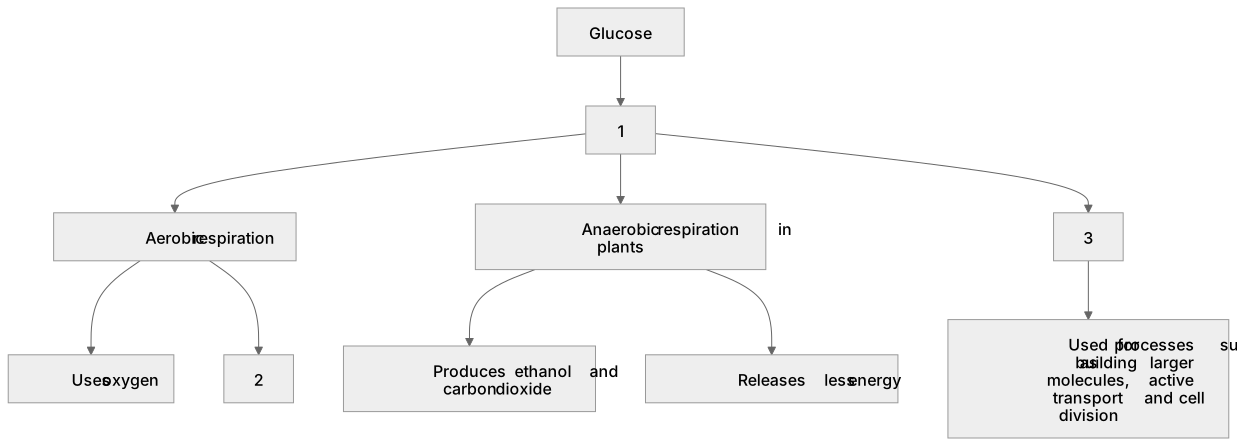
Some boxes have lost their names. Pick the right name for each number.
1Box 1
2Box 2
3Box 3
There is more to this lesson
The full lesson goes on to check your understanding and help you earn the marks. Create a free account to carry on, with your progress saved.
A week of Premium from your first lesson · Then the free plan continues · No card, no charge
Test your understanding of Uses of glucose from photosynthesis: used for respiration
Active recall beats re-reading. Take an instant quiz now to test what you’ve learned and lock it into long-term memory.
A week of Premium from your first lesson · Then the free plan continues · No card, no charge