AQA · GCSE · Combined Science
Course version: 8464 · Version from Sept 2018
Uses of glucose from photosynthesis: used to produce cellulose, which strengthens the cell wall
Glucose made in photosynthesis is not all used for respiration.
- 4 key terms
Study notes
From the checked teaching notes for this specification point.
The idea
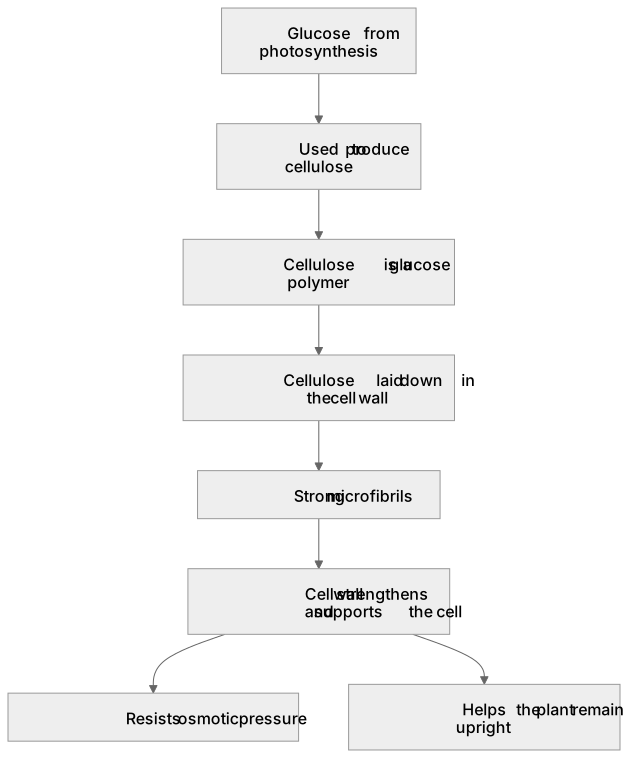
Glucose made in photosynthesis is not all used for respiration. Some is converted into cellulose, a polymer of β-glucose molecules joined by glycosidic bonds. Cellulose molecules form long straight chains held together by many hydrogen bonds, producing strong microfibrils. These microfibrils are laid down in the plant cell wall at different angles, giving the wall tensile strength. This structural strength supports the cell, resists osmotic pressure when water enters, and helps the whole plant stay upright.
For example: In a root hair cell, a strong cellulose wall prevents bursting as water moves in by osmosis.
What earns the marks
- Glucose produced in photosynthesis is a reactant used to synthesise cellulose.
- Cellulose is a carbohydrate polymer built from many glucose units joined together.
- Cellulose is deposited in the plant cell wall, forming strong microfibrils.
- The cellulose cell wall strengthens and supports the cell, resisting osmotic pressure and helping the plant remain upright.
- A clear answer links glucose to cellulose production and then to the structural role of the cell wall.
Common mistakes and how to put them right
Saying cellulose is used for respiration.
Put it right: Glucose is used for respiration, while cellulose is a structural polymer used to build the cell wall.
Confusing cellulose with starch.
Put it right: Starch is a storage carbohydrate, whereas cellulose is a structural carbohydrate found in cell walls.
Stating that cellulose strengthens the cell membrane.
Put it right: Cellulose strengthens the cell wall, which lies outside the cell membrane.
Exam tips
- Use the word 'polymer' when describing cellulose, and state that it is made from glucose.
- Link the structure of cellulose to its function: long chains and microfibrils give strength.
- When asked why the cell wall is important, mention support and resistance to osmotic pressure.
Try the lesson
The start of the Uses of glucose from photosynthesis: used to produce cellulose, which strengthens the cell wall lesson, made from checked teaching notes for this specification point.
Have a go first
Which substance made from glucose strengthens the plant cell wall?
Listen
Glucose made in photosynthesis is not all used for respiration. Some is converted into cellulose, a polymer of β-glucose molecules joined by glycosidic bonds. Cellulose molecules form long straight chains held together by many hydrogen bonds, producing strong microfibrils. These microfibrils are laid down in the plant cell wall at different angles, giving the wall tensile strength. This structural strength supports the cell, resists osmotic pressure when water enters, and helps the whole plant stay upright. For example, in a root hair cell, a strong cellulose wall prevents bursting as water moves in by osmosis. A strong answer earns marks for these points. Glucose produced in photosynthesis is a reactant used to synthesise cellulose. Cellulose is a carbohydrate polymer built from many glucose units joined together. Cellulose is deposited in the plant cell wall, forming strong microfibrils. The cellulose cell wall strengthens and supports the cell, resisting osmotic pressure and helping the plant remain upright. A common slip: Saying cellulose is used for respiration. Instead, glucose is used for respiration, while cellulose is a structural polymer used to build the cell wall. Exam tip: Use the word 'polymer' when describing cellulose, and state that it is made from glucose.
See it
Key words
Say what each word means before you turn the card.
Cellulose
Try answering aloud or in your head before turning the card.
Cell wall
Try answering aloud or in your head before turning the card.
Osmotic pressure
Try answering aloud or in your head before turning the card.
Glucose
Try answering aloud or in your head before turning the card.
See every definition
- Cellulose
- A carbohydrate polymer built from many glucose units joined together, deposited in the plant cell wall forming strong microfibrils.
- Cell wall
- The structure strengthened by cellulose, which supports the cell, resists osmotic pressure and helps the plant remain upright.
- Osmotic pressure
- Pressure that a strong cellulose cell wall resists when water enters the cell, preventing bursting.
- Glucose
- Produced in photosynthesis and used as a reactant to synthesise cellulose.
Label the diagram
Some boxes have lost their names. Pick the right name for each number.
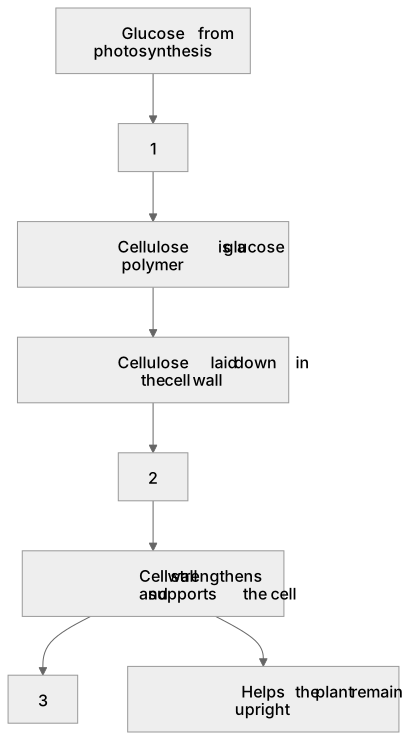
1Box 1
2Box 2
3Box 3
There is more to this lesson
The full lesson goes on to check your understanding and help you earn the marks. Create a free account to carry on, with your progress saved.
A week of Premium from your first lesson · Then the free plan continues · No card, no charge
Test your understanding of Uses of glucose from photosynthesis: used to produce cellulose, which strengthens the cell wall
Active recall beats re-reading. Take an instant quiz now to test what you’ve learned and lock it into long-term memory.
A week of Premium from your first lesson · Then the free plan continues · No card, no charge