AQA · GCSE · Combined Science
Course version: 8464 · Version from Sept 2018
Waste management: Pollution can occur:
Pollution is the release of a harmful substance or form of energy into the environment.
- 3 key terms
Study notes
From the checked teaching notes for this specification point.
The idea
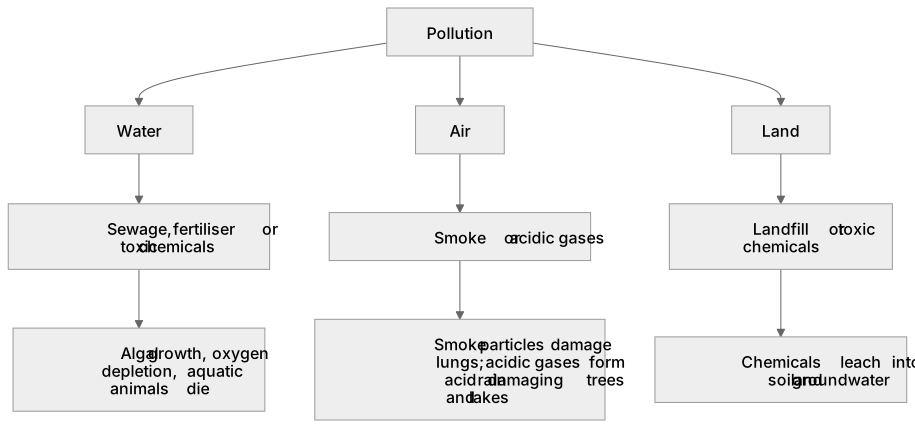
Pollution is the release of a harmful substance or form of energy into the environment. It can occur in water, from sewage, fertiliser or toxic chemicals; in air, from smoke and acidic gases; and on land, from landfill and toxic chemicals. Each route harms organisms in a different way. Sewage and fertiliser add nutrients, so algae grow, decomposers use up dissolved oxygen and aquatic animals die. Toxic chemicals such as pesticides can accumulate in food chains. Smoke particles damage lungs, and acidic gases such as sulfur dioxide dissolve in rain to form acid rain, which damages trees and lakes. Landfill can leach chemicals into soil and groundwater. Recognising the source, the route and the harm lets you suggest a control, such as treatment, filters or recycling.
What earns the marks
- States that pollution can occur in water, for example from sewage, fertiliser or toxic chemicals.
- States that pollution can occur in air, for example from smoke or acidic gases.
- States that pollution can occur on land, for example from landfill or toxic chemicals.
- Explains a harm for at least one route, such as sewage causing algal growth and oxygen depletion in water.
- Explains a harm for a second route, such as acidic gases causing acid rain that damages trees and lakes.
- Links a named pollutant to its source and a suitable control, such as treating sewage before release.
Common mistakes and how to put them right
Listing only one pollution route.
Put it right: The specification expects water, air and land, so give all three with an example each.
Confusing the pollutant with the harm.
Put it right: Name the substance, such as sulfur dioxide, then state the effect, such as acid rain.
Assuming pollution is only visible.
Put it right: Gases such as carbon monoxide and dissolved chemicals can pollute without being seen.
Exam tips
- Structure your answer by route: water, air, land, giving one pollutant and one effect for each.
- Use precise pollutant names, such as sulfur dioxide or nitrate from fertiliser, rather than vague words like chemicals.
- If asked to suggest a reduction method, match it to the route, such as filters for air pollution or sewage treatment for water pollution.
Try the lesson
The start of the Waste management: Pollution can occur: lesson, made from checked teaching notes for this specification point.
Have a go first
Which of these is an example of pollution occurring in water?
Listen
Pollution is the release of a harmful substance or form of energy into the environment. It can occur in water, from sewage, fertiliser or toxic chemicals; in air, from smoke and acidic gases; and on land, from landfill and toxic chemicals. Each route harms organisms in a different way. Sewage and fertiliser add nutrients, so algae grow, decomposers use up dissolved oxygen and aquatic animals die. Toxic chemicals such as pesticides can accumulate in food chains. Smoke particles damage lungs, and acidic gases such as sulfur dioxide dissolve in rain to form acid rain, which damages trees and lakes. Landfill can leach chemicals into soil and groundwater. Recognising the source, the route and the harm lets you suggest a control, such as treatment, filters or recycling. A strong answer earns marks for these points. States that pollution can occur in water, for example from sewage, fertiliser or toxic chemicals. States that pollution can occur in air, for example from smoke or acidic gases. States that pollution can occur on land, for example from landfill or toxic chemicals. Explains a harm for at least one route, such as sewage causing algal growth and oxygen depletion in water. A common slip: Listing only one pollution route. Instead, the specification expects water, air and land, so give all three with an example each. Exam tip: Structure your answer by route: water, air, land, giving one pollutant and one effect for each.
See it
Key words
Say what each word means before you turn the card.
Water pollution
Try answering aloud or in your head before turning the card.
Air pollution
Try answering aloud or in your head before turning the card.
Land pollution
Try answering aloud or in your head before turning the card.
See every definition
- Water pollution
- Pollution can occur in water, from sewage, fertiliser or toxic chemicals, and each route harms organisms in a different way.
- Air pollution
- Pollution can occur in air, from smoke and acidic gases, and each route harms organisms in a different way.
- Land pollution
- Pollution can occur on land, from landfill and toxic chemicals, and each route harms organisms in a different way.
Label the diagram
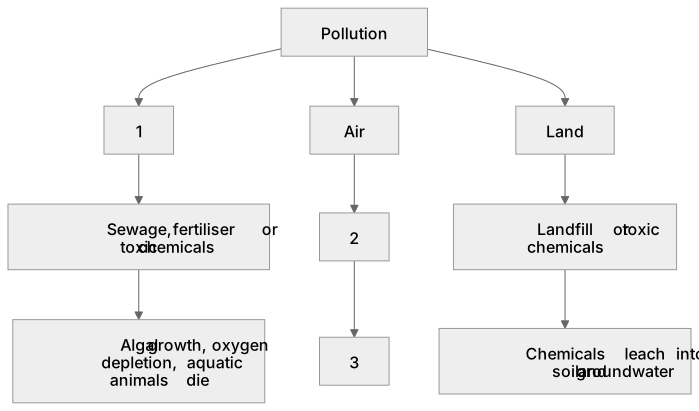
Some boxes have lost their names. Pick the right name for each number.
1Box 1
2Box 2
3Box 3
There is more to this lesson
The full lesson goes on to check your understanding and help you earn the marks. Create a free account to carry on, with your progress saved.
A week of Premium from your first lesson · Then the free plan continues · No card, no charge
Test your understanding of Waste management: Pollution can occur:
Active recall beats re-reading. Take an instant quiz now to test what you’ve learned and lock it into long-term memory.
A week of Premium from your first lesson · Then the free plan continues · No card, no charge