AQA · GCSE · Combined Science
Course version: 8464 · Version from Sept 2018
Waste management: Pollution kills plants and animals which can reduce biodiversity.
Biodiversity is the variety of species and the range of habitats in an ecosystem.
Study notes
From the checked teaching notes for this specification point.
The idea
Biodiversity is the variety of species and the range of habitats in an ecosystem. Pollution can kill sensitive plants and animals directly, for example when toxic chemicals poison organisms, or indirectly by changing conditions such as water oxygen concentration or soil pH. If a species disappears from a habitat, the variety of life there falls, so biodiversity is reduced. For example, fertiliser run-off into a lake causes algal blooms; decomposers then use up oxygen, fish die, and the community becomes less diverse. Some species may be tolerant and survive, but overall species richness and ecosystem stability decrease. Reducing pollution protects habitats and helps maintain biodiversity.
What earns the marks
- Biodiversity is the variety of different species and habitats in an ecosystem.
- Pollution can kill plants and animals directly, for example toxic chemicals poisoning organisms.
- Pollution can kill indirectly by changing conditions such as oxygen concentration, temperature or pH.
- Fewer surviving species means lower biodiversity and a less stable ecosystem.
- A named example, such as fertiliser run-off causing oxygen depletion and fish deaths, supports the explanation.
Common mistakes and how to put them right
Saying pollution only harms individual organisms and not populations.
Put it right: Deaths can remove a whole species from a habitat, reducing biodiversity.
Confusing biodiversity with the total number of organisms.
Put it right: Biodiversity is about the variety of species and habitats, not just population size.
Assuming all species respond to pollution in the same way.
Put it right: Some species are sensitive and die, while tolerant species may survive, changing community composition.
Exam tips
- Define biodiversity briefly before explaining how pollution reduces it.
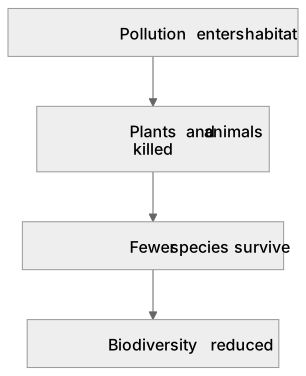
- Use a cause-and-effect chain: pollutant enters habitat, sensitive species die, species variety falls.
- Refer to a specific habitat and pollutant to make the explanation concrete.
Try the lesson
The start of the Waste management: Pollution kills plants and animals which can reduce biodiversity. lesson, made from checked teaching notes for this specification point.
Have a go first
A river receives a large spill of toxic waste. Several types of fish and water plants in the river are completely wiped out. What effect does this have on the biodiversity of the river?
Listen
Biodiversity is the variety of species and the range of habitats in an ecosystem. Pollution can kill sensitive plants and animals directly, for example when toxic chemicals poison organisms, or indirectly by changing conditions such as water oxygen concentration or soil pH. If a species disappears from a habitat, the variety of life there falls, so biodiversity is reduced. For example, fertiliser run-off into a lake causes algal blooms; decomposers then use up oxygen, fish die, and the community becomes less diverse. Some species may be tolerant and survive, but overall species richness and ecosystem stability decrease. Reducing pollution protects habitats and helps maintain biodiversity. A strong answer earns marks for these points. Biodiversity is the variety of different species and habitats in an ecosystem. Pollution can kill plants and animals directly, for example toxic chemicals poisoning organisms. Pollution can kill indirectly by changing conditions such as oxygen concentration, temperature or pH. Fewer surviving species means lower biodiversity and a less stable ecosystem. A common slip: Saying pollution only harms individual organisms and not populations. Instead, deaths can remove a whole species from a habitat, reducing biodiversity. Exam tip: Define biodiversity briefly before explaining how pollution reduces it.
See it
Put it in order
Put these steps in the order they happen.
- 1. Plants and animals killed
- 2. Fewer species survive
- 3. Biodiversity reduced
- 4. Pollution enters habitat
Label the diagram
Some boxes have lost their names. Pick the right name for each number.
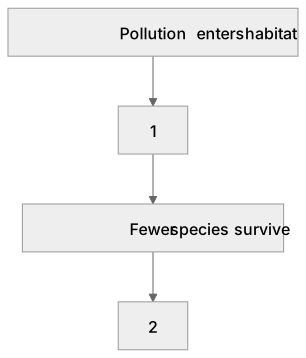
1Box 1
2Box 2
There is more to this lesson
The full lesson goes on to check your understanding and help you earn the marks. Create a free account to carry on, with your progress saved.
A week of Premium from your first lesson · Then the free plan continues · No card, no charge
Test your understanding of Waste management: Pollution kills plants and animals which can reduce biodiversity.
Active recall beats re-reading. Take an instant quiz now to test what you’ve learned and lock it into long-term memory.
A week of Premium from your first lesson · Then the free plan continues · No card, no charge