AQA · GCSE · Combined Science
Course version: 8464 · Version from Sept 2018
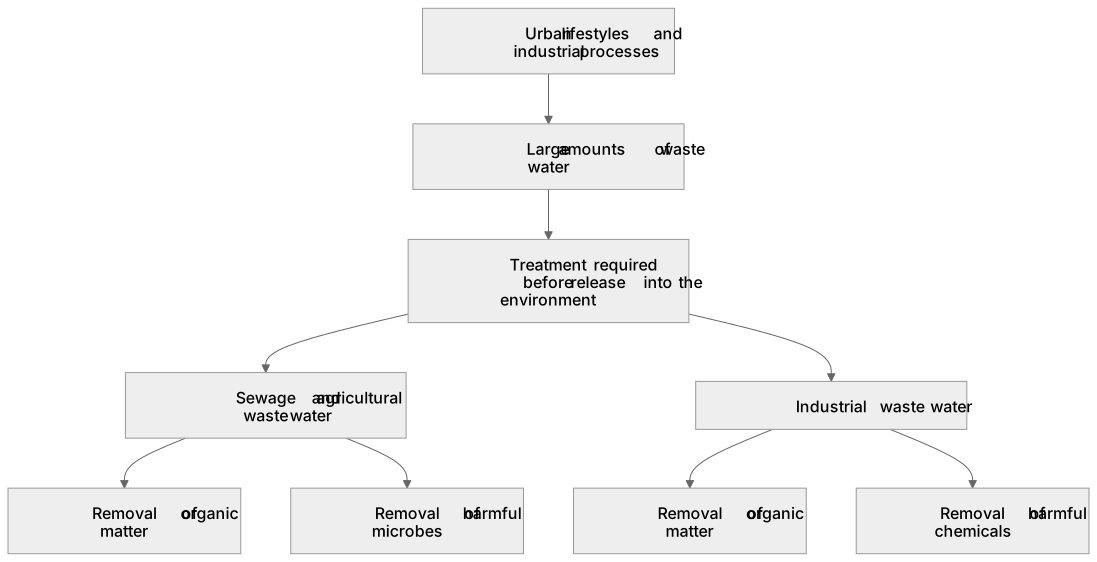
Waste water treatment: Urban lifestyles and industrial processes produce large amounts of waste water that require treatment before being released into the environment. Sewage and agricultural waste water require removal of organic matter and harmful microbes. Industrial waste water may require removal of organic matter and harmful chemicals.
Urban living and industry generate large volumes of waste water.
Study notes
From the checked teaching notes for this specification point.
The idea
Urban living and industry generate large volumes of waste water. If released untreated, this water pollutes rivers and harms ecosystems. Sewage from homes and agricultural run-off contain organic matter and harmful microbes, so treatment must remove both. Organic matter is oxidised by microorganisms, which lowers dissolved oxygen and can kill aquatic life; harmful microbes can spread disease. Industrial waste water may also contain organic matter but often carries harmful chemicals such as acids, heavy metal ions or solvents, so additional neutralisation, precipitation or filtration steps may be needed.
For example: A factory may neutralise acidic effluent with alkali before discharge, while a sewage works uses biological treatment to break down organic matter and reduce microbial load.
What earns the marks
- Urban lifestyles and industrial processes both produce large amounts of waste water that must be treated before release into the environment.
- Sewage and agricultural waste water require removal of organic matter and harmful microbes.
- Organic matter in waste water is broken down by microorganisms, which can reduce dissolved oxygen in water and harm aquatic organisms.
- Harmful microbes in sewage and agricultural waste water can cause disease, so treatment must reduce their numbers.
- Industrial waste water may require removal of organic matter and harmful chemicals, such as acids, heavy metal ions or toxic solvents.
- Treatment methods must match the pollutants present: biological treatment for organic matter and microbes, and chemical or physical methods for harmful chemicals.
Common mistakes and how to put them right
Thinking all waste water is the same.
Put it right: Sewage and agricultural waste water mainly need organic matter and harmful microbes removed, while industrial waste water may also need harmful chemicals removed.
Assuming dilution in a river makes waste water safe.
Put it right: Pollutants such as organic matter, microbes and harmful chemicals can still cause harm, so treatment is required before release.
Confusing removal of organic matter with removal of harmful chemicals.
Put it right: Organic matter is broken down by microorganisms, whereas harmful chemicals may need neutralisation, precipitation or other chemical treatment.
Exam tips
- Link each source of waste water to the specific pollutants it contains, then state the treatment needed.
- Use the phrase 'before being released into the environment' to show why treatment is required.
- When comparing sewage and industrial waste water, mention both organic matter and the additional harmful chemicals in industrial waste.
Try the lesson
The start of the Waste water treatment: Urban lifestyles and industrial processes produce large amounts of waste water that require treatment before being released into the environment. Sewage and agricultural waste water require removal of organic matter and harmful microbes. Industrial waste water may require removal of organic matter and harmful chemicals. lesson, made from checked teaching notes for this specification point.
Have a go first
Which type of waste water must have harmful microbes removed before it is released into the environment?
Listen
Urban living and industry generate large volumes of waste water. If released untreated, this water pollutes rivers and harms ecosystems. Sewage from homes and agricultural run-off contain organic matter and harmful microbes, so treatment must remove both. Organic matter is oxidised by microorganisms, which lowers dissolved oxygen and can kill aquatic life; harmful microbes can spread disease. Industrial waste water may also contain organic matter but often carries harmful chemicals such as acids, heavy metal ions or solvents, so additional neutralisation, precipitation or filtration steps may be needed. For example, a factory may neutralise acidic effluent with alkali before discharge, while a sewage works uses biological treatment to break down organic matter and reduce microbial load. A strong answer earns marks for these points. Urban lifestyles and industrial processes both produce large amounts of waste water that must be treated before release into the environment. Sewage and agricultural waste water require removal of organic matter and harmful microbes. Organic matter in waste water is broken down by microorganisms, which can reduce dissolved oxygen in water and harm aquatic organisms. Harmful microbes in sewage and agricultural waste water can cause disease, so treatment must reduce their numbers. A common slip: Thinking all waste water is the same. Instead, sewage and agricultural waste water mainly need organic matter and harmful microbes removed, while industrial waste water may also need harmful chemicals removed. Exam tip: Link each source of waste water to the specific pollutants it contains, then state the treatment needed.
See it
There is more to this lesson
The full lesson goes on to check your understanding and help you earn the marks. Create a free account to carry on, with your progress saved.
A week of Premium from your first lesson · Then the free plan continues · No card, no charge
Test your understanding of Waste water treatment: Urban lifestyles and industrial processes produce large amounts of waste water that require treatment before being released into the environment. Sewage and agricultural waste water require removal of organic matter and harmful microbes. Industrial waste water may require removal of organic matter and harmful chemicals.
Active recall beats re-reading. Take an instant quiz now to test what you’ve learned and lock it into long-term memory.
A week of Premium from your first lesson · Then the free plan continues · No card, no charge