AQA · GCSE · Drama
Course version: AQA-GCSE-Drama · Version from Mar 2026
Understanding drama
Master the foundations of theatre production with this comprehensive guide to Component 1. Learn to think like a theatre maker and apply precise terminology to unlock the top mark bands.
- 5 min read
- 2 worked examples
- 4 practice questions
- 8 key terms
Check what you remember
Read the wording for your board, then hide it and explain Sub-text in your own words. Rough notes are fine. This is a self-check, with no mark or grade.
Reference: AQA
The underlying meaning or emotion that a character communicates without saying it directly.
Study Notes
Overview
Understanding Drama (Component 1) is the foundation of your GCSE Drama written exam. Examiners are looking for candidates who can demonstrate a sophisticated understanding of how theatre works—not just as an audience member, but from the perspective of a theatre maker. This means understanding the characteristics of performance texts, the impact of social and historical contexts, and the precise roles and responsibilities of everyone involved in a production. Crucially, you must be able to analyse how meaning is communicated to an audience through design and performance choices. Description will only get you so far; analysis is the key to the highest marks.
Podcast: Understanding Drama
Listen to our comprehensive 10-minute revision podcast covering all the core concepts, exam tips, and a quick-fire recall quiz.
Core Concept 1: Characteristics of Performance Texts
A play script is a blueprint for performance. When studying your set text, you must consider:
- Genre, Form, and Style: Is it a tragedy, comedy, or physical theatre? Is the structure linear, episodic, or circular?
- Sub-text: This is a crucial concept. Sub-text is the underlying meaning or emotion that a character communicates without saying it directly. Examiners reward candidates who can identify the tension between what a character says and what they actually mean.
- Stage Directions: These are not optional extras. They provide vital clues about character motivation, mood, rhythm, and climax. A playwright's instruction for a character to 'pause' can completely alter the emotional weight of a scene.
Core Concept 2: Staging Configurations
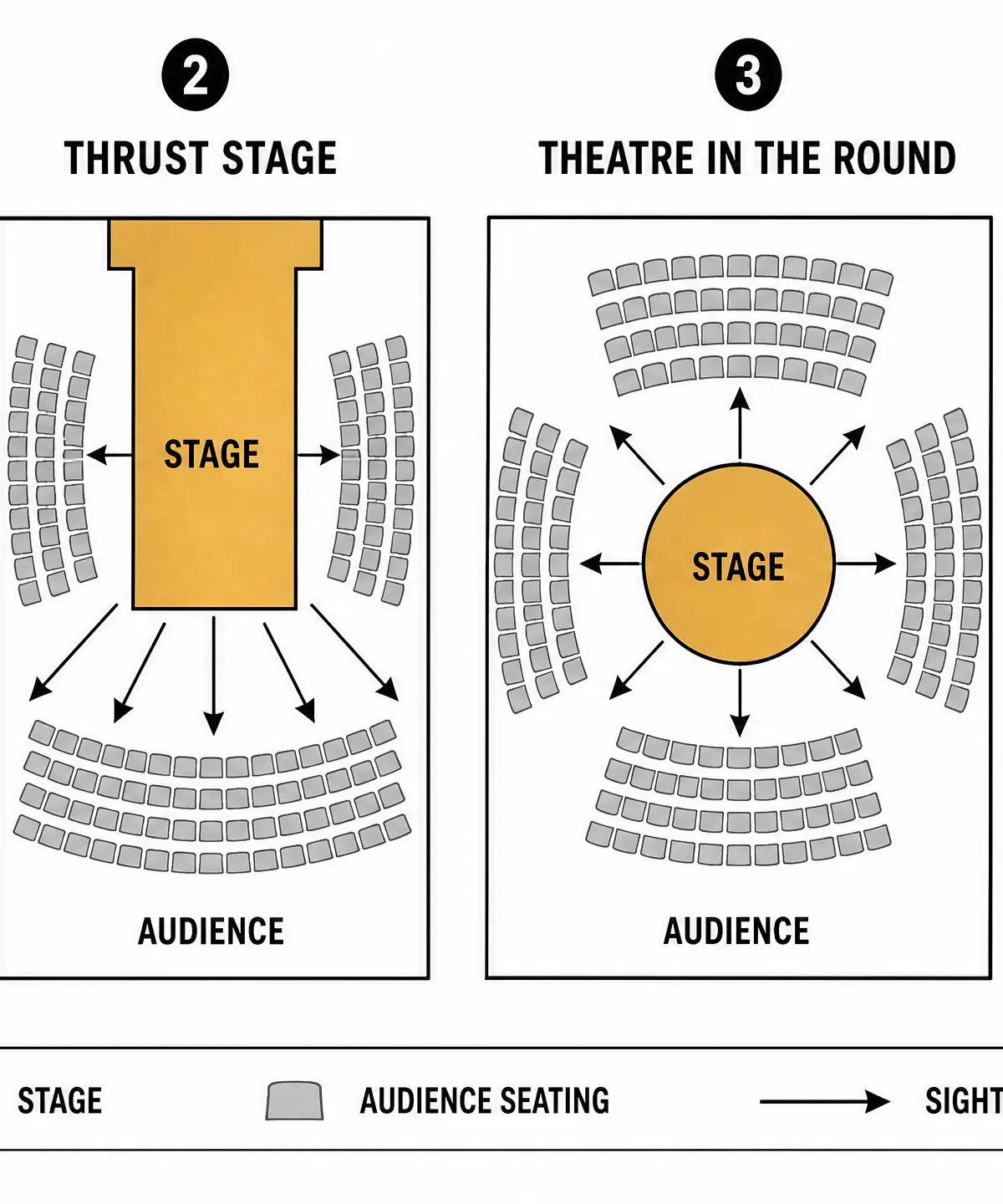
You must understand the four main staging configurations and their impact on the audience-performer relationship:
- Proscenium Arch: The traditional 'picture frame' stage. Creates a clear separation (the 'fourth wall') between performers and audience. Good for large-scale spectacle.
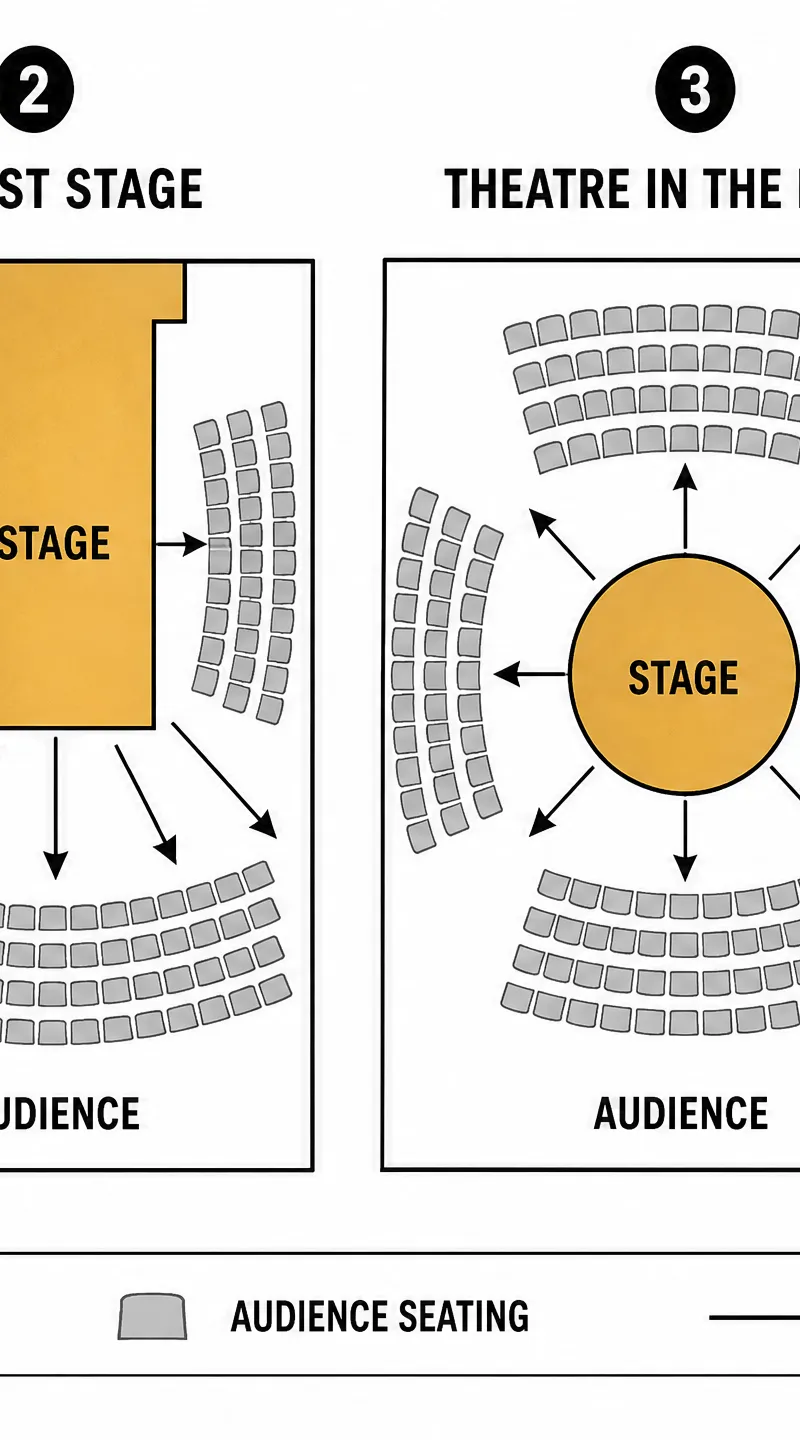
- Thrust Stage: The stage extends into the audience, with seating on three sides. Creates intimacy and a shared experience, breaking down the fourth wall.
- Theatre in the Round: The audience completely surrounds the stage. Creates intense intimacy and immersion, but presents significant challenges for sightlines and blocking.
- Traverse Stage: The audience sits on two opposite sides, like a catwalk. Creates a dynamic, confrontational atmosphere, often used for journeys or debates.
Core Concept 3: Design Fundamentals
Design is how the physical world of the play communicates meaning. You must be able to discuss:
- Set Design: Establishes time, place, and atmosphere. A minimalist set can focus attention entirely on the performers, while a naturalistic set creates a fully realised world.
- Costume (including Hair & Make-up): Communicates character status, period, personality, and even sub-text before a single word is spoken.
- Lighting Design: A powerful tool for shifting mood, isolating characters, and directing audience focus. Consider intensity, direction, and colour (e.g., a harsh white spotlight vs. a warm amber wash).
- Sound Design: Both live and recorded sound can establish location or work subliminally to build tension or create atmosphere.
Core Concept 4: Performer Interpretation
When discussing performance, you must use precise terminology to describe vocal and physical skills:
- Vocal Skills: Accent, pitch, pace, tone, volume, and pause. How does a slow, deliberate pace change the meaning of a line compared to a rushed, breathless delivery?
- Physical Skills: Movement, posture, gesture, facial expression, and use of space. A character adopting an expansive posture communicates dominance, while a hunched posture suggests vulnerability.
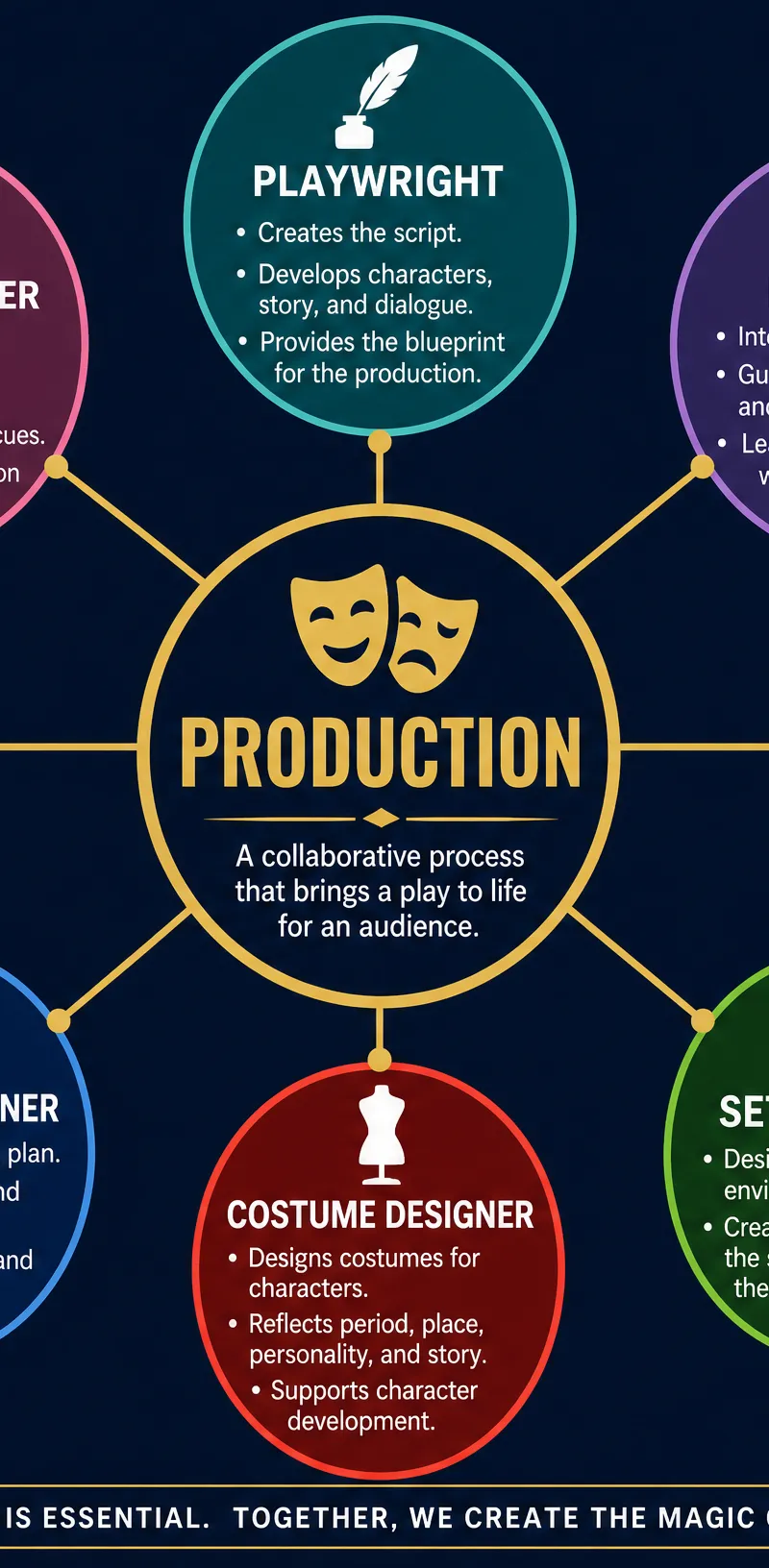
Core Concept 5: Roles and Responsibilities
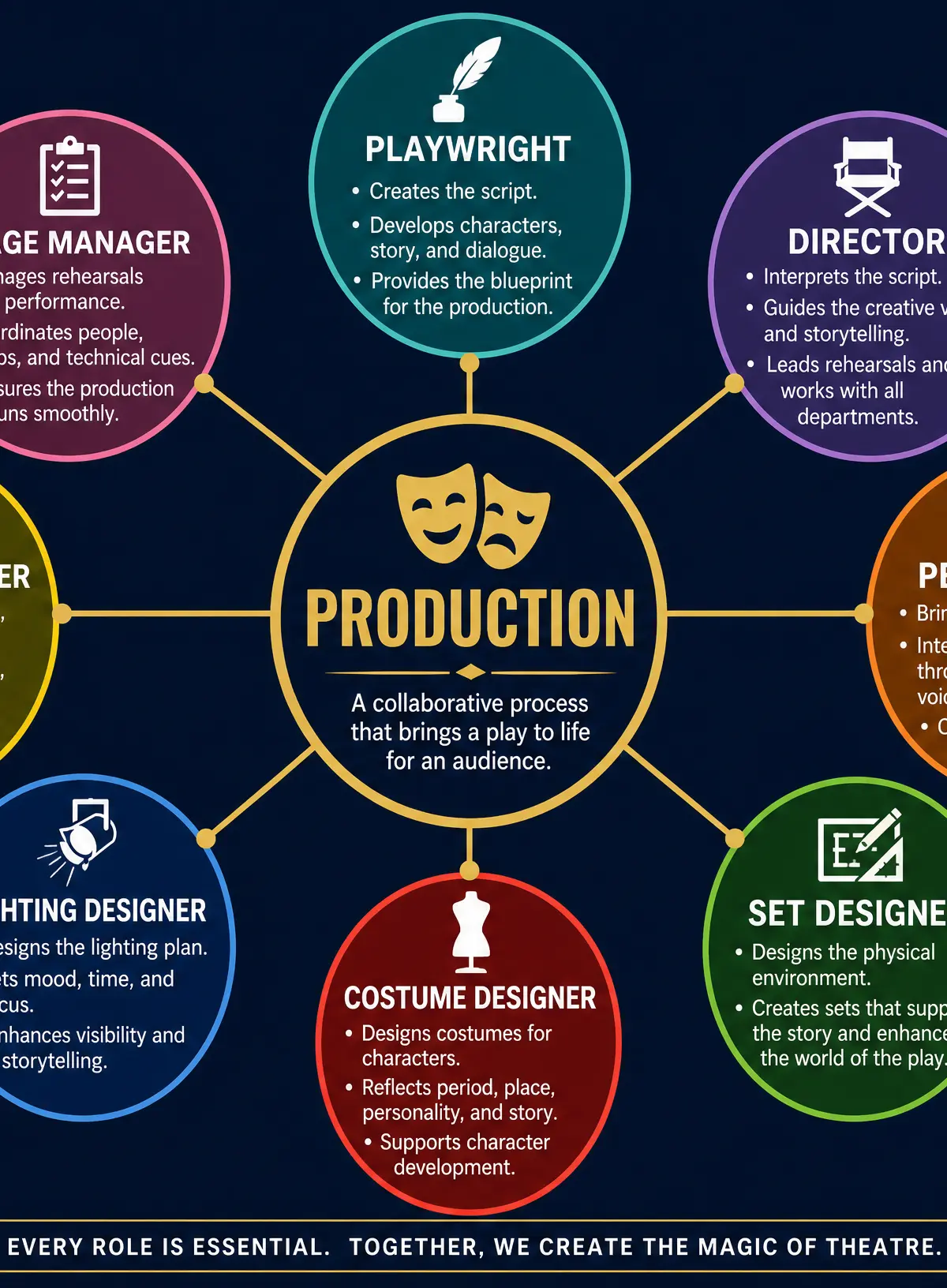
You may be asked to describe the day-to-day activities of key theatre makers:
- Playwright: Creates the script, story, and dialogue.
- Director: Interprets the script, shapes the creative vision, and guides the performers and designers.
- Performer: Interprets the script to bring characters to life through vocal and physical skills.
- Designers (Set, Costume, Lighting, Sound): Create the visual and auditory world of the production.
- Stage Manager: Coordinates rehearsals and performances, manages props and technical cues, and ensures smooth running.
Integrating Context
Social, cultural, and historical context must be woven into your analysis, not bolted on. Consider when the play was written and set, the theatrical conventions of the time, and how a modern director might interpret those themes for a contemporary audience.
Visual Resources
2 diagrams and illustrations
Interactive Diagrams
1 interactive diagram to visualise key concepts
Conceptual Flow Outline
The Process of Communicating Meaning in Theatre
Worked Examples
2 worked examples — open one to explore the question and available guidance.
Practice Questions
Try the question, then reveal an answer plan or example response
As a performer, how would you use vocal and physical skills to demonstrate your character's changing status in a key scene? (15 marks)
Hint: Focus on the contrast. How do they sound/move when their status is low, versus when it becomes high? Use precise terminology.
Describe the day-to-day responsibilities of a Stage Manager during the production process. (4 marks)
Hint: Think about what happens in rehearsals versus what happens during the actual performances.
Evaluate the advantages and disadvantages of using Theatre in the Round for a highly emotional, intimate play. (10 marks)
Hint: Consider both the audience experience and the practical challenges for the performers and designers.
As a costume designer, explain how your choices for one character would reflect the social and historical context of the play. (12 marks)
Hint: Pick a specific time period. How do fabrics, colours, and the condition of the clothes show class, wealth, and the rules of that society?
Exam technique
How to turn what you know into marks
How to approach the question
Always identify your role (Director, Designer, Performer) and the command word. Underline the specific focus of the question (e.g., 'tension', 'relationship', 'atmosphere').
How to structure your answer
Use the 'What, How, Why' structure. WHAT is the choice? (e.g., a red spotlight). HOW is it applied? (e.g., high intensity, downlit). WHY is it used? (e.g., to communicate anger and shock the audience).
Timing
Aim for roughly 1.5 minutes per mark. For a 15-mark question, spend 3-4 minutes planning and 18-20 minutes writing.
Common pitfalls
- Describing the plot instead of analysing theatrical choices.
- Using vague words like 'nice', 'good', or 'scary' instead of precise drama terminology.
- Forgetting to mention the impact on the audience.
What the command words want
- Analyse
- Separate information into components and identify their characteristics. Explore the relationship between choices and meaning.
- Discuss
- Present key points about different ideas or strengths and weaknesses of an idea. Show a considered approach.
- Explain
- Set out purposes or reasons. Use phrases like 'This is because...' or 'This communicates...'
- Describe
- Set out the characteristics clearly. Paint a picture with words using precise terminology.
Watch or listen (optional)
Test your understanding of Understanding drama
Active recall beats re-reading. Take an instant quiz now to test what you’ve learned and lock it into long-term memory.
7 days Premium · Then the free plan continues · No card, no charge