Pearson Edexcel · A-Level · Economics B
Course version: 9EB0 · Version from Sept 2015
C) Selling the output for more than the cost of the inputs (adding value)
Full specification wording
Role of an entrepreneur in the economy: c) Selling the output for more than the cost of the inputs (adding value)
Entrepreneurs add value by selling output for more than the cost of the inputs used in production.
Checked against the Pearson Edexcel 9EB0 specification (opens in a new tab) on .
- Point 3 of 3
Study notes
From the checked teaching notes for this specification point.
The idea
Entrepreneurs add value by selling output for more than the cost of the inputs used in production. Adding value involves transforming raw materials into a finished product that consumers perceive as more valuable, achieved through manufacturing, branding, customer service, or unique design. For example, a cafe buys raw beans and milk (inputs) at a low cost. By brewing the coffee and serving it in a branded environment, the entrepreneur sells the coffee (output) for a significantly higher price than the combined cost of the ingredients. The difference between the selling price and the cost of these inputs represents the added value. This added value is essential for covering the business's fixed costs and ultimately generating a profit.
What earns the marks
- Defining added value as the difference between the selling price of a product and the cost of its material inputs.
- Identifying methods of adding value, such as branding, quality improvement, and customer service.
- Explaining how adding value allows a business to charge a premium price and increase profit margins.
- Recognising that added value is necessary to pay for other costs such as labour, rent, and marketing.
Common mistakes and how to put them right
Confusing added value with profit.
Put it right: Added value is the selling price minus the cost of material inputs, whereas profit deducts all costs, including fixed costs like rent.
Assuming that adding value always requires physical changes to a product.
Put it right: Value can also be added through intangible factors like branding or convenience.
Believing that increasing the price automatically increases added value.
Put it right: If the cost of inputs rises by the same proportion, the added value remains unchanged.
Exam tips
- Always define added value precisely as the selling price minus the cost of bought-in materials and components.
- Use the specific context of the business in the question to suggest realistic ways it could increase its added value.
- Remember to link the concept of adding value to competitive advantage and the ability to generate profit.
Try the lesson
The start of the Role of an entrepreneur in the economy: c) Selling the output for more than the cost of the inputs (adding value) lesson, made from checked teaching notes for this specification point.
Have a go first
How does an entrepreneur successfully add value to a product in the economy?
Listen
Entrepreneurs add value by selling output for more than the cost of the inputs used in production. Adding value involves transforming raw materials into a finished product that consumers perceive as more valuable, achieved through manufacturing, branding, customer service, or unique design. For example, a cafe buys raw beans and milk (inputs) at a low cost. By brewing the coffee and serving it in a branded environment, the entrepreneur sells the coffee (output) for a significantly higher price than the combined cost of the ingredients. The difference between the selling price and the cost of these inputs represents the added value. This added value is essential for covering the business's fixed costs and ultimately generating a profit. A strong answer earns marks for these points. Defining added value as the difference between the selling price of a product and the cost of its material inputs. Identifying methods of adding value, such as branding, quality improvement, and customer service. Explaining how adding value allows a business to charge a premium price and increase profit margins. Recognising that added value is necessary to pay for other costs such as labour, rent, and marketing. Exam tip: Always define added value precisely as the selling price minus the cost of bought-in materials and components.
See it
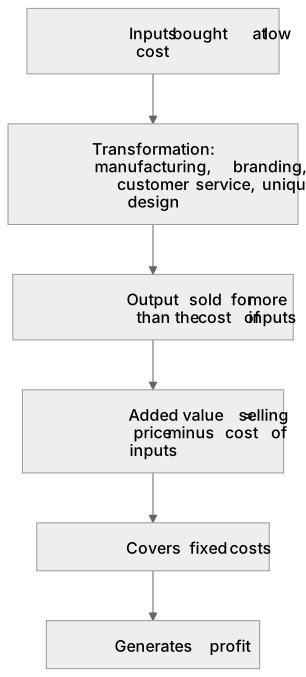
Put it in order
Put these steps in the order they happen.
- 1. Output sold for more than the cost of inputs
- 2. Transformation: manufacturing, branding, customer service, unique design
- 3. Inputs bought at low cost
- 4. Generates profit
- 5. Covers fixed costs
- 6. Added value = selling price minus cost of inputs
Label the diagram
Some boxes have lost their names. Pick the right name for each number.
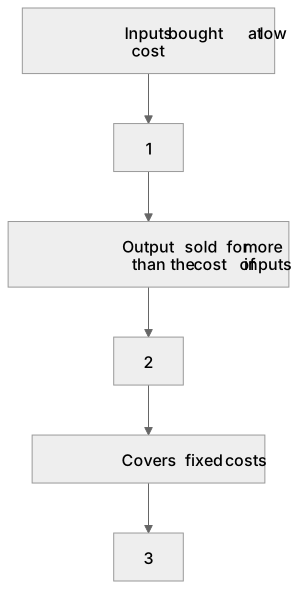
1Box 1
2Box 2
3Box 3
There is more to this lesson
The full lesson goes on to check your understanding and help you earn the marks. Create a free account to carry on, with your progress saved.
A week of Premium from your first lesson · Then the free plan continues · No card, no charge
Test your understanding of Role of an entrepreneur in the economy: c) Selling the output for more than the cost of the inputs (adding value)
Active recall beats re-reading. Take an instant quiz now to test what you’ve learned and lock it into long-term memory.
A week of Premium from your first lesson · Then the free plan continues · No card, no charge