Pearson Edexcel · A-Level · Economics B
Course version: 9EB0 · Version from Sept 2015
B) Sources of credit: o banks o other firms
Full specification wording
Types and sources of credit and the impact of credit within the economy: b) Sources of credit: o banks o other firms
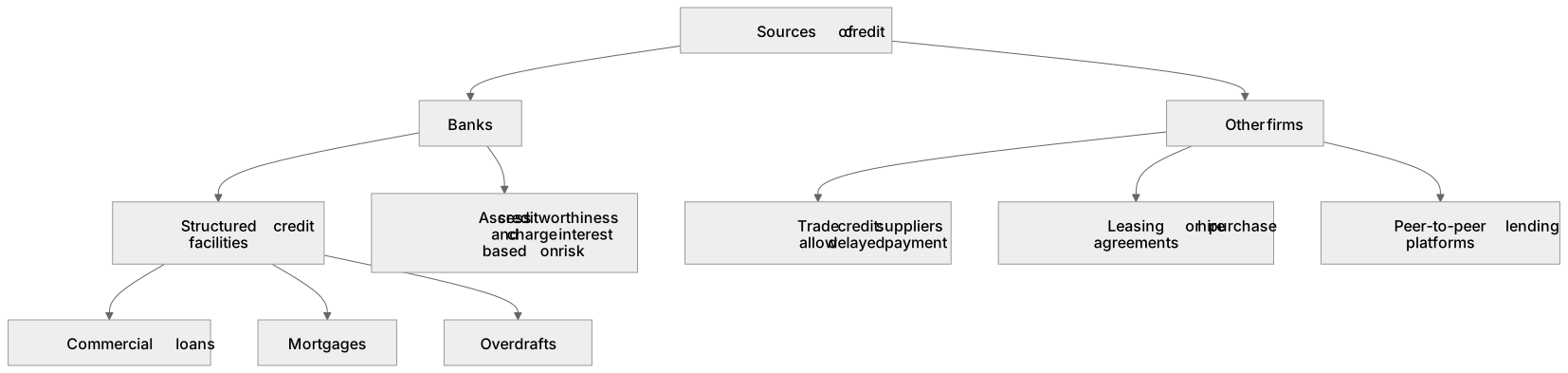
Businesses and consumers can obtain credit from various sources, primarily banks and other firms.
Checked against the Pearson Edexcel 9EB0 specification (opens in a new tab) on .
- Point 2 of 5
- 4 key terms
Study notes
From the checked teaching notes for this specification point.
The idea
Businesses and consumers can obtain credit from various sources, primarily banks and other firms. Banks are traditional financial institutions that provide structured credit facilities, such as commercial loans, mortgages, and overdrafts. They assess creditworthiness before lending and charge interest based on risk. Other firms act as sources of credit primarily through trade credit, where suppliers allow businesses to delay payment for goods. Additionally, some non-bank firms offer leasing or hire purchase agreements, and peer-to-peer lending platforms connect borrowers directly with corporate lenders, bypassing traditional banks to secure necessary funding.
What earns the marks
- Identify banks as primary financial institutions offering structured credit like loans and overdrafts.
- Recognise other firms as sources of credit, particularly through trade credit arrangements between suppliers and buyers.
- Explain how banks assess risk and creditworthiness before providing credit facilities.
- Differentiate between the formal lending processes of banks and the operational credit provided by other firms.
Common mistakes and how to put them right
Assuming banks are the only source of external finance.
Put it right: Other firms, such as suppliers offering trade credit, are significant sources of credit.
Confusing the types of credit offered by banks and other firms.
Put it right: Banks typically offer loans and overdrafts, while other firms usually provide trade credit or leasing.
Believing trade credit from other firms is always free.
Put it right: While often interest-free for a set period, late payments can incur penalties or loss of early payment discounts.
Exam tips
- Consider the relationship between the borrower and the source of credit; banks require formal applications, whereas trade credit relies on supplier relationships.
- Evaluate the cost of credit from different sources, noting that banks charge interest while other firms may offer interest-free periods.
- Use the context of the case study to decide whether a bank or another firm is the most realistic source of credit for the business.
Try the lesson
The start of the Types and sources of credit and the impact of credit within the economy: b) Sources of credit: o banks o other firms lesson, made from checked teaching notes for this specification point.
Have a go first
When a business uses trade credit to delay payment for inventory, which source of credit is it primarily utilising?
Listen
Businesses and consumers can obtain credit from various sources, primarily banks and other firms. Banks are traditional financial institutions that provide structured credit facilities, such as commercial loans, mortgages, and overdrafts. They assess creditworthiness before lending and charge interest based on risk. Other firms act as sources of credit primarily through trade credit, where suppliers allow businesses to delay payment for goods. Additionally, some non-bank firms offer leasing or hire purchase agreements, and peer-to-peer lending platforms connect borrowers directly with corporate lenders, bypassing traditional banks to secure necessary funding. A strong answer earns marks for these points. Identify banks as primary financial institutions offering structured credit like loans and overdrafts. Recognise other firms as sources of credit, particularly through trade credit arrangements between suppliers and buyers. Explain how banks assess risk and creditworthiness before providing credit facilities. Differentiate between the formal lending processes of banks and the operational credit provided by other firms. A common slip: Assuming banks are the only source of external finance. Instead, other firms, such as suppliers offering trade credit, are significant sources of credit. Exam tip: Consider the relationship between the borrower and the source of credit; banks require formal applications, whereas trade credit relies on supplier relationships.
See it
Key words
Say what each word means before you turn the card.
Financial institutions
Try answering aloud or in your head before turning the card.
Creditworthiness
Try answering aloud or in your head before turning the card.
Supplier relationships
Try answering aloud or in your head before turning the card.
Sources of finance
Try answering aloud or in your head before turning the card.
See every definition
- Financial institutions
- Traditional organisations such as banks that provide structured credit facilities, including commercial loans, mortgages and overdrafts.
- Creditworthiness
- What banks assess before lending, charging interest based on risk.
- Supplier relationships
- The basis on which trade credit relies, with suppliers allowing businesses to delay payment for goods.
- Sources of finance
- Banks and other firms, from which businesses and consumers can obtain credit.
Label the diagram
Some boxes have lost their names. Pick the right name for each number.
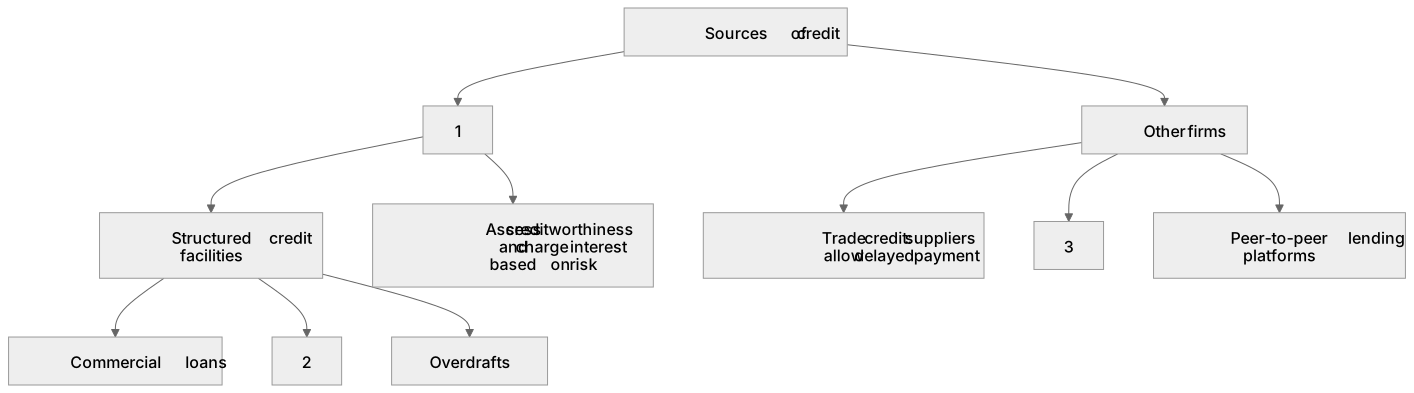
1Box 1
2Box 2
3Box 3
There is more to this lesson
The full lesson goes on to check your understanding and help you earn the marks. Create a free account to carry on, with your progress saved.
A week of Premium from your first lesson · Then the free plan continues · No card, no charge
Test your understanding of Types and sources of credit and the impact of credit within the economy: b) Sources of credit: o banks o other firms
Active recall beats re-reading. Take an instant quiz now to test what you’ve learned and lock it into long-term memory.
A week of Premium from your first lesson · Then the free plan continues · No card, no charge