Pearson Edexcel · A-Level · Economics B
Course version: 9EB0 · Version from Sept 2015
A) The impact of marketing on the demand curve: o product differentiation…
Full specification wording
Types of non-price competition: a) The impact of marketing on the demand curve: o product differentiation o advertising and other promotional methods o distribution methods
Marketing strategies are forms of non-price competition designed to shift the demand curve to the right and make it more price inelastic.
Checked against the Pearson Edexcel 9EB0 specification (opens in a new tab) on .
- 3 key terms
Study notes
From the checked teaching notes for this specification point.
The idea
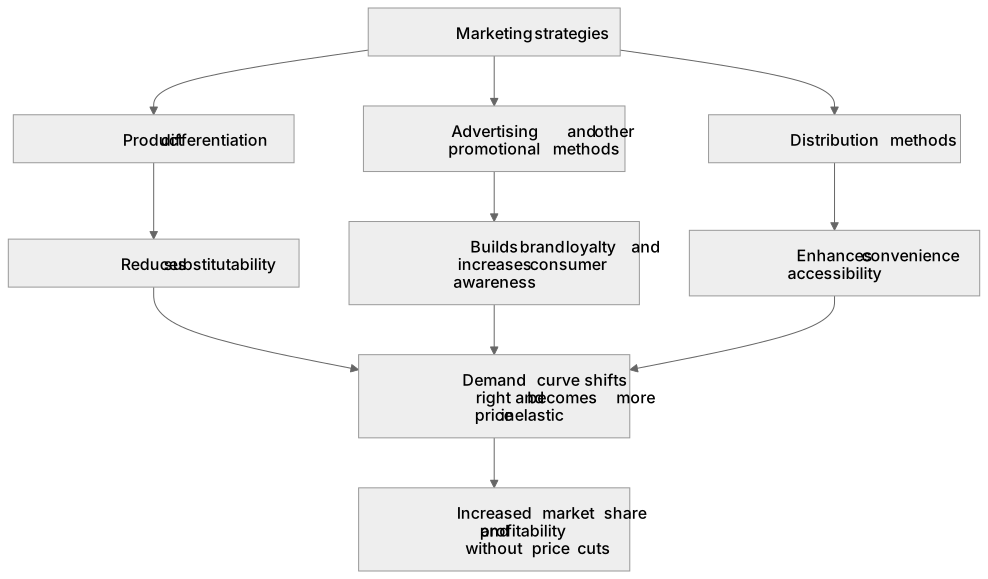
Marketing strategies are forms of non-price competition designed to shift the demand curve to the right and make it more price inelastic. Product differentiation, such as adding unique features to a smartphone, reduces substitutability, allowing firms to charge a premium. Advertising and promotional methods build brand loyalty and increase consumer awareness, directly stimulating demand. Distribution methods, like exclusive retail partnerships or direct-to-consumer online sales, enhance convenience and accessibility, further driving sales. By successfully employing these techniques, a firm can increase its market share and profitability without resorting to price cuts, which might otherwise trigger a damaging price war.
What earns the marks
- Identify that successful marketing campaigns shift the demand curve for a product to the right.
- Explain that product differentiation makes the demand curve more price inelastic by reducing the availability of close substitutes.
- Recognise that advertising and promotional methods increase consumer awareness and foster brand loyalty.
- Understand that effective distribution methods increase product accessibility, thereby increasing overall consumer demand.
Common mistakes and how to put them right
Assuming marketing only shifts the demand curve to the right.
Put it right: Marketing also aims to change the slope of the demand curve, making it more price inelastic.
Confusing product differentiation with price competition.
Put it right: Product differentiation is a non-price strategy that focuses on unique features or branding rather than lowering prices.
Believing distribution methods do not affect demand.
Put it right: Distribution affects accessibility and convenience, which are key factors in consumer purchasing decisions and overall demand.
Exam tips
- Always link marketing strategies to both the position (shift) and the elasticity (slope) of the demand curve.
- Use specific examples of product differentiation, such as unique design or superior customer service, to illustrate your points.
- When evaluating promotional methods, consider the cost of advertising against the potential increase in revenue from higher demand.
Try the lesson
The start of the Types of non-price competition: a) The impact of marketing on the demand curve: o product differentiation o advertising and other promotional methods o distribution methods lesson, made from checked teaching notes for this specification point.
Have a go first
Which of the following is the most likely impact of a successful advertising campaign on a firm's demand curve?
Listen
Marketing strategies are forms of non-price competition designed to shift the demand curve to the right and make it more price inelastic. Product differentiation, such as adding unique features to a smartphone, reduces substitutability, allowing firms to charge a premium. Advertising and promotional methods build brand loyalty and increase consumer awareness, directly stimulating demand. Distribution methods, like exclusive retail partnerships or direct-to-consumer online sales, enhance convenience and accessibility, further driving sales. By successfully employing these techniques, a firm can increase its market share and profitability without resorting to price cuts, which might otherwise trigger a damaging price war. A strong answer earns marks for these points. Identify that successful marketing campaigns shift the demand curve for a product to the right. Explain that product differentiation makes the demand curve more price inelastic by reducing the availability of close substitutes. Recognise that advertising and promotional methods increase consumer awareness and foster brand loyalty. Understand that effective distribution methods increase product accessibility, thereby increasing overall consumer demand. A common slip: Assuming marketing only shifts the demand curve to the right. Instead, Marketing also aims to change the slope of the demand curve, making it more price inelastic. Exam tip: Always link marketing strategies to both the position (shift) and the elasticity (slope) of the demand curve.
See it
Key words
Say what each word means before you turn the card.
Non-price competition
Try answering aloud or in your head before turning the card.
Product differentiation
Try answering aloud or in your head before turning the card.
Distribution methods
Try answering aloud or in your head before turning the card.
See every definition
- Non-price competition
- Marketing strategies designed to shift the demand curve to the right and make it more price inelastic.
- Product differentiation
- Adding unique features to a product to reduce substitutability, allowing firms to charge a premium.
- Distribution methods
- Methods such as exclusive retail partnerships or direct-to-consumer online sales that enhance convenience and accessibility, further driving sales.
Label the diagram
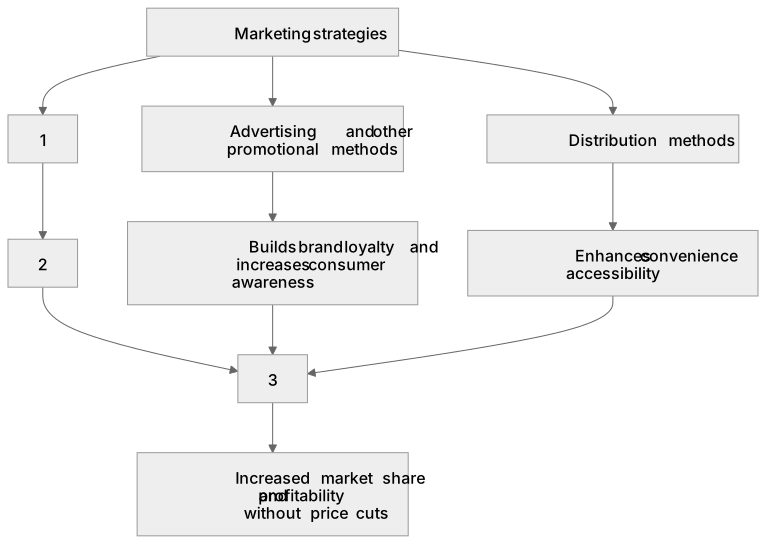
Some boxes have lost their names. Pick the right name for each number.
1Box 1
2Box 2
3Box 3
There is more to this lesson
The full lesson goes on to check your understanding and help you earn the marks. Create a free account to carry on, with your progress saved.
A week of Premium from your first lesson · Then the free plan continues · No card, no charge
Test your understanding of Types of non-price competition: a) The impact of marketing on the demand curve: o product differentiation o advertising and other promotional methods o distribution methods
Active recall beats re-reading. Take an instant quiz now to test what you’ve learned and lock it into long-term memory.
A week of Premium from your first lesson · Then the free plan continues · No card, no charge