Study Notes
Overview
The Anthology Poetry Comparison (Component 2, Section B, Part 1) is a critical component of the Pearson Edexcel GCSE English Literature exam. It requires candidates to compare a named poem from their chosen collection with another poem of their choice from the same anthology. Examiners are looking for a sophisticated, integrated approach that balances three Assessment Objectives: AO1 (critical response and textual evidence), AO2 (analysis of language, form, and structure), and AO3 (understanding of context). Success in this section demands more than just feature-spotting; it requires a genuine comparative argument that explores how different poets approach similar themes, supported by precise textual analysis and relevant contextual knowledge.
Assessment Objectives Breakdown
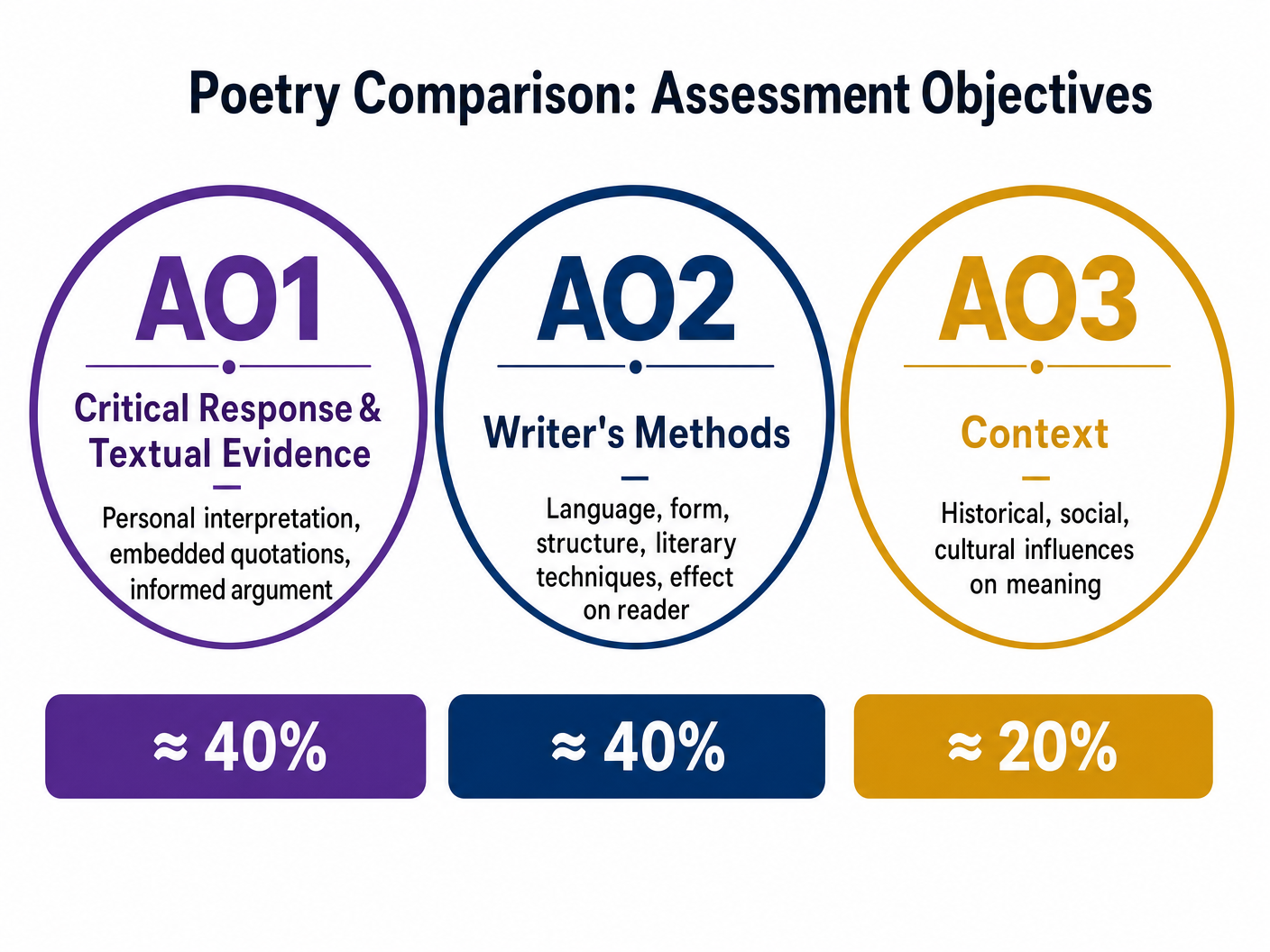
Understanding the Assessment Objectives (AOs) is crucial for structuring your response effectively.
AO1 (Critical Response & Textual Evidence): This forms the foundation of your essay. You must articulate a clear, informed personal response to both poems. Quotations must be judiciously selected and seamlessly embedded into your sentences. Examiners reward candidates who use evidence to build an argument rather than simply dropping quotes to prove they have read the text.
AO2 (Writer's Methods): This is where you analyze how the poets create meaning. You must go beyond identifying language features (like metaphors or similes) and explore form and structure. Why did the poet choose a sonnet form? What is the effect of enjambment or a sudden volta? Always link the method back to the poem's overall meaning or effect on the reader.
AO3 (Context): Context is not a history lesson tacked onto the end of a paragraph. It is the integration of historical, social, and cultural factors that influenced the poem's creation or reception. High-level responses show how context shapes the poet's perspective and the poem's meaning.
The Comparative Approach
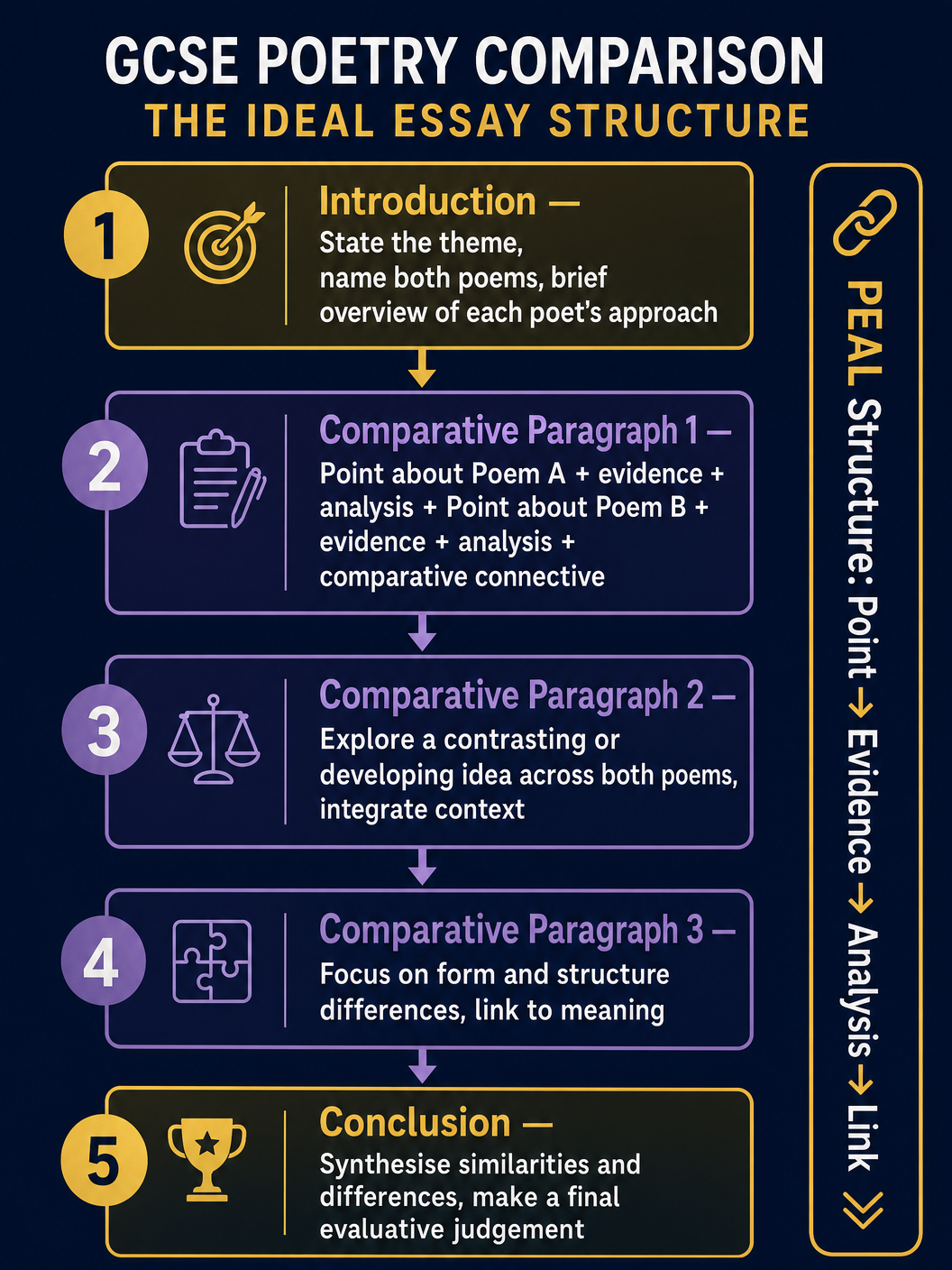
The most common pitfall in this exam is writing two separate essays. To achieve high marks, your response must be comparative throughout. This means discussing both poems in every paragraph, using comparative connectives (e.g., "Similarly," "In contrast," "Whereas").
When selecting your second poem, choose one that offers rich comparative potential. It doesn't have to be identical in theme; sometimes, contrasting approaches to a similar subject yield the most perceptive analysis.
Key Themes in the Pearson Anthology
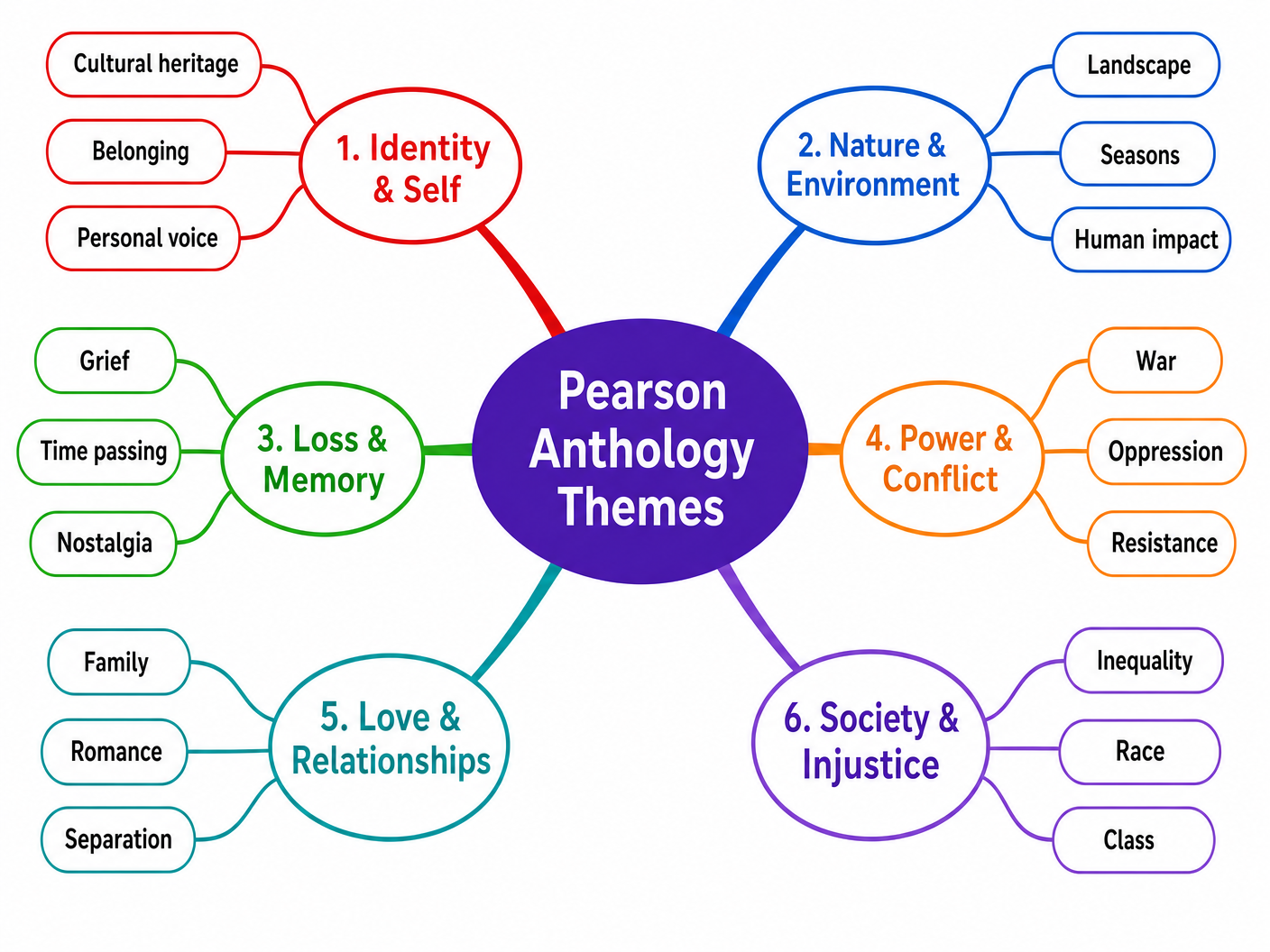
While the specific poems vary by collection (e.g., Relationships, Conflict, Time and Place), certain overarching themes frequently appear:
Theme 1: Power and Conflict
Many poems explore the physical and psychological impacts of war, oppression, or societal conflict. Look for how poets use structure (like fragmented stanzas) to mirror the chaos of conflict, or language (like violent verbs) to convey trauma.
Key Quotes (Examples):
- "blood-shadow" — Suggests a permanent, inescapable stain of guilt or trauma.
- "mind-forg'd manacles" — Highlights psychological oppression alongside physical control.
Theme 2: Love and Relationships
This theme encompasses romantic love, familial bonds, and the pain of separation. Compare how poets use form (like the controlled structure of a sonnet versus free verse) to reflect the nature of the relationship.
Key Quotes (Examples):
- "half-fledged thing" — A metaphor for vulnerability and the painful process of letting go.
- "the smile on your mouth was the deadest thing" — An oxymoron emphasizing the decay of affection.
Theme 3: Nature and Time
The enduring power of nature is often contrasted with the transience of human life or achievements. Analyze how poets use imagery and rhythm to convey the unstoppable passage of time.
Key Quotes (Examples):
- "sneer of cold command" — Personifies human arrogance in the face of inevitable decay.
- "spits like a tame cat turned savage" — A simile showing nature's unpredictable and uncontrollable force.
Theme 4: Identity and Belonging
Poets frequently explore questions of cultural identity, displacement, and the search for belonging. Look for the use of first-person voice, direct address, and the tension between two cultures or worlds.
Key Quotes (Examples):
- "I am not from here" — Blunt, declarative syntax that asserts alienation.
- "caught between two worlds" — Metaphor for cultural duality.
Writer's Methods: Language, Form, and Structure
Examiners award marks for analysis of all three elements. Many candidates focus exclusively on language and neglect form and structure, which limits their mark.
Language: Analyze specific word choices. Ask: why this word and not another? What connotations does it carry? What is its effect on the reader?
Form: Consider the type of poem. A sonnet traditionally explores love or beauty; choosing this form for a poem about war creates a powerful ironic contrast. Free verse suggests authenticity and lack of constraint. A dramatic monologue creates a gap between what the speaker says and what the reader understands.
Structure: Look at how the poem is organized. Regular stanzas suggest control; irregular stanzas suggest chaos. Enjambment creates momentum; caesura creates pause and emphasis. The volta marks a shift in thought or tone — its placement is always significant.
Audio Resource: Poetry Comparison Masterclass
Listen to our comprehensive 10-minute podcast episode covering core concepts, exam tips, and a quick-fire recall quiz.
Visual Resources
3 diagrams and illustrations
Interactive Diagrams
1 interactive diagram to visualise key concepts
Conceptual Flow Outline
The Ideal Workflow for the Poetry Comparison Exam
Worked Examples
2 detailed examples with solutions and examiner commentary
Practice Questions
Test your understanding — click to reveal model answers
Compare how poets present the power of nature in the named poem and one other poem from your anthology. (30 marks)
Hint: Consider whether nature is presented as a destructive force, a comforting presence, or an indifferent entity. Look for structural features like enjambment that might mimic nature's movement.
Compare how the writers explore the effects of loss in the named poem and one other poem. (30 marks)
Hint: Loss can be literal (death) or metaphorical (loss of innocence, loss of culture). How do the poets use form (e.g., elegiac tone, fragmented structure) to convey this?
Compare how poets present complex relationships in the named poem and one other poem. (30 marks)
Hint: Look for shifts in tone. Does the relationship change? How does the structure of the poem reflect the dynamics of the relationship? Consider familial as well as romantic relationships.
Compare how the writers use structure to create tension in the named poem and one other poem. (30 marks)
Hint: This question specifically targets AO2 structure. You must discuss features like stanza length, line length, enjambment, caesura, and volta. Do not focus primarily on language.