AQA · GCSE · English Literature
Course version: 8702 · Version from Sept 2015
London
Master Blake's 'London' to unlock high marks in the AQA Power and Conflict poetry cluster. This poem offers rich opportunities for AO2 analysis through its relentless structure and powerful metaphors, whilst demanding strong AO3 integration of Blake's radical critique of Georgian society.
- 7 min read
- 2 worked examples
- 4 practice questions
- 4 key terms
Try the lesson
The start of the London lesson, made from checked teaching notes for this specification point.
Have a go first
In 'London', which word does Blake use to describe the streets and the river, suggesting that they are owned and controlled?
Listen
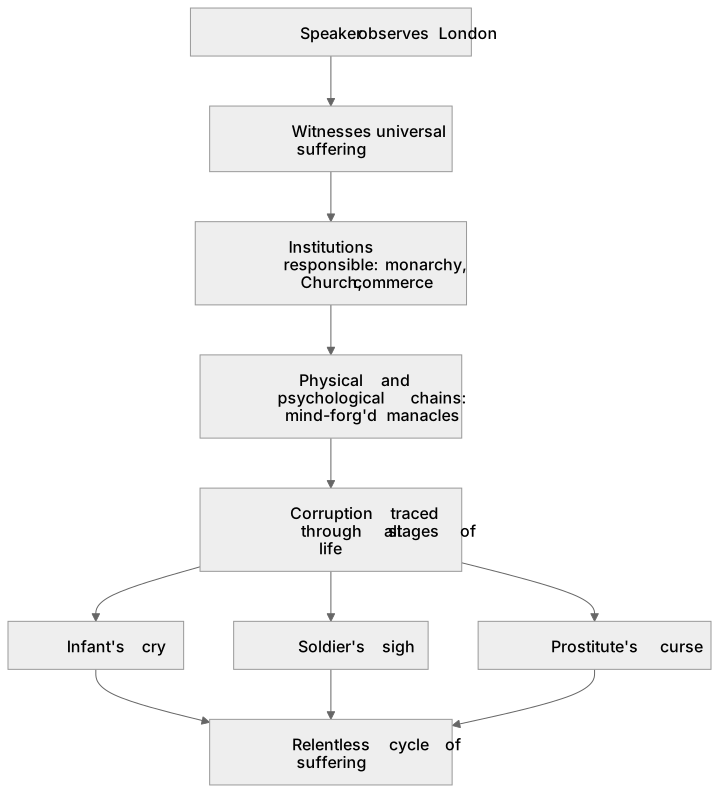
William Blake’s “London” is a fierce critique of the oppressive power structures of the late 18th century. The speaker, acting as an observer, walks through the city and witnesses the universal suffering of its inhabitants. Blake argues that institutions like the monarchy, the Church, and commerce are responsible for this misery, imposing both physical and psychological chains (“mind-forg’d manacles”) on the people. The poem traces this corruption through all stages of life, from the cry of the infant to the soldier’s sigh and the prostitute’s curse. Ultimately, it presents a bleak vision of a society where human potential and joy are systematically destroyed by man-made systems of control, creating a relentless cycle of suffering. A strong answer earns marks for these points. Develop a clear interpretation of the speaker's attitude towards the city, supporting it with well-chosen textual references. When comparing, focus on a shared concept like 'institutional power' or 'human suffering' to build a coherent argument. Trace the speaker's journey through the poem, from general observations in the first two stanzas to identifying the causes and consequences in the last two. Analyse the effect of the poem's relentless rhythm and rhyme scheme in reflecting the inescapable and monotonous suffering in the city. A common slip: The speaker is William Blake. Instead, While the views expressed align with Blake's, it is more precise to refer to 'the speaker' or 'the persona'. This maintains a focus on the poem as a literary construction rather than a simple statement of autobiography. Exam tip: Compare with Ozymandias: The abuse of power by rulers. Difference: In 'Ozymandias', the ruler's power is shown to be temporary and ultimately destroyed by time and nature. In 'London', the power of institutions is presented as an immediate, ongoing, and inescapable force that actively oppresses the living population. Useful when: How poets present power as transient versus persistent.
See it
Key words
Say what each word means before you turn the card.
The power of institutions
Try answering aloud or in your head before turning the card.
Social injustice and inequality
Try answering aloud or in your head before turning the card.
Loss of innocence and freedom
Try answering aloud or in your head before turning the card.
Widespread human suffering
Try answering aloud or in your head before turning the card.
See every definition
- The power of institutions
- The monarchy, the Church and commerce are held responsible for the misery of the city's inhabitants, imposing physical and psychological chains on the people.
- Social injustice and inequality
- A society in which human potential and joy are systematically destroyed by man-made systems of control, creating a relentless cycle of suffering.
- Loss of innocence and freedom
- Corruption is traced through all stages of life, from the cry of the infant to the soldier's sigh and the prostitute's curse.
- Widespread human suffering
- The speaker walks through the city and witnesses the universal suffering of its inhabitants, a misery visible and permanently etched onto every person.
Label the diagram
Some boxes have lost their names. Pick the right name for each number.
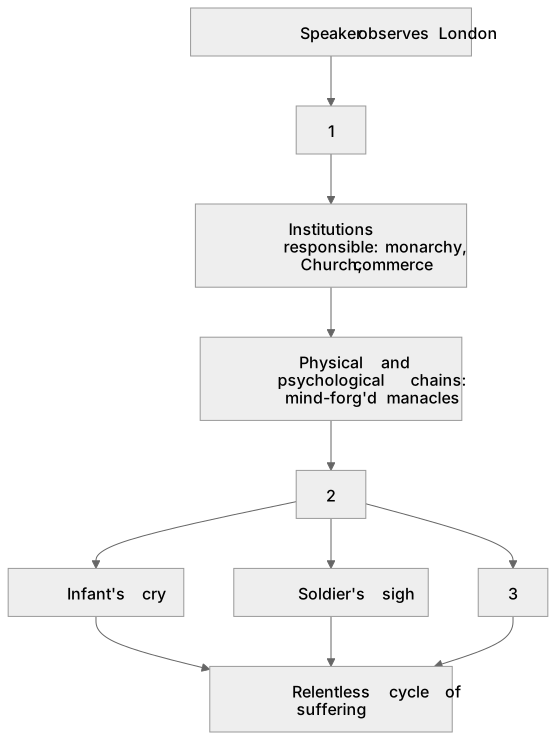
1Box 1
2Box 2
3Box 3
There is more to this lesson
The full lesson goes on to check your understanding and help you earn the marks. Create a free account to carry on, with your progress saved.
A week of Premium from your first lesson · Then the free plan continues · No card, no charge
Study Notes
Overview
William Blake's 'London' (1794) is a devastating critique of 18th-century society, presenting a dystopian vision of the capital where suffering is universal and institutional power is corrupt. Published in Songs of Experience, the poem is essential for the AQA Power and Conflict cluster because it addresses both literal power (the Church, the Monarchy) and psychological conflict. Examiners consistently reward candidates who move beyond identifying basic imagery to explore Blake's complex argument about 'mind-forg'd manacles' — the psychological chains that prevent rebellion. Strong responses must balance AO1 interpretation of the speaker's despair with precise AO2 analysis of Blake's relentless iambic rhythm and anaphoric structures, while seamlessly weaving in AO3 context regarding the Industrial Revolution and Blake's dissenting politics.
Poem Structure and Content Overview
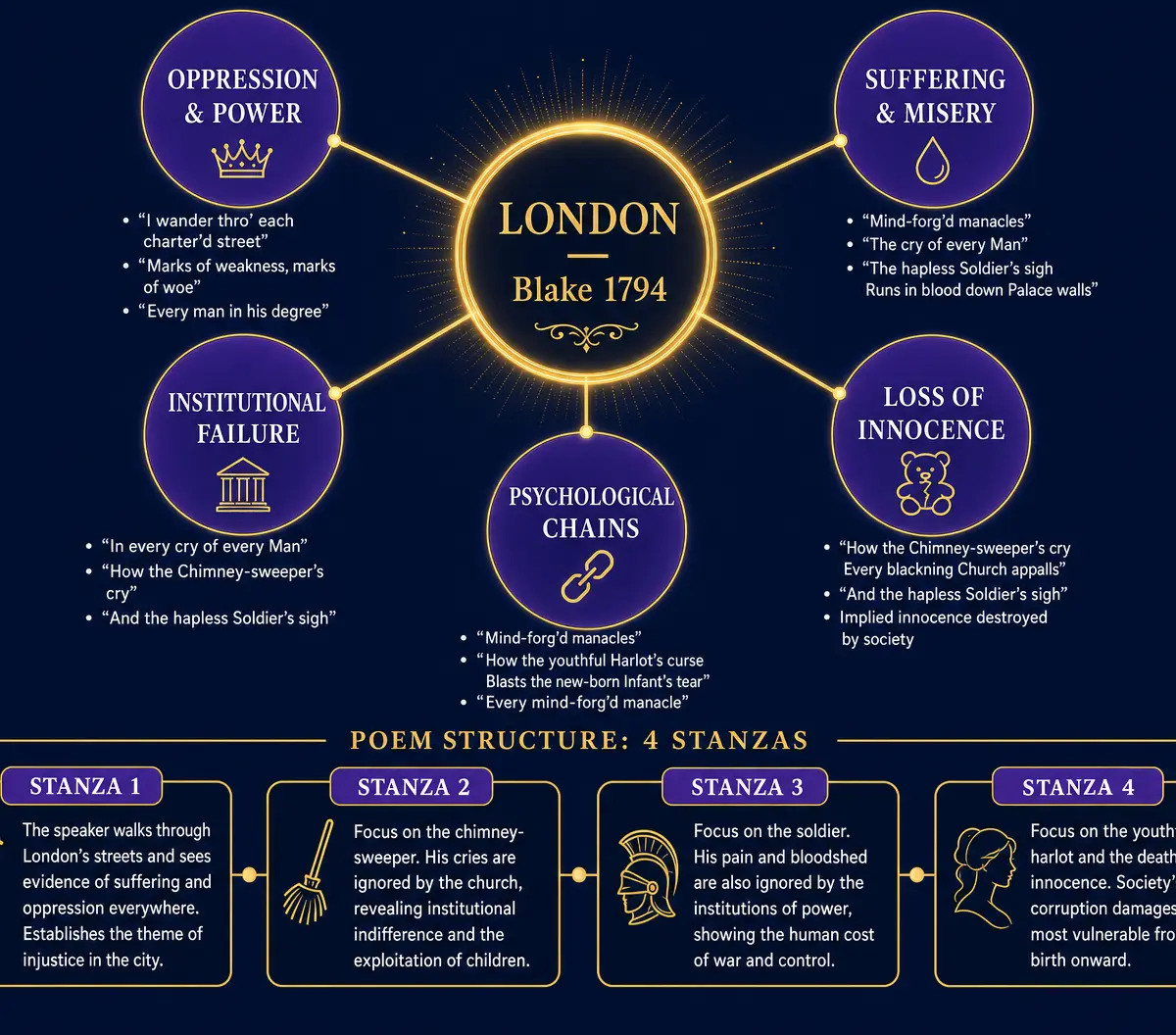
The poem is structured as a walk through the city, divided into four quatrains:
- Stanza 1: The speaker establishes the setting, wandering through 'charter'd' streets near the 'charter'd' Thames, observing universal suffering ('Marks of weakness, marks of woe').
- Stanza 2: The focus shifts to the psychological reality of the city. The speaker hears the cries of men and infants, concluding that they are trapped by 'mind-forg'd manacles'.
- Stanza 3: Blake introduces specific victims and indicts the institutions responsible: the chimney-sweeper (failed by the Church) and the soldier (failed by the Monarchy).
- Stanza 4: The poem reaches its dark climax at midnight, focusing on the 'youthful Harlot' whose curse destroys the innocence of the newborn and corrupts the institution of marriage.
Themes
Theme 1: Oppression and Institutional Power
Blake presents power not as protective, but as entirely destructive and corrupt. He systematically indicts the pillars of 18th-century authority — the Church, the State, and Commerce — demonstrating how they exploit the vulnerable rather than safeguarding them. The poem suggests that power is maintained through control of both physical spaces (the 'charter'd street') and human bodies.
Key Quotes:
- "I wander thro' each charter'd street" (Stanza 1) - The repetition of 'charter'd' highlights how commerce and corporate power have mapped, claimed, and restricted freedom in the city. Even the natural flow of the Thames is constrained by human greed.
- "Every blackning Church appalls" (Stanza 3) - The Church is literally blackened by the soot of the Industrial Revolution, but also morally blackened by its hypocrisy and failure to protect child chimney sweeps.
- "Runs in blood down Palace walls" (Stanza 3) - A powerful visual metaphor accusing the monarchy of sacrificing the lives of ordinary soldiers to maintain its own power and wealth.
Theme 2: Universal Suffering and Misery
Suffering in 'London' is inescapable and all-encompassing. Blake uses sensory language, particularly auditory imagery (cries, sighs, curses), to overwhelm the reader with the sheer volume of pain in the city. The suffering affects all ages, from the 'new-born Infant' to the adult man, creating a bleak portrait of the human condition under oppressive rule.
Key Quotes:
- "Marks of weakness, marks of woe" (Stanza 1) - The repetition of 'marks' suggests physical scarring or branding, indicating that suffering leaves permanent, visible damage on the populace.
- "In every cry of every Man / In every Infant's cry of fear" (Stanza 2) - The anaphora (repetition of 'In every') creates a relentless, suffocating rhythm that mirrors the inescapable nature of the misery.
Theme 3: Psychological Imprisonment
Perhaps Blake's most radical theme is the idea that oppression is not merely physical, but internalised. He argues that the ruling class has successfully conditioned the poor to accept their own subjugation, creating a society where rebellion is prevented by the victims' own minds.
Key Quotes:
- "The mind-forg'd manacles I hear" (Stanza 2) - This brilliant metaphor suggests that the citizens' chains (manacles) are forged in their own minds. They are trapped by their belief in the inevitability of their suffering and their acceptance of the social hierarchy.
Theme 4: The Corruption of Innocence
As a poem from Songs of Experience, 'London' repeatedly contrasts the vulnerability of youth with the corrupting force of adult society. Children are born into a world that immediately begins to destroy them, either through exploitative labour or inherited disease.
Key Quotes:
- "How the Chimney-sweeper's cry" (Stanza 3) - Represents the exploitation of children for dangerous, deadly labour, highlighting the loss of childhood.
- "Blasts the new-born Infant's tear" (Stanza 4) - The harsh verb 'blasts' (meaning to wither or destroy) shows how the harlot's curse (both her anger and her venereal disease) destroys the innocence of the child from the moment of birth.
The Speaker / Poetic Persona
Role: The speaker acts as a wandering observer, a prophetic voice bearing witness to the horrors of the city.
Key Traits: Observant, despairing, critical, isolated.
Narrative Voice: The use of the first-person pronoun "I" gives the poem an eyewitness authenticity. However, candidates must avoid confusing the speaker entirely with Blake himself; the speaker is a constructed persona used to guide the reader's perspective and force them to confront the uncomfortable realities of urban poverty.
Writer's Methods
- Form and Structure: The poem consists of four regular quatrains with a strict ABAB rhyme scheme. This highly controlled structure reflects the control imposed upon the citizens of London. The rhythm is predominantly iambic tetrameter (four beats per line), creating a trudging, marching pace that mimics the speaker's heavy footsteps and the relentless nature of the suffering.
- Anaphora: The repetition of "In every..." in the second stanza creates a suffocating, inescapable auditory landscape.
- Sensory Imagery: Blake relies heavily on sound (cries, sighs, curses) to convey the distress of the city, making the suffering feel immediate and overwhelming.
- Oxymoron: The final phrase "Marriage hearse" violently yokes together an institution of life and love with a vehicle of death, symbolising the complete corruption of society.
Context
To achieve high marks for AO3, context must be integrated into your analysis of language and form.
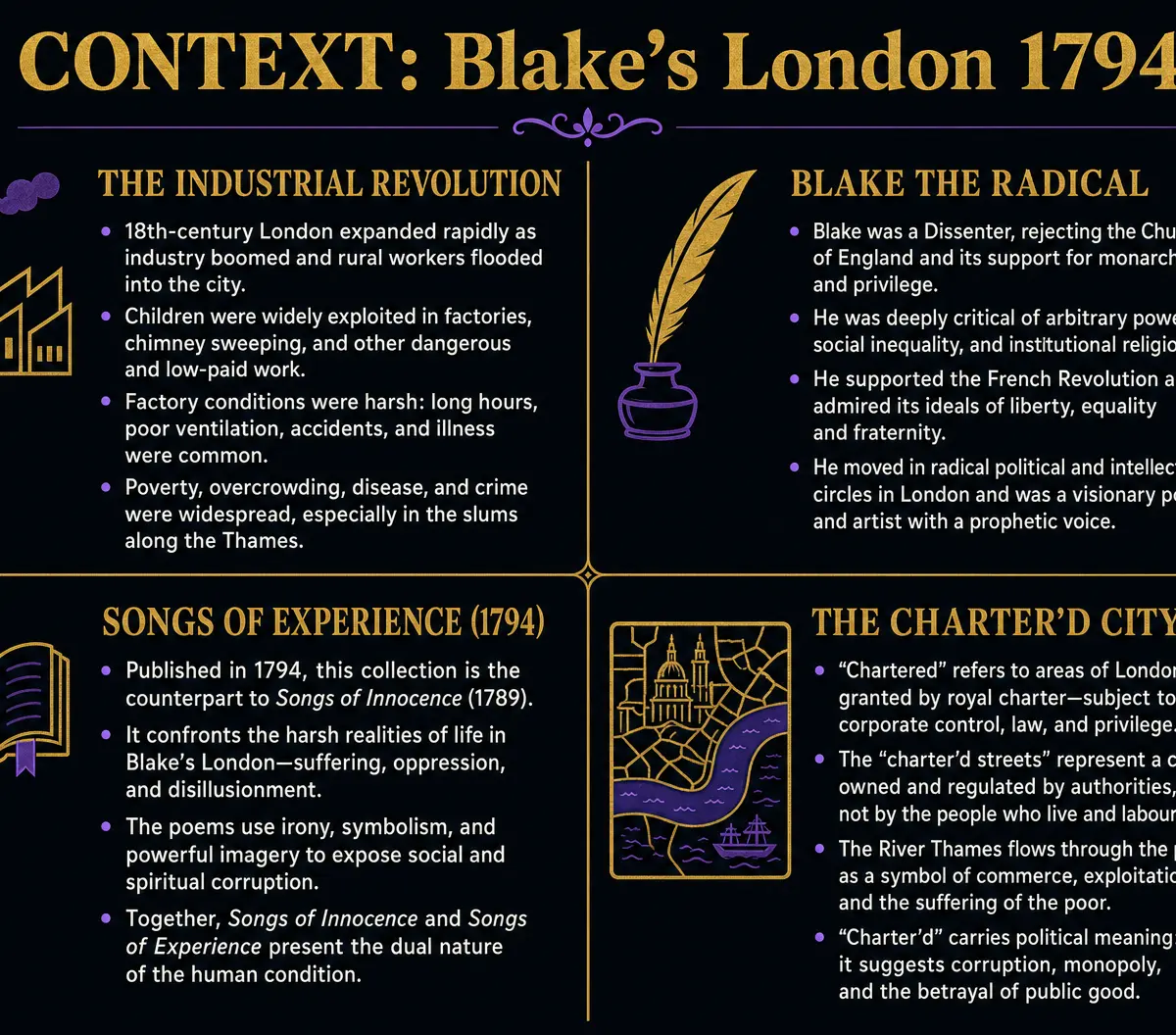
- The Industrial Revolution: London was expanding rapidly, leading to overcrowding, disease, and the exploitation of workers, particularly children (chimney sweeps). The 'blackning' of the city is both literal (pollution) and moral.
- Blake's Radical Politics: Blake was a Dissenter who rejected the authority of the Church of England and the Monarchy. He supported the ideals of the French Revolution and despised the rigid class structures of Georgian England.
- Songs of Experience: Published in 1794 as a counterpart to Songs of Innocence, this collection explores how the harsh realities of adult life and societal corruption destroy the purity of childhood.
- The 'Charter'd' City: The word 'charter'd' refers to the way land and rights were being bought up by wealthy corporations and the state, turning public spaces into private, controlled property.
Listen to our 10-minute deep dive podcast for examiner tips and a quick-fire recall quiz.
Worked Examples
2 worked examples — open one to explore the question and available guidance.
Practice Questions
Try the question, then reveal an answer plan or example response
Compare how poets present the reality of living in a city in 'London' and one other poem from 'Power and Conflict'. (30 marks)
Hint: Consider using 'The Emigrée' to contrast Blake's dark, oppressive view of London with Rumens's idealized, sunlight-filled memory of her home city.
How does Blake use language and structure to create a sense of despair in 'London'? (30 marks)
Hint: Focus heavily on AO2. Look at the anaphora in stanza 2, the auditory imagery, and the final oxymoron.
Compare how poets present the loss of innocence in 'London' and one other poem. (30 marks)
Hint: Consider comparing with 'Remains' or 'Kamikaze', focusing on how institutions or conflict destroy youth.
Explore the significance of the title 'London' in the context of the poem. (15 marks)
Hint: Think about what London represented in 1794 (power, empire, wealth) versus what Blake actually describes.
Exam technique
How to turn what you know into marks
How to approach the question
Deconstruct the prompt: highlight the key theme (e.g., 'power', 'suffering') and select your second poem immediately. Plan 3 comparative paragraphs focusing on conceptual links.
How to structure your answer
Use integrated comparative paragraphs. Start with a comparative topic sentence, analyze Blake's methods (with context), use a connective ('Similarly', 'Conversely'), and analyze the second poet's methods.
Timing
For the 30-mark comparison question, spend 5-7 minutes planning your comparative points, and 40 minutes writing.
Common pitfalls
- Feature spotting without analysing the effect (e.g., 'Blake uses an ABAB rhyme scheme' without explaining that it reflects the relentless, inescapable nature of the suffering).
- Bolting on context at the end of a paragraph rather than using it to explain *why* Blake chose specific words.
- Confusing the speaker of the poem with William Blake himself. Use 'the speaker' or 'the poetic persona'.
- Writing about one poem entirely, and then the other. You must compare throughout.
What the command words want
- Compare
- Focus on both similarities and differences in *how* the poets present their ideas. Use comparative connectives constantly.
- How does... present
- This is asking for AO2 methods. You must discuss language, form, and structure, and explain the effect on the reader.
Watch or listen (optional)
Test your understanding of London
Active recall beats re-reading. Take an instant quiz now to test what you’ve learned and lock it into long-term memory.
A week of Premium from your first lesson · Then the free plan continues · No card, no charge