AQA · GCSE · English Literature
Course version: 8702 · Version from Sept 2015
Poetry: Worlds and Lives (First teaching 2023, first exam 2025)
Worlds and Lives is a newer AQA poetry cluster, first taught in 2023 and first examined in 2025.
Checked against the AQA 8702 specification (opens in a new tab) on .
- Point 5 of 5
Study notes
From the checked teaching notes for this specification point.
The idea
Worlds and Lives is a newer AQA poetry cluster, first taught in 2023 and first examined in 2025. It explores how poets present the natural world, human experience and the relationship between people and the places they inhabit. The poems invite you to consider different worlds, from the everyday to the imagined, and the lives lived within them. You need to know each poem's ideas and methods, and to compare two poems in response to a question. In the exam, AQA will name or print one poem and you choose one other poem from the cluster to compare with it. Build your understanding of themes such as nature, belonging, change, loss and wonder, and notice how poets use imagery, form, structure and voice. Because the cluster is new, rely on your anthology and class study rather than assuming past-paper patterns. You will be assessed on your analysis of the two poems you compare.
What earns the marks
- Show secure knowledge of the poems in the Worlds and Lives cluster, including their titles, poets and central ideas about worlds and lives.
- Analyse how poets use methods such as imagery, form, structure, rhythm and voice to present worlds and lives, using precise quotations.
- Compare two poems, exploring similarities and differences in the ideas and methods used to present worlds and lives.
- Respond to the specific focus of the question, selecting relevant material rather than retelling the poems.
- Use subject terminology accurately and integrate contextual understanding where it illuminates the poems' presentation of worlds and lives.
Common mistakes and how to put them right
Treating the cluster as if it were an older, well-known set and relying on remembered past-paper questions.
Put it right: Use your anthology and class notes instead.
Writing about one poem only.
Put it right: The task requires comparison, so plan both poems and weave links between them.
Retelling the story or message of each poem without analysing methods.
Put it right: Focus on how language, form and structure create meaning.
Treating a specification section number as examinable knowledge.
Put it right: Use the section label only for navigation and spend revision time on the poems, comparison and assessment objectives.
Exam tips
- Read the question twice and underline the focus words before choosing your second poem.
- Spend a few minutes planning three or four comparative points, each with a quotation and a method.
- Use comparative connectives such as 'similarly', 'whereas' and 'both poets' to keep the comparison explicit.
- Keep quotations short and embed them in your sentences to save time and sharpen analysis.
Try the lesson
The start of the Poetry: Worlds and Lives (First teaching 2023, first exam 2025) lesson, made from checked teaching notes for this specification point.
Have a go first
In the 'Worlds and Lives' poetry anthology, which poem explores a speaker's feeling of connection to a culture they are visiting, symbolised by the experience of having their hand decorated with henna?
Listen
Worlds and Lives is a newer AQA poetry cluster, first taught in 2023 and first examined in 2025. It explores how poets present the natural world, human experience and the relationship between people and the places they inhabit. The poems invite you to consider different worlds, from the everyday to the imagined, and the lives lived within them. You need to know each poem's ideas and methods, and to compare two poems in response to a question. In the exam, AQA will name or print one poem and you choose one other poem from the cluster to compare with it. Build your understanding of themes such as nature, belonging, change, loss and wonder, and notice how poets use imagery, form, structure and voice. Because the cluster is new, rely on your anthology and class study rather than assuming past-paper patterns. You will be assessed on your analysis of the two poems you compare. A strong answer earns marks for these points. Show secure knowledge of the poems in the Worlds and Lives cluster, including their titles, poets and central ideas about worlds and lives. Analyse how poets use methods such as imagery, form, structure, rhythm and voice to present worlds and lives, using precise quotations. Compare two poems, exploring similarities and differences in the ideas and methods used to present worlds and lives. Respond to the specific focus of the question, selecting relevant material rather than retelling the poems. A common slip: Treating a specification section number as examinable knowledge. Instead, use the section label only for navigation and spend revision time on the poems, comparison and assessment objectives. Exam tip: Read the question twice and underline the focus words before choosing your second poem.
See it
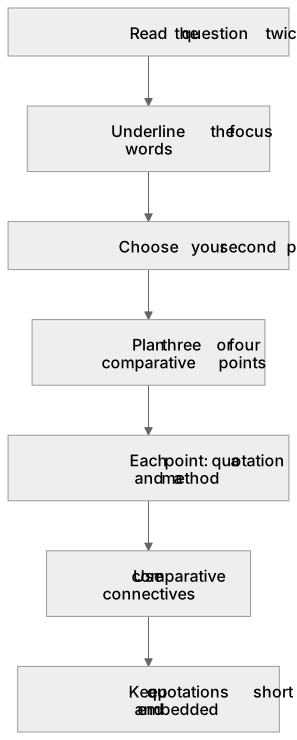
Put it in order
Put these steps in the order they happen.
- 1. Keep quotations short and embedded
- 2. Use comparative connectives
- 3. Choose your second poem
- 4. Each point: a quotation and a method
- 5. Read the question twice
- 6. Underline the focus words
- 7. Plan three or four comparative points
Watch it explained
What is the one idea the video explains? Say it in a sentence.
Read the described scene instead
Worlds and Lives is a newer AQA poetry cluster, first taught in 2023 and first examined in 2025. It asks how poets present the natural world, human experience, and the relationship between people and the places they inhabit. You will compare two poems in the exam. The cluster explores the natural world and humanity's place in it, belonging, home and displacement, change, loss and memory, and wonder, imagination and the everyday. Notice how poets use imagery, form, structure and voice to present these worlds and lives. You need secure knowledge of each poem's titles, poets and central ideas. Analyse methods such as imagery, form, structure, rhythm and voice, using precise quotations. Respond to the question's focus, selecting relevant material rather than retelling the poems. For comparison, read the question twice and underline its focus words before choosing your second poem. Plan three or four comparative points, each with a quotation and a method. Use connectives such as similarly, whereas and both poets to keep links explicit. Keep quotations short and embed them in your sentences. Do not treat the cluster as an older, well-known set or rely on remembered past-paper questions. Use your anthology and class notes. Do not write about one poem only: the task requires comparison, so plan both poems and weave links. Do not retell story or message without analysing methods; focus on how language, form and structure create meaning. Revise the Worlds and Lives poems with their titles, poets and ideas. Build understanding of nature, belonging, change, loss and wonder. In the exam, analyse methods in two poems and compare similarities and differences. Use subject terminology accurately and integrate context only where it illuminates the poems' presentation of worlds and lives.
Label the diagram
Some boxes have lost their names. Pick the right name for each number.
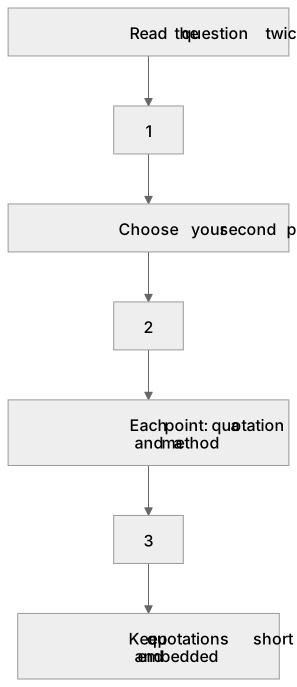
1Box 1
2Box 2
3Box 3
There is more to this lesson
The full lesson goes on to check your understanding and help you earn the marks. Create a free account to carry on, with your progress saved.
A week of Premium from your first lesson · Then the free plan continues · No card, no charge
Test your understanding of Poetry: Worlds and Lives (First teaching 2023, first exam 2025)
Active recall beats re-reading. Take an instant quiz now to test what you’ve learned and lock it into long-term memory.
A week of Premium from your first lesson · Then the free plan continues · No card, no charge