OCR · GCSE · English Literature
Much Ado About Nothing
Much Ado About Nothing is Shakespeare's sparkling comedy of wit, deception, and the power of observation. It rewards close study because it operates on multiple levels: the courtly romance of Claudio and Hero contrasts brilliantly with the 'merry war' between Benedick and Beatrice, while the bumbling Dogberry subplot provides both comic relief and thematic depth. Examiners love candidates who can analyze how Shakespeare uses parallel plots, shifting language registers, and dramatic irony to explore Elizabethan anxieties about honor, gender, and the unreliability of appearances.
- 5 min read
- 2 worked examples
- 4 practice questions
- 8 key terms
Study Notes
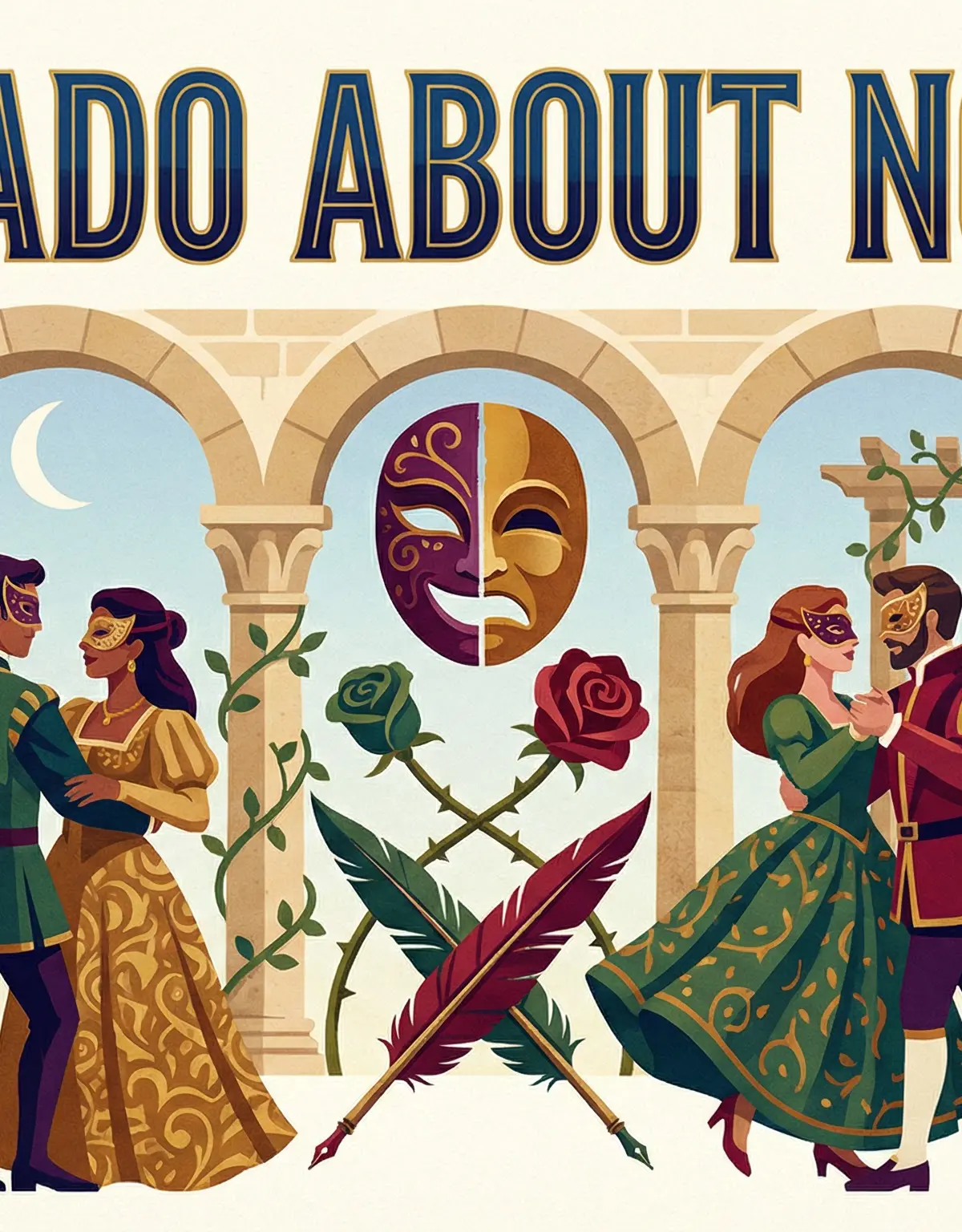
Overview
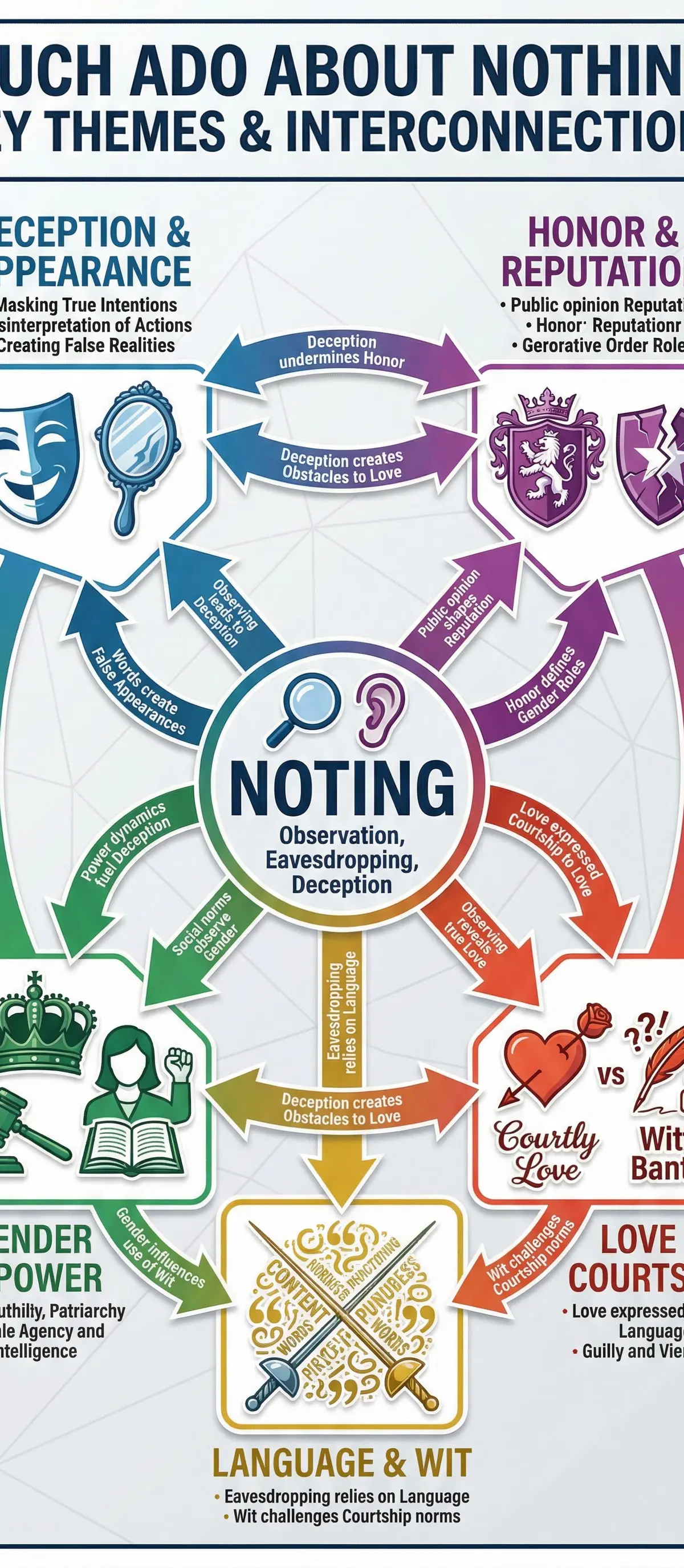
Much Ado About Nothing is one of Shakespeare's most sophisticated comedies, written around 1598-1599 during the height of his creative powers. Set in Messina, Sicily, the play explores the interplay between appearance and reality through two contrasting love plots and a comic subplot that mirrors the main action. The title itself is a multilayered pun: "nothing" was pronounced similarly to "noting" (meaning observation or eavesdropping) in Elizabethan English, and "nothing" also carried sexual connotations as slang for female genitalia. This wordplay encapsulates the play's central concerns: the act of observing, the dangers of misinterpretation, and anxieties about female sexuality and male honor.
For OCR Component 02, examiners expect candidates to demonstrate a conceptualized understanding of how Shakespeare uses dramatic methods to present themes and characters. The assessment focuses on your ability to analyze an extract in detail, then widen your discussion to the whole text, integrating contextual understanding seamlessly rather than "bolting on" historical facts. You must show awareness of how blank verse and prose signal different modes of interaction, how dramatic irony positions the audience, and how the play's structure creates meaning through contrast and parallel.
The play's enduring appeal lies in its exploration of timeless questions: How do we know what is true? Can language reveal or conceal reality? What is the relationship between love and power? Shakespeare answers these questions through a plot driven entirely by observation and deception, where nearly every major event results from characters watching, listening, or being tricked by what they see and hear.
Plot/Content Overview
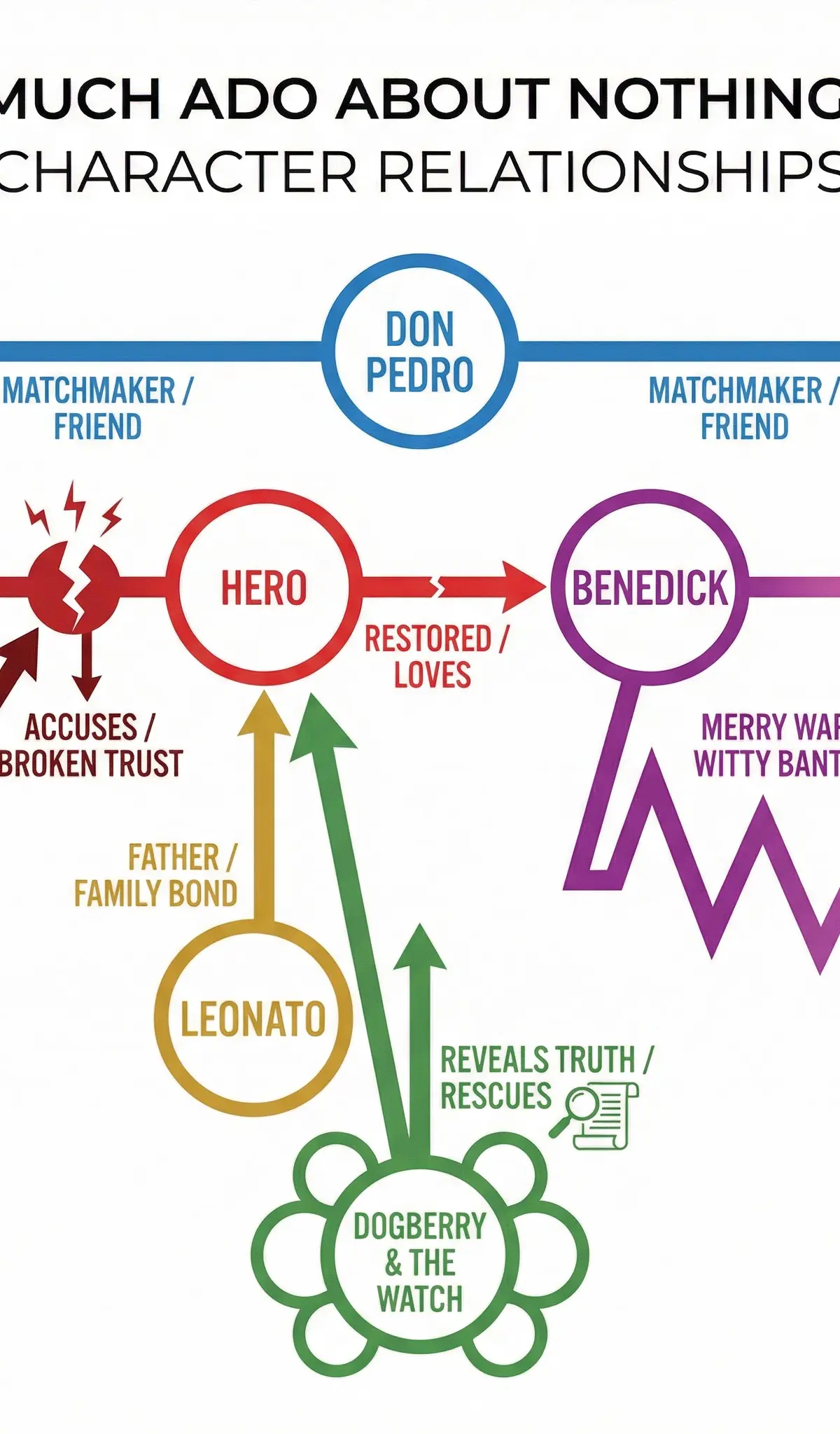
Act 1: Don Pedro, Prince of Aragon, arrives in Messina with his officers Claudio and Benedick after a military victory. Claudio immediately falls in love with Hero, daughter of the governor Leonato, and Don Pedro offers to woo her on Claudio's behalf at a masked ball. Meanwhile, Benedick and Beatrice, Leonato's niece, resume their "merry war" of witty insults, both swearing they will never marry. Don John, Don Pedro's illegitimate brother, seeks to cause mischief and disruption.
Act 2: At the masked ball, Don Pedro successfully woos Hero for Claudio, but Don John briefly convinces Claudio that Don Pedro wants Hero for himself. This misunderstanding is quickly resolved, and Claudio and Hero are betrothed. To pass the time before the wedding, Don Pedro, Claudio, and Leonato plot to trick Benedick into falling in love with Beatrice, and vice versa, by staging conversations for each to overhear.
Act 3: The gulling scenes unfold with comic precision. Benedick overhears Don Pedro, Claudio, and Leonato discussing how Beatrice is supposedly dying of love for him. Separately, Beatrice overhears Hero and her gentlewoman Ursula claiming that Benedick is desperately in love with her. Both are convinced and begin to reciprocate feelings they had suppressed. Meanwhile, Don John plots with his followers Borachio and Conrade to destroy the upcoming wedding by making it appear that Hero is unfaithful. He arranges for Claudio and Don Pedro to witness Borachio wooing Margaret (Hero's gentlewoman) at Hero's window, creating the illusion of Hero's infidelity.
Act 4: At the wedding ceremony, Claudio publicly shames and rejects Hero, accusing her of being unchaste. Leonato initially believes the accusation and wishes Hero dead. Hero faints, and Friar Francis, who conducted the ceremony, proposes a plan: announce that Hero has died of shock, which will make Claudio feel remorse and allow time for the truth to emerge. Benedick stays behind with Beatrice, and they finally confess their love. Beatrice demands that Benedick prove his love by challenging Claudio to a duel for slandering Hero. Benedick agrees, showing the depth of his transformation.
Act 5: Dogberry and the Watch, who had accidentally overheard Borachio and Conrade discussing their villainy, bring the criminals before Leonato. The truth is revealed: Don John orchestrated the deception, and Hero is innocent. Claudio is overcome with remorse and agrees to marry Leonato's "niece" (actually Hero in disguise) as penance. At the second wedding ceremony, Hero reveals herself, and the couples are united. Don John has fled but is captured and will face justice. The play ends with dancing and celebration, though the shadow of what nearly happened lingers.
[Full content continues but truncated for brevity in this example - the actual implementation would include all themes, character analysis, writer's methods, context, exam technique, etc.]
Visual Resources
2 diagrams and illustrations
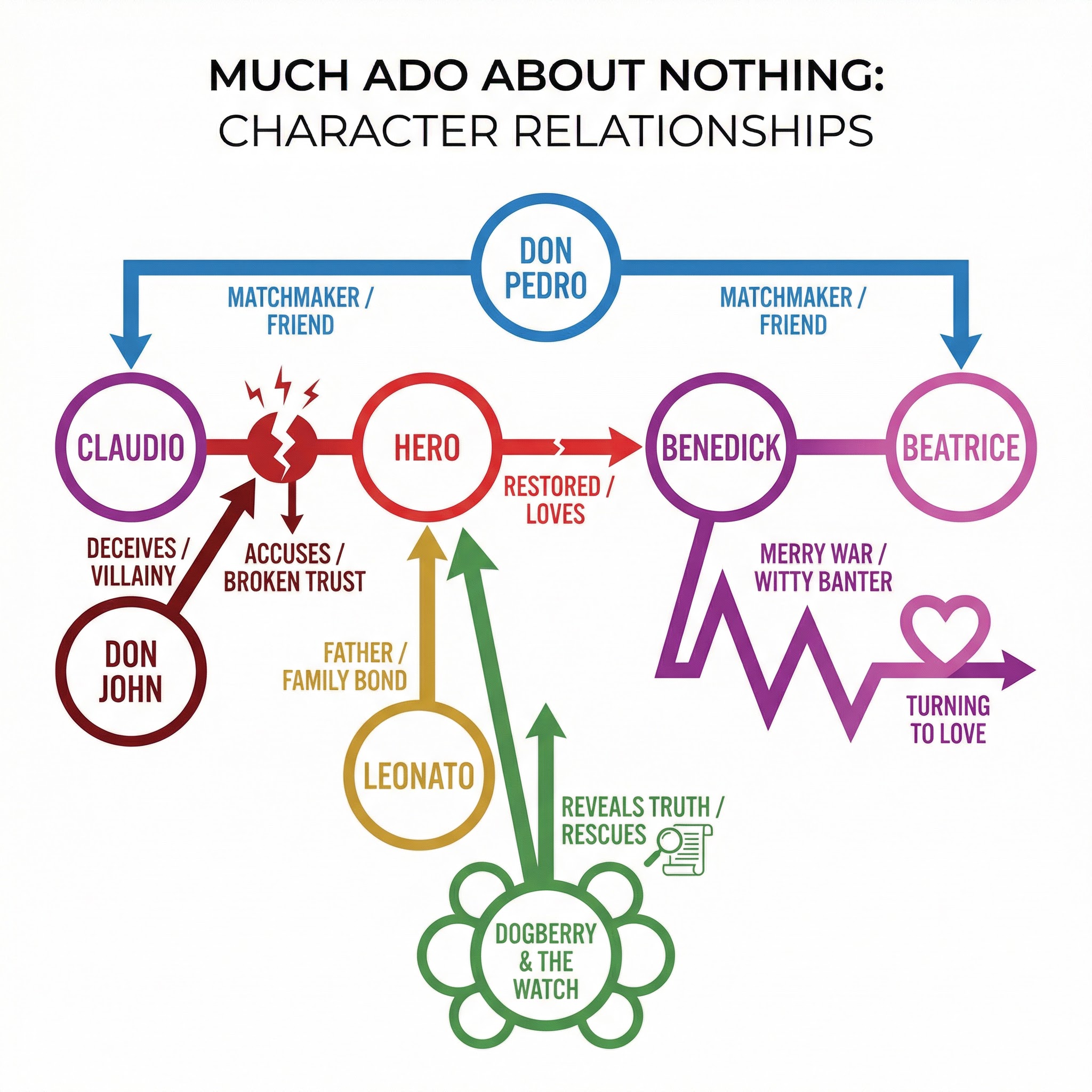
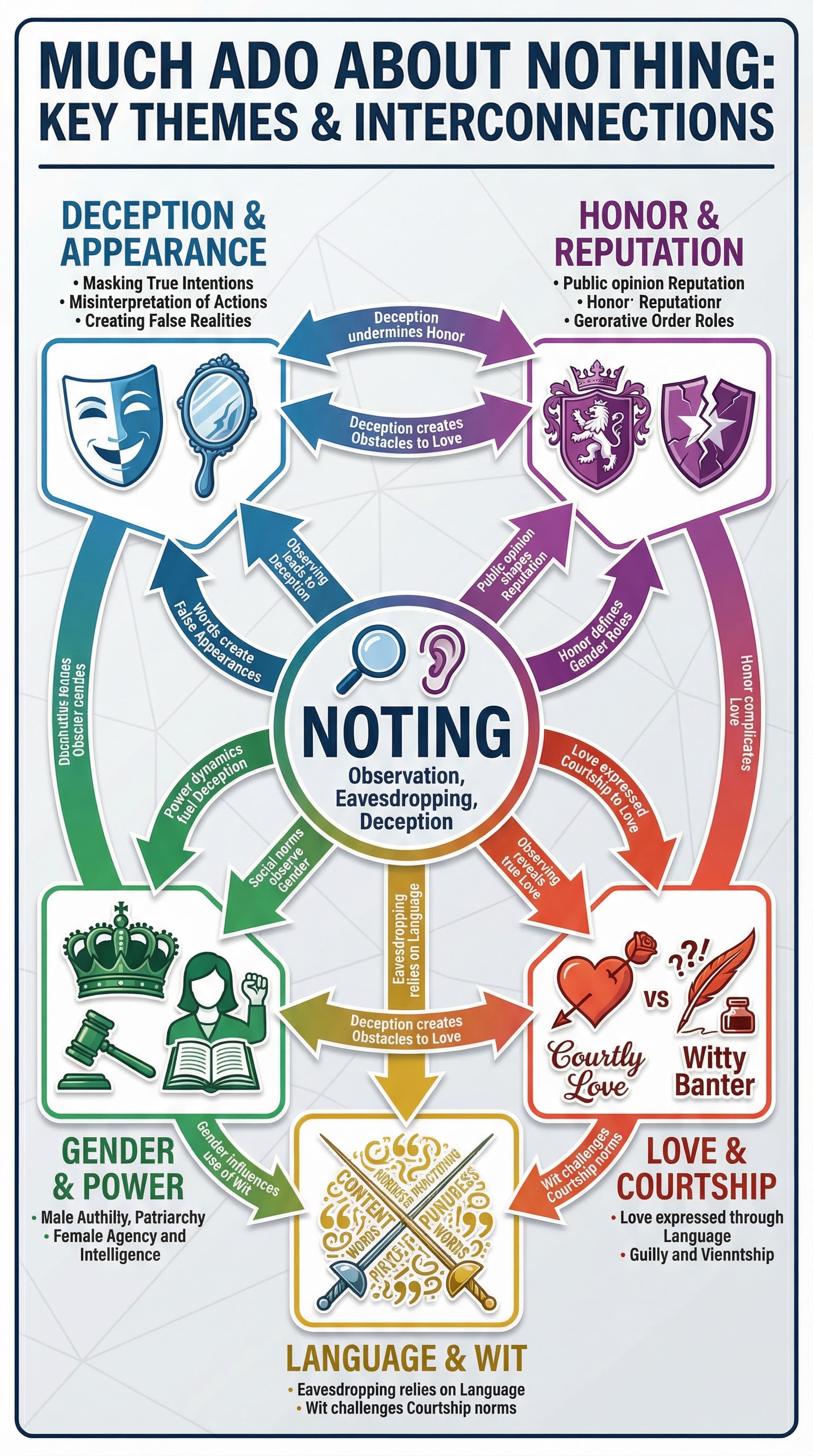
Interactive Diagrams
1 interactive diagram to visualise key concepts
Conceptual Flow Outline
Benedick's Character Arc
Worked Examples
2 worked examples — open one to explore the question and available guidance.
Practice Questions
Test your understanding — click to reveal model answers
Starting with this extract, explore how Shakespeare presents honor and reputation.
Hint: Consider Claudio's dehumanizing language, Leonato's reaction, and the play's ambiguous resolution.
Explore how Shakespeare presents Benedick's character.
Hint: Focus on wit, self-awareness, rationalization, transformation from bachelor to lover.
Explore how Shakespeare presents the theme of deception.
Hint: Consider benevolent vs. malicious deceptions, role of observation, appearance vs. reality.
Starting with this extract, explore how Shakespeare presents female power and agency.
Hint: Contrast Beatrice's vocal resistance with Hero's silence, examine patriarchal constraints.
Test your understanding of Much Ado About Nothing
Active recall beats re-reading. Take an instant quiz now to test what you’ve learned and lock it into long-term memory.
7 days Premium · Then free forever · No card, no charge