Catrin
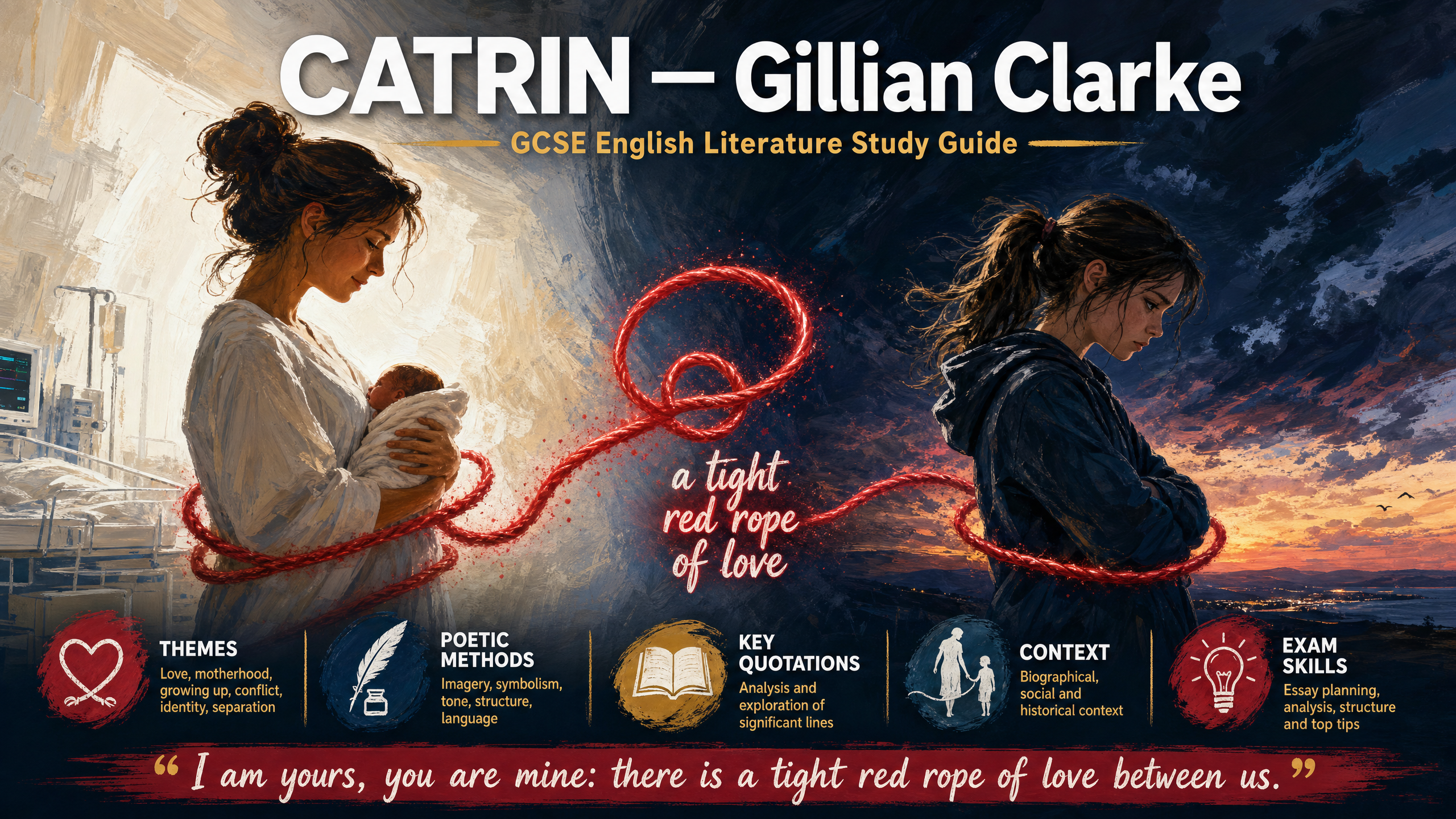
Gillian Clarke's 'Catrin' offers a raw, honest exploration of the mother-daughter bond, capturing the intense paradox of love and conflict from childbirth through adolescence. It's a highly rewarding poem to study because its vivid imagery and shifting structure provide excellent opportunities for high-level AO2 analysis.
Study Notes
Overview
'Catrin' is a deeply personal yet universally resonant poem by Welsh poet Gillian Clarke, addressed to her daughter. It explores the intense, complex, and often contradictory nature of the mother-child relationship. Examiners consistently reward candidates who move beyond simply identifying the poem's autobiographical elements and instead analyse it as a crafted literary construct. Top-band responses recognise the ambivalence at the heart of the poem: the idea that maternal love is simultaneously a profound connection and a source of painful restriction. By examining Clarke's structural shift from the past tense of childbirth to the present tense of adolescence, candidates can demonstrate perceptive AO2 skills.
Listen to our comprehensive audio guide for a deeper dive into the poem:
Plot/Content Overview
Stanza 1 (The Past): The speaker recalls the intense, almost combative experience of giving birth to her daughter in a "hot, white room." She remembers the physical struggle, the clinical environment, and the profound, primal connection forged at the moment of birth.
Stanza 2 (The Present): The poem jumps forward in time. The daughter is now an adolescent, asking to go out "skating in the dark." The mother reflects on the enduring tension between them—the ongoing struggle between the mother's protective instinct and the daughter's growing need for independence.
Themes
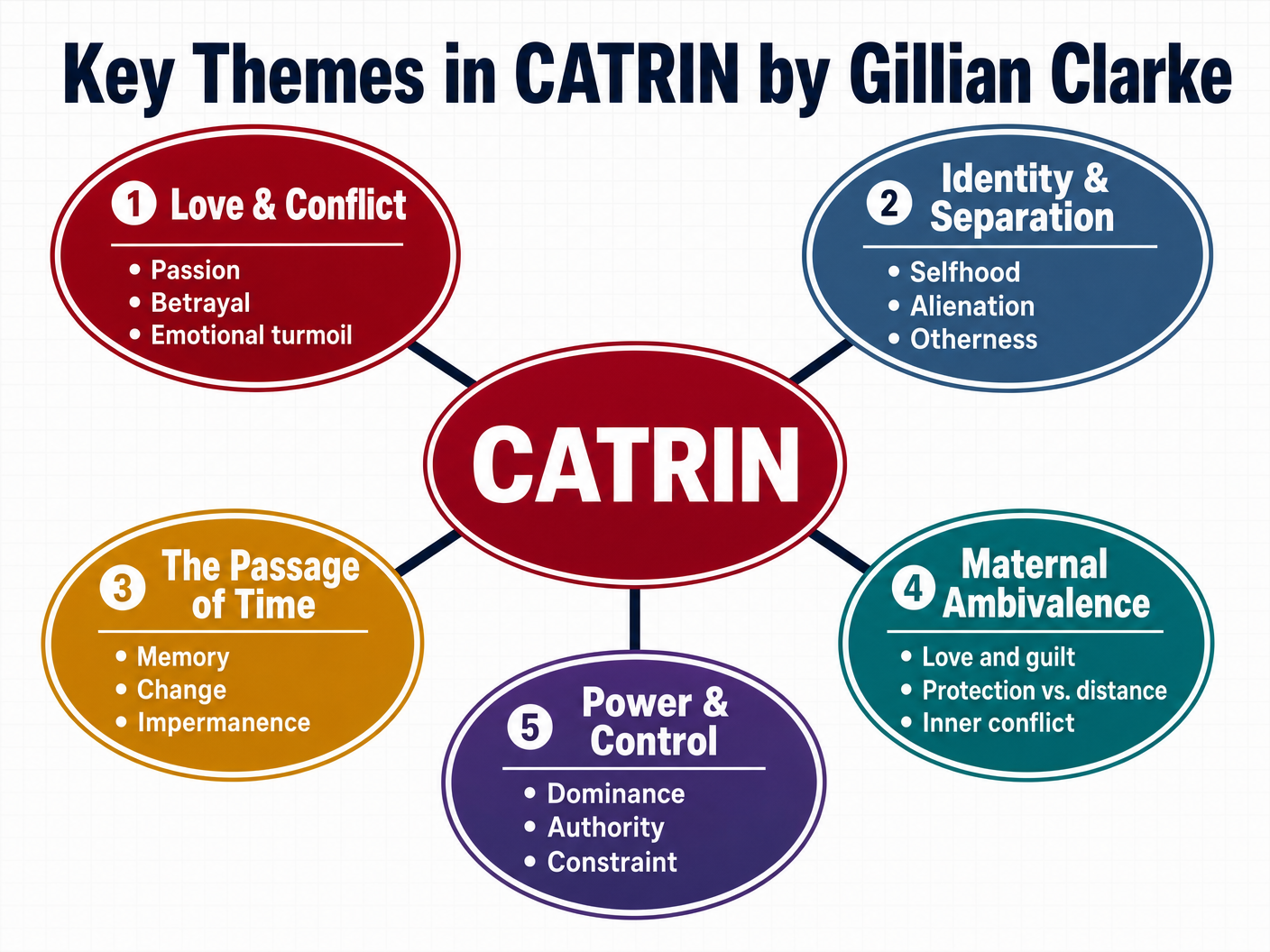
Theme 1: Love and Conflict
The poem presents love and conflict not as opposites, but as inextricably linked. The intensity of the mother's love is precisely what causes the conflict; she wants to protect her daughter, while the daughter wants freedom.
Key Quotes:
- "the tight red rope of love" (Stanza 1) - This central metaphor captures the paradox perfectly. The rope connects them (love, the umbilical cord), but it is "tight" (constricting, tense, painful) and "red" (blood, passion, danger).
- "We shouted in the same language" (Stanza 1) - Suggests a primal, instinctive connection, but also conveys anger, pain, and struggle. They are united, yet combative.
Theme 2: Identity and Separation
Clarke explores how a child, originally part of the mother's body, must inevitably separate to form her own identity. The poem traces this physical and emotional severing.
Key Quotes:
- "to be two, to be ourselves" (Stanza 1) - Highlights the necessity of separation. The birth is the first act of becoming "two" distinct individuals.
- "your straight, strong, long / brown hair" (Stanza 2) - The enjambment draws out the description, emphasising the daughter's physical growth and emerging, distinct identity.
Theme 3: The Passage of Time
The poem's structure mirrors the relentless forward movement of time, showing how the nature of the mother-daughter struggle evolves but fundamentally remains the same.
Key Quotes:
- "that old rope" (Stanza 2) - The "red rope" of birth has become "old," showing that the emotional tension has persisted throughout the daughter's life.
- "skating / in the dark" (Stanza 2) - Symbolises the daughter moving away from the safety of childhood into the uncertain, potentially dangerous world of adolescence and adulthood.
Writer's Methods
Structure and Form:
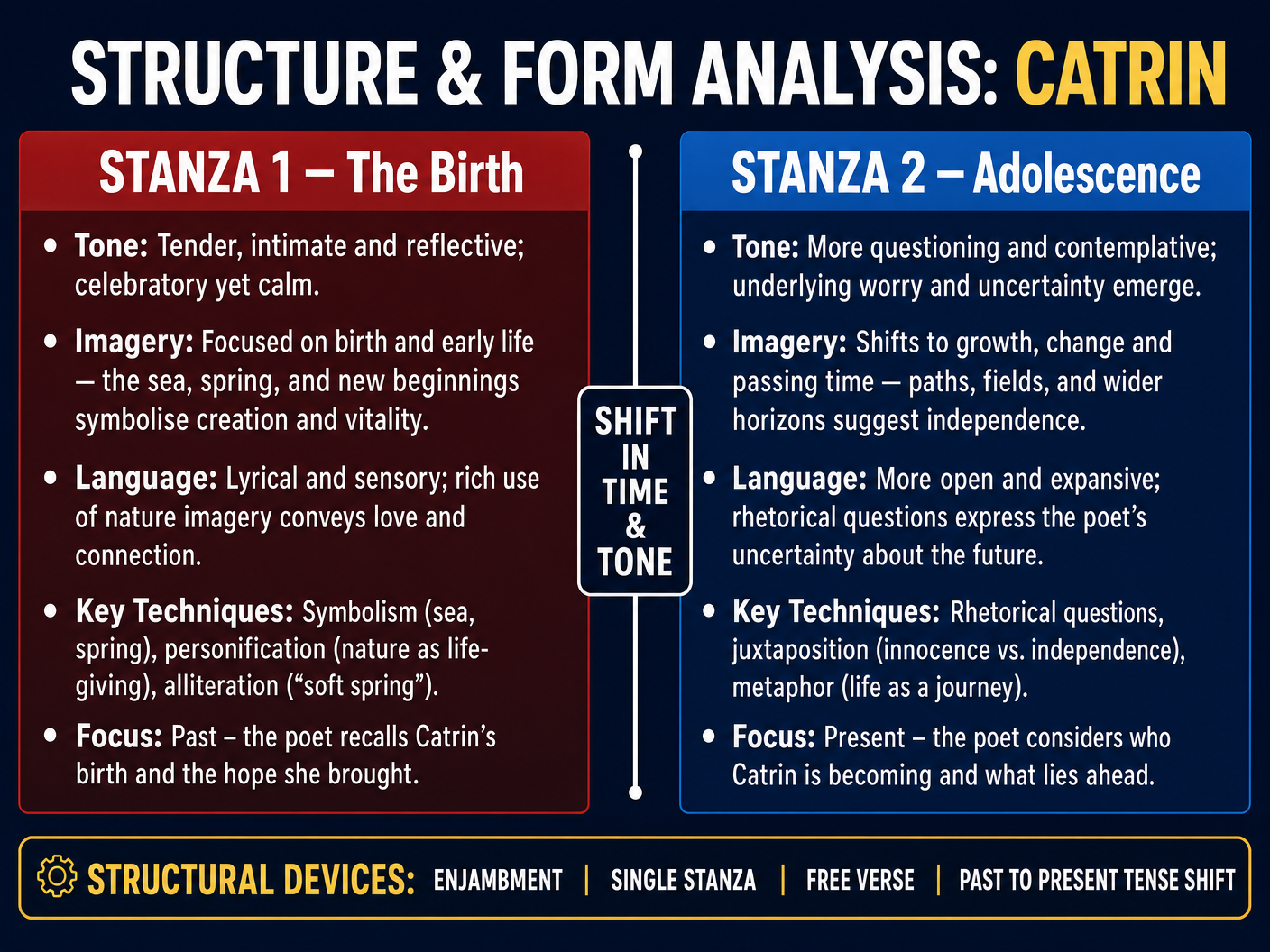
The poem is written in free verse across two stanzas. The lack of a regular rhyme scheme or meter reflects the unpredictable, raw nature of the relationship and the lack of neat resolution. The first stanza is grounded in the past tense (memory of birth), while the second shifts to the present tense (current conflict). This structural division mirrors the physical separation of mother and child.
Imagery:
Clarke uses stark, contrasting imagery. The "hot, white room" of the hospital contrasts with the "darkening lanes" of adolescence. The clinical environment is juxtaposed with the visceral, emotional reality of the "red rope."
Language:
The use of direct address ("I can remember you") creates an intimate, conversational tone. The repetition of "struggle" emphasizes the ongoing difficulty of the relationship. Clarke also uses sensory language ("shouted," "hot," "tight") to make the emotional experience physically palpable to the reader.
Context
Gillian Clarke is a prominent Welsh poet whose work often explores domestic life, nature, and the female experience. While 'Catrin' is based on her relationship with her own daughter, examiners expect candidates to understand it as a universal exploration of motherhood. The poem was published in the late 20th century, a time when poetry increasingly focused on the authentic, sometimes unglamorous realities of women's lives, moving away from idealized depictions of motherhood.
Interactive Diagrams
1 interactive diagram to visualise key concepts
Conceptual Flow Outline
The structural and thematic progression in 'Catrin'
Worked Examples
1 detailed example with solutions and examiner commentary
Practice Questions
Test your understanding — click to reveal model answers
Compare how poets present complex family relationships in 'Catrin' and one other poem from your anthology.
Hint: Choose a poem that also deals with parental love or the pain of growing up, such as 'Poppies' by Jane Weir or 'Walking Away' by C. Day Lewis.
How does Clarke use language and structure to convey the intensity of the speaker's feelings in 'Catrin'?
Hint: Ensure you address both 'language' (word choices, imagery) and 'structure' (stanzas, enjambment, tense shifts) equally.