
Study Notes
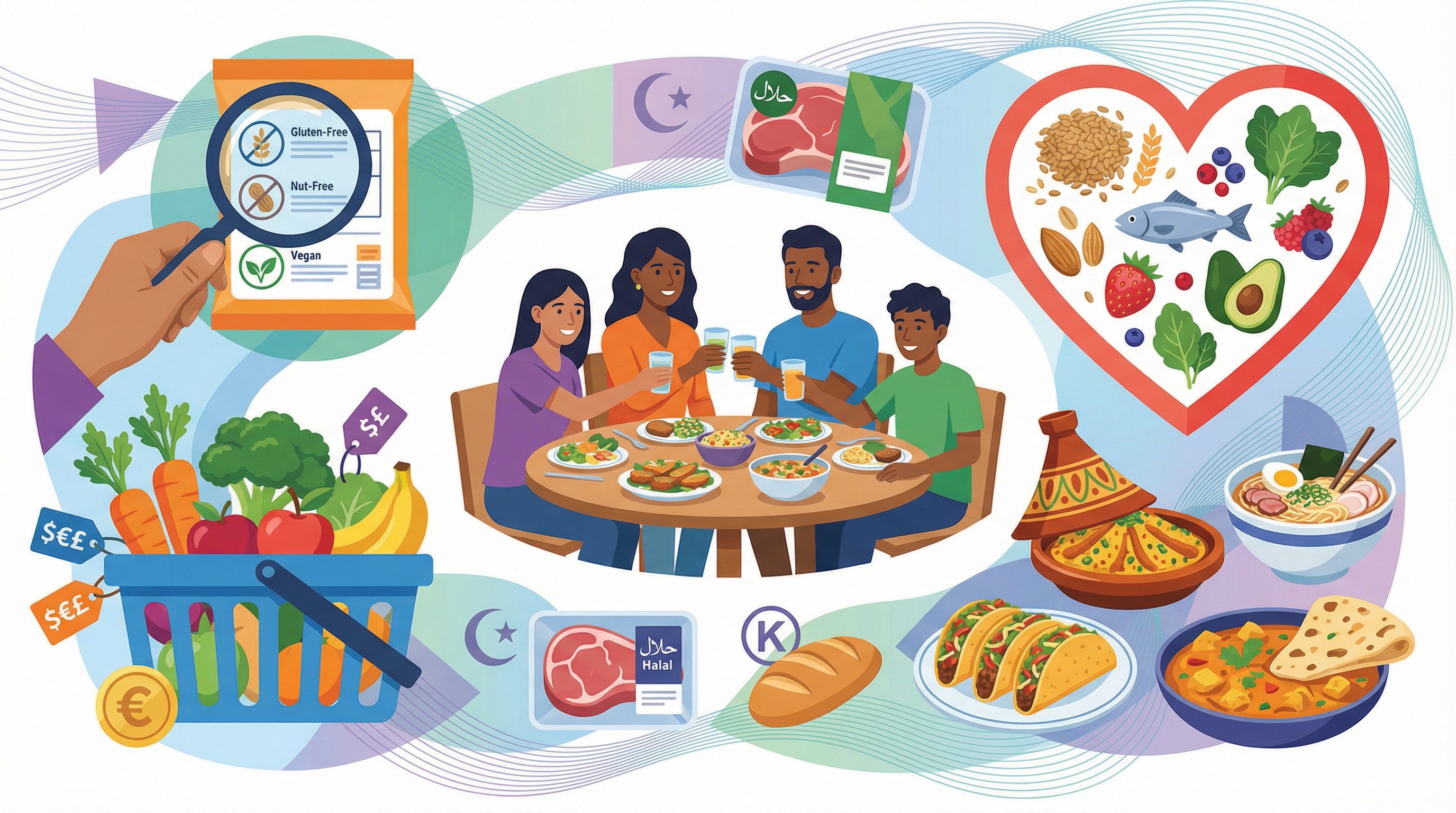
Overview
This study guide provides a comprehensive overview of the "Factors Affecting Food Choice" topic for the AQA GCSE Food Preparation and Nutrition specification. Understanding why people choose the foods they do is a cornerstone of the subject, and examiners expect candidates to provide a holistic evaluation of how physical, psychological, social, and economic factors dictate these choices. This guide will equip you with the detailed knowledge and analytical skills required to excel in the exam. You will learn to analyze the interplay between specific dietary needs, religious prohibitions, and economic constraints, moving beyond simple descriptions to a level of evaluation that is rewarded with top marks. We will explore the physiological mechanisms of medical conditions like Coeliac disease, differentiate clearly between allergies and intolerances, and analyze the impact of marketing on consumer behavior. By mastering the content in this guide, you will be prepared to tackle any question on this topic with confidence.
Key Factors & Concepts
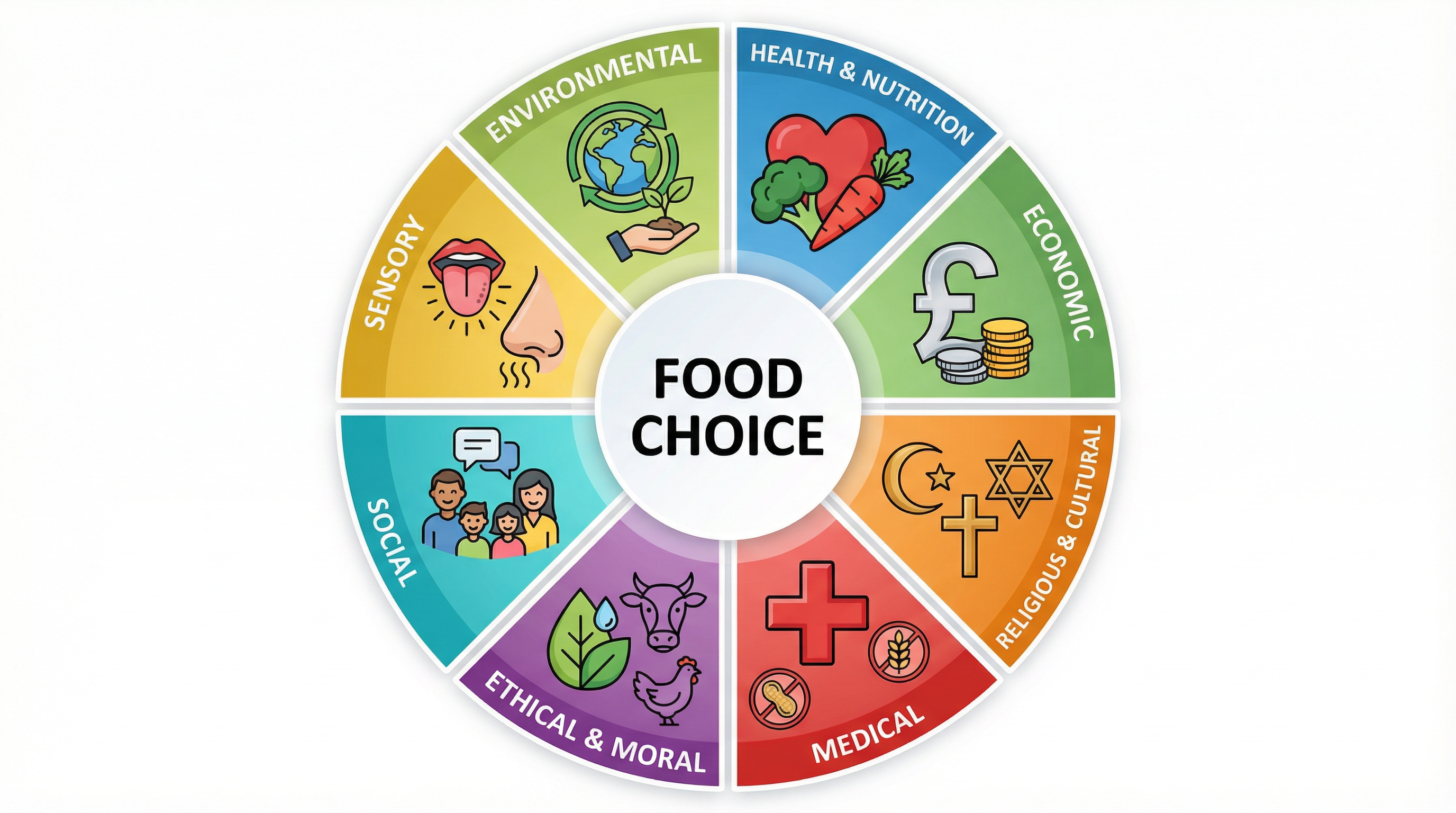
1. Health & Nutritional Factors
What it is: This factor relates to how an individual's health status, life stage, and nutritional requirements influence their food choices. Examiners look for specific, evidence-based links between nutrients, health conditions, and food examples.
Why it matters: Vague answers like "eating healthy" will not receive credit. Marks are awarded for demonstrating precise knowledge of nutritional science.
Specific Knowledge:
| Life Stage | Nutritional Need | Specific Requirement | Food Examples |
|---|---|---|---|
| Teenage Girls | Iron | 14.8mg/day to prevent iron-deficiency anaemia | Red meat, lentils, spinach, fortified breakfast cereals |
| Pregnant Women | Folic Acid | 400μg/day before and during first 12 weeks to prevent neural tube defects | Fortified breads, cereals, green leafy vegetables |
| Pregnant Women | Energy | Additional 200 kcal in third trimester | Nutrient-dense foods |
| Elderly Adults | Calcium & Vitamin D | To prevent osteoporosis | Dairy products, fortified foods, oily fish |
| Elderly Adults | Fibre | To aid digestion | Wholegrain bread, vegetables, pulses |
Health Conditions:
- Coronary Heart Disease (CHD): Individuals must reduce saturated fats (found in fatty meats, butter, cheese) to lower LDL cholesterol levels and consume more unsaturated fats (found in oily fish, nuts, avocados).
- Type 2 Diabetes: Requires careful management of carbohydrate intake to control blood glucose levels, often favouring low glycaemic index (GI) foods like wholegrain bread, porridge, and pulses.
2. Economic Factors
What it is: This covers how a person's income, the cost of food, and their available budget impact their food choices. It involves a critical analysis of value, not just price.
Why it matters: This is a key area for evaluation questions. Candidates must be able to analyze the trade-off between time-cost and money-cost.
Specific Knowledge:
- Budgeting: Low-income families may rely on cheaper, energy-dense foods that are often high in fat, salt, and sugar. They may purchase own-brand products over more expensive branded goods.
- Convenience vs. Homemade: A ready-made lasagne might cost £5 and take 5 minutes to microwave, while a homemade version might cost £3 in ingredients but take an hour to prepare. A candidate could argue that for a time-poor individual, the convenience justifies the higher monetary cost.
- Food Inflation: When food prices rise, consumers may switch from expensive protein sources like beef to cheaper alternatives such as chicken, eggs, or plant-based proteins like beans and lentils.
- Special Offers: Supermarket deals like "Buy One Get One Free" (BOGOF) can encourage bulk buying but may also lead to food waste if not used in time.
3. Religious & Cultural Factors
What it is: This explores how religious laws and cultural traditions prescribe or forbid certain foods. Precision is vital here.
Why it matters: Examiners award marks for naming specific religious laws, slaughter methods, and prohibited ingredients.
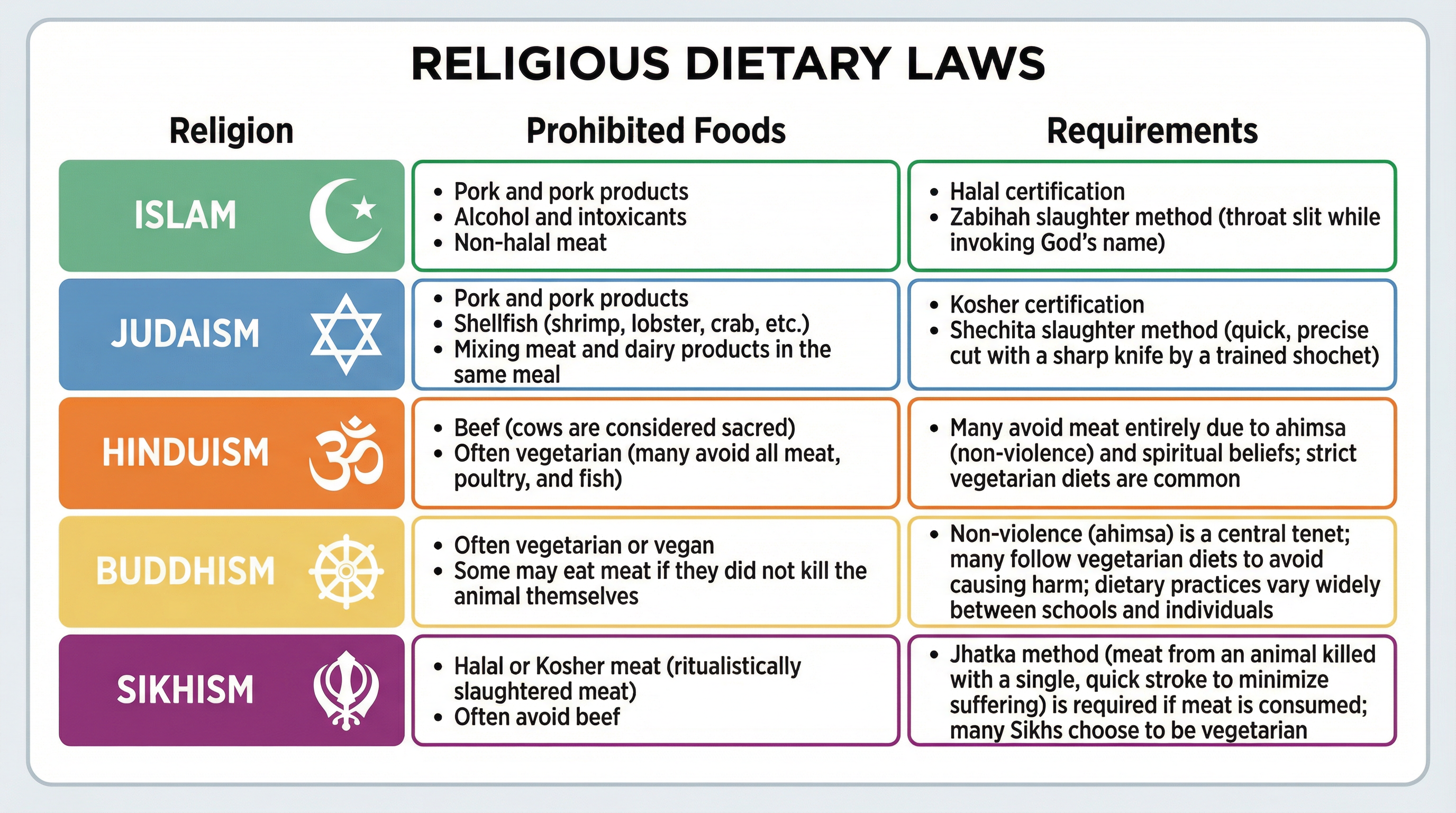
| Religion | Prohibited Foods | Slaughter Method/Requirements |
|---|---|---|
| Islam | Pork, alcohol, non-Halal meat | Halal - Zabihah method (swift throat incision while invoking God's name) |
| Judaism | Pork, shellfish (shrimp, lobster, crab), mixing meat and dairy | Kosher - Shechita method (quick, precise cut by trained shochet) |
| Hinduism | Beef (cows are sacred), often all meat | Many follow vegetarian diets due to Ahimsa (non-violence) |
| Buddhism | Often vegetarian/vegan | Ahimsa (non-violence) principle leads many to avoid meat |
| Sikhism | Halal or Kosher meat, often beef | If meat eaten, must be Jhatka method (single blow); many are vegetarian |
4. Medical Factors (Allergies & Intolerances)
What it is: This covers medical conditions that necessitate the avoidance of certain foods. The key distinction is between an allergy and an intolerance.
Why it matters: This is a very common area for confusion. High-level responses must explain the different physiological mechanisms.
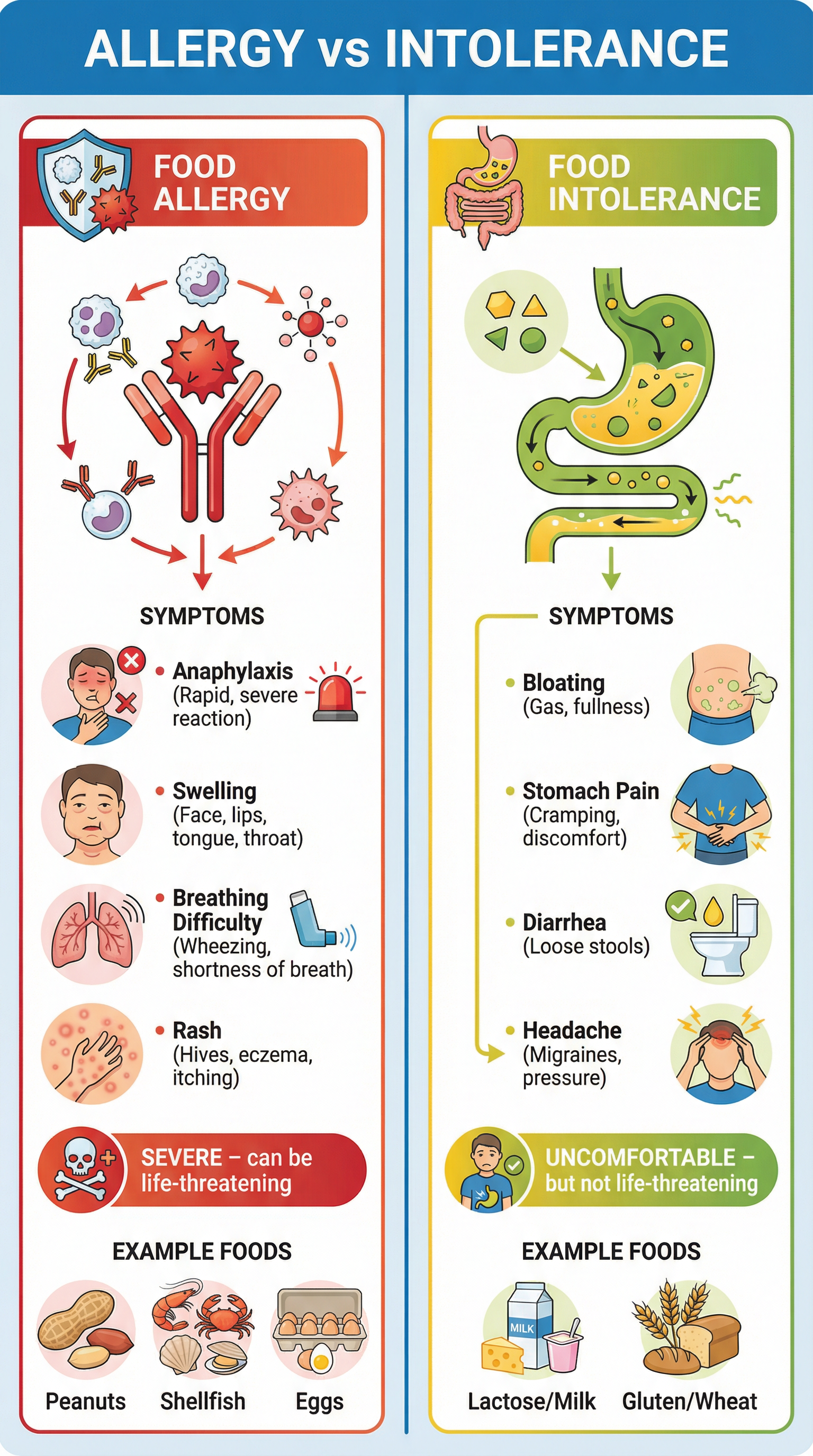
| Aspect | Food Allergy | Food Intolerance |
|---|---|---|
| System Affected | Immune system | Digestive system |
| Mechanism | Body produces IgE antibodies that attack food protein | Body lacks enzyme to digest food component |
| Severity | Can be life-threatening (anaphylaxis) | Uncomfortable but not life-threatening |
| Symptoms | Anaphylaxis, swelling, breathing difficulty, rash | Bloating, stomach cramps, diarrhoea, headache |
| Common Examples | Peanuts, tree nuts, milk, eggs, shellfish, fish | Lactose (lactase deficiency), gluten sensitivity |
Coeliac Disease: An autoimmune condition, not a simple intolerance. When a person with Coeliac disease consumes gluten (a protein in wheat, barley, and rye), their immune system attacks and damages the villi in the small intestine, impairing nutrient absorption.
5. Social & Ethical Factors
What it is: This encompasses the influence of family, peers, marketing, and ethical beliefs on food choices.
Why it matters: This tests a candidate's ability to analyze the wider context of food consumption.
Specific Knowledge:
- Social Influence: Family meals, peer groups (e.g., adopting vegetarianism to fit in), and social media trends all shape eating habits.
- Marketing: Techniques like "pester power" (children influencing parents), celebrity endorsements, and misleading health claims ("low fat" but high in sugar) are key areas for analysis.
- Ethical/Moral Beliefs:
- Vegetarianism/Veganism: Often chosen due to objections to animal cruelty or the environmental impact of meat production.
- Animal Welfare: Choosing "free-range" eggs or "RSPCA Assured" meat.
- Fair Trade: Selecting products (e.g., coffee, bananas, chocolate) that ensure farmers in developing countries receive a fair price.
6. Environmental & Sensory Factors
What it is: This covers the impact of sustainability concerns and the sensory properties of food.
Why it matters: Shows an awareness of contemporary food issues.
Specific Knowledge:
- Environmental:
- Seasonality: Choosing foods that are in season, which are often cheaper and have better flavour (e.g., British strawberries in summer).
- Food Miles: Selecting locally produced food to reduce the carbon footprint associated with transportation.
- Sustainability: Choosing sustainably sourced fish (e.g., MSC certified) to protect fish stocks.
- Sensory: The choice of food is heavily influenced by its taste, smell, texture, and appearance. These preferences are often developed in childhood and vary by culture.