Study Notes
Overview
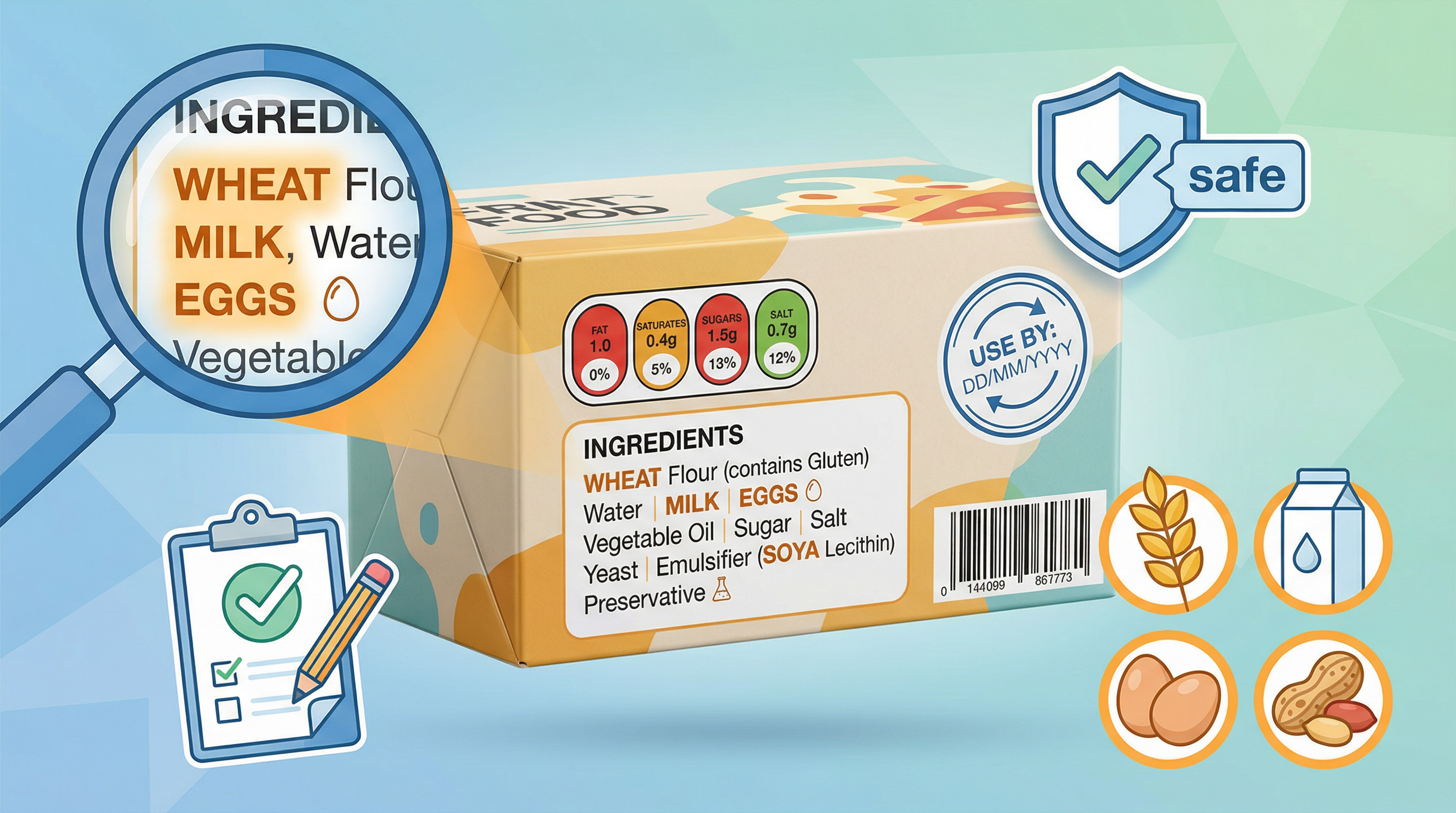
Understanding food labelling is a cornerstone of the AQA GCSE specification, directly linking to food safety, nutrition, and dietary needs. This is not just about reading a label; it is about critically evaluating it against legal standards. Examiners expect candidates to demonstrate precise knowledge of the Food Information for Consumers (FIC) Regulation 2014, which governs what must legally appear on packaging. This guide will break down the mandatory requirements, such as allergen emphasis and nutritional declarations, and distinguish them from voluntary schemes like traffic light labelling. A strong understanding allows you to analyse how labels protect consumers, particularly those with specific dietary requirements (e.g., coeliac disease, lactose intolerance), and how they can be used to make informed, healthier food choices. Credit is consistently awarded for citing the specific regulation and using correct terminology, such as 'organoleptic qualities' and 'pathogens', to justify your points.
Mandatory Labelling Requirements
The 14 Mandatory Allergens
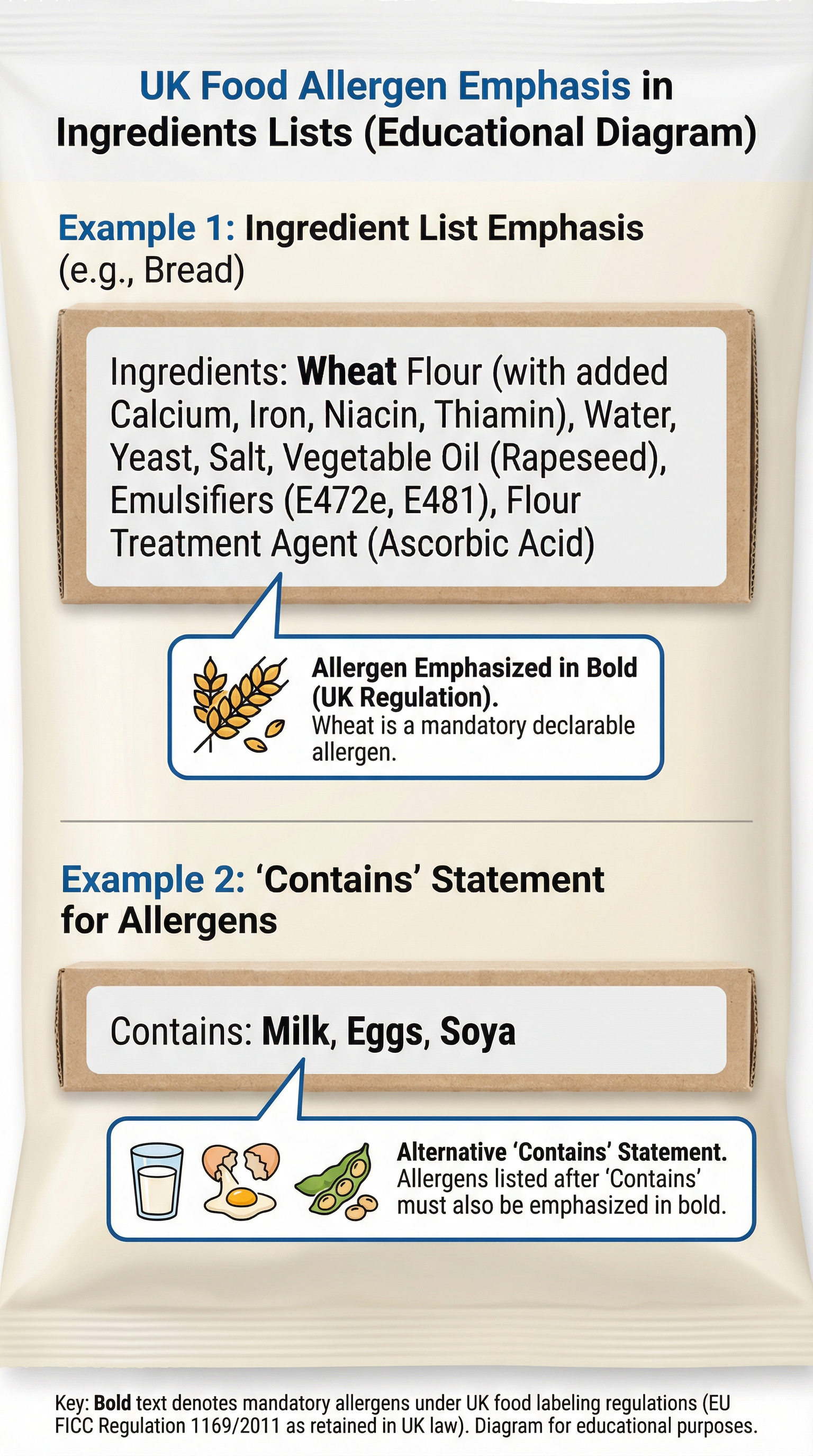
What it is: The FIC Regulation 2014 legally requires that 14 specific allergens must be declared and clearly emphasised on the ingredients list.
Why it matters: This is a critical food safety control to protect consumers with food allergies or intolerances. An allergic reaction can be severe and even fatal. Marks are awarded for identifying that allergens must be emphasised (e.g., in bold, italics, or underlined) to make them easy to spot.
Specific Knowledge: The 14 allergens are: Cereals containing gluten (like wheat, rye, barley), crustaceans, eggs, fish, peanuts, soybeans, milk, nuts (almonds, hazelnuts etc.), celery, mustard, sesame seeds, sulphur dioxide/sulphites, lupin, and molluscs.
Date Marking: 'Use By' vs 'Best Before'
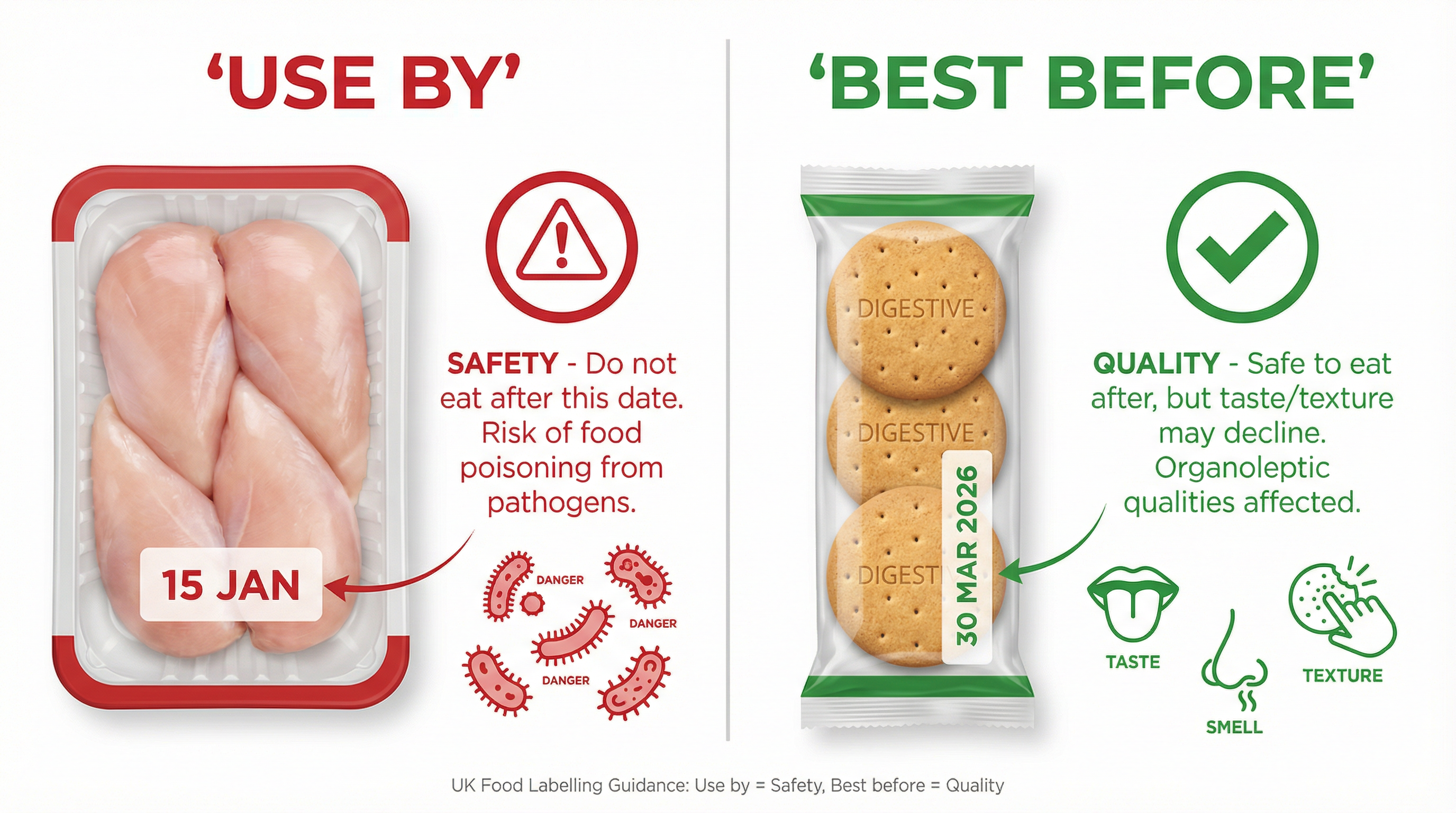
What it is: A legal requirement to indicate the shelf-life of a product. The type of date mark depends on the product's microbiological risk.
Why it matters: This distinction is fundamental to food safety. 'Use By' is a safety instruction, while 'Best Before' is a quality guide. Confusing the two can have dangerous consequences. Examiners frequently test this concept.
Specific Knowledge:
- Use By: Found on high-risk, perishable foods (e.g., fresh meat, dairy). It relates to safety. After this date, the food could be unsafe to eat due to the growth of harmful pathogens. It is illegal to sell food past its 'Use By' date.
- Best Before: Found on foods with a longer life (e.g., biscuits, canned goods). It relates to quality. After this date, the food is still safe to eat, but its organoleptic qualities (taste, texture, aroma) may have deteriorated.
Nutritional Information & QUID
What it is: Most pre-packed foods must display a nutrition declaration showing energy (kJ/kcal), fat, saturates, carbohydrates, sugars, protein, and salt per 100g/ml. Quantitative Ingredient Declaration (QUID) is the rule that if an ingredient is in the name of the food (e.g., 'Pork' sausage), its percentage must be listed.
Why it matters: This allows consumers to compare products and make informed choices based on their dietary needs. QUID prevents manufacturers from misleading the public about the content of a product.
Voluntary Labelling Schemes
Front-of-Pack 'Traffic Light' Labelling
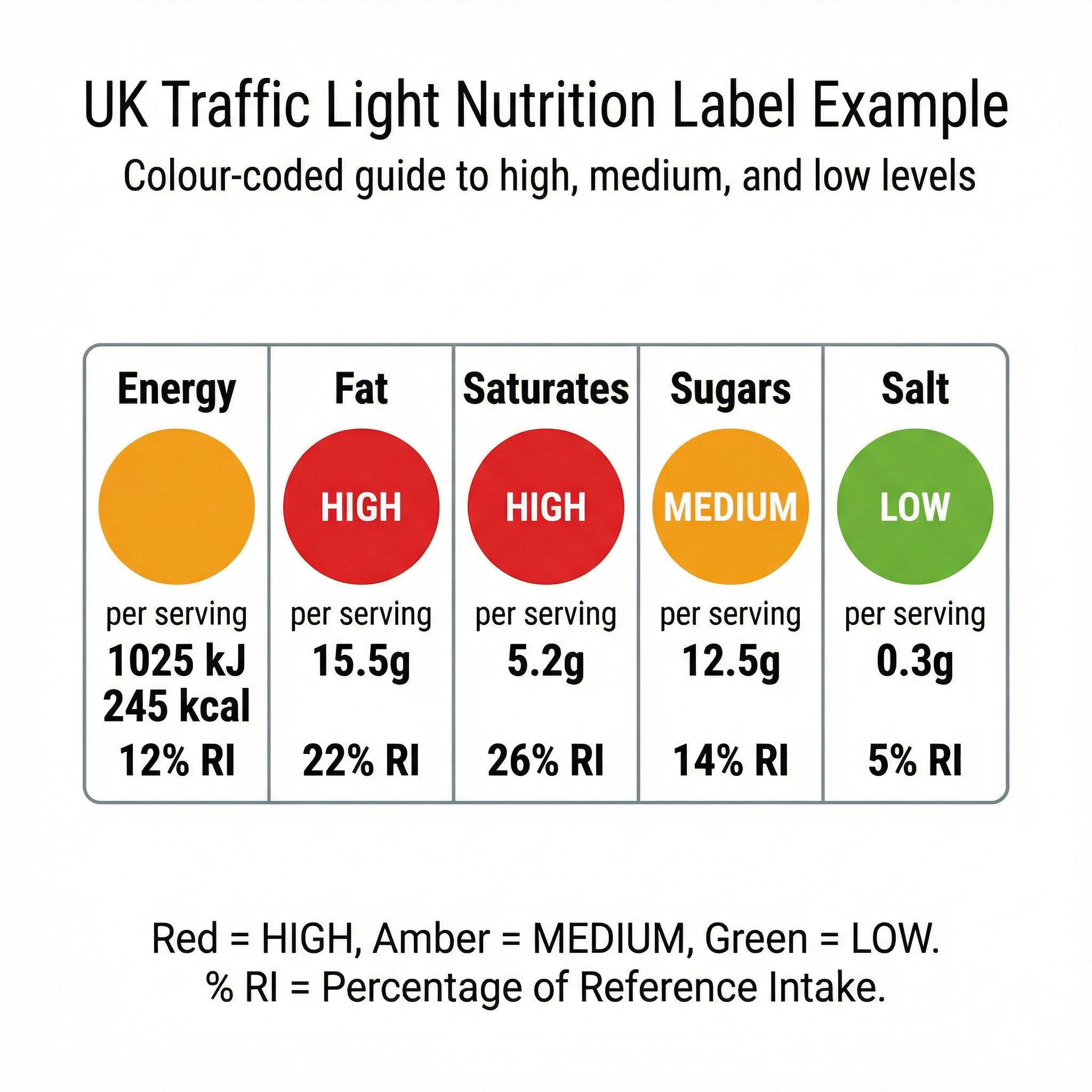
What it is: A voluntary scheme that uses red, amber, and green colour-coding to give an at-a-glance guide to the levels of fat, saturates, sugars, and salt.
Why it matters: It is a powerful tool for promoting public health, helping consumers quickly identify foods high in nutrients linked to health problems like obesity and heart disease. However, candidates MUST know it is voluntary, not a legal requirement. This is a common point of confusion and a frequent exam question.