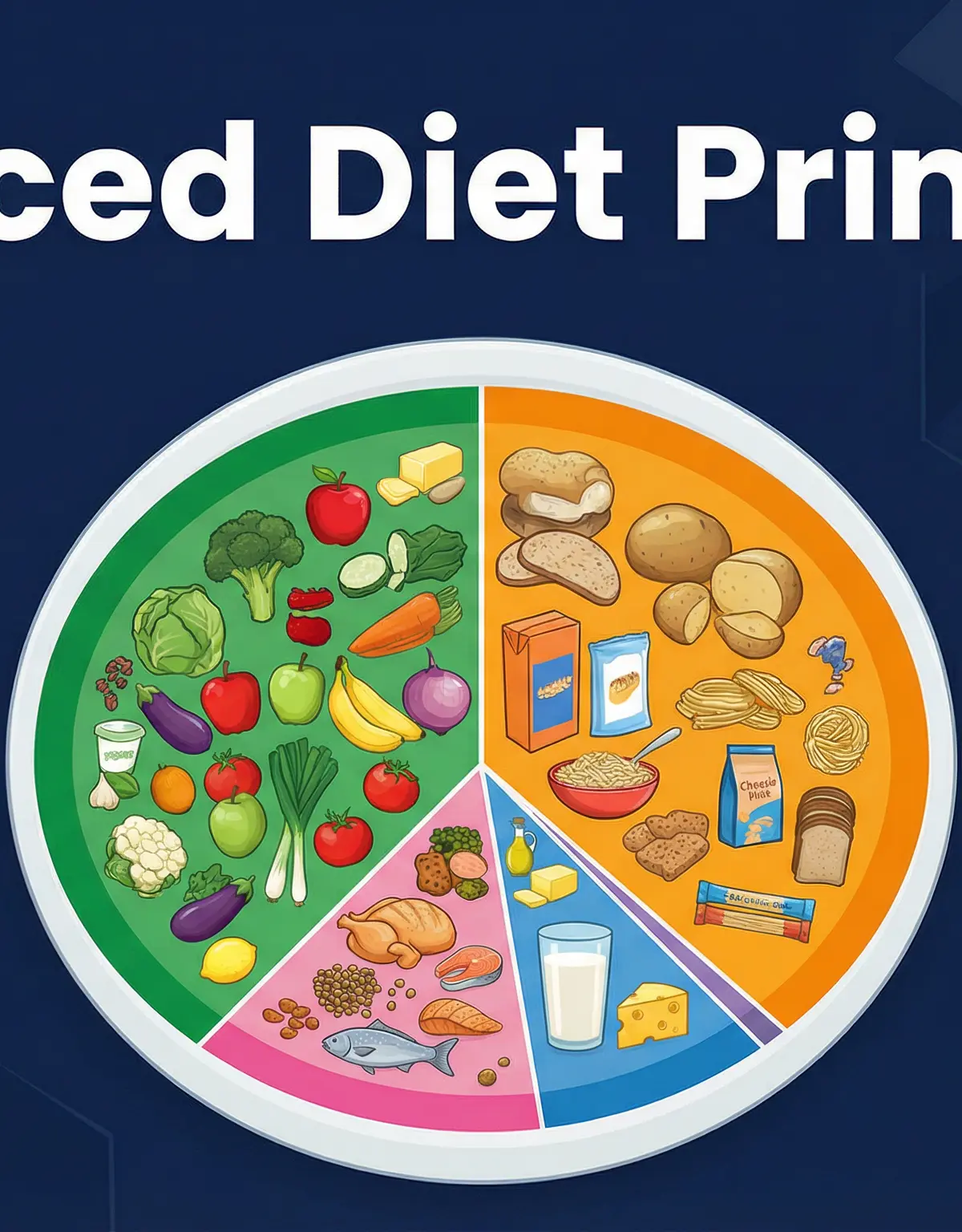
Balanced diet principles Revision Notes

    Subject: Food Preparation and Nutrition | Level: GCSE | Exam Board: OCR

    Mastering the principles of a balanced diet is crucial for success in your OCR GCSE Food Preparation and Nutrition exam. This guide breaks down the Eatwell Guide, energy balance, and key nutrients, providing you with the scientific understanding and exam technique needed to secure top marks.

    Revision Notes & Key Concepts

    ![Header image for Balanced Diet Principles](https://xnnrgnazirrqvdgfhvou.supabase.co/storage/v1/object/public/study-guide-assets/guide_a773f76d-0ccc-4133-a951-3e3d1ceb3290/header_image.png) ## Overview This study guide provides a comprehensive overview of the principles of a balanced diet, as required by the OCR J309 specification for GCSE Food Preparation and Nutrition. A deep understanding of this topic is fundamental, as it forms the basis for many other areas of the course, from nutritional needs through life stages to the dietary causes of ill health. Examiners expect candidates to move beyond simply listing the food groups and to demonstrate a clear understanding of the physiological reasons behind dietary recommendations. This means linking specific nutrients to their functions in the body and applying the principles of the Eatwell Guide to practical scenarios, such as modifying recipes for specific target groups. Credit is awarded for precise, scientific language and the ability to justify dietary advice with clear reasoning. {{asset:balanced_diet_principles_podcast.mp3}} ## The Eatwell Guide The Eatwell Guide is the UK’s healthy eating model. It shows the proportions in which different types of foods are needed to have a well-balanced and healthy diet. It is essential that candidates can not only name the five main food groups but also explain their relative proportions and the key nutrients they provide. ![The Eatwell Guide Proportions](https://xnnrgnazirrqvdgfhvou.supabase.co/storage/v1/object/public/study-guide-assets/guide_a773f76d-0ccc-4133-a951-3e3d1ceb3290/eatwell_guide_diagram.png) ### The Five Food Groups * **Fruit and Vegetables**: Should make up just over a third of the food we eat each day. Aim for at least five portions of a variety of fruit and veg each day. They are a vital source of vitamins, minerals, and fibre. * **Potatoes, bread, rice, pasta and other starchy carbohydrates**: Should also make up just over a third of our diet. Wholegrain versions are recommended as they contain more fibre and release energy more slowly. * **Beans, pulses, fish, eggs, meat and other proteins**: This group should make up about 12% of our intake. Protein is essential for growth and repair. Oily fish is particularly important for its omega-3 fatty acid content. * **Dairy and alternatives**: This group makes up 8% of the diet and is a key source of calcium for bone health. * **Oils and Spreads**: A small amount (1%) is needed. Unsaturated fats are healthier choices. ## Energy Balance Energy balance is the relationship between the energy we consume (Energy In) and the energy we expend (Energy Out). A consistent energy imbalance will lead to a change in body weight. Examiners will often test this concept in the context of diet-related diseases like obesity. ![Understanding Energy Balance](https://xnnrgnazirrqvdgfhvou.supabase.co/storage/v1/object/public/study-guide-assets/guide_a773f76d-0ccc-4133-a951-3e3d1ceb3290/energy_balance_diagram.png) * **Positive Energy Balance (Weight Gain)**: Occurs when energy intake is greater than energy expenditure. * **Negative Energy Balance (Weight Loss)**: Occurs when energy intake is less than energy expenditure. * **Energy Balance (Weight Maintenance)**: Occurs when energy intake equals energy expenditure. ## Key Nutrients and Their Functions For higher marks, candidates must link nutrients to their specific biological functions. Vague statements like ‘gives you energy’ will not receive credit. You must be specific about which nutrient provides energy and how. ![Key Nutrients and Their Functions](https://xnnrgnazirrqvdgfhvou.supabase.co/storage/v1/object/public/study-guide-assets/guide_a773f76d-0ccc-4133-a951-3e3d1ceb3290/nutrient_functions_diagram.png)

    Key Terms & Definitions

    Balanced Diet
    A diet that contains the correct proportions of carbohydrates, fats, proteins, vitamins, minerals, and water necessary to maintain good health.
    Macronutrient
    Nutrients required in large amounts in the diet, namely carbohydrates, proteins, and fats.
    Micronutrient
    Nutrients required in small amounts in the diet, namely vitamins and minerals.
    Energy Balance
    The relationship between energy intake (from food) and energy expenditure (from physical activity and bodily functions).
    Saturated Fat
    A type of fat, found primarily in animal products and some processed foods, that is solid at room temperature and can raise levels of 'bad' LDL cholesterol in the blood.
    Dietary Fibre
    A type of carbohydrate that cannot be digested by the body's enzymes. It is essential for maintaining a healthy digestive system.

    Worked Examples

    Practice Questions

    Balanced diet principles

    Mastering the principles of a balanced diet is crucial for success in your OCR GCSE Food Preparation and Nutrition exam. This guide breaks down the Eatwell Guide, energy balance, and key nutrients, providing you with the scientific understanding and exam technique needed to secure top marks.

    4
    Min Read
    2
    Examples
    2
    Questions
    6
    Key Terms
    🎙 Podcast Episode
    Balanced diet principles
    0:00-0:00

    Study Notes

    Header image for Balanced Diet Principles

    Overview

    This study guide provides a comprehensive overview of the principles of a balanced diet, as required by the OCR J309 specification for GCSE Food Preparation and Nutrition. A deep understanding of this topic is fundamental, as it forms the basis for many other areas of the course, from nutritional needs through life stages to the dietary causes of ill health. Examiners expect candidates to move beyond simply listing the food groups and to demonstrate a clear understanding of the physiological reasons behind dietary recommendations. This means linking specific nutrients to their functions in the body and applying the principles of the Eatwell Guide to practical scenarios, such as modifying recipes for specific target groups. Credit is awarded for precise, scientific language and the ability to justify dietary advice with clear reasoning.

    The Eatwell Guide

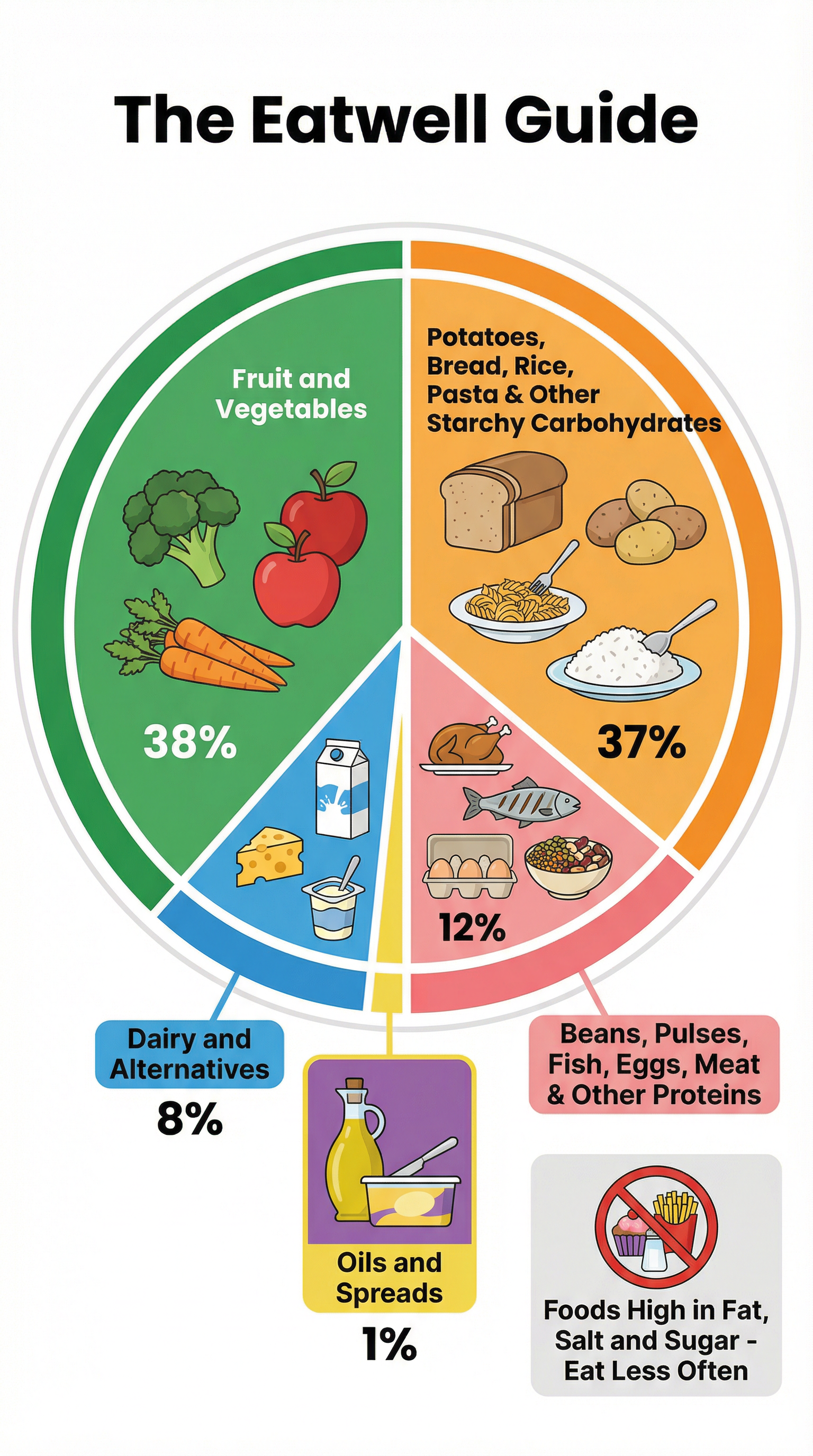
    The Eatwell Guide is the UK’s healthy eating model. It shows the proportions in which different types of foods are needed to have a well-balanced and healthy diet. It is essential that candidates can not only name the five main food groups but also explain their relative proportions and the key nutrients they provide.
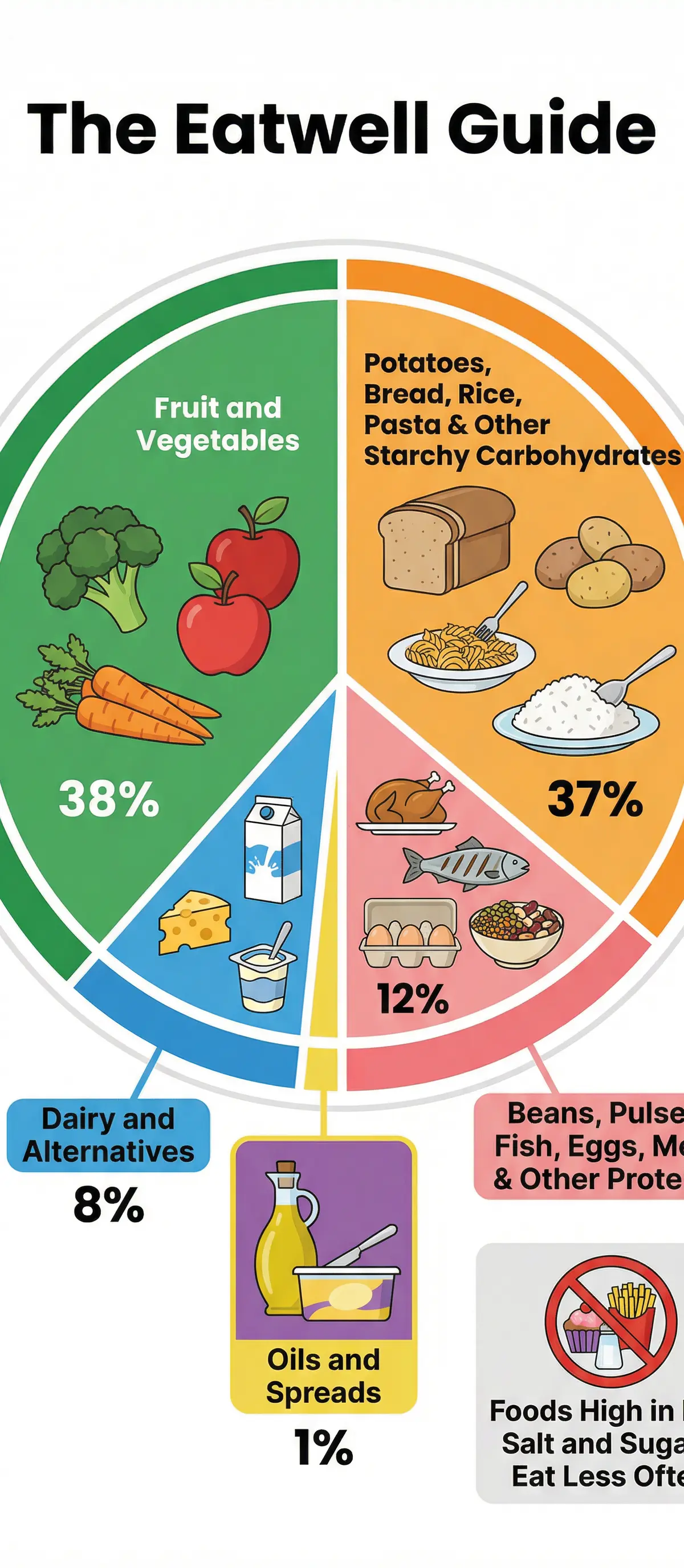
    The Eatwell Guide Proportions

    The Five Food Groups

    • Fruit and Vegetables: Should make up just over a third of the food we eat each day. Aim for at least five portions of a variety of fruit and veg each day. They are a vital source of vitamins, minerals, and fibre.
    • Potatoes, bread, rice, pasta and other starchy carbohydrates: Should also make up just over a third of our diet. Wholegrain versions are recommended as they contain more fibre and release energy more slowly.
    • Beans, pulses, fish, eggs, meat and other proteins: This group should make up about 12% of our intake. Protein is essential for growth and repair. Oily fish is particularly important for its omega-3 fatty acid content.
    • Dairy and alternatives: This group makes up 8% of the diet and is a key source of calcium for bone health.
    • Oils and Spreads: A small amount (1%) is needed. Unsaturated fats are healthier choices.

    Energy Balance

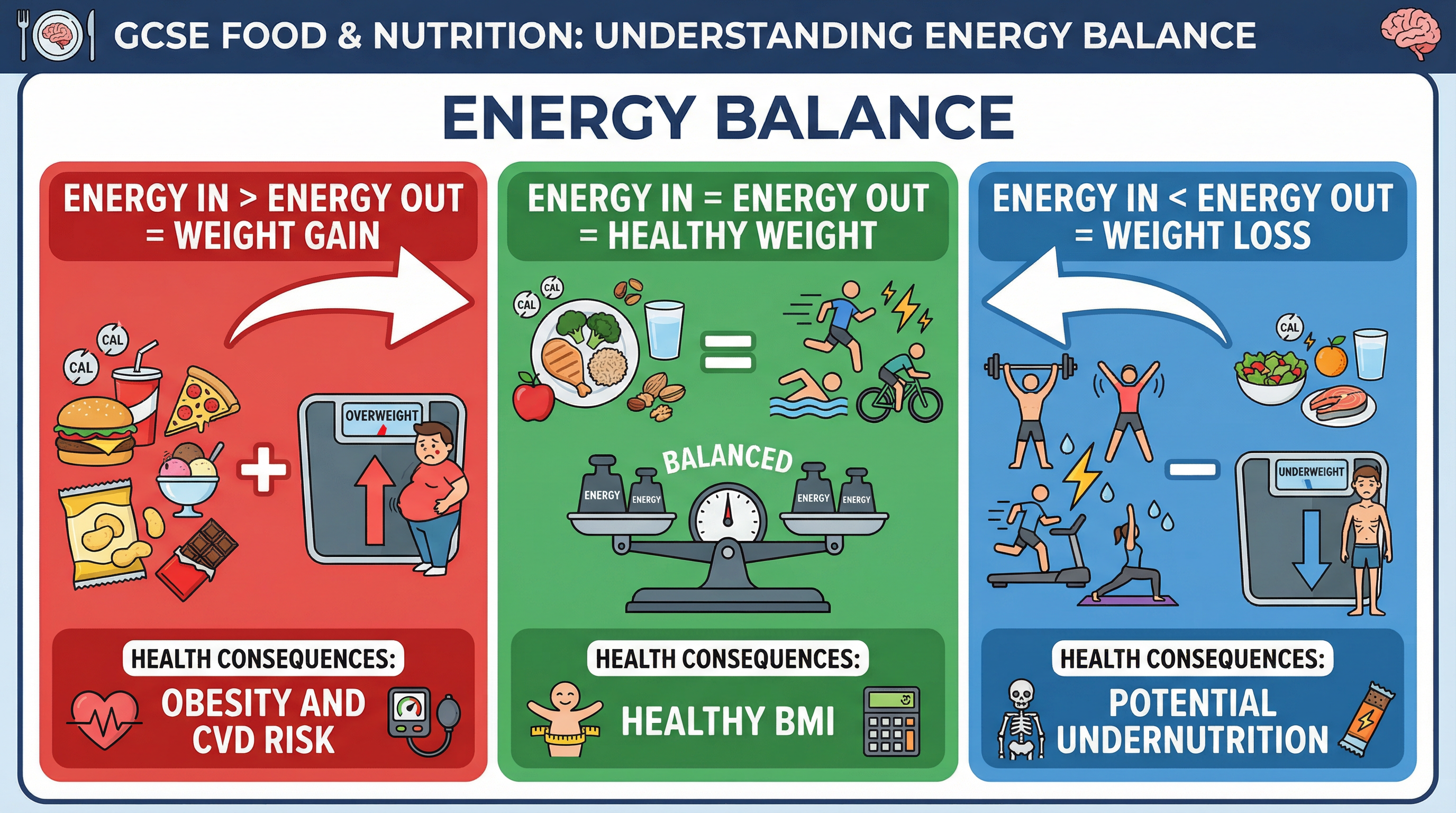
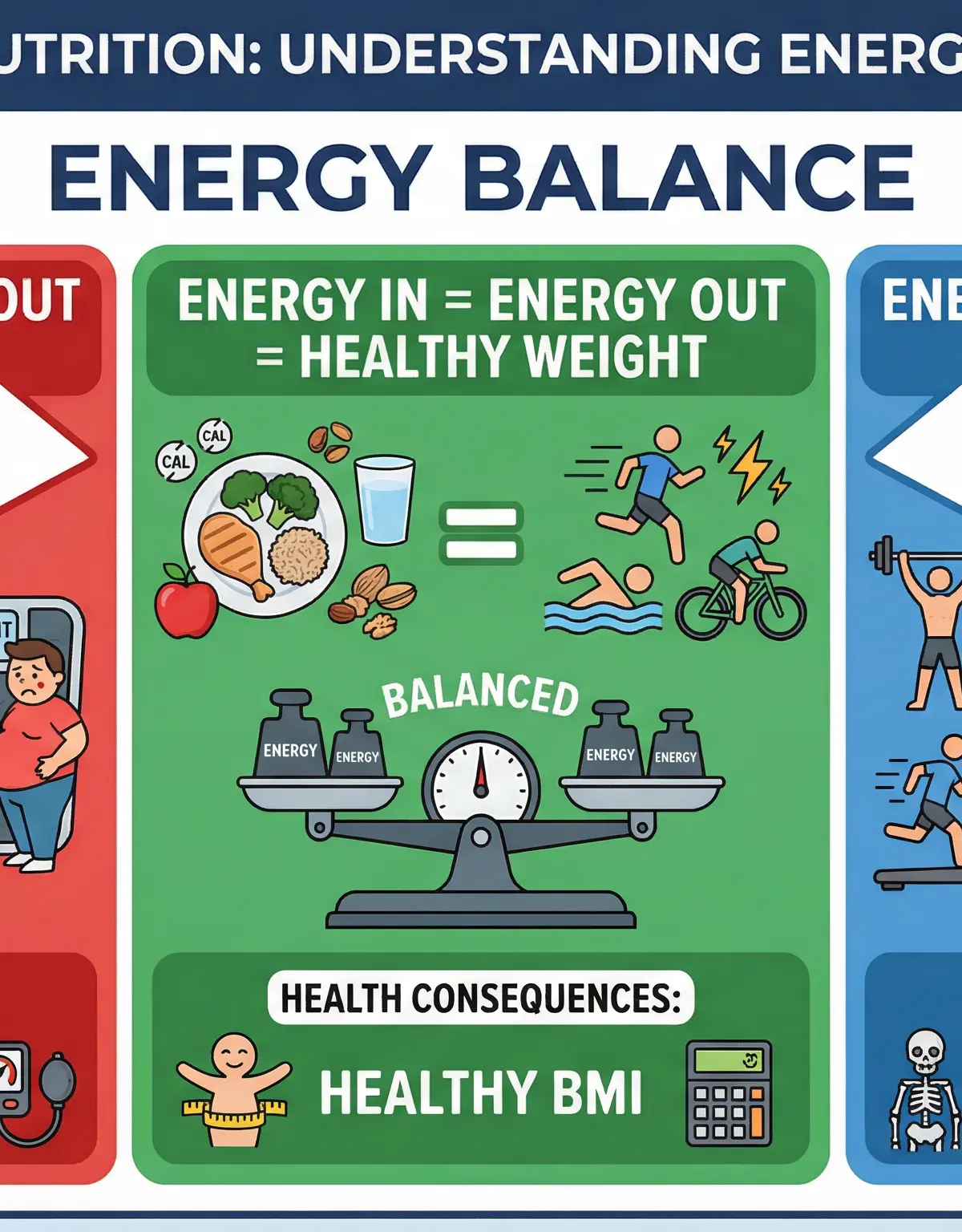
    Energy balance is the relationship between the energy we consume (Energy In) and the energy we expend (Energy Out). A consistent energy imbalance will lead to a change in body weight. Examiners will often test this concept in the context of diet-related diseases like obesity.
    Understanding Energy Balance

    • Positive Energy Balance (Weight Gain): Occurs when energy intake is greater than energy expenditure.
    • Negative Energy Balance (Weight Loss): Occurs when energy intake is less than energy expenditure.
    • Energy Balance (Weight Maintenance): Occurs when energy intake equals energy expenditure.

    Key Nutrients and Their Functions

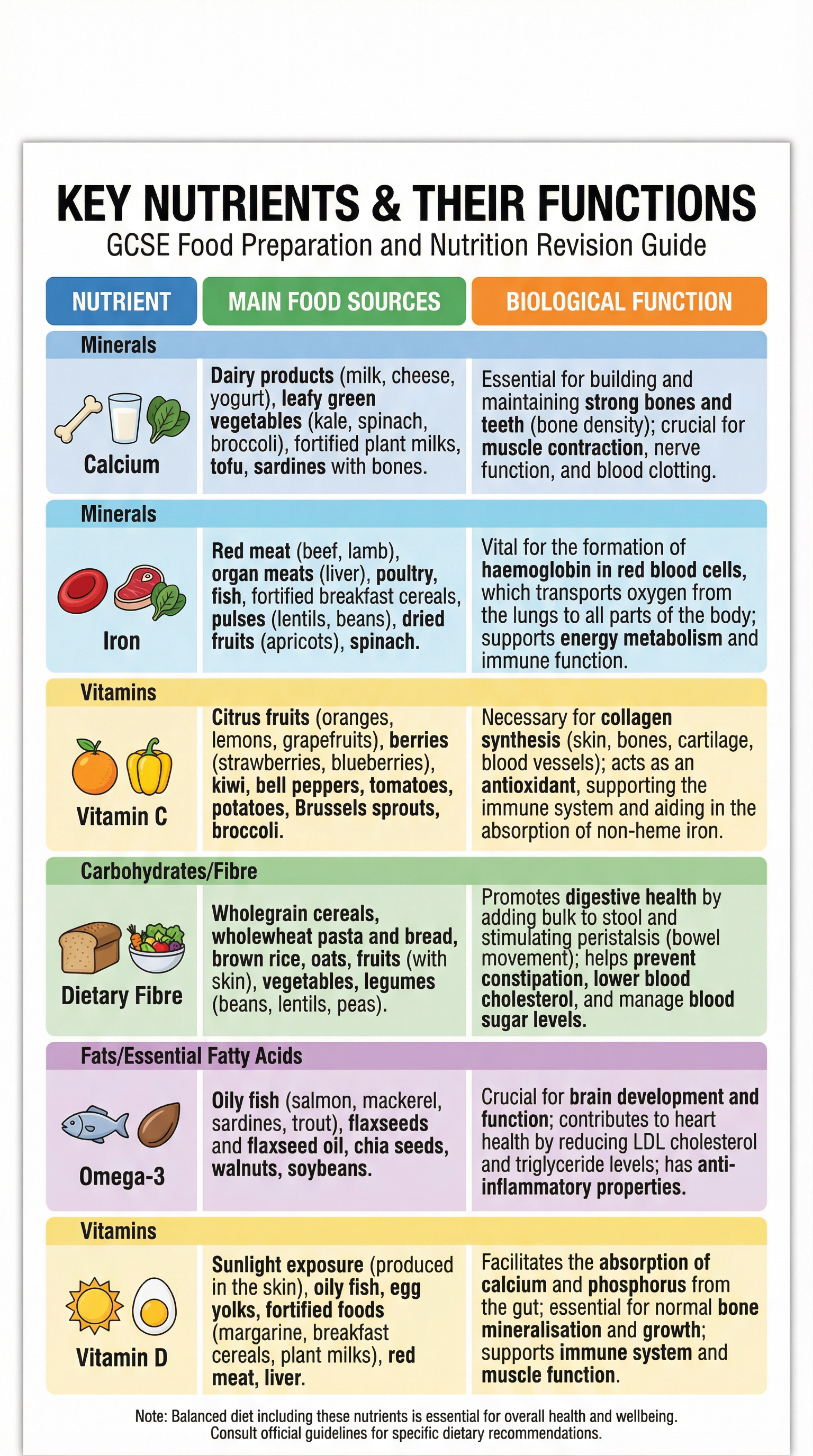
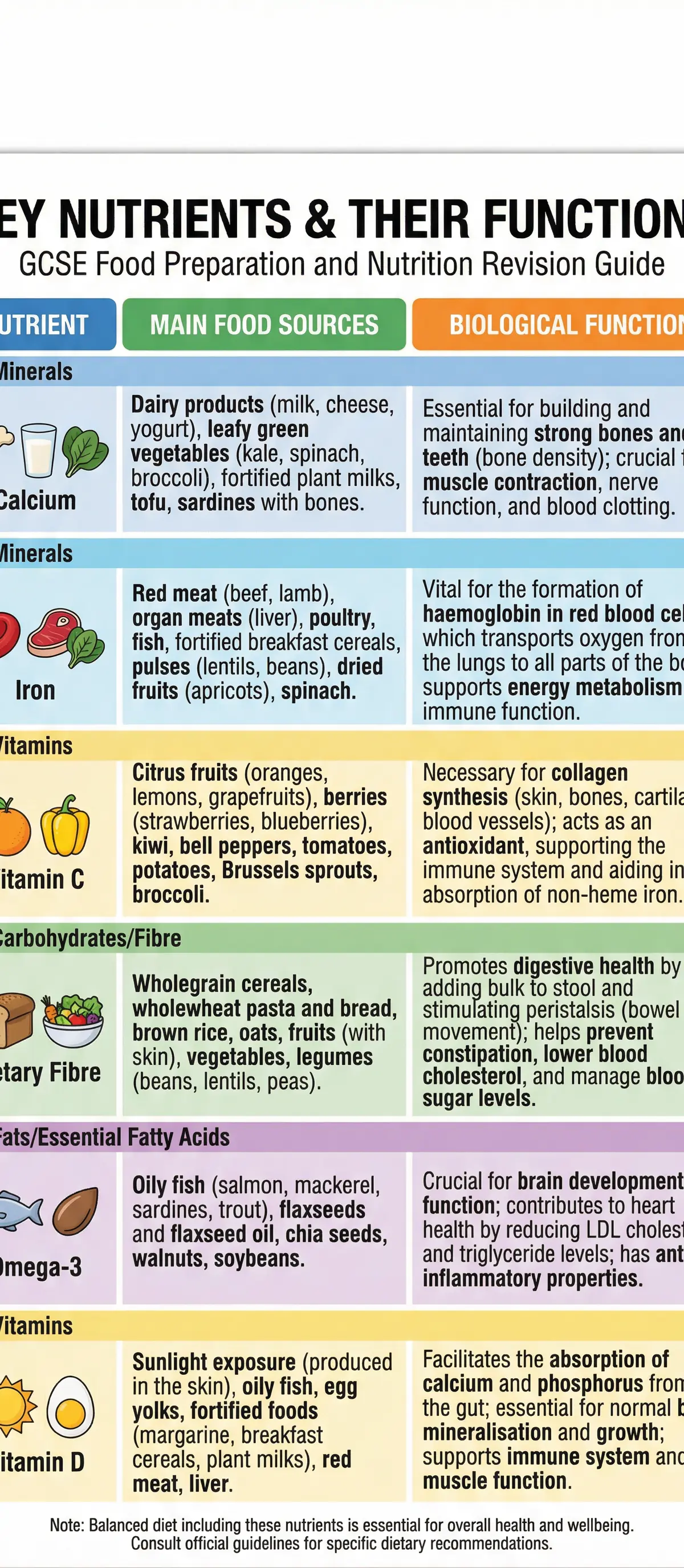
    For higher marks, candidates must link nutrients to their specific biological functions. Vague statements like ‘gives you energy’ will not receive credit. You must be specific about which nutrient provides energy and how.
    Key Nutrients and Their Functions

    Visual Resources

    3 diagrams and illustrations
    The Eatwell Guide Proportions
    The Eatwell Guide Proportions
    Understanding Energy Balance
    Understanding Energy Balance
    Key Nutrients and Their Functions
    Key Nutrients and Their Functions

    Interactive Diagrams

    1 interactive diagram to visualise key concepts

    A flowchart showing the core components of a balanced diet and energy balance.

    Worked Examples

    2 detailed examples with solutions and examiner commentary

    Practice Questions

    Test your understanding — click to reveal model answers

    Q1

    Explain the functions of protein in the diet. (4 marks)

    4 marks
    standard

    Hint: Think about growth, but also what else the body needs protein for.

    Q2

    A 65-year-old woman has been advised to reduce her risk of developing cardiovascular disease. Explain three dietary changes she could make. (6 marks)

    6 marks
    hard

    Hint: Focus on fats, salt, and fibre. Be specific with your advice.

    Key Terms

    Essential vocabulary to know