Study Notes
Overview
Edexcel GCSE French demands absolute precision in the transcription and production of quantitative data. Mastery of cardinal/ordinal numbers, the 24-hour clock, and calendar vocabulary is critical for accessing marks in Listening (AO1) and Reading (AO3) where distractors often rely on numerical nuance, and for ensuring communication clarity in Speaking (AO2) and Writing (AO4). Examiners expect candidates to not only understand this data but to produce it accurately under pressure, avoiding common errors like incorrect capitalization or preposition use. This guide provides a comprehensive breakdown of the core knowledge and exam techniques required to turn this fundamental topic into a reliable source of marks.
Core Number Systems
Cardinal Numbers (1-100+)
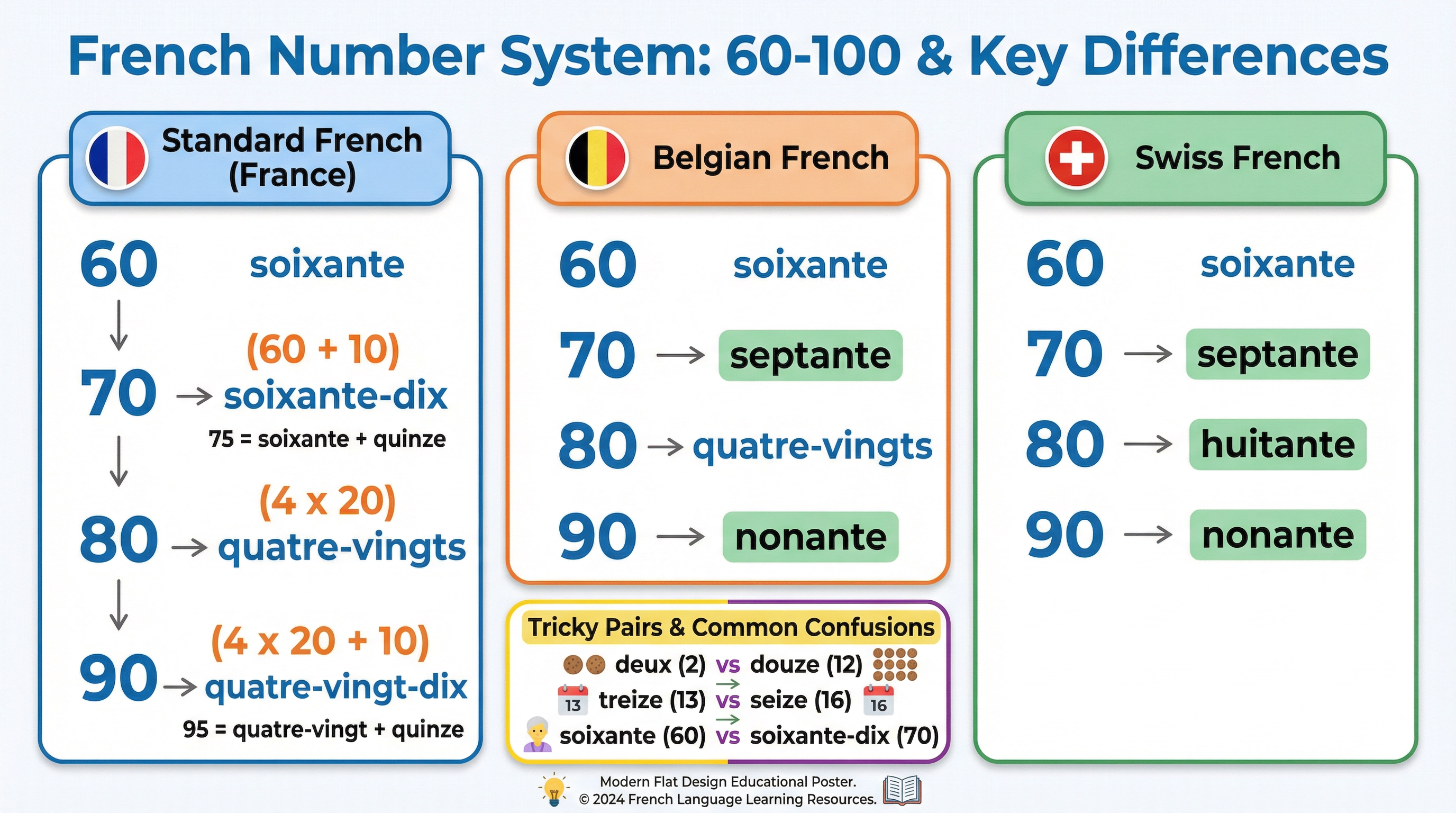
What you need to know: French numbers are logical until 69, after which they become mathematical, especially in Standard French. Candidates must be able to recognise and produce these forms instantly.
Key Patterns:
- 1-69: Largely regular. Key phonetic traps include
deux(2) vsdouze(12) andtreize(13) vsseize(16). - 70-79: Based on 60.
soixante-dix(70),soixante-et-onze(71),soixante-douze(72), etc. - 80-99: Based on 20.
quatre-vingts(80),quatre-vingt-un(81),quatre-vingt-dix(90),quatre-vingt-onze(91).
Why it matters: In Listening, an answer might be soixante-seize (76), with a distractor of seize (16). In Speaking, hesitation over these numbers can lose you fluency marks. Credit is given for the correct formation, and marks are lost where ambiguity arises.
Ordinal Numbers
What you need to know: Ordinal numbers (first, second, third) are crucial for dates and sequencing. The main rule is adding -ième to the cardinal number, with a few exceptions.
Specific Knowledge:
- First:
premier(masculine) /première(feminine). This is the most common exception and is essential for dates (le premier mai). - Second: Can be
deuxièmeorsecond(e).Deuxièmeis more common, especially when there are more than two items in a list. - Fifth:
cinquième(note theu). - Ninth:
neuvième(thefbecomes av).
Telling the Time (L'Heure)
The 24-Hour Clock
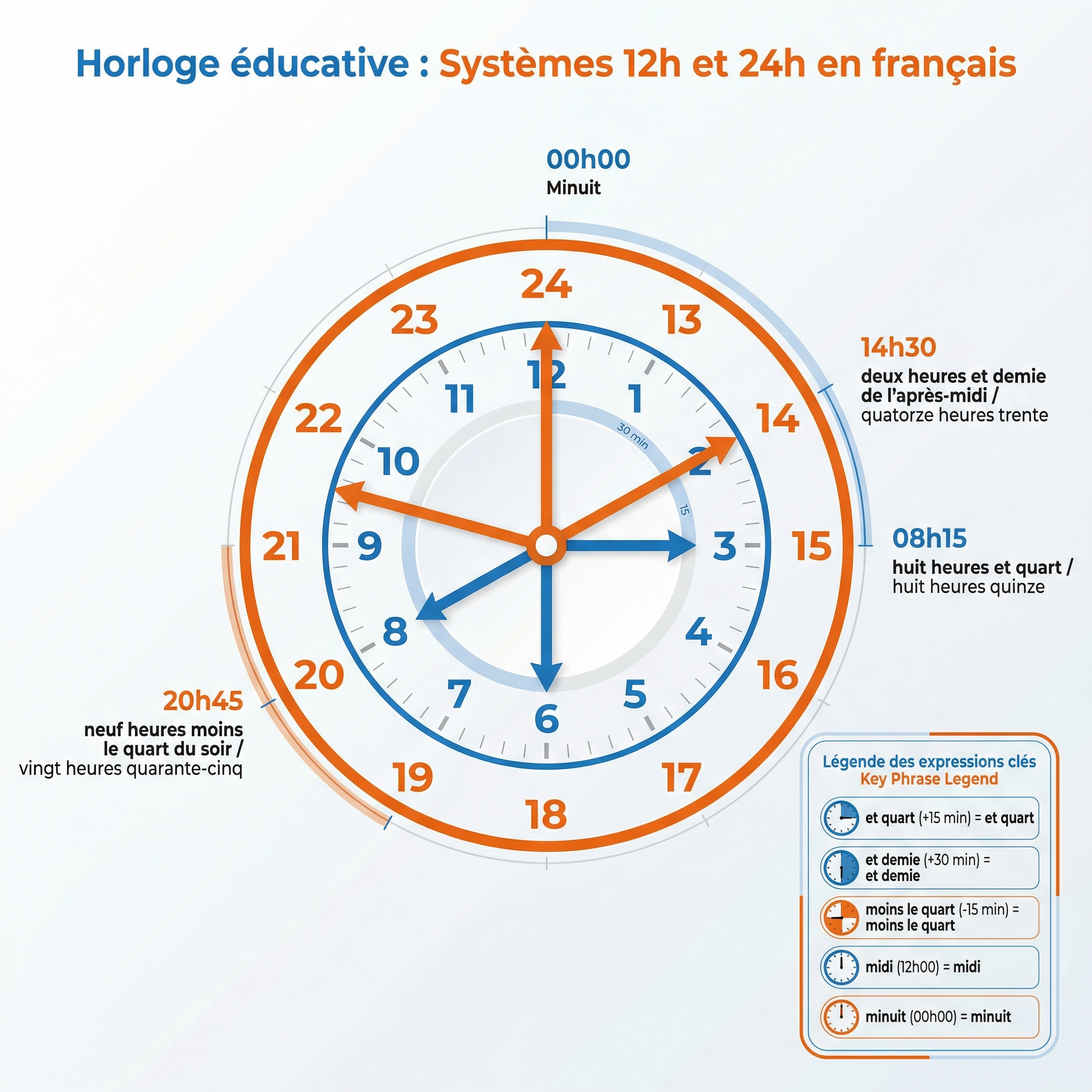
What you need to know: The 24-hour clock (l'heure officielle) is standard in all written contexts: train timetables, school schedules, official appointments. Candidates must be fluent in this system.
Key Structures:
- Format:
[Hour]h[Minute]. Example:14h30. - Spoken Form:
quatorze heures trente. The wordheuresis always plural (unless it's 1 o'clock) andminutesis often omitted. - Key Times:
midi(12h00) andminuit(00h00). Examiners will penalize the use ofdouze heuresfor noon.
The 12-Hour Clock & Common Phrases
What you need to know: While less formal, the 12-hour clock is common in spoken French and uses specific phrases for quarter and half hours.
Specific Knowledge:
...et quart: quarter past (e.g.,trois heures et quart- 3:15)...et demie: half past (e.g.,trois heures et demie- 3:30). Notedemieagrees withheure(feminine)....moins le quart: quarter to (e.g.,quatre heures moins le quart- 3:45)
Expressing Dates (Les Dates)
Structure and Prepositions
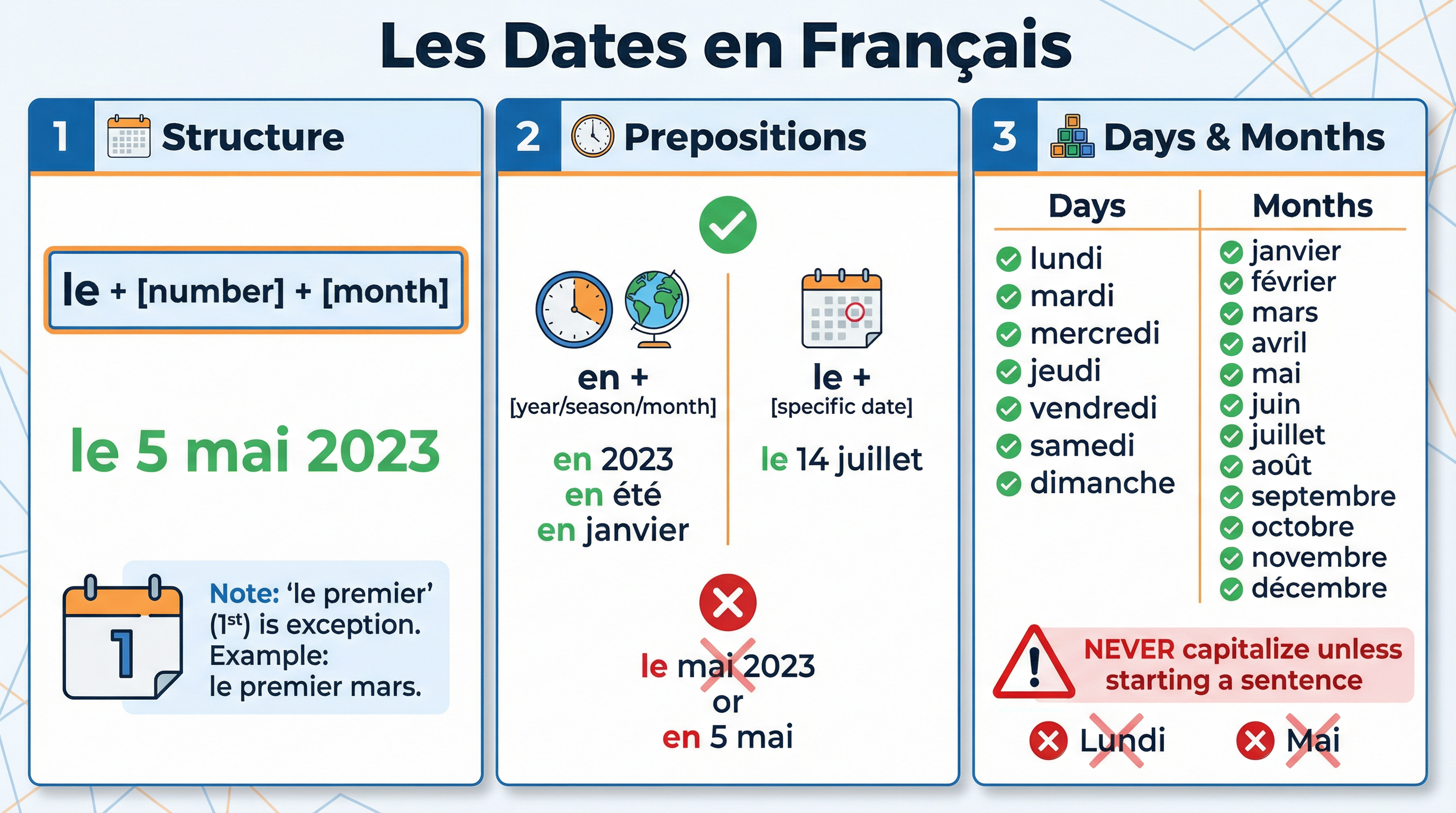
What you need to know: The format for dates is rigid. Marks are consistently lost for incorrect structure and capitalization.
Key Rules:
- Format:
le + [number] + [month] + [year]. Example:le 5 mai 2023. Theleis mandatory. - Capitalization: Days of the week and months of the year are never capitalized in French unless they begin a sentence. This is a key marking point in AO4 (Writing).
- Prepositions: Use
enfor months, seasons, and years (en mai,en hiver,en 2024). Uselefor specific dates (le 14 juillet).