Pearson Edexcel · A-Level · Geography
Course version: Pearson-A-Level-Geography · Version from Mar 2026
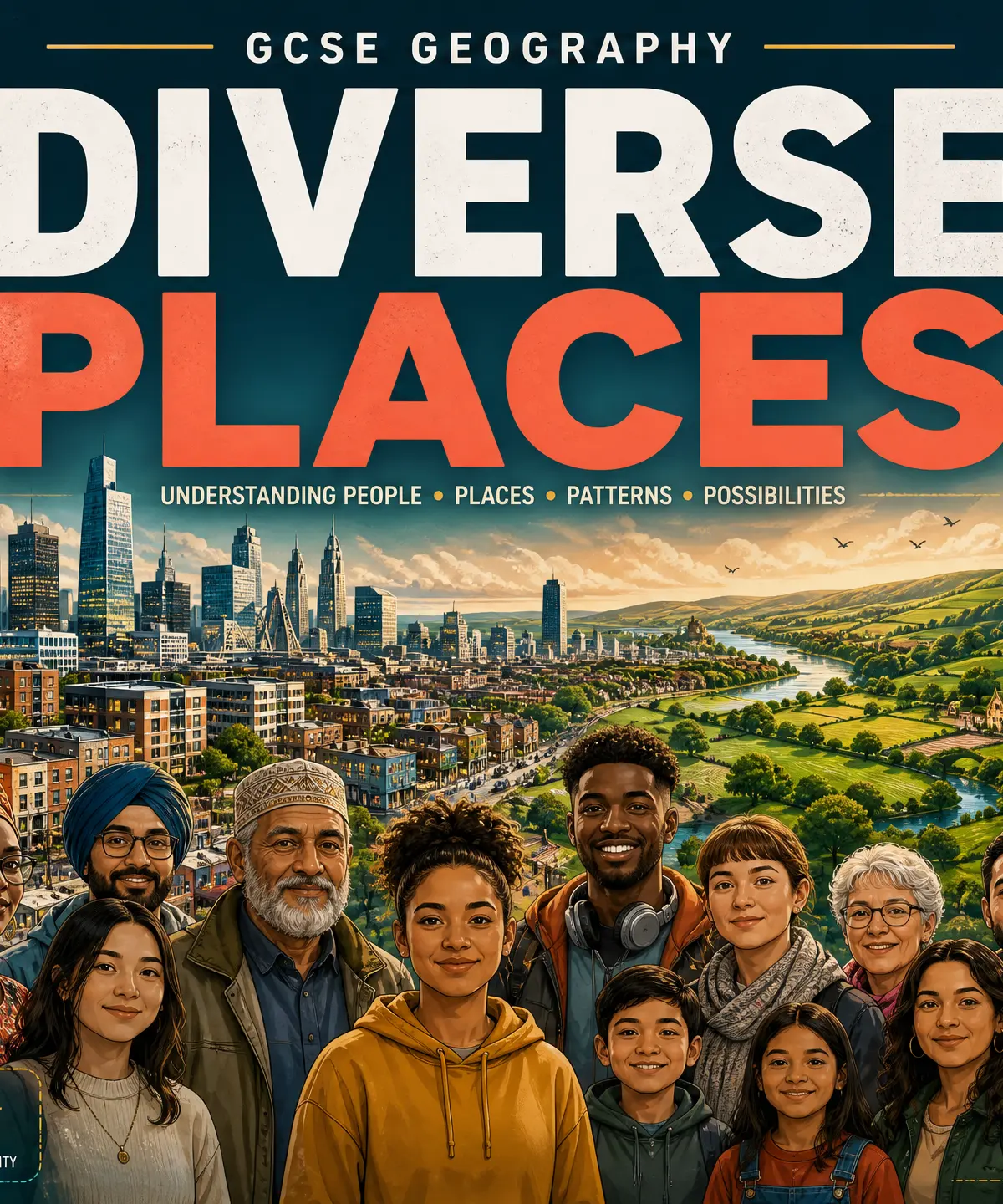
Diverse Places
Dive into 'Diverse Places' and discover how migration, policy, and perceptions shape the communities we live in. This topic is essential for understanding the modern UK, connecting global demographic shifts with the very streets you walk down every day.
- 6 min read
- 3 worked examples
- 2 practice questions
- 6 key terms
Check what you remember
Read the wording for your board, then hide it and explain Rural-Urban Continuum in your own words. Rough notes are fine. This is a self-check, with no mark or grade.
Reference: Pearson Edexcel
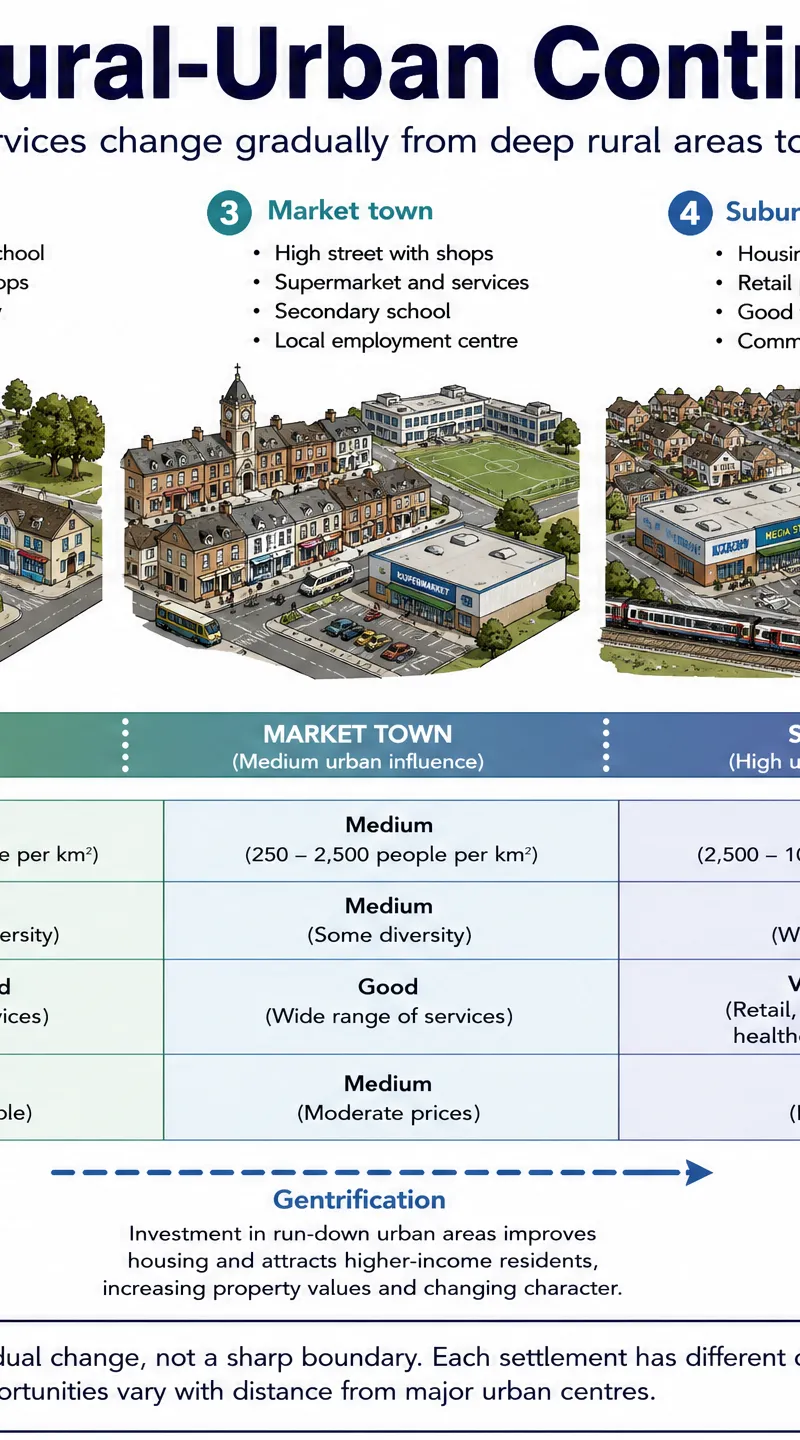
The unbroken transition from sparsely populated, remote rural places to densely populated, central urban places.
Study Notes
Overview
The 'Diverse Places' topic explores the dynamic human geography of the UK. It asks fundamental questions about our population: who lives where, why they live there, and how this shapes the cultural and demographic character of different places. Examiners expect you to understand how processes like migration, fertility, and mortality drive changes in population structure across the rural-urban continuum. Crucially, you must be able to evaluate how government policies and physical accessibility influence these patterns. Furthermore, you will need to critically analyse how different groups perceive places based on their lived experiences and how these places are represented in the media. A strong grasp of specific, named examples and the ability to link these concepts to wider geographical themes are essential for achieving top marks.
Listen to the topic podcast here:
Key Concepts & Processes
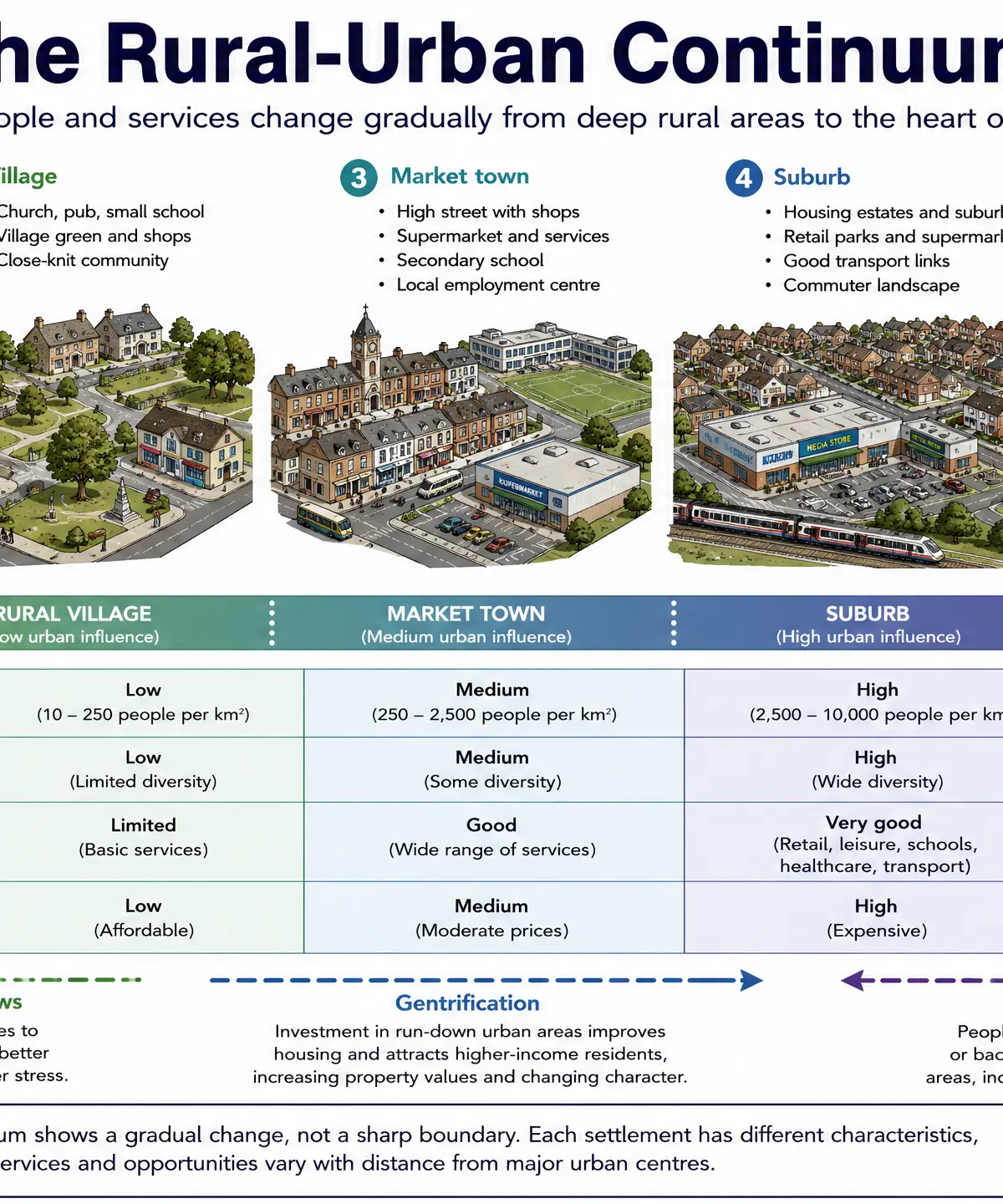
The Rural-Urban Continuum
What it is: The gradual transition from deep, remote rural areas to the densely populated centres of major cities.
Why it matters: Population characteristics change systematically along this continuum. Remote rural areas typically have older, less ethnically diverse populations with lower population densities. Conversely, major urban centres are characterised by younger, highly diverse populations and high densities.
Specific Knowledge: In the UK, the median age in rural areas is significantly higher than in urban areas, reflecting counter-urbanisation of older demographics and urbanisation of young professionals.
Population Structure and Demographic Drivers
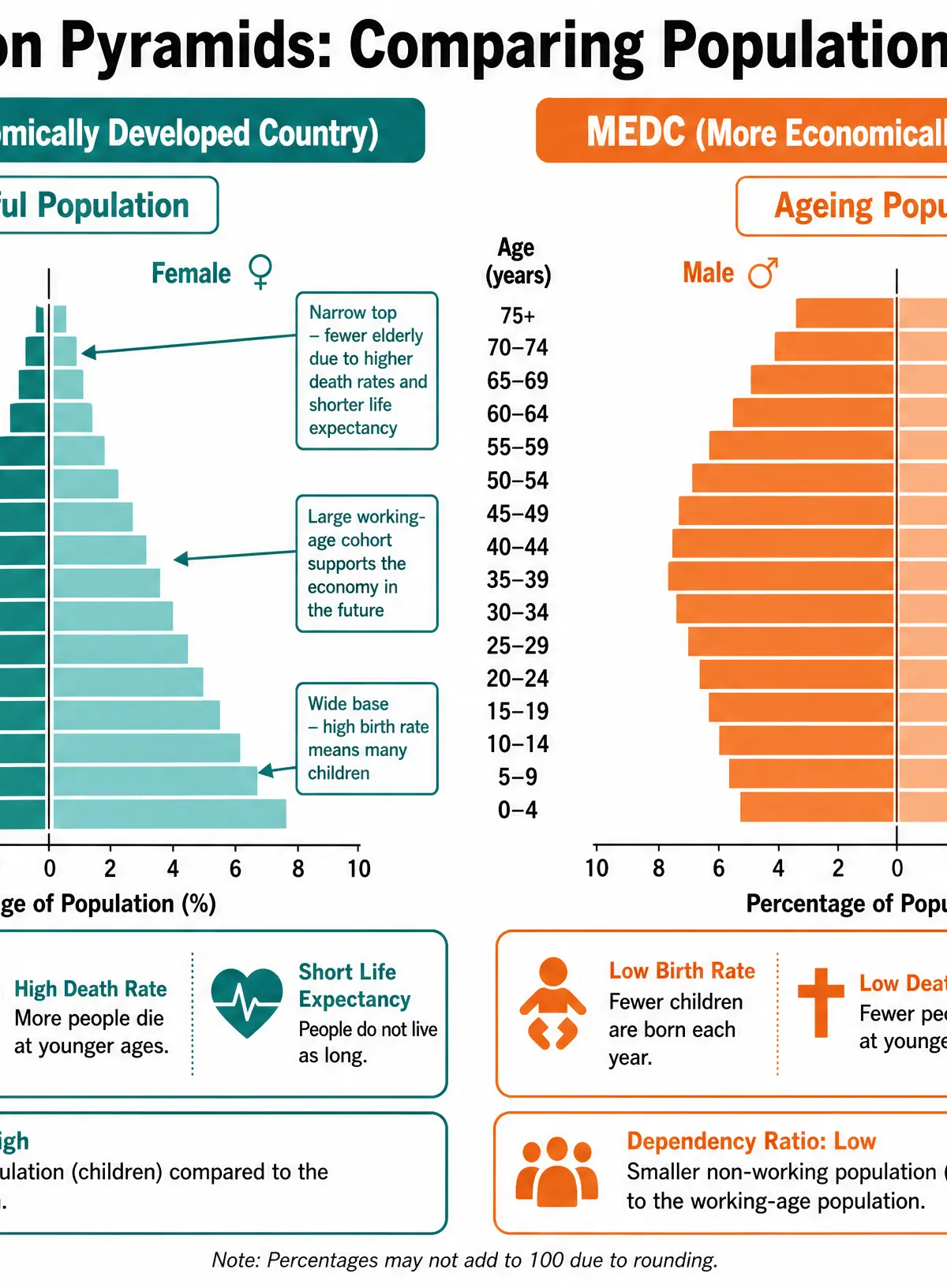
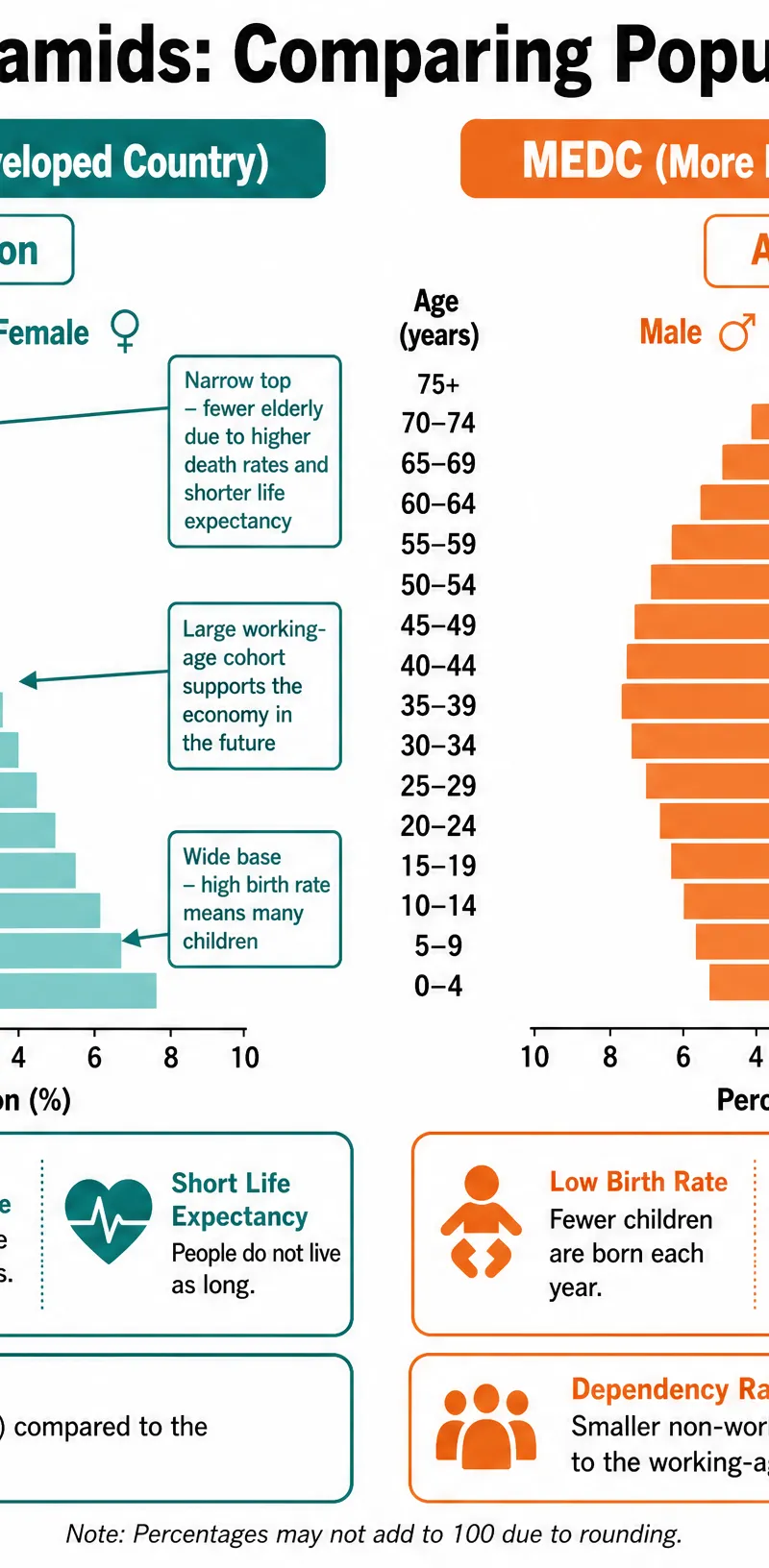
What it is: The composition of a population, usually shown using a population pyramid, driven by fertility, mortality, and migration.
Why it matters: Understanding whether a population is 'youthful' or 'ageing' helps explain economic challenges (like the dependency ratio) and cultural characteristics.
Specific Knowledge: The UK has an ageing population (approx. 18.6% aged 65+ in 2021). The total fertility rate (approx. 1.49 in 2022) is below the replacement level of 2.1. Net migration has been the primary driver of UK population growth in recent decades.
Migration and Cultural Diversity
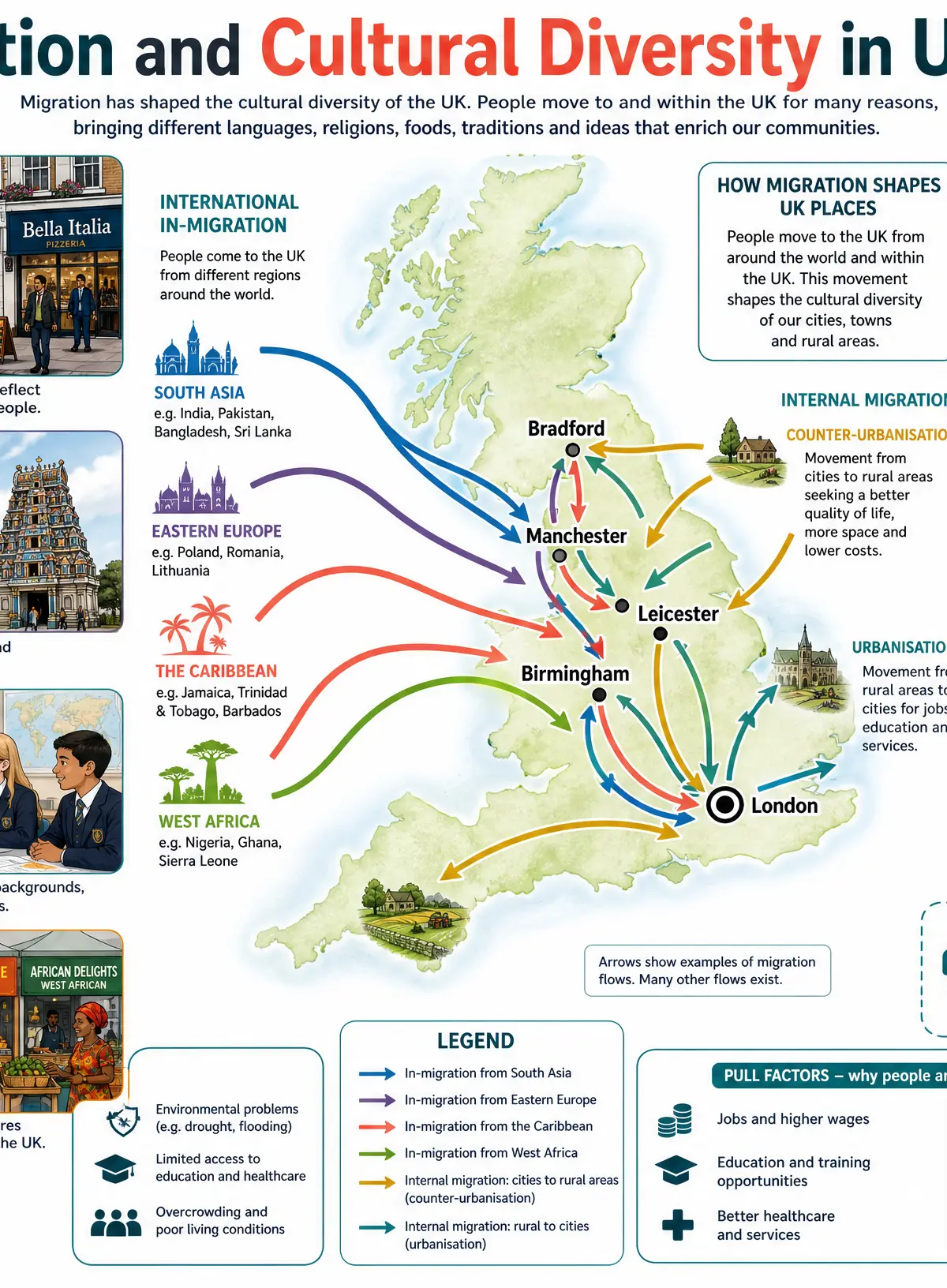
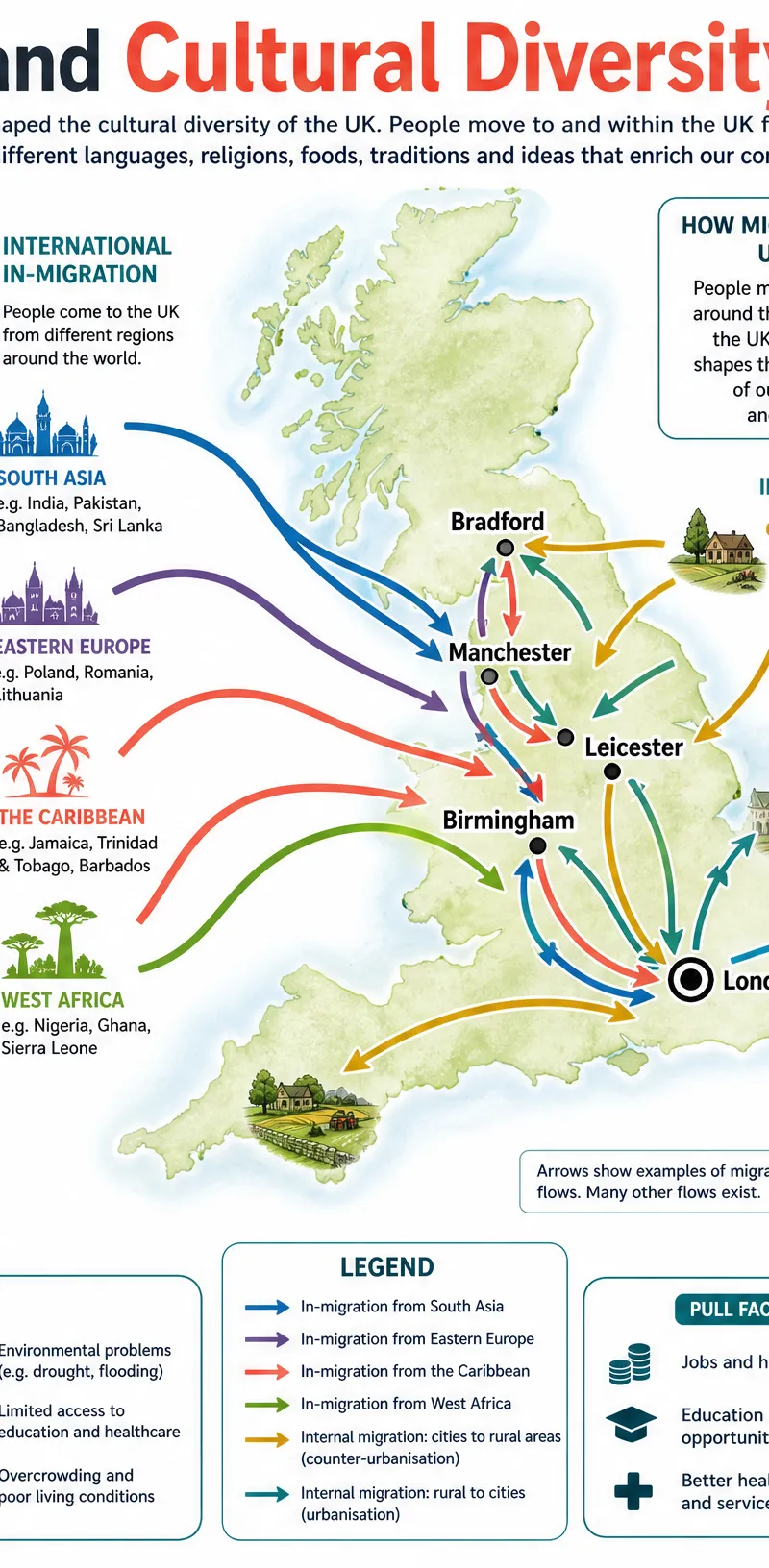
What it is: The movement of people brings new languages, religions, and cultural practices, shaping the identity of places.
Why it matters: Migration is the most significant factor in creating culturally diverse places, but it can also lead to social clustering and varied perceptions of social cohesion.
Specific Knowledge: Leicester became the first UK city with a non-white British majority (2011 Census), largely due to South Asian migration. Bradford has a significant Muslim population (24.7% in 2011), reflecting migration from Pakistan and Bangladesh.
Government Planning Policy
What it is: Decisions made by local and national governments regarding housing, regeneration, and infrastructure.
Why it matters: Policy acts as a 'gatekeeper'. It can foster diversity (e.g., mandating affordable housing) or suppress it (e.g., gentrification displacing lower-income groups).
Specific Knowledge: The 1980s 'Right to Buy' policy reduced social housing stock, fundamentally altering the demographic makeup of many urban estates.
Perceptions of Place
What it is: How places are viewed and experienced, shaped by 'lived experience' (personal day-to-day reality) and 'media representation' (how places are portrayed in news/film).
Why it matters: Perceptions influence where people choose to live and invest. Different groups (e.g., by age or ethnicity) can have vastly different lived experiences of the exact same place.
Specific Knowledge: A gentrifying area might be perceived positively by incoming young professionals (better amenities) but negatively by long-term residents (rising costs, loss of community).
Second-Order Concepts
Causation
Demographic change is caused by a complex interplay of push/pull migration factors, economic opportunities, and government policies. For example, post-industrial decline in northern cities caused out-migration, while service-sector growth in London caused in-migration.
Consequence
The consequences of these demographic shifts include changing cultural landscapes (e.g., new places of worship, diverse retail), altered dependency ratios, and varying levels of social cohesion and segregation.
Change & Continuity
While urban areas have seen rapid demographic change and increased diversity over the last 50 years, many deep rural areas have experienced continuity in their ethnic composition, though they have seen changes in age structure (ageing populations).
Significance
Understanding diverse places is significant because it explains the social fabric of the modern UK. It highlights the challenges of planning for ageing populations and managing social integration in rapidly changing urban environments.
Source Skills
When evaluating sources (e.g., news articles, census data, photographs) in this topic, examiners expect you to assess:
- Content: What does the data or text actually show about population or diversity?
- Provenance: Who created it? (e.g., The ONS census is highly reliable; a tabloid newspaper article may have a specific political agenda).
- Limitations: Is the data outdated? Is the sample size small? Does a photograph only show one street rather than the whole town?
Worked Examples
3 worked examples — open one to explore the question and available guidance.
Practice Questions
Try the question, then reveal an answer plan or example response
Explain two reasons why population structure varies along the rural-urban continuum. (4 marks)
Hint: Think about who moves to cities (and why) versus who moves to rural areas.
Assess the impacts of social clustering on cultural diversity within urban areas. (9 marks)
Hint: Discuss both the positive impacts (maintaining culture, support networks) and negative impacts (segregation, tension).
Exam technique
How to turn what you know into marks
How to approach the question
Always identify the command word, the key geographical concept, and whether a named example is required.
How to structure your answer
- Essay questions
- Brief Intro → Point 1 (Agree/Positive) → Point 2 (Disagree/Negative) → Evaluative Conclusion.
- Source questions
- Analyse Content → Evaluate Provenance → Identify Limitations → Reach a Judgement on usefulness.
- Explain questions
- Use PEEL: Point, Evidence (named place/stat), Explanation (how/why), Link back to the question.
Timing
Approximately 1 minute per mark. For 9 or 12 mark 'assess/evaluate' questions, spend 2-3 minutes planning your argument.
Common pitfalls
- Writing descriptive narratives about migration without explaining *how* it changes the place.
- Using vague examples ('in a city') instead of named places with data ('in Leicester, 2011...').
- Confusing 'lived experience' (personal reality) with 'media representation' (how it's shown in the news).
What the command words want
- Assess
- Weigh up the importance of different factors. You must come to a conclusion.
- Explain
- Give reasons why something happens. Use connectives like 'because', 'leading to', 'therefore'.
- Describe
- State what something is like or identify patterns from a graph. No explanation needed.
- Evaluate
- Look at both sides (e.g., positive/negative, useful/not useful) and make a supported judgement.
Watch or listen (optional)
Test your understanding of Diverse Places
Active recall beats re-reading. Take an instant quiz now to test what you’ve learned and lock it into long-term memory.
7 days Premium · Then the free plan continues · No card, no charge