Pearson Edexcel · A-Level · Geography
Course version: Pearson-A-Level-Geography · Version from Mar 2026
Regenerating Places
Master the complexities of how we measure the success of urban and rural regeneration. Learn why success is deeply contested, how different stakeholders view the same projects through different lenses, and how to evaluate the tension between a place's glossy new image and the lived reality of its residents.
- 6 min read
- 3 worked examples
- 2 practice questions
- 6 key terms
Check what you remember
Read the wording for your board, then hide it and explain Regeneration in your own words. Rough notes are fine. This is a self-check, with no mark or grade.
Reference: Pearson Edexcel
Long-term upgrading of existing places for urban, rural, industrial, and commercial areas, designed to tackle inequality and decline.
Study Notes
Overview
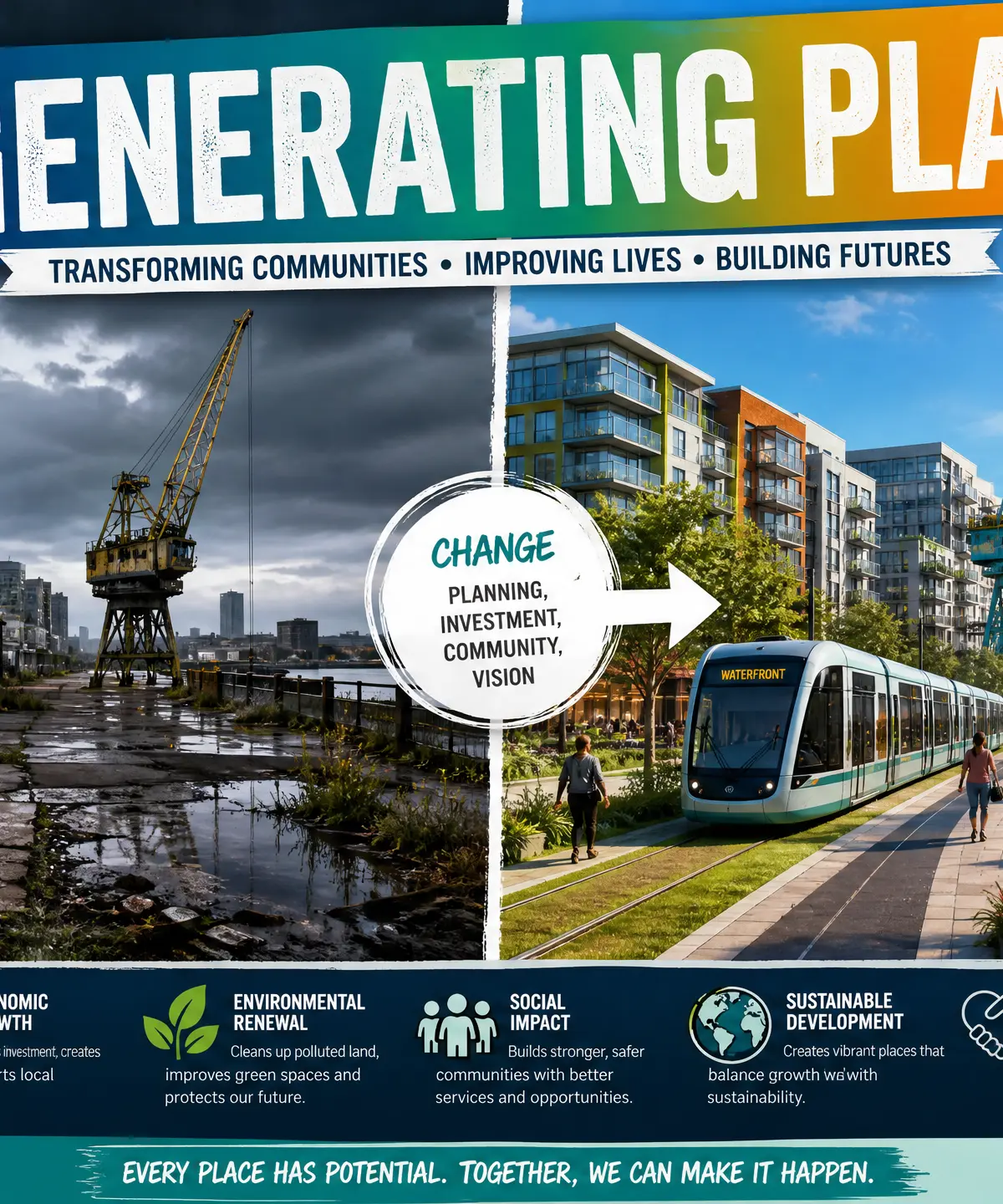
Regenerating places is about far more than just constructing new buildings; it is a complex, multi-dimensional process aimed at reversing economic, social, or environmental decline. In this GCSE Geography topic, examiners expect you to understand that regeneration is never simply a 'success' or a 'failure'. Instead, success is deeply contested. It depends entirely on which measures you use and which stakeholder perspective you adopt. A shiny new waterfront development might look like a triumph of economic renewal on paper, but if it displaces the original working-class community through gentrification, long-term residents will view it very differently.
To achieve the highest marks, you must be able to evaluate regeneration schemes using four distinct lenses: economic, social, environmental, and demographic. You must also be able to apply these measures to specific, named case studies, such as the urban regeneration of Salford Quays or the rural, tourism-led regeneration of the North Antrim coast. Finally, you must recognise the tension between the 'image' of a place (how it is marketed and perceived externally) and its 'reality' (the actual lived experience of the people who call it home).
Measuring Success: The Four Lenses
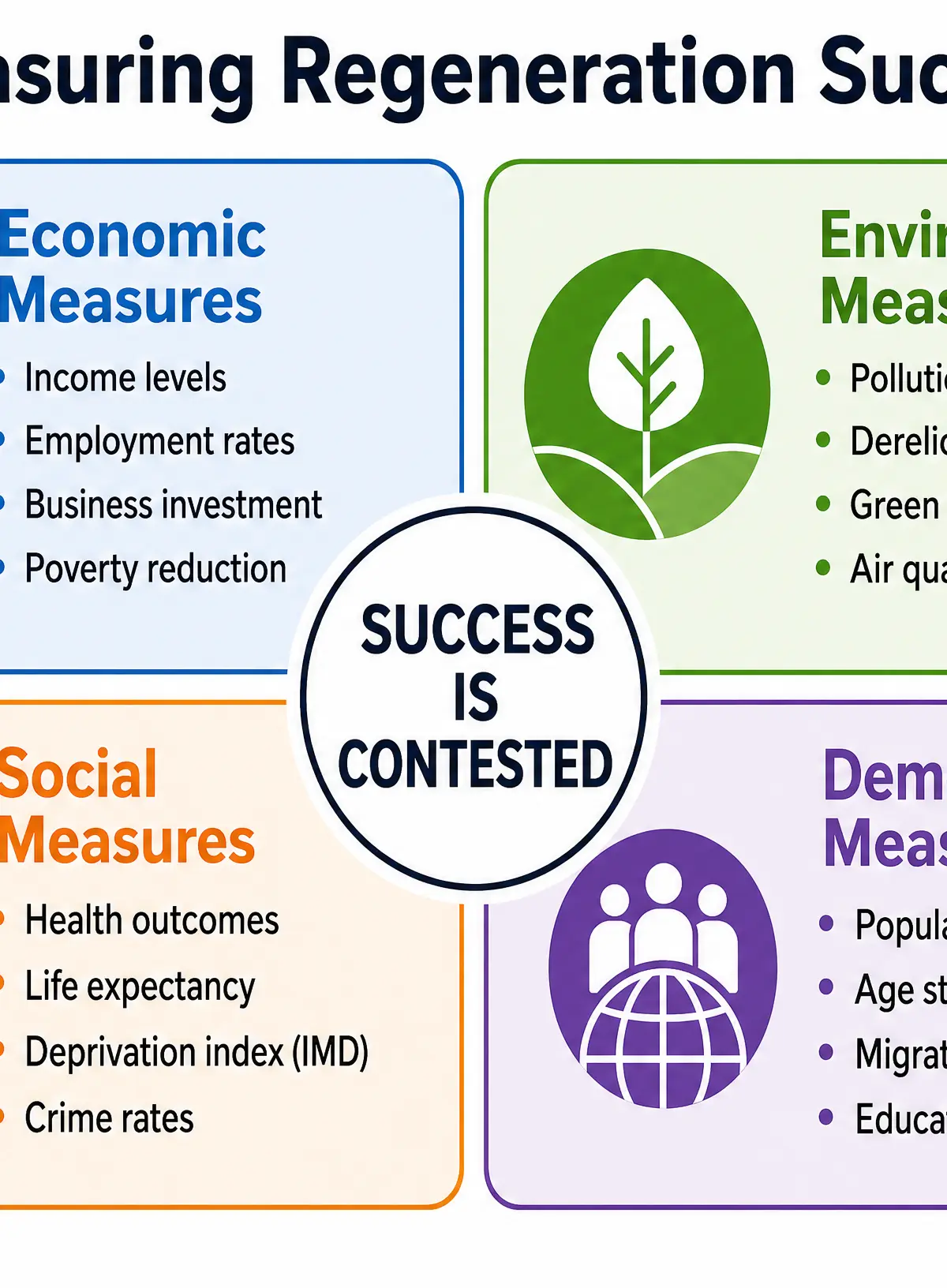
Economic Measures
What we measure: Income levels, poverty rates, employment figures, and the volume of new business investment.
Why it matters: Economic decline is often the catalyst for regeneration. Successful economic regeneration creates jobs, boosts local incomes, and attracts private sector investment. For example, the development of MediaCityUK in Salford Quays created over 7,000 jobs and significantly boosted the local economy.
Specific Knowledge: Examiners look for specific data, such as percentage increases in employment or the amount of inward investment (e.g., FDI - Foreign Direct Investment) a project has secured.
Social Measures
What we measure: Health outcomes, life expectancy, crime rates, educational attainment, and the Index of Multiple Deprivation (IMD).
Why it matters: Social measures reveal whether the lives of the people living in the area have actually improved. The IMD is a crucial tool here, as it combines multiple indicators into a single rank. If an area's IMD score improves post-regeneration, it indicates social progress.
Specific Knowledge: You must be able to discuss how regeneration can sometimes fail socially, even when succeeding economically. Gentrification—where wealthier incomers price out original residents—is a classic example of social failure in the eyes of the displaced community.
Environmental Measures
What we measure: Pollution levels, the reclamation of derelict land (brownfield sites), the creation of green spaces, and improvements in air and water quality.
Why it matters: Environmental degradation often accompanies industrial decline. Successful environmental regeneration not only cleans up toxic sites but also makes the area more attractive for future investment and improves the physical health of residents.
Specific Knowledge: The London Docklands Development Corporation (LDDC) is a prime example of environmental regeneration, having reclaimed thousands of hectares of derelict docklands from the 1980s onwards.
Demographic Measures
What we measure: Population growth or decline, changes in age structure, and migration patterns.
Why it matters: A growing population, particularly an influx of young, economically active people, is often seen as a sign that an area has become desirable again. However, this must be balanced against the potential loss of long-term, older, or lower-income residents.
Stakeholder Perspectives
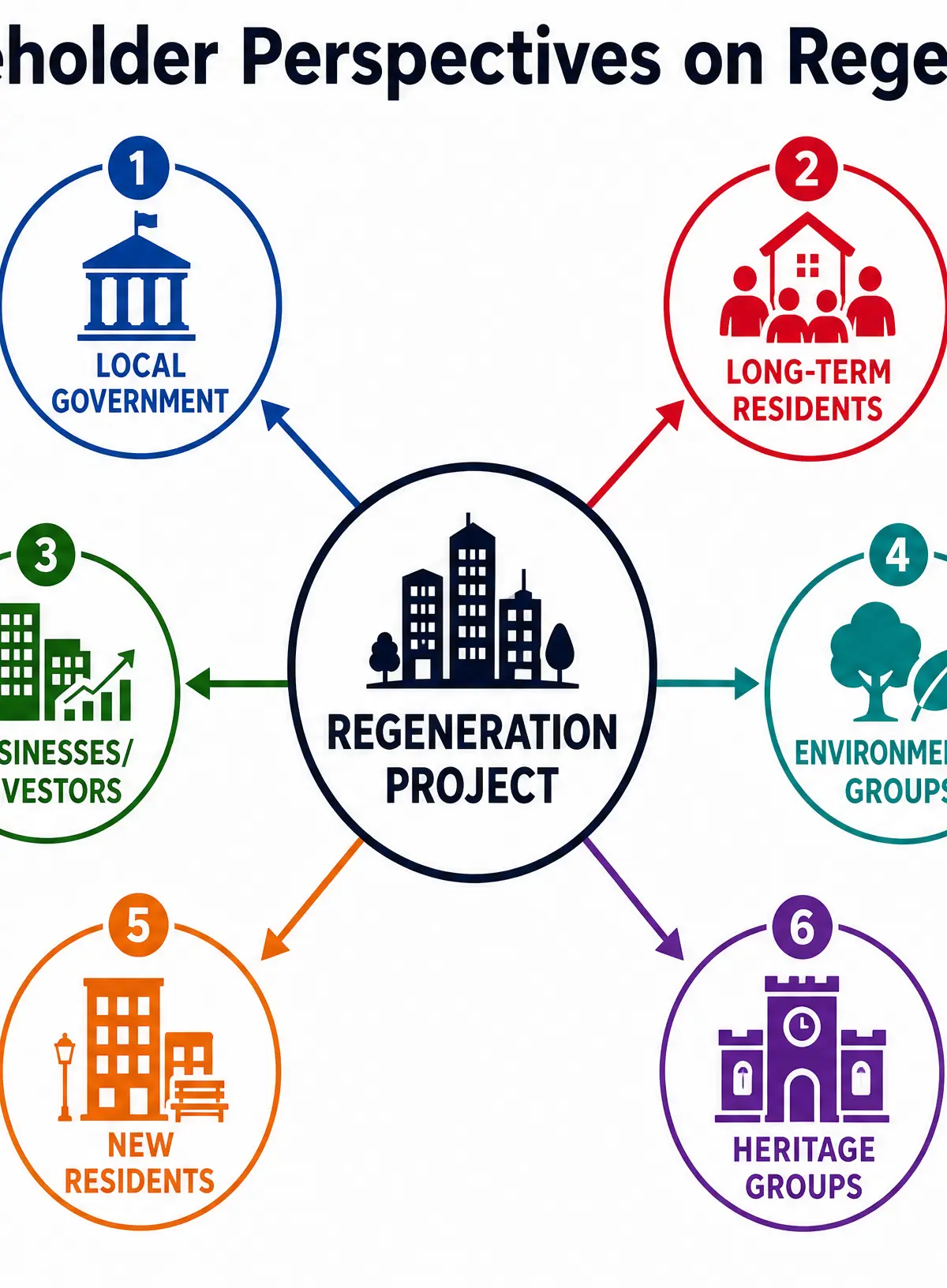
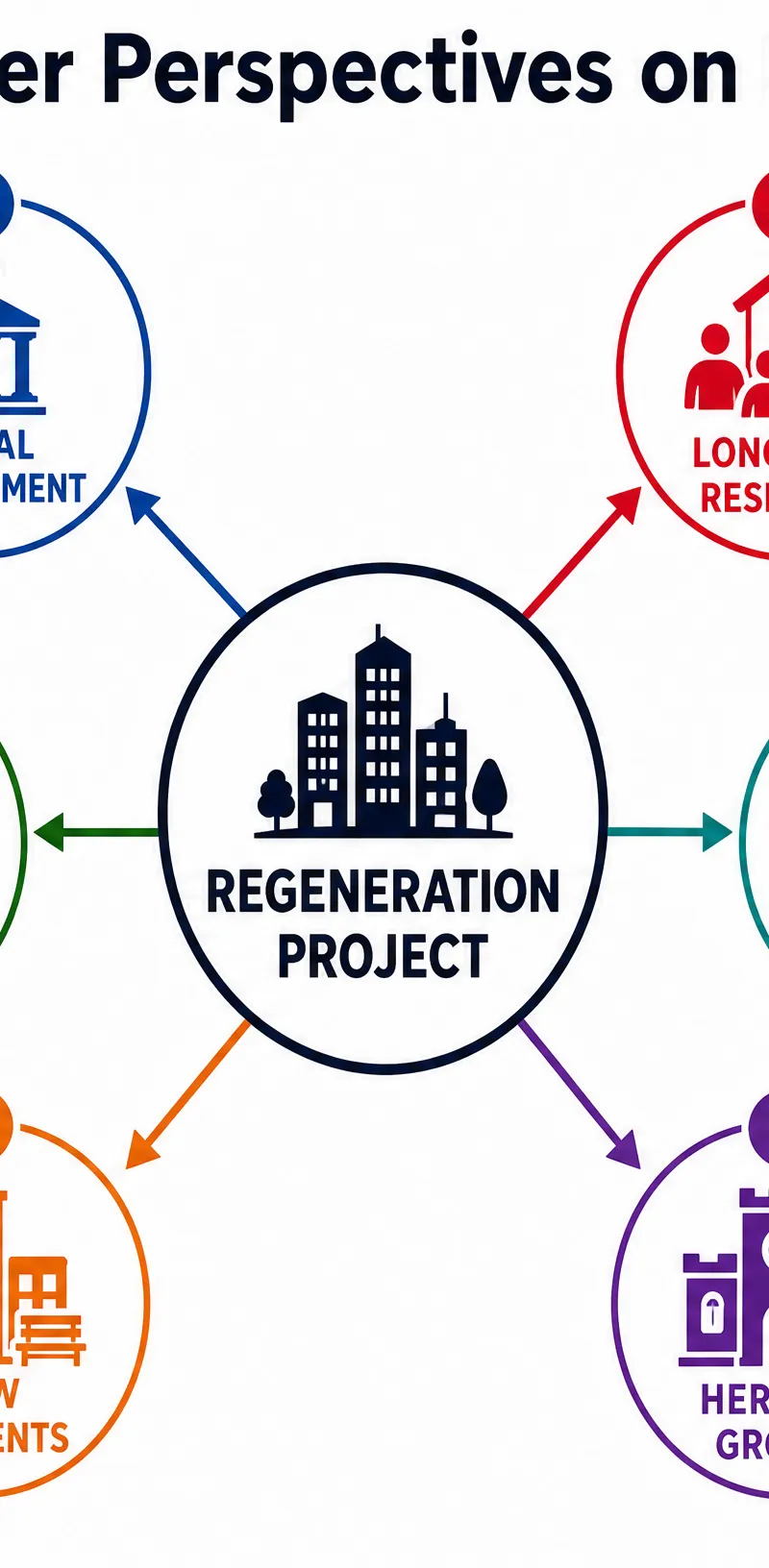
Because regeneration affects different groups in different ways, success is highly contested. You must be able to articulate these contrasting viewpoints:
- Local Government: Typically prioritises economic growth, job creation, and improved national rankings (like the IMD). They focus on headline statistics.
- Long-term Residents: Often prioritise affordable housing, community cohesion, and local services. They are most vulnerable to the negative impacts of gentrification.
- Businesses and Investors: Focus on profitability, footfall, and returns on investment.
- Environmental Groups: Prioritise sustainability, biodiversity, and the reduction of pollution, sometimes opposing developments that favour rapid economic growth over ecological protection.
- Heritage Groups: Focus on preserving local identity and historic architecture, often clashing with developers who wish to demolish old structures to build modern facilities.
The Tension Between Image and Reality
Regeneration projects invest heavily in 'place marketing'—rebranding an area to improve its external image and attract investment. However, examiners will reward candidates who critically evaluate whether this polished image reflects the true 'lived experience' of the residents. A spectacular waterfront may look excellent in a promotional brochure, but if local people cannot afford to live or socialise there, the regeneration has failed to address the reality of their deprivation.
Case Studies
Urban Case Study: Salford Quays
Role: A major urban regeneration project transforming former industrial docklands in Greater Manchester.
Key Actions: Development of MediaCityUK (home to BBC and ITV), the Lowry arts centre, and extensive luxury waterfront housing.
Impact: Economically highly successful, creating thousands of jobs. However, socially contested: much of the new housing is unaffordable for the original working-class community of Ordsall, leading to feelings of exclusion and highlighting the gap between the glossy image of MediaCity and the reality of persistent local deprivation.
Rural Case Study: North Antrim Coast
Role: A rural regeneration strategy focused on heritage and tourism in Northern Ireland.
Key Actions: Investment in visitor infrastructure around the Giant's Causeway and the Causeway Coastal Route.
Impact: Economically successful in boosting visitor numbers and tourism revenue. However, environmentally and socially contested: concerns over traffic congestion, the environmental impact of mass tourism on a fragile landscape, and the uneven distribution of economic benefits among local communities.
Worked Examples
3 worked examples — open one to explore the question and available guidance.
Practice Questions
Try the question, then reveal an answer plan or example response
Explain how environmental measures can be used to assess the success of a regeneration project. (4 marks)
Hint: Think about what physical changes happen when an old industrial area is cleaned up.
Evaluate the view that the success of regeneration is determined entirely by the perspective of the stakeholder. (12 marks)
Hint: This is a 'how far do you agree' question. You need to show that stakeholders DO have different views, but also consider if there are objective measures of success that apply to everyone.
Exam technique
How to turn what you know into marks
How to approach the question
Always identify the command word first. If asked to 'evaluate' or 'assess', you MUST look at multiple sides (e.g., different measures or different stakeholders) and reach a conclusion.
How to structure your answer
- Essay questions
- Introduction setting out criteria for success → Paragraph on economic/environmental success → Paragraph on social/demographic issues (gentrification) → Conclusion weighing up the overall impact.
- Source questions
- Look at the provenance. Who made it and why? A local council report will highlight success; a local resident action group will highlight failures.
- Explain questions
- Use the PEEL structure: Point, Evidence (specific knowledge/case study fact), Explanation (how it answers the question), Link.
Timing
Approximately 1 minute per mark, plus planning time for longer 8 or 12 mark questions.
Common pitfalls
- Only discussing economic success and forgetting social, environmental, and demographic factors.
- Using vague statements like 'it got better' instead of specific data like 'MediaCityUK created 7,000 jobs'.
- Failing to mention that different stakeholders have different views on what success is.
What the command words want
- Explain
- Requires you to give reasons. Use connective phrases like 'This led to...', 'As a result...', 'Therefore...'.
- Suggest
- Apply your geographical knowledge to a novel situation or resource provided in the exam.
- Assess / Evaluate
- Requires a balanced argument. Look at the positives and negatives, consider different stakeholder views, and provide a justified conclusion.
Watch or listen (optional)
Test your understanding of Regenerating Places
Active recall beats re-reading. Take an instant quiz now to test what you’ve learned and lock it into long-term memory.
7 days Premium · Then the free plan continues · No card, no charge