Pearson Edexcel · A-Level · Geography
Course version: Pearson-A-Level-Geography · Version from Mar 2026
Superpowers
This topic explores how superpowers and emerging powers exert significant influence over the global economic system, primarily through international organizations, transnational corporations (TNCs), and the promotion of specific economic ideologies like capitalism and free trade. Understanding this is crucial for the exam as it connects economic power to broader geopolitical dominance.
- 5 min read
- 3 worked examples
- 5 practice questions
- 6 key terms
Check what you remember
Read the wording for your board, then hide it and explain Superpower in your own words. Rough notes are fine. This is a self-check, with no mark or grade.
Reference: Pearson Edexcel
A nation with the ability to project its influence anywhere in the world and be a dominant global force.
Study Notes
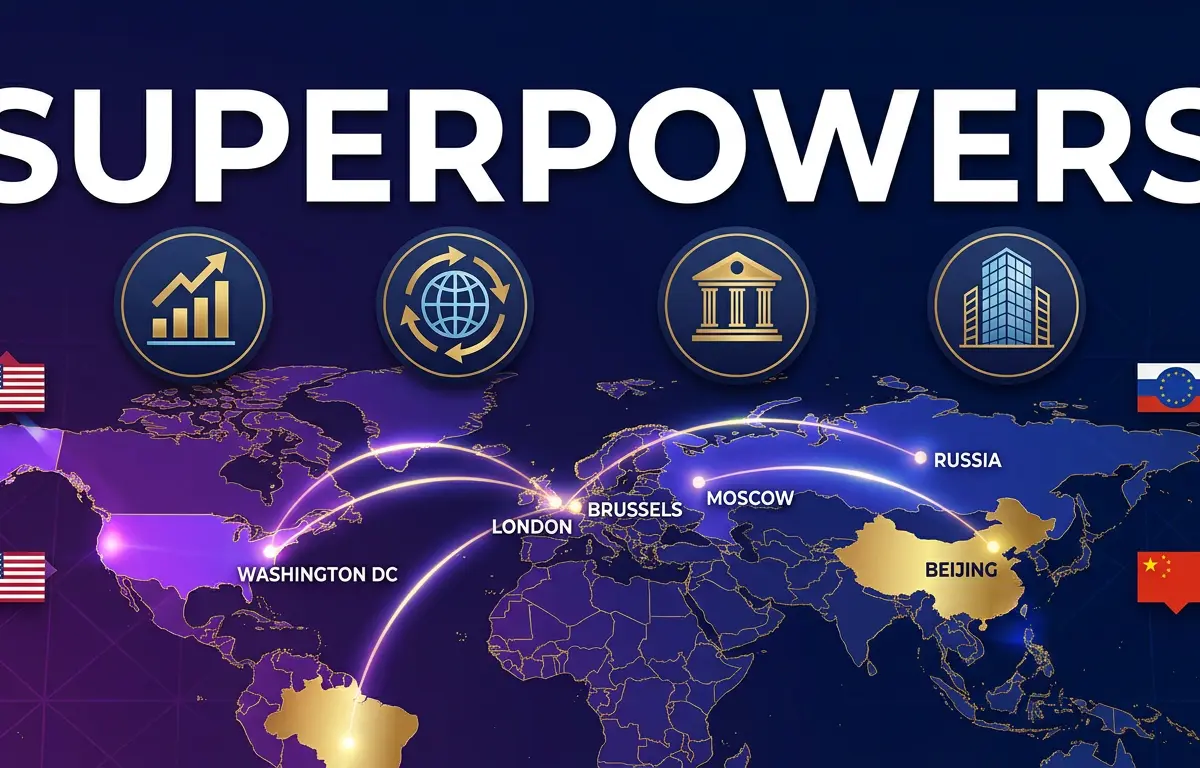
Overview
This study guide covers the fundamental concepts of global superpowers and how they maintain and extend their influence in the modern world. Examiners expect candidates to demonstrate a clear understanding of the mechanisms of power—distinguishing between hard and soft power—and to explain how International Governmental Organisations (IGOs) and Transnational Corporations (TNCs) shape the global economic system. You will need to use specific named examples, such as the World Bank, IMF, WTO, and WEF, alongside major TNCs like Apple and Walmart. A key theme throughout this topic is how economic dominance translates into political and cultural influence, often referred to as 'Westernisation'.
Key Concepts & Mechanisms of Power
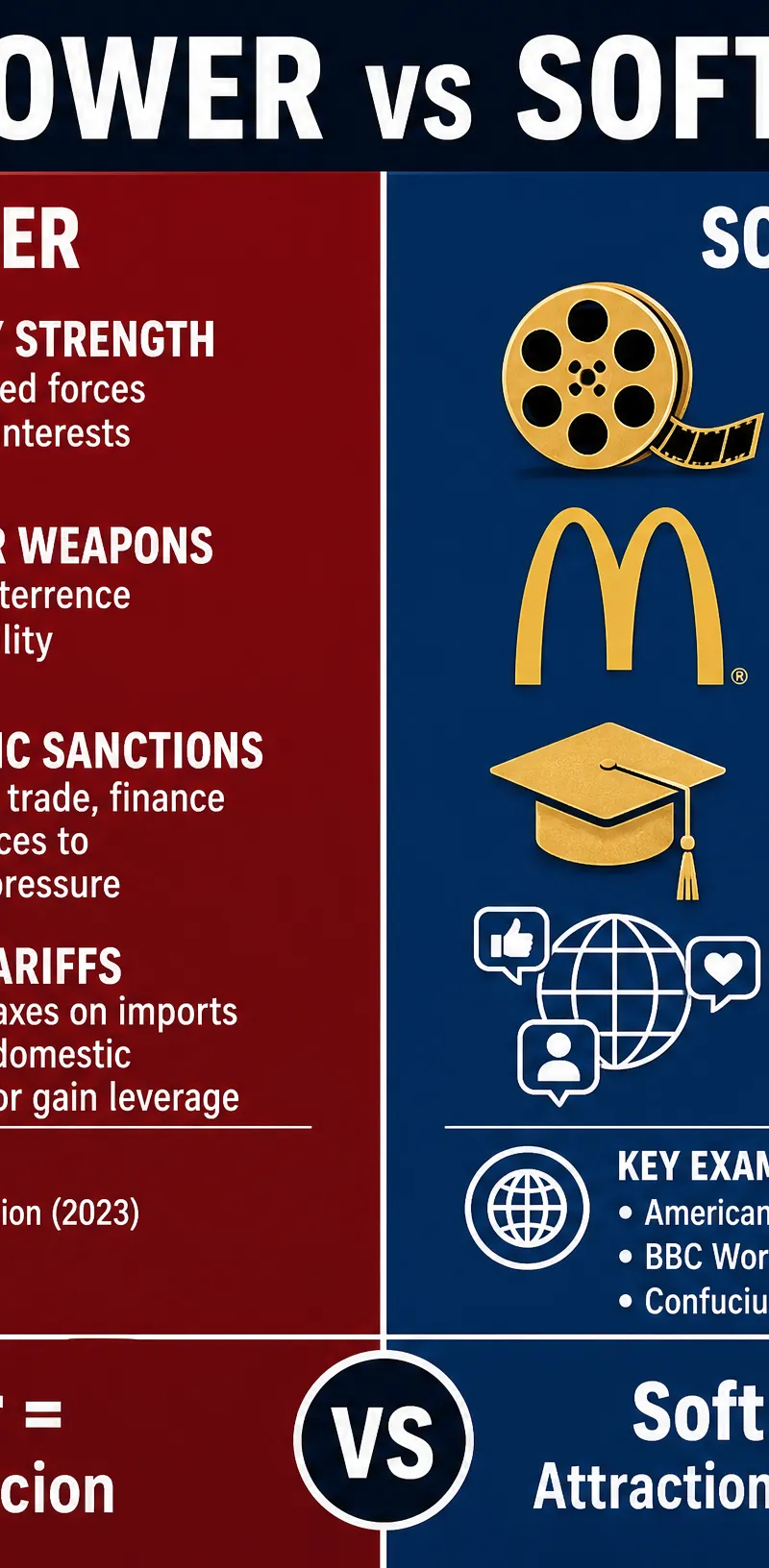
Hard Power vs Soft Power
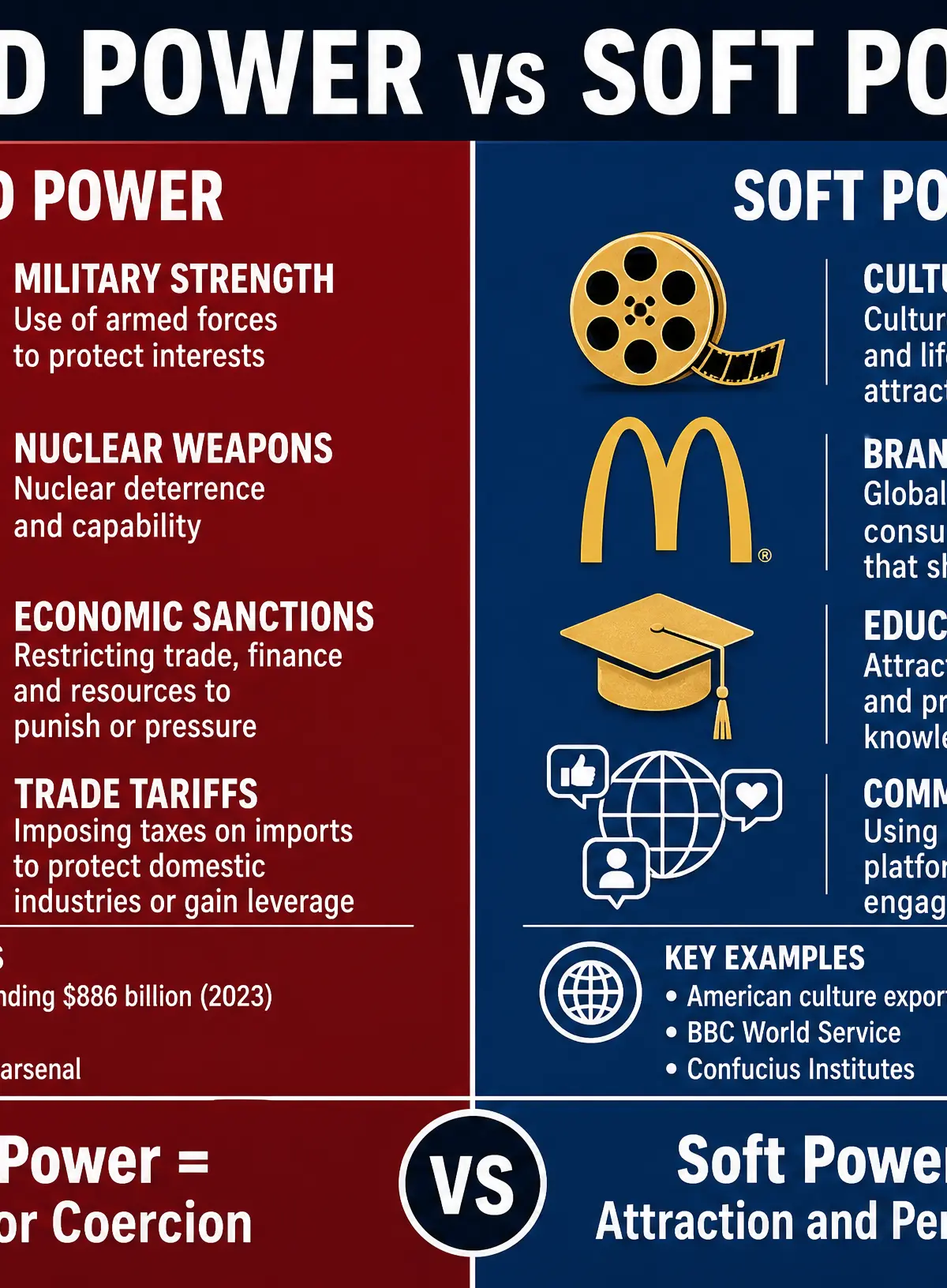
Definition: Power is the ability to influence others. Hard power relies on coercion and force, whereas soft power relies on attraction and persuasion.
Key Mechanisms:
- Hard Power: Military interventions, nuclear deterrence, economic sanctions, and trade tariffs. For example, the USA's military spending of $886 billion (2023) or the economic sanctions placed on Russia.
- Soft Power: Cultural exports, education, and global brands. Examples include Hollywood films, the global reach of the English language, American universities, and China's Confucius Institutes.
Why it matters: Examiners frequently ask candidates to compare these two forms of power. The most successful answers recognize that modern superpowers often use a combination of both, sometimes termed 'smart power'.
The Role of IGOs
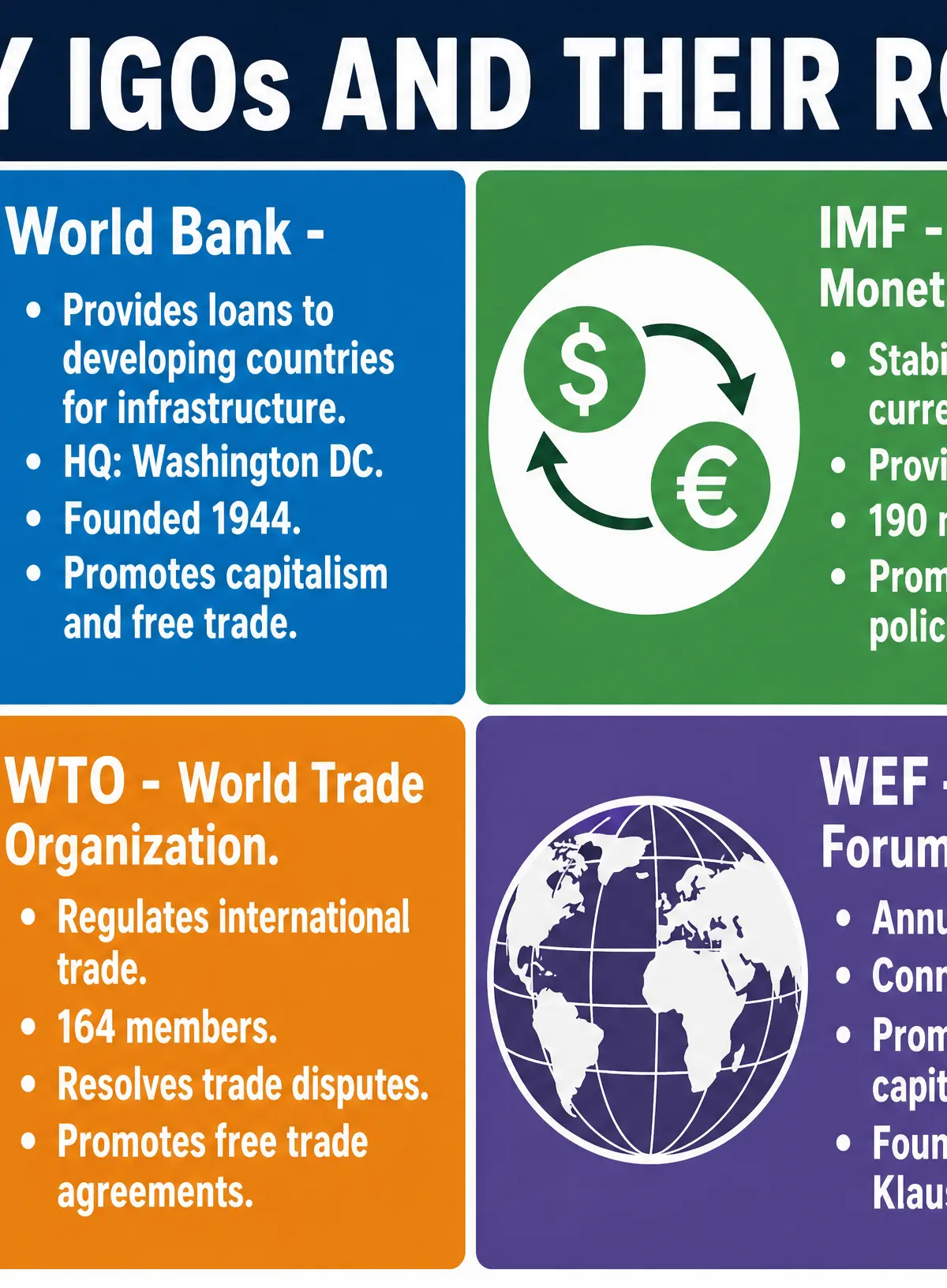
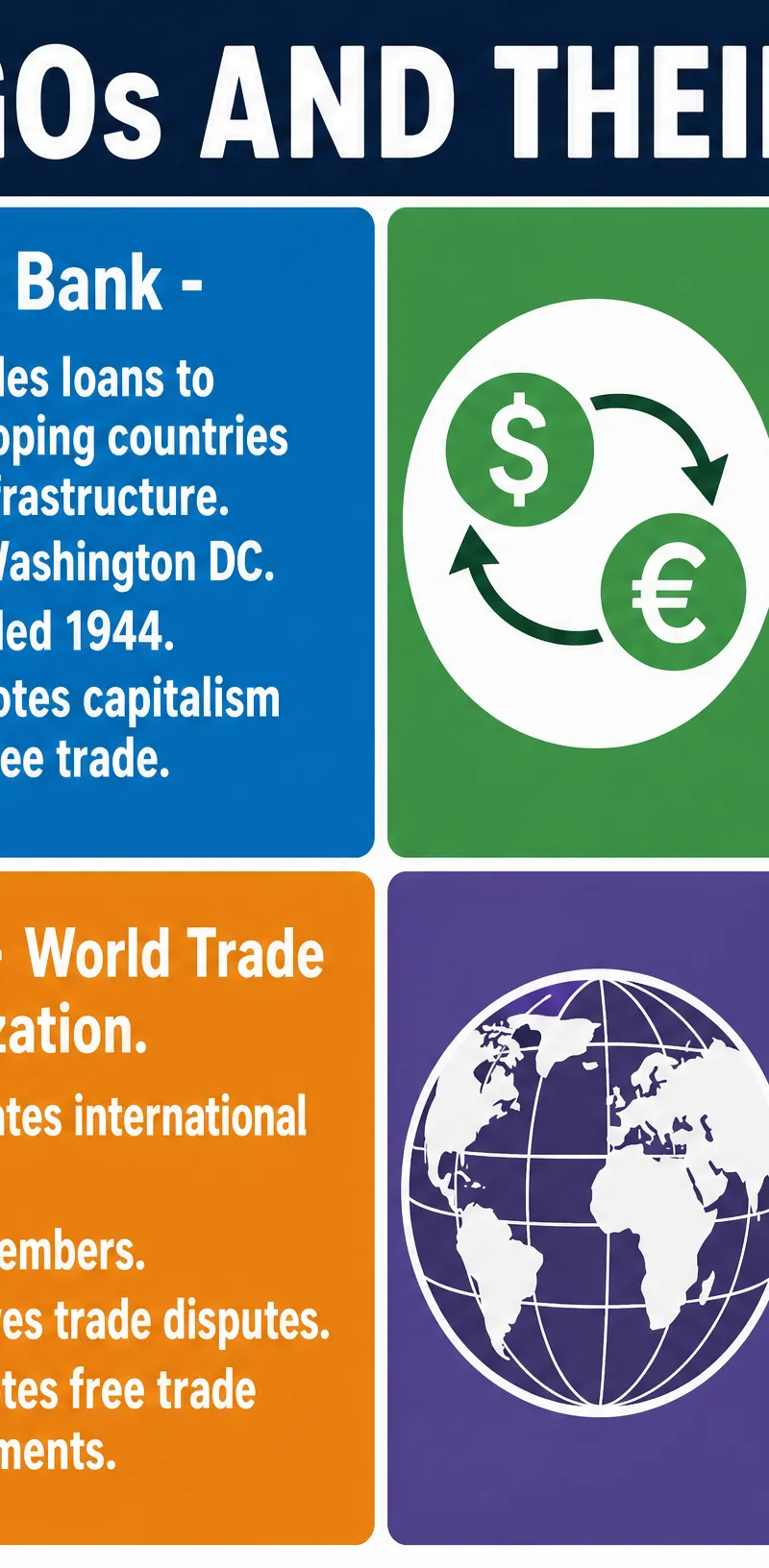
What they are: International Governmental Organisations are bodies created by treaties between nations. Following WWII, several key IGOs were established, largely shaped by Western powers (particularly the USA).
Key Organisations to Know:
- World Bank (1944): Provides loans for development and infrastructure in developing countries, often attaching conditions that promote free-market policies.
- International Monetary Fund (IMF) (1944): Stabilises global currencies and provides emergency financial assistance, again usually requiring structural adjustment programmes (SAPs) that favour capitalism.
- World Trade Organization (WTO): Regulates international trade, negotiates agreements, and resolves disputes to promote global free trade.
- World Economic Forum (WEF) (1971): An influential annual gathering in Davos that shapes global economic policy and promotes interconnected capitalism.
Exam Focus: Do not confuse the roles of these four organisations. Be prepared to assess whether they benefit all nations equally or primarily serve the interests of established superpowers.
Transnational Corporations (TNCs)
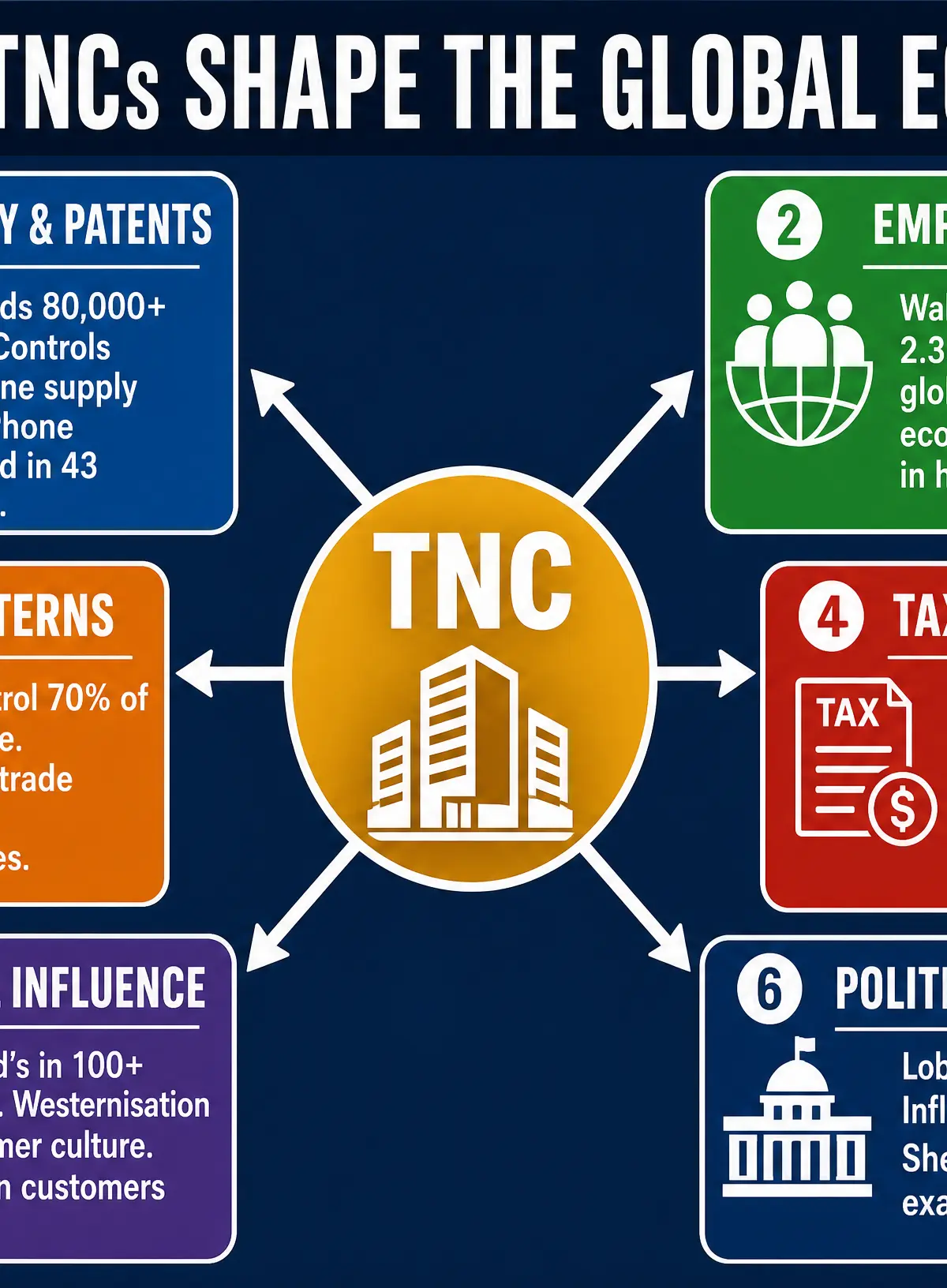
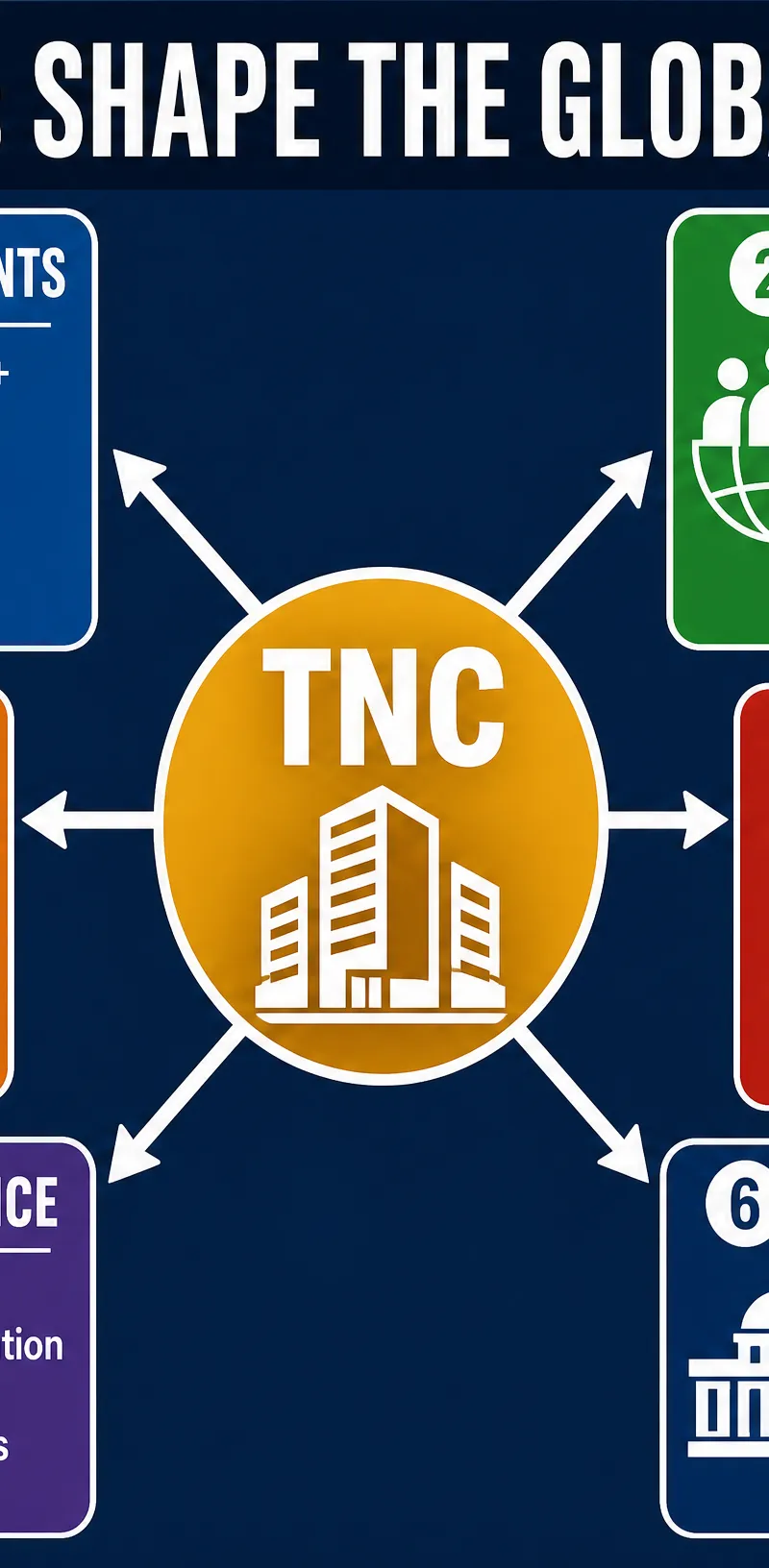
What they are: Companies operating in multiple countries, usually headquartered in superpower nations.
How they exert influence:
- Technology and Patents: Companies like Apple hold thousands of patents, dominating global tech supply chains.
- Trade Patterns: TNCs control an estimated 70% of world trade, heavily influencing global supply chains and intra-firm trade.
- Employment and Dependency: Giants like Walmart employ millions globally, making host countries economically dependent on their operations.
- Cultural Influence: Brands like McDonald's drive the 'Westernisation' of global consumer culture.
Specific Knowledge: Always use named examples with data (e.g., Apple's revenue, Walmart's workforce size) to support your points in exam answers.
Second-Order Concepts
Causation
How economic strength (GDP, trade dominance) directly leads to geopolitical power (UN Security Council influence, military spending capacity).
Consequence
The impact of structural adjustment programmes (SAPs) by the IMF/World Bank on developing nations—often leading to privatization and reduced public spending.
Change & Continuity
The shift from unipolar (US dominance post-Cold War) to an increasingly multipolar world with the rise of China, while Western-created IGOs continue to dominate the financial system.
Significance
Understanding that economic ideology (free-market capitalism) is not neutral; it is a mechanism used by superpowers to maintain their global position.
Visual Resources
3 diagrams and illustrations
Interactive Diagrams
1 interactive diagram to visualise key concepts
Conceptual Flow Outline
The Dimensions of Superpower Influence
Worked Examples
3 worked examples — open one to explore the question and available guidance.
Practice Questions
Try the question, then reveal an answer plan or example response
Explain two ways in which soft power contributes to a country's superpower status. (4 marks)
Hint: Think about culture, brands, and education. Make sure to explain *how* these create influence.
Evaluate the view that economic power is more important than military power in maintaining superpower status today. (12 marks)
Hint: You must discuss both economic and military power, providing specific examples for each, before reaching a judgement.
State the main role of the World Trade Organization (WTO). (1 mark)
Hint: Think about what the 'T' stands for.
Explain how one named TNC has influenced global trade patterns. (3 marks)
Hint: Name a specific company and explain how its supply chain works globally.
Describe two characteristics of a superpower. (2 marks)
Hint: What makes a country a superpower? Think of the different categories of power.
Exam technique
How to turn what you know into marks
How to approach the question
Identify the command word, underline the key topic focus, and plan 3 specific facts before writing.
How to structure your answer
- Essay questions
- Introduction outlining factors → Paragraph 1 (Agree/Main factor) → Paragraph 2 (Disagree/Alternative factor) → Conclusion with final judgement
- Source questions
- Content analysis → Provenance (Who/When/Why) → Usefulness → Limitations
- Explain questions
- PEEL structure: Point, Evidence (specific knowledge/stats), Explanation (This means that...), Link to question
Timing
Approximately 1 minute per mark, plus planning time for longer questions
Common pitfalls
- Confusing the specific roles of the IMF and the World Bank.
- Writing vaguely about 'companies' instead of naming specific TNCs like Apple or Walmart with data.
- Describing facts without explaining *how* they create power or influence.
What the command words want
- Assess
- Use evidence to determine the relative significance of something. Consider both sides.
- Explain
- Give reasons how or why something happens. Use connective phrases like 'because' or 'this leads to'.
- Describe
- Give the main characteristics or features. No explanation needed.
- Evaluate
- Review information and bring it together to form a conclusion, drawing on evidence.
Watch or listen (optional)
Test your understanding of Superpowers
Active recall beats re-reading. Take an instant quiz now to test what you’ve learned and lock it into long-term memory.
7 days Premium · Then the free plan continues · No card, no charge