Pearson Edexcel · GCSE · Greek
Course version: Pearson-GCSE-Greek · Version from Mar 2026
International and global dimension
Master the vocabulary and grammar needed to discuss global events, the environment, and international campaigns in Greek. This guide will help you hit the top mark bands by teaching you how to justify opinions and confidently use past, present, and future tenses.
- 4 min read
- 3 worked examples
- 5 practice questions
- 6 key terms
Check what you remember
Read the wording for your board, then hide it and explain Η κλιματική αλλαγή (Climate change) in your own words. Rough notes are fine. This is a self-check, with no mark or grade.
Reference: Pearson Edexcel
Long-term shifts in temperatures and weather patterns.
Study Notes

Overview
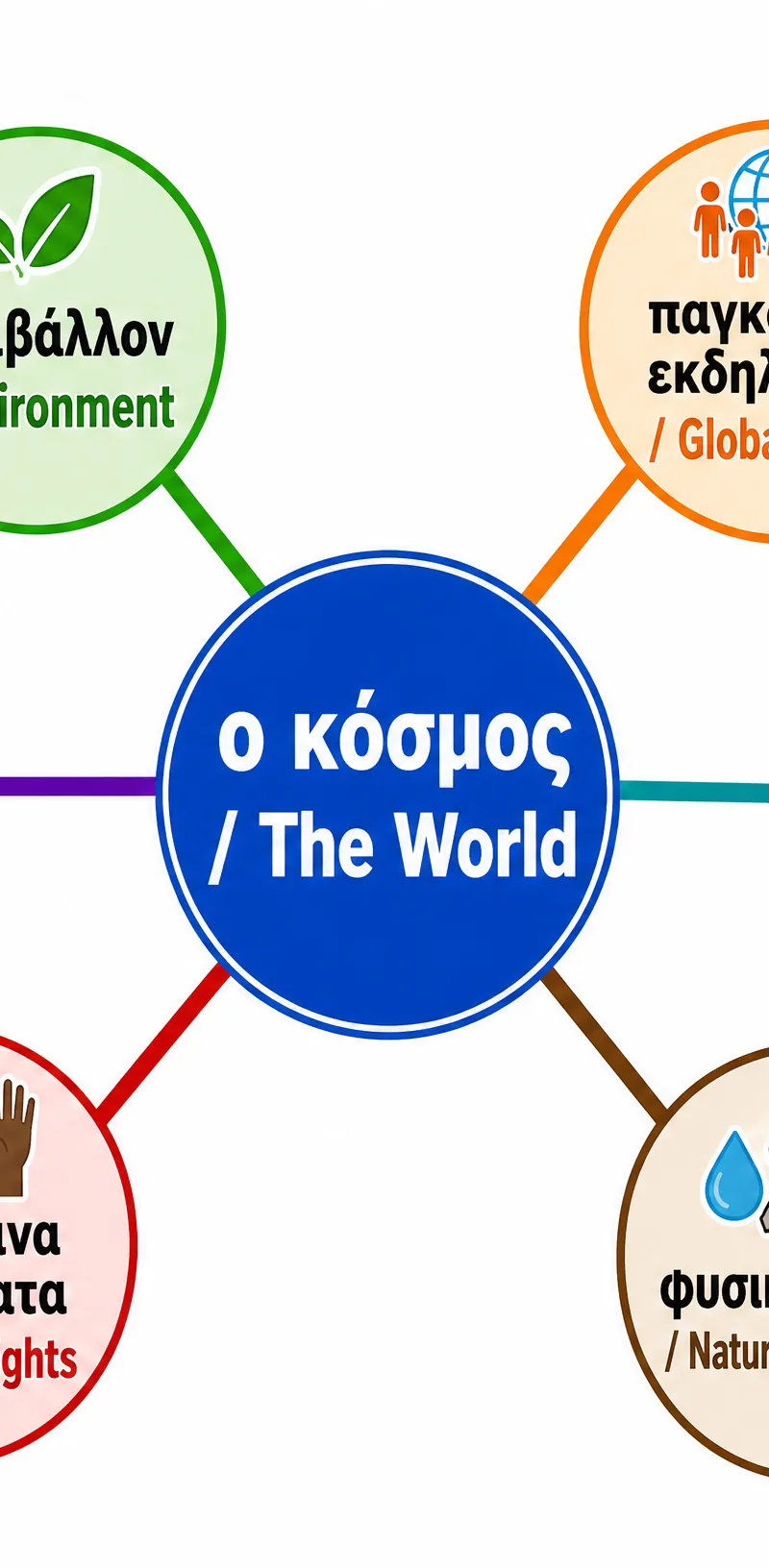
Theme 5 of the GCSE Greek specification focuses on the 'International and Global Dimension'. This is a high-value topic where examiners expect you to show your ability to discuss real-world issues. It covers two main sub-themes: bringing the world together (such as global events like the Olympics and international campaigns) and environmental issues (such as climate change, pollution, recycling, and sustainable development).
To succeed in this topic, you must move beyond simple vocabulary lists. Examiners are looking for your ability to express and justify opinions, refer to events across the past, present, and future, and use a variety of complex grammatical structures like the subjunctive (να) and conditional sentences. This guide provides the tools to build sophisticated, multi-tense answers that will elevate your writing and speaking tasks.
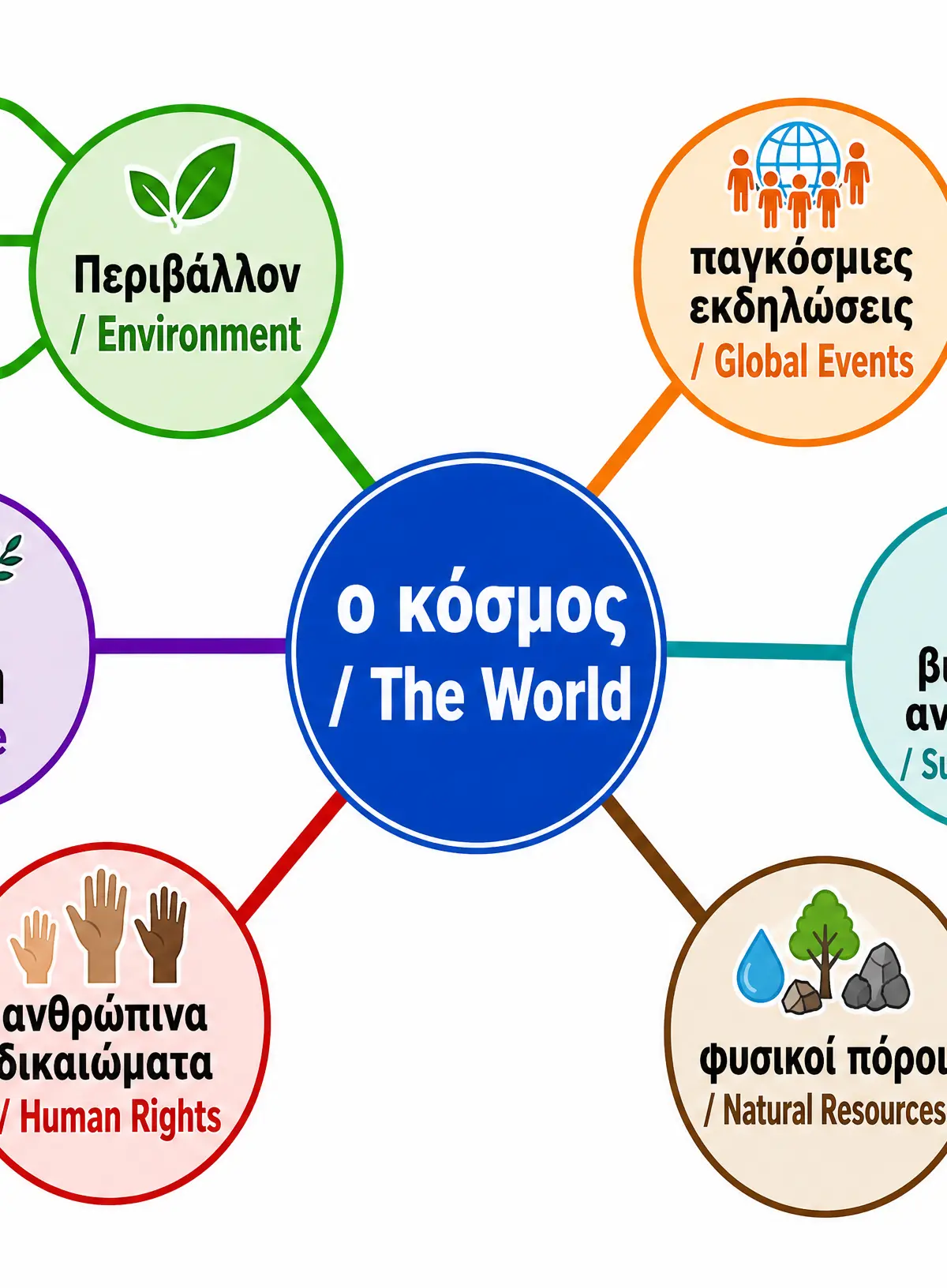
Key Vocabulary: The Environment (Το Περιβάλλον)
To access higher marks, you must use precise terminology rather than generic words. Here are the core terms you need:
- η κλιματική αλλαγή: climate change
- η ρύπανση: pollution
- η ανακύκλωση: recycling
- η βιώσιμη ανάπτυξη: sustainable development
- οι φυσικοί πόροι: natural resources
- τα σκουπίδια: rubbish / waste
- τα καυσαέρια: emissions
Key Vocabulary: Global Events (Παγκόσμιες Εκδηλώσεις)
- οι Ολυμπιακοί Αγώνες: the Olympic Games
- η παγκόσμια εκστρατεία: global campaign
- η διεθνής συνεργασία: international cooperation
- η ειρήνη: peace
- τα ανθρώπινα δικαιώματα: human rights
- η φιλανθρωπία: charity
Core Grammar: The Three Tenses
A critical requirement for the top mark bands is demonstrating that you can confidently use past, present, and future tenses. If you only answer in the present tense, your marks will be capped.
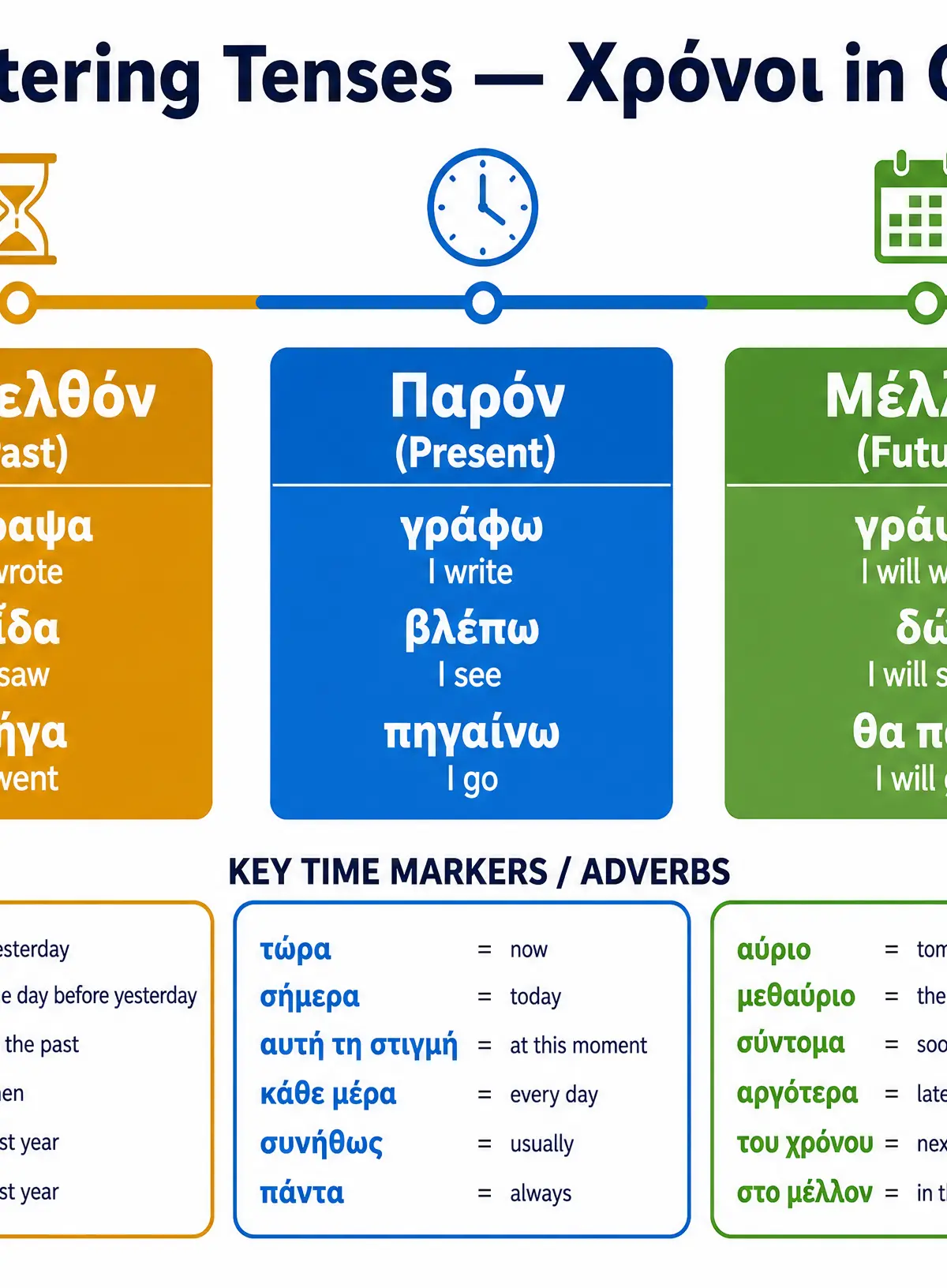
The Past (Το Παρελθόν)
Use the Aorist (Simple Past) for completed actions.
Example: Πέρυσι, το σχολείο μας οργάνωσε μια εκστρατεία ανακύκλωσης. (Last year, our school organised a recycling campaign.)
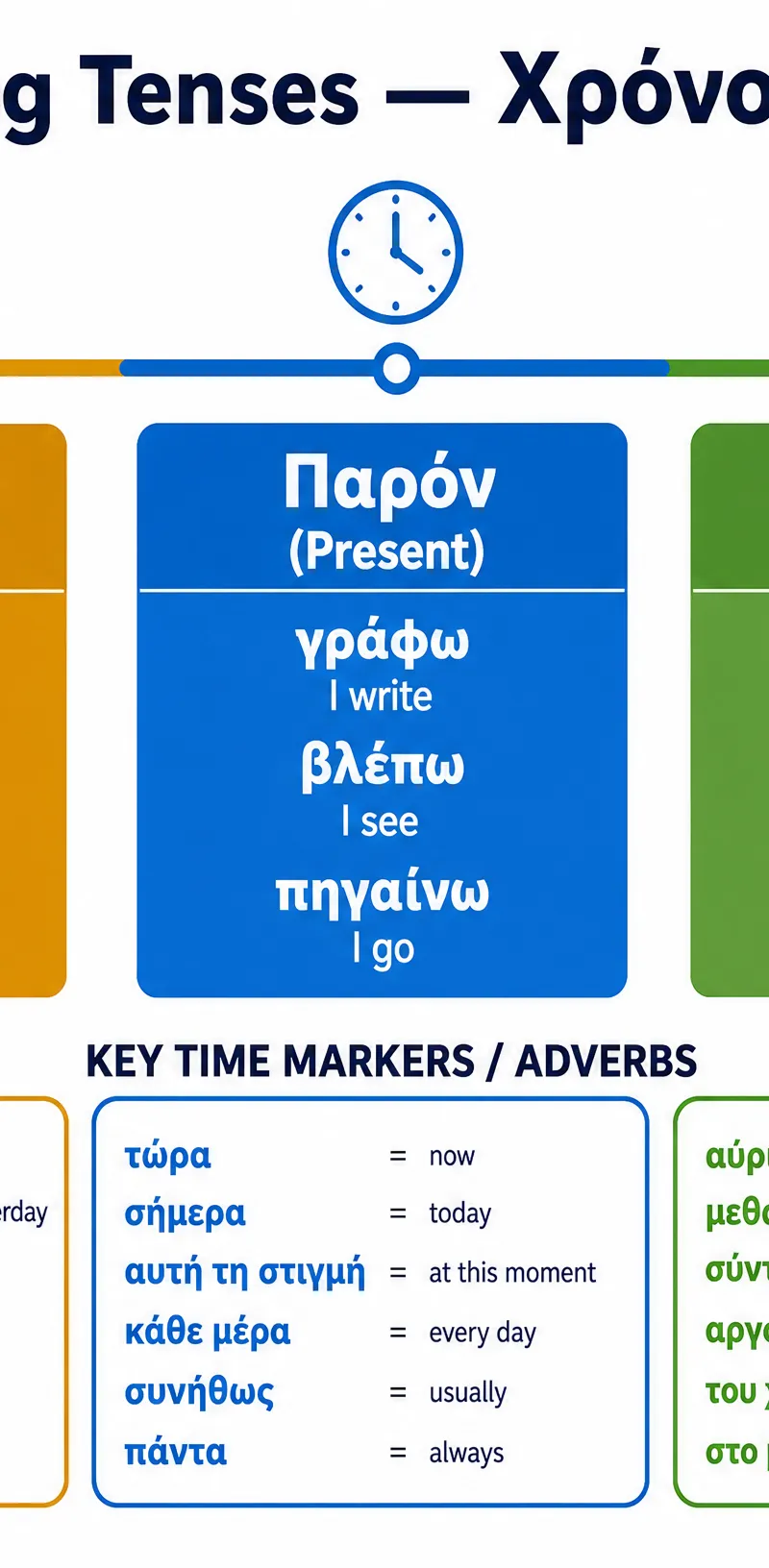
The Present (Το Παρόν)
Use the Present tense for general facts or current actions.
Example: Σήμερα, η κλιματική αλλαγή είναι ένα μεγάλο πρόβλημα. (Today, climate change is a big problem.)
The Future (Το Μέλλον)
Use the Simple Future (θα + subjunctive form) for future plans or hopes.
Example: Στο μέλλον, θα χρησιμοποιούμε περισσότερη ηλιακή ενέργεια. (In the future, we will use more solar energy.)
Expressing and Justifying Opinions
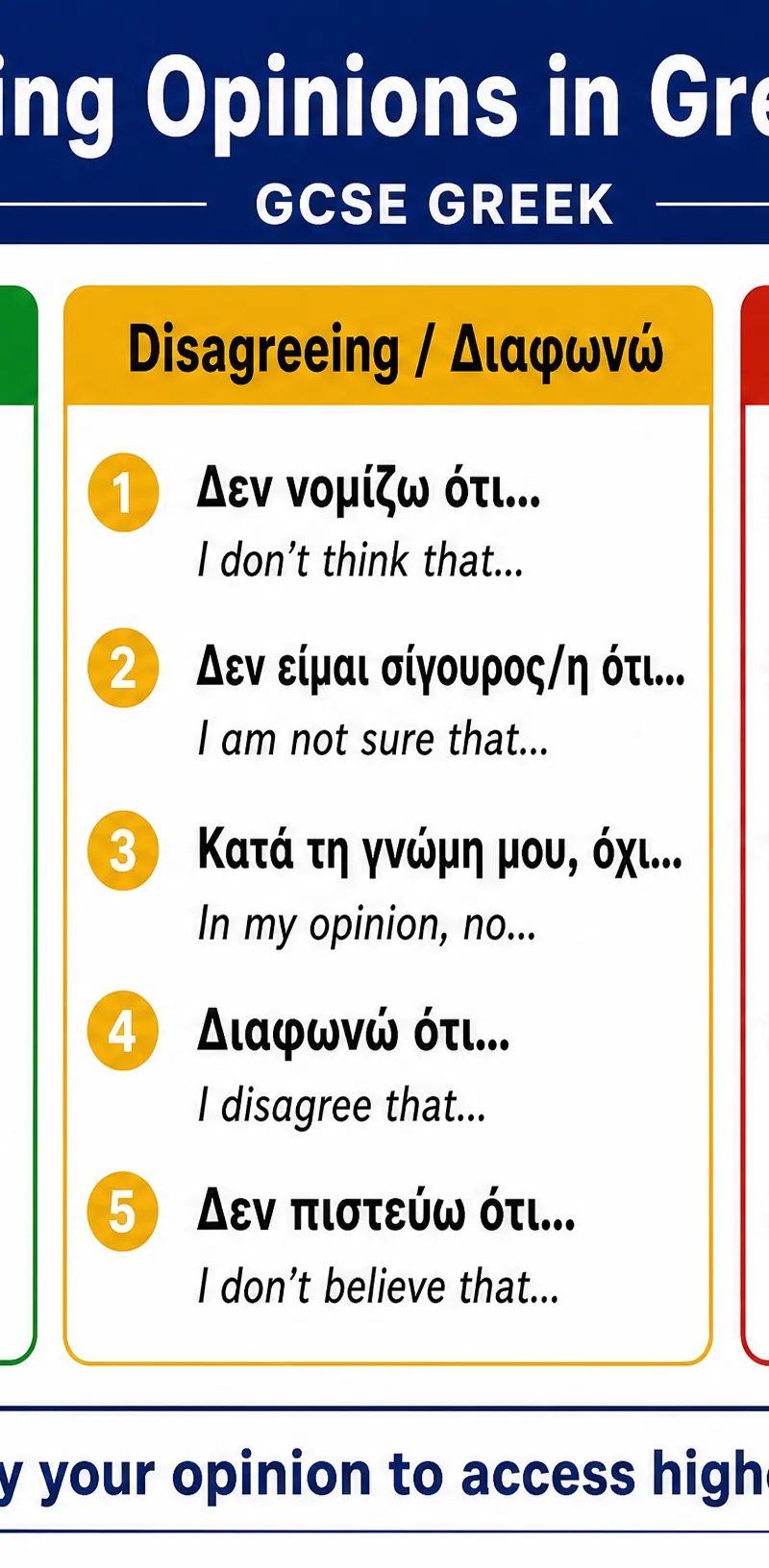
Examiners explicitly reward candidates who justify their thoughts. Never just state an opinion; always explain why.
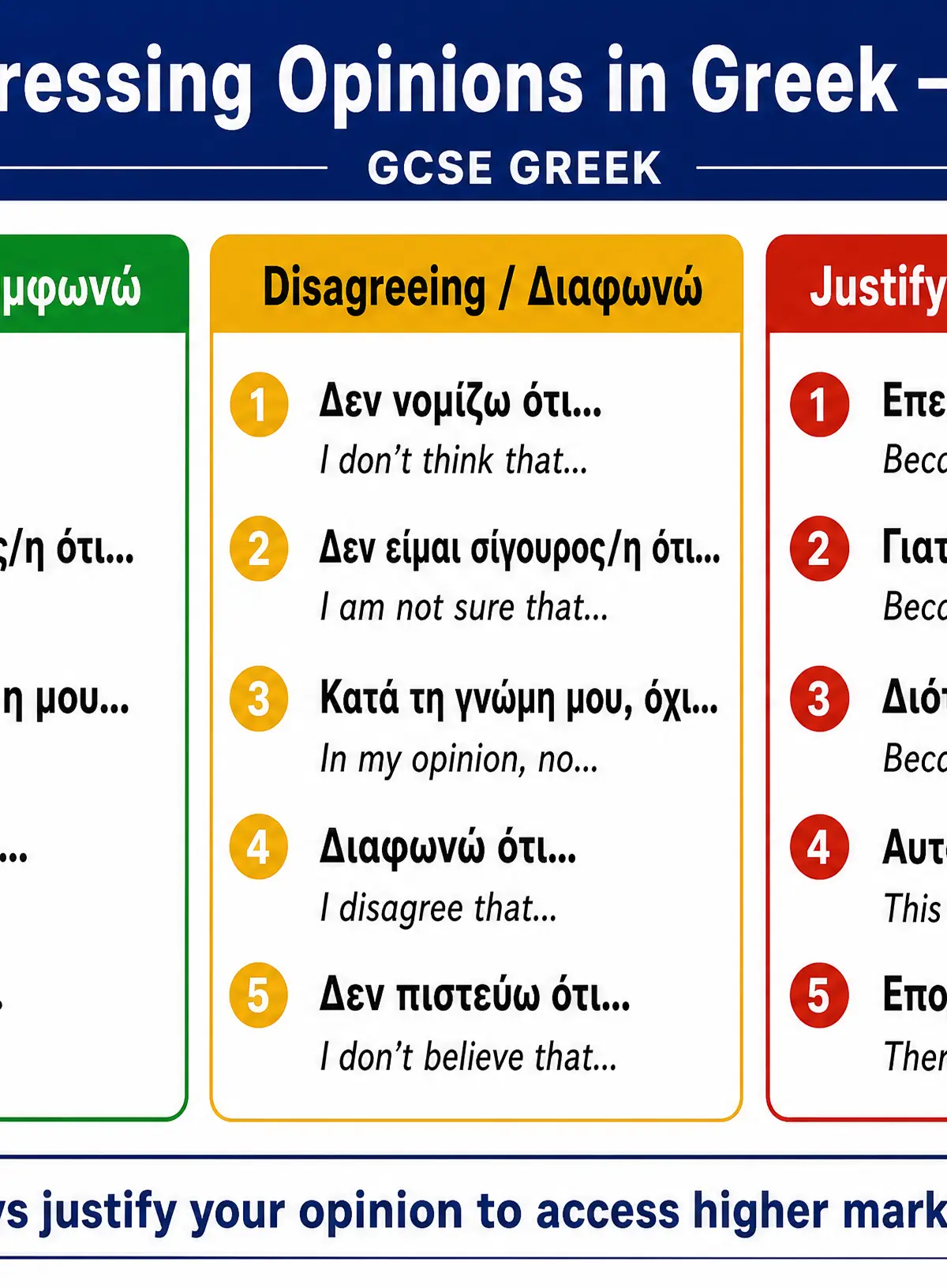
- State: Κατά τη γνώμη μου, η ανακύκλωση είναι σημαντική... (In my opinion, recycling is important...)
- Justify: ...επειδή βοηθάει στη μείωση των σκουπιδιών. (...because it helps in the reduction of rubbish.)
Visual Resources
3 diagrams and illustrations
Interactive Diagrams
1 interactive diagram to visualise key concepts
Conceptual Flow Outline
Theme 5 Topic Breakdown
Worked Examples
3 worked examples — open one to explore the question and available guidance.
Practice Questions
Try the question, then reveal an answer plan or example response
Writing: Write an email to a Greek friend about a global event you recently watched. Mention what the event was, why it is important, and what global event you would like to attend in the future.
Hint: Remember to use past tense for the event you watched, present tense for why it is important, and future tense for what you want to attend.
Speaking (Picture Based): Describe a photo showing people cleaning a beach. (What is in the photo? What are they doing? Why is it important?)
Hint: Use spatial prepositions (στο βάθος, στα δεξιά) and the present continuous tense.
Reading: Read the short text about a charity and answer the questions in English. 'Η οργάνωση μας βοηθάει παιδιά σε φτωχές χώρες. Πέρυσι χτίσαμε τρία σχολεία. Του χρόνου ελπίζουμε να βρούμε περισσότερους εθελοντές.' Q: What did the charity achieve last year?
Hint: Look for the word 'Πέρυσι' (last year).
Translation: Translate into English: 'Η κλιματική αλλαγή είναι το μεγαλύτερο πρόβλημα της εποχής μας.'
Hint: Break it down: Η κλιματική αλλαγή = ?, είναι = ?, το μεγαλύτερο πρόβλημα = ?
Writing: You are writing a blog post about how your town is becoming greener. Mention what facilities exist now, what was bad in the past, and what you will do to help.
Hint: Ensure you clearly separate the time frames using markers like 'Σήμερα', 'Στο παρελθόν', and 'Στο μέλλον'.
Exam technique
How to turn what you know into marks
How to approach the question
Underline the tense indicators in the question (e.g., 'τι έκανες' vs 'τι θα κάνεις') to ensure you reply in the correct tense.
How to structure your answer
- Essay questions
- Address every bullet point. Tick them off as you write. Include past, present, and future tenses.
- Source questions
- Read the text twice. Look for cognates (words that look like English) to guess meaning.
- Explain questions
- State opinion → Justify with επειδή/γιατί → Give an example.
Timing
For writing, aim for roughly 1 minute per mark. For a 16-mark essay, spend 3-4 minutes planning and 12 minutes writing.
Common pitfalls
- Failing to address all bullet points in the writing exam.
- Writing exclusively in the present tense.
- Using English sentence structures (Mother-tongue interference).
- Stating opinions without justifying them.
What the command words want
- Σύγκρινε (Compare)
- Use comparative structures like 'πιο... από' (more... than).
- Περίγραψε (Describe)
- Give details and use adjectives. Ensure adjectives agree with the noun.
- Δικαιολόγησε (Justify)
- You must use connectives like επειδή, γιατί, or διότι.
Watch or listen (optional)
Test your understanding of International and global dimension
Active recall beats re-reading. Take an instant quiz now to test what you’ve learned and lock it into long-term memory.
7 days Premium · Then the free plan continues · No card, no charge