Pearson Edexcel · A-Level · History
Course version: 9HI0 · Version from Sept 2015
Cultural change: the impact of the growth of grammar schools and…
Full specification wording
Economic, social and cultural change, 1509–88: Cultural change: the impact of the growth of grammar schools and universities; the impact of the printing press; the impact of religious change on culture; patronage and the development of drama, music and poetry; the significance of royal and noble patronage; developments in drama, music, poetry and architecture; the impact of the ‘cult of Gloriana’.
Cultural change transformed England.
Checked against the Pearson Edexcel 9HI0 specification (opens in a new tab) on .
- Point 3 of 3
- 3 key terms
Study notes
From the checked teaching notes for this specification point.
The idea
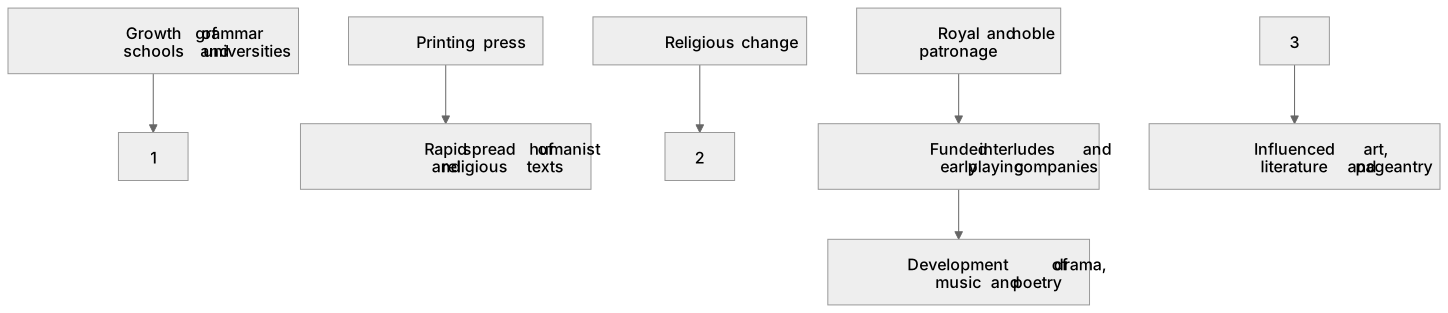
Cultural change transformed England. The impact of the growth of grammar schools and universities increased literacy. The impact of the printing press spread humanist and religious texts rapidly. The impact of religious change on culture reshaped church music and art. Patronage and the development of drama, music and poetry flourished; the significance of royal and noble patronage funded interludes and early playing companies. Developments in drama, music, poetry and architecture included Renaissance styles replacing Gothic. The impact of the ‘cult of Gloriana’ promoted Elizabeth I as a semi-divine figure, heavily influencing art, literature and pageantry before 1588.
What earns the marks
- Explains the impact of the growth of grammar schools and universities on literacy, and the impact of the printing press on spreading ideas.
- Analyses the impact of religious change on culture, alongside developments in drama, music, poetry and architecture.
- Evaluates patronage and the development of drama, music and poetry, highlighting the significance of royal and noble patronage.
- Assesses the impact of the ‘cult of Gloriana’ on cultural developments and its manifestation in art and literature.
Common mistakes and how to put them right
Citing post-1588 examples like the Globe Theatre or Shakespeare's later plays.
Put it right by using pre-1588 examples like Gorboduc or early playing companies.
Assuming the printing press immediately replaced oral culture.
Put it right by noting the persistence of oral traditions.
Treating the ‘cult of Gloriana’ as solely political.
Put it right by acknowledging its cultural manifestations in art and literature.
Exam tips
- Ensure all examples of developments in drama, music, poetry and architecture fit within the 1509–1588 timeframe.
- Link cultural changes directly to the impact of religious change and the significance of royal and noble patronage.
Try the lesson
The start of the Economic, social and cultural change, 1509–88: Cultural change: the impact of the growth of grammar schools and universities; the impact of the printing press; the impact of religious change on culture; patronage and the development of drama, music and poetry; the significance of royal and noble patronage; developments in drama, music, poetry and architecture; the impact of the ‘cult of Gloriana’. lesson, made from checked teaching notes for this specification point.
Have a go first
What was the main effect of the growth of grammar schools in sixteenth-century England?
Listen
Cultural change transformed England. The impact of the growth of grammar schools and universities increased literacy. The impact of the printing press spread humanist and religious texts rapidly. The impact of religious change on culture reshaped church music and art. Patronage and the development of drama, music and poetry flourished; the significance of royal and noble patronage funded interludes and early playing companies. Developments in drama, music, poetry and architecture included Renaissance styles replacing Gothic. The impact of the ‘cult of Gloriana’ promoted Elizabeth I as a semi-divine figure, heavily influencing art, literature and pageantry before 1588. A strong answer earns marks for these points. Explains the impact of the growth of grammar schools and universities on literacy, and the impact of the printing press on spreading ideas. Analyses the impact of religious change on culture, alongside developments in drama, music, poetry and architecture. Evaluates patronage and the development of drama, music and poetry, highlighting the significance of royal and noble patronage. Assesses the impact of the ‘cult of Gloriana’ on cultural developments and its manifestation in art and literature. A common slip: Citing post-1588 examples like the Globe Theatre or Shakespeare's later plays. Instead, using pre-1588 examples like Gorboduc or early playing companies. Exam tip: Ensure all examples of developments in drama, music, poetry and architecture fit within the 1509–1588 timeframe.
See it

Key words
Say what each word means before you turn the card.
Education and print culture
Try answering aloud or in your head before turning the card.
Patronage and cultural expression
Try answering aloud or in your head before turning the card.
The cult of Gloriana
Try answering aloud or in your head before turning the card.
See every definition
- Education and print culture
- The growth of grammar schools and universities increased literacy, while the printing press spread humanist and religious texts rapidly.
- Patronage and cultural expression
- Royal and noble patronage funded interludes and early playing companies, and supported the development of drama, music and poetry.
- The cult of Gloriana
- This promoted Elizabeth I as a semi-divine figure, heavily influencing art, literature and pageantry before 1588.
Label the diagram
Some boxes have lost their names. Pick the right name for each number.
1Box 1
2Box 2
3Box 3
There is more to this lesson
The full lesson goes on to check your understanding and help you earn the marks. Create a free account to carry on, with your progress saved.
A week of Premium from your first lesson · Then the free plan continues · No card, no charge
Test your understanding of Economic, social and cultural change, 1509–88: Cultural change: the impact of the growth of grammar schools and universities; the impact of the printing press; the impact of religious change on culture; patronage and the development of drama, music and poetry; the significance of royal and noble patronage; developments in drama, music, poetry and architecture; the impact of the ‘cult of Gloriana’.
Active recall beats re-reading. Take an instant quiz now to test what you’ve learned and lock it into long-term memory.
A week of Premium from your first lesson · Then the free plan continues · No card, no charge