Pearson Edexcel · A-Level · History
Course version: 9HI0 · Version from Sept 2015
The changing nature of warfare, 1859–1991: perception and reality - 1…
Full specification wording
Paper 3, Option 37.1: The changing nature of warfare, 1859–1991: perception and reality - 1 Reporting and portraying war: The changing remembrance and portrayal of war, 1859– 1991 in ceremonies, novels, plays, war books and comics, films and television series (key developments: the impact of the film All Quiet on the Western Front 1930, the portrayal in Hollywood films of the Second World War in 1940s and 1950s and Vietnam War in the 1970s and 1980s).
This topic explores how war has been remembered and portrayed in ceremonies, novels, plays, war books and comics, films and television series from 1859 to 1991.
Checked against the Pearson Edexcel 9HI0 specification (opens in a new tab) on .
- Point 2 of 2
- 4 key terms
Study notes
From the checked teaching notes for this specification point.
The idea
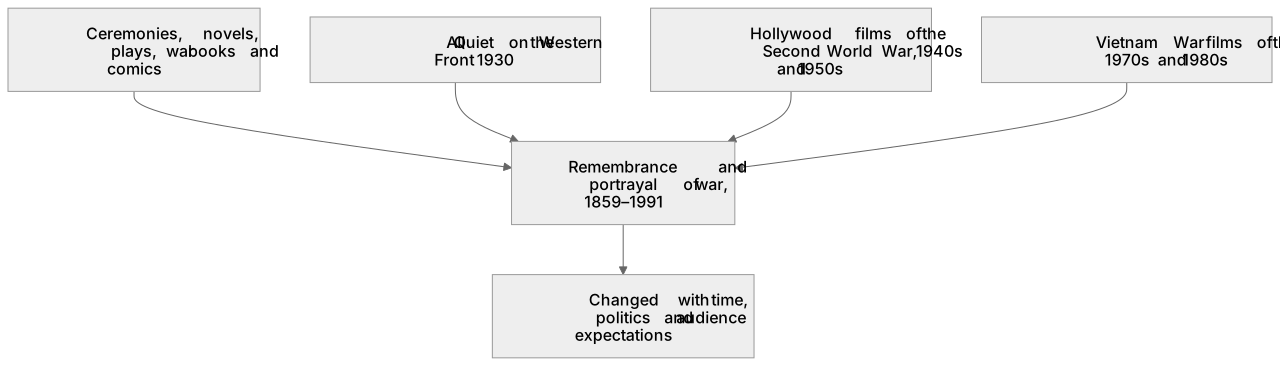
This topic explores how war has been remembered and portrayed in ceremonies, novels, plays, war books and comics, films and television series from 1859 to 1991. You need to show how different media shaped public memory and attitudes, often years after the fighting. Key examples include the 1930 film All Quiet on the Western Front, which presented the First World War as futile and traumatic, and Hollywood's portrayal of the Second World War in the 1940s and 1950s, which often celebrated heroism and national purpose. Vietnam War films of the 1970s and 1980s, such as The Deer Hunter and Platoon, reflected division and trauma. Consider how ceremonies, comics and television series also contributed to remembrance, and assess how portrayals changed with time, politics and audience expectations.
What earns the marks
- Explains how ceremonies, novels, plays, war books and comics contributed to remembrance of war across the period.
- Analyses the impact of All Quiet on the Western Front 1930 in shaping a critical, anti-war memory of the First World War.
- Assesses how Hollywood films of the 1940s and 1950s portrayed the Second World War, often emphasising heroism, sacrifice and national unity.
- Evaluates how Vietnam War films of the 1970s and 1980s presented the conflict as traumatic and morally ambiguous, reflecting wider public division.
- Compares different media and time periods to show how remembrance and portrayal changed in response to politics, audience taste and collective memory.
Common mistakes and how to put them right
Treating All Quiet on the Western Front 1930 as a simple documentary record.
Put it right: Analyse it as a dramatic interpretation that shaped anti-war memory and provoked political controversy.
Assuming all Hollywood Second World War films were purely celebratory.
Put it right: Note variations and the influence of wartime propaganda and post-war consensus.
Ignoring non-film media such as ceremonies, comics and television series.
Put it right: Integrate them to show the full range of remembrance and portrayal.
Exam tips
- Use specific film titles, dates and examples to support claims about changing portrayal.
- Link each portrayal to its historical context, such as interwar pacifism, post-1945 confidence or post-Vietnam disillusionment.
- Discuss both remembrance and portrayal, showing how public memory is constructed and contested over time.
Try the lesson
The start of the Paper 3, Option 37.1: The changing nature of warfare, 1859–1991: perception and reality - 1 Reporting and portraying war: The changing remembrance and portrayal of war, 1859– 1991 in ceremonies, novels, plays, war books and comics, films and television series (key developments: the impact of the film All Quiet on the Western Front 1930, the portrayal in Hollywood films of the Second World War in 1940s and 1950s and Vietnam War in the 1970s and 1980s). lesson, made from checked teaching notes for this specification point.
Have a go first
Which 1930 film, based on Erich Maria Remarque's novel, portrayed the horrors of trench warfare on the Western Front?
Listen
This topic explores how war has been remembered and portrayed in ceremonies, novels, plays, war books and comics, films and television series from 1859 to 1991. You need to show how different media shaped public memory and attitudes, often years after the fighting. Key examples include the 1930 film All Quiet on the Western Front, which presented the First World War as futile and traumatic, and Hollywood's portrayal of the Second World War in the 1940s and 1950s, which often celebrated heroism and national purpose. Vietnam War films of the 1970s and 1980s, such as The Deer Hunter and Platoon, reflected division and trauma. Consider how ceremonies, comics and television series also contributed to remembrance, and assess how portrayals changed with time, politics and audience expectations. A strong answer earns marks for these points. Explains how ceremonies, novels, plays, war books and comics contributed to remembrance of war across the period. Analyses the impact of All Quiet on the Western Front 1930 in shaping a critical, anti-war memory of the First World War. Assesses how Hollywood films of the 1940s and 1950s portrayed the Second World War, often emphasising heroism, sacrifice and national unity. Evaluates how Vietnam War films of the 1970s and 1980s presented the conflict as traumatic and morally ambiguous, reflecting wider public division. A common slip: Treating All Quiet on the Western Front 1930 as a simple documentary record. Instead, analyse it as a dramatic interpretation that shaped anti-war memory and provoked political controversy. Exam tip: Use specific film titles, dates and examples to support claims about changing portrayal.
See it
Key words
Say what each word means before you turn the card.
Memory and commemoration
Try answering aloud or in your head before turning the card.
Media and cultural representation
Try answering aloud or in your head before turning the card.
Heroism versus trauma in war portrayal
Try answering aloud or in your head before turning the card.
Changing public attitudes to war
Try answering aloud or in your head before turning the card.
See every definition
- Memory and commemoration
- How war has been remembered and portrayed in ceremonies, novels, plays, war books and comics, films and television series from 1859 to 1991.
- Media and cultural representation
- The different media, such as ceremonies, comics and television series, that contributed to remembrance and shaped public memory and attitudes.
- Heroism versus trauma in war portrayal
- The contrast between Hollywood films of the Second World War celebrating heroism and national purpose and Vietnam War films reflecting division and trauma.
- Changing public attitudes to war
- How portrayals changed with time, politics and audience expectations, often years after the fighting, shaping public memory and attitudes.
Label the diagram
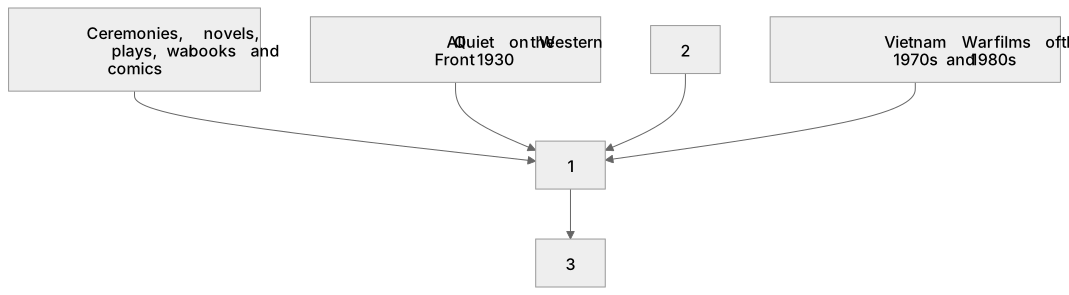
Some boxes have lost their names. Pick the right name for each number.
1Box 1
2Box 2
3Box 3
There is more to this lesson
The full lesson goes on to check your understanding and help you earn the marks. Create a free account to carry on, with your progress saved.
A week of Premium from your first lesson · Then the free plan continues · No card, no charge
Test your understanding of Paper 3, Option 37.1: The changing nature of warfare, 1859–1991: perception and reality - 1 Reporting and portraying war: The changing remembrance and portrayal of war, 1859– 1991 in ceremonies, novels, plays, war books and comics, films and television series (key developments: the impact of the film All Quiet on the Western Front 1930, the portrayal in Hollywood films of the Second World War in 1940s and 1950s and Vietnam War in the 1970s and 1980s).
Active recall beats re-reading. Take an instant quiz now to test what you’ve learned and lock it into long-term memory.
A week of Premium from your first lesson · Then the free plan continues · No card, no charge